dailynewsnblog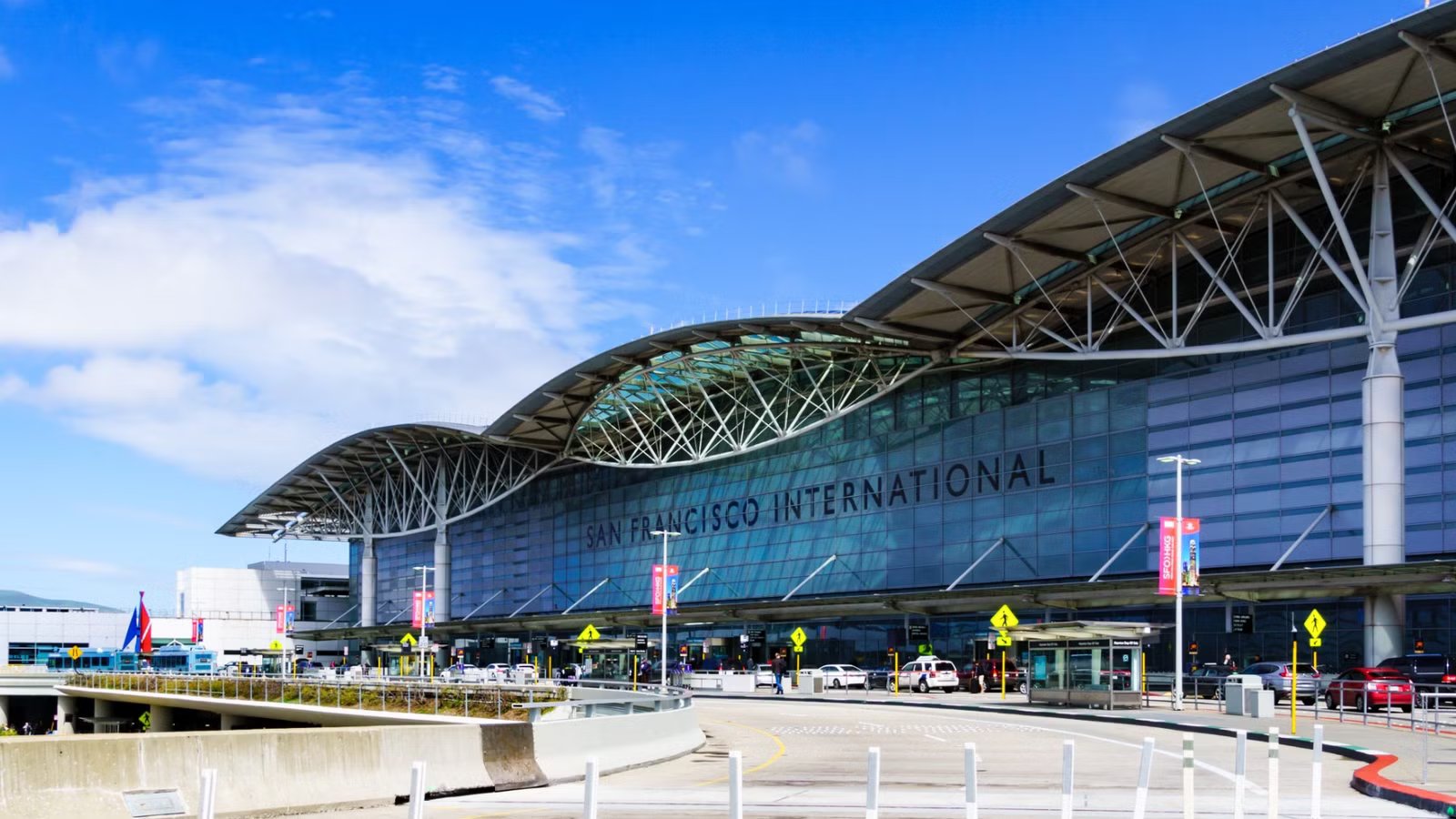
Since the Federal Aviation Administration banned parallel landing at  San Francisco International Airport (SFO), the average flight delay time has quadrupled from 5 minutes to 20 minutes. In particular, arrivals between the peak hours of 1:00 PM and 9:00 PM have experienced a greater than 50% delay rate since the new landing safety regulation took effect, according to the San Francisco Chronicle.
The increased time has been seen across the board with the delayed arrivals becoming far more frequent as opposed to longer individual delays on acutely affected flights. Currently, the least impacted time slots are the earliest morning arrivals with 5:00 AM flights experiencing an around 10% delay rate and 7:00 AM following at 13% on average.
Slow Going At San Francisco International Airport

The FAA officially dictated the end of parallel landings on April 1 at SFO. Since the federal order took effect, delays have skyrocketed compared to the same time period in 2025. The SF Chronicle reported that there has been a clearly measurable increase in delays for every hour of daily flight operations. On top of the moratorium on hero landings at SFO’s two east-west runways, the north-south runway has been closed for a construction project to resurface and modernize.
SFO’s 28L and 28R are only 750 feet apart, which is closer than at any other parallel airstrips at a major US hub. In order for pilots to safely land with such a narrow separation, they were required to use visual confirmation which was only possible at SFO under a waiver from the FAA. The agency can no longer permit such approaches since American Airlines Flight 5342 collided with an Army helicopter over Washington Dulles (IAD) in early 2025, which killed nearly 70 crew and passengers.
In order to prevent such a tragic and fatal mishap from happening again, all airports are now required to use positive air traffic control at all times with radar monitoring. Unfortunately, because SFO is not equipped to handle its normal capacity under the new rules, customers are suffering the consequences. SFO spokesperson Doug Yakel told the SF Chronicle that “flights at SFO were 1.8 times more likely to be delayed between April 1 to May 16 in 2026 compared to the same period in 2025.”
Catch what other flight trackers miss
Emergency squawks, holds, NOTAMs — live signals, no signup.
Open tracker
Catch what other flight trackers miss
Emergency squawks, holds, NOTAMs — live signals, no signup.
Open tracker
The Battle Against Weather In The Bay Area

According to the airport’s data, domestic departures and arrivals have seen a 43% delay in arrival and departures while international flights have increased by 35%, owing to the fact that domestic is more common. Departing flights have been more impacted than arrivals, jumping from 16% to 45% compared to last year, and representing an increase of nearly 11,000 more delayed takeoffs. Arrivals landing 15 minutes late or more are up to 37% in 2026 compared to 20% in 2025.
One of the reasons that the parallel landings helped increase SFO capacity significantly was due to the frequent weather delays during fog and high winds that impact the Bay Area on a regular basis. Taking advantage of breaks in the weather to land a higher volume of traffic at a faster rate when adverse conditions clear up was a fundamental operational strategy for SFO. Additionally, construction is limited due to the borders around the airfield that prevented making another parallel runway with greater separation.
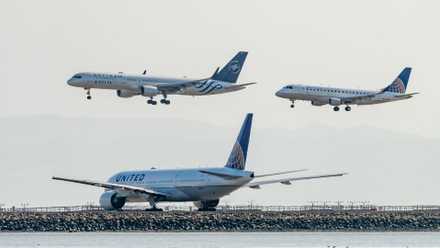
FAA To Introduce “New Flight Procedure” In San Francisco After Banning Parallel Landings
The FAA is working to keep safety high and improve efficiency at SFO.
No Room To Grow At SFO

When runway one finishes the $180 million modernization project, the airport will be able to accommodate a much greater volume of traffic. However, that doesn’t solve the parallel runway dilemma. SFO is built on the bay which would mean that a massive artificial land mass would need to be built in order to expand the airfield over the water, like the pioneering Kansai International (KIX) that was built in Osaka, Japan.
Creating a structure from artificial islands or a peninsula would be a massive and extremely expensive construction undertaking, making growth toward the land side of airport might seem like the apparent alternative. Yet, SFO is bordered by Highway 101 which is also a major artery for land transportation and diversion would be a similarly colossal undertaking. The impact and cost that it would demand to divert and rebuild Highway 101 and then also build a new runway could possibly exceed the cost of land reclamation in the bay.
For now, efforts are focused on completing renovation work to runway one with future expansion plans unclear for the time being. FAA Administrator Bryan Bedford is anticipated to announce new approach protocols for SFO in July to help alleviate the situation. Until that time, travelers to and from SFO will have no choice but to continue to plan for delays and longer travel times.