dailynewsnblog
Qantas has revealed the dedicated pilot and cabin crew rest facilities that will support its ultra-long haul Project Sunrise flights, offering the clearest look yet at how the airline plans to operate some of the world’s longest nonstop commercial services. Installed aboard specially configured Airbus A350-1000ULR aircraft, the new rest areas are designed to help crews manage flights lasting up to 22 hours between Australia and destinations such as London and New York.
The facilities represent a critical component of Project Sunrise, the ambitious initiative intended to connect Sydney directly with major global cities without intermediate stops. While passenger cabins and premium seating have attracted considerable attention, aviation regulators and fatigue experts have long viewed crew welfare as one of the most important factors determining whether such flights can be operated safely and sustainably. Recent images from inside the aircraft provide new insight into how Qantas is addressing that challenge.
Purpose-Built Spaces For Extended Duty Periods

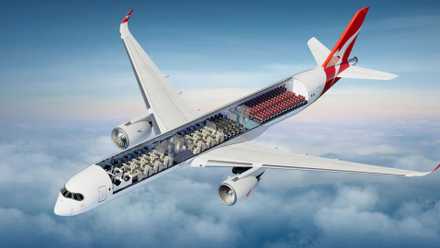
Unlike conventional long-haul aircraft, where crew rest compartments are often hidden above passenger cabins or located in compact lower deck spaces, Qantas’ A350-1000 configuration incorporates purpose-designed rest facilities tailored specifically for ultra-long-haul operations. Photos shared by aviation journalist Zach Griff during a visit to the aircraft reveal separate rest zones for pilots and cabin crew. The pilot compartment includes two lie-flat beds and dedicated seating, providing flight deck crews with a quiet environment away from operational areas. Cabin crew have access to a larger rest section featuring multiple bunks arranged in a stacked configuration. Privacy curtains, subdued lighting, and sound-insulated spaces are intended to create conditions conducive to meaningful sleep during long duty cycles.
According to reporting from Yahoo Australia, the crew rest facilities are positioned above the passenger cabin and are accessible through discreet stairways. The layout maximizes available space while preserving seating capacity in revenue-generating areas of the aircraft. While hidden from passengers during normal operations, the facilities are expected to play a central role in maintaining alertness throughout flights that may exceed 20 hours in duration.
Additional Context & Relevant Insights

The rest compartments are only one element of a broader fatigue mitigation strategy developed for Project Sunrise. Qantas has spent years conducting research flights and scientific studies examining how pilots, cabin crew, and passengers respond to ultra-long haul travel. Test flights operated during the pandemic between Australia and Europe generated data on sleep patterns, alertness levels, hydration, meal timing, and circadian rhythm management. Researchers monitored crew performance throughout the journey to better understand the physiological challenges associated with extended periods in the air.
Those findings helped shape both aircraft design and operating procedures. Crew members on Project Sunrise services will work under carefully structured schedules that include designated rest periods and controlled sleep opportunities. The dedicated sleeping areas allow pilots and flight attendants to obtain restorative rest away from passenger activity, an important consideration given the duration of the planned routes.
Australian and international aviation regulators require airlines operating ultra-long haul flights to demonstrate that fatigue risks remain within acceptable limits. As a result, rest facilities are not simply comfort features but operational necessities that form part of the aircraft’s certification and safety framework.
Qantas Backtracks On 33-Inch Legroom Project Sunrise Promise To Add Extra-Legroom Seats
As Qantas’ Project Sunrise edges closer to launch, attention shifts from route maps to seat maps.
Supporting A New Era Of Nonstop Flying

Project Sunrise aims to redefine long distance air travel by eliminating traditional transit stops between Australia and some of the world’s largest international markets. The first aircraft are expected to enter service later this decade, enabling nonstop flights from  Sydney Kingsford Smith Airport (SYD) to London and New York that could exceed 21 hours depending on weather and operational conditions. To support those missions, Qantas selected a bespoke version of the A350-1000ULR featuring fewer seats than many standard configurations. The reduced passenger count allows additional space for premium cabins, wellness areas, fuel requirements, and crew facilities.
The investment highlights how airline priorities change as flight durations increase. On conventional long haul routes, crew rest areas are often secondary design considerations. For Project Sunrise, however, they have become fundamental infrastructure. Ensuring that pilots and cabin crew remain adequately rested is essential to maintaining operational performance across journeys that approach the practical limits of commercial aviation.
While passengers may never see the hidden compartments during their travels, the newly unveiled facilities offer a glimpse into the operational realities behind nonstop flights linking Australia directly with Europe and North America. As Qantas prepares to launch Project Sunrise, the aircraft’s dedicated rest areas underscore a simple reality: on a 22-hour flight, crew endurance can be just as important as aircraft range.