dailynewsnblog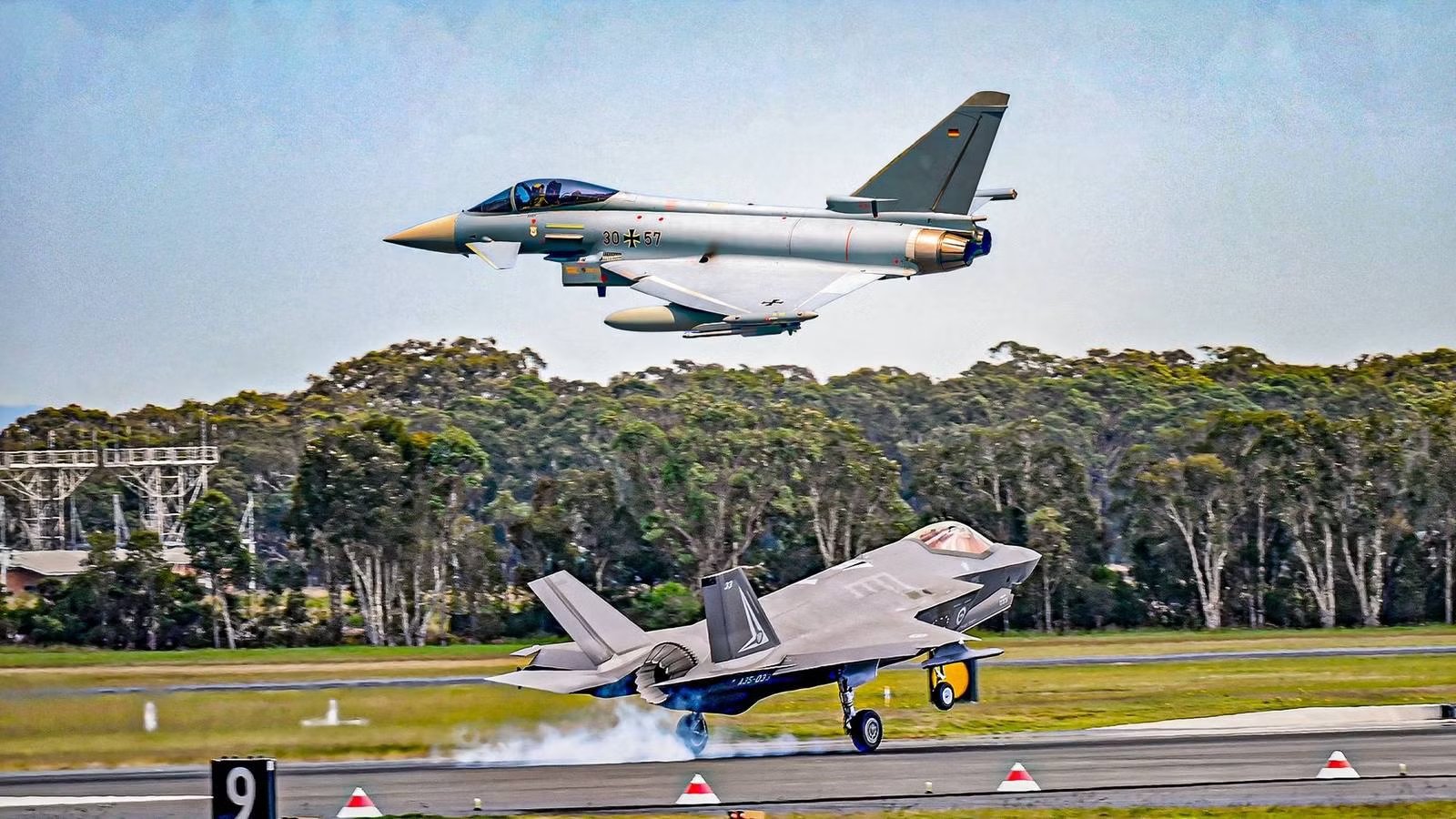
After the Spanish government declined to go through with a procurement deal for Lockheed Martin’s F-35B Lightning II stealth fighter, the Spanish Navy will become the last operator of the McDonnell Douglas AV-8B Harrier II. The carrier Juan Carlos I of the Armada is only able to operate with jump jets, and without the forthcoming F-35B, there is no replacement path to modernize its Air Wing.
The move to refocus on European Defense Industries is part of a broader trend within the North Atlantic Treaty Organization. However, there simply is no alternative short-take-off or vertical landing aircraft currently available to replace the Harrier, other than the Joint Strike Fighter. This situation means that a major portion of NATO’s carrier-capable fighter jets must now resort to scavenging and cannibalizing legacy aircraft that were built decades ago.
Choppy Seas Ahead For Spanish Naval Aviation

The US Marines ‘sundowned’ their last squadron of Harrier jets earlier this June, while the Italian Navy has a handful of examples still in operation. Spain acquired five retired USMC AV-8Bs in June from decommissioned USMC aircraft, as Aerotime reported. Still, taking the spare parts and spare jets that the Marines have divested will only keep Spain’s fleet flying for a few more years, given the airframe fatigue in its fleet.
Operating fighter jets from the deck of an assault ship at sea with a dead supply chain is a high-risk endeavor even for the experienced crews of the Armada. Ultimately, there is a flight hour ceiling instituted for safety that will eventually force the retirement of these jets. This could lead the Spanish Navy to completely lose its fixed-wing aviation capability altogether in the next decade.
If there is no replacement for the Harrier, the Juan Carlos I will only be able to deploy helicopters. That would mean that the ship would have virtually no forward force projection and, instead of being a ‘lightning carrier’ like the US Marines’ air-ground task forces, Spain’s aircraft carrier would only be an amphibious assault vessel. The speed, range, and firepower of a fighter jet simply cannot be matched by any rotary wing platform currently in existence.
A New Era Onboard The Juan Carlos I

In lieu of the F-35B Joint Strike Fighter as a means of modernizing its fixed-wing fleet, Spain’s Navy is now investigating uncrewed aerial vehicles instead. This alternative path would see the AV-8Bs succeeded by advanced drones like the collaborative combat aircraft in development in the US and Europe. Also known as loyal wingman drones, Airbus and Dassault are still pursuing a joint development plan under the Future Combat Air System initiative.
FCAS was intended to produce a sixth-generation fighter jet for France, Germany, and Spain but is now being relegated to a drone and combat cloud data link joint venture. The dispute between Airbus and Dassault over intellectual property and industrial work sharing was an insurmountable obstacle that ultimately led to the abandonment of collaborative development of a new fighter jet.
Although FCAS is now greatly reduced in scope, the program still offers the Spanish Navy a roadmap to recapitalizing its naval aviation capability. Spain’s National Defense Contractor, Indra, remains a core partner of the FCAS trilateral program despite the recent downturn. Fast-tracking a drone program, similar to Boeing’s new MQ-25 Stingray, would prevent a capability gap for the Armada and the NATO alliance.
Still, the Stingray is built for catapult launches and wire-arrested ‘tailhook’ landings, which is very different from the flight deck of the Juan Carlos I with its ‘ski jump’ ramp. However, the investment in funding and time to take a drone from the drawing board to the assembly line should be much more rapid than a crewed jump jet.
Stopgap Measures For Spain’s Fleet

The Spanish Navy fleet of AV-8B Harrier IIs currently consists of 12 fighter jets. The five recently procured USMC airframes will be cannibalized as parts donors to keep these aircraft in operational condition for as long as possible. Airbus will manage the long-term fleet sustainment using the disassembled Harriers from the Marines in addition to the existing spare parts pool. Although the situation is far from ideal, there are major benefits of these jets being in airworthy condition before ‘cannibalization.’
The parts from the USMC jets can be almost immediately reinstalled on an Armada AV-8B when needed because they were already inspected and certified for use on flying airplanes before they went on the shelf in the Airbus hangars. Spain is also procuring much of the maintenance supplies and equipment used by the USMC Harrier squadrons to bolster its independent maintenance operations.
Spain, Italy, and the US operated a joint program office to collaboratively manage the Harrier fleet of all three nations until the Marines finally sundowned the last squadron this year. Despite the US no longer being an operator, all three members have shared access to the intellectual property necessary for a complete operation from the factory to the flight line. Aerotime also reported Spain has begun negotiations with Italy to purchase its remaining stockpiles of spare parts after the last Italian Harriers are grounded in the next two or three years.
Madrid’s New Flat Top: Spanish Supercarrier

Since 2025, there have been reports that Spain is planning to build a much larger aircraft carrier to replace the Juan Carlos I by approximately 2040. According to El Mundo America, the Spanish Ministry of Defense commissioned state-owned shipbuilder Navantia to conduct a formal feasibility study into a future flagship on the same scale as France’s Charles de Gaulle. The French Navy’s supercarrier is the only nuclear-powered aircraft carrier not operated by the US Navy.
The plan to replace Spain’s current aircraft carrier with a much larger conventional catapult-assisted takeoff and assisted recovery, or CATOBAR, is meant to parallel the FCAS program. The ship is projected to carry 25 or 30 sixth-generation fighter jets like the Charles de Gaulle, but it is not expected to be nuclear-powered. Introducing a much larger vessel of this scale would open up opportunities for its Air Wing to choose from a much wider range of airframes.
Since the failure of FCAS to successfully produce a next-gen fighter jet, Spain is looking to potentially join the global combat air program instead. However, even if this plan did not immediately yield an advanced stealth aircraft with carrier capability, there are other alternatives available. Since a CATOBAR carrier is not limited to operating jump jets, Spain could fly the Dassault Rafale fighters, which already operate on the Charles de Gaulle.
The French Connection: Dassault’s Next Tailhook Jet

Dassault and Airbus decided to go their own ways, but that doesn’t mean that a next-gen carrier-capable stealth fighter will never be built in Europe. The GCAP program was founded by the United Kingdom, Italy, and Japan without any clear intention of developing a tailhook fighter variant, which means it may not be a good fit for Spain. However, whatever next-gen airframe is built will need to do both because it needs to fulfill the requirements of both the French Air Force and Navy.
The decision to downgrade FCAS is still fresh, and so far only Canada has joined GCAP as the first official observer. Germany and Spain have both expressed strong interest in participating, but no formal announcement has been made. If Spain did choose to join GCAP without a clear path to a next-gen tailhook fighter, it could be purely to procure a replacement for its Eurofighter Typhoons in the long-haul.
Spain’s Air Force is replacing its Boeing F/A-18 Super Hornets under a $7 billion deal for 45 Eurofighter Typhoons since the F-35 was canceled. That will bring its total fleet strength to 115 Eurofighters, but eventually the oldest examples will need to retire. These are at best 4.5-Gen jets, so even disregarding airframe fatigue, it would be logical to seek a future sixth-generation successor. If that led to a mix of GCAP and Dassault jets, it would be less than ideal if an aging next-gen platform was later purchased for the Navy, as it would lead to a mixed fleet.
That may not be an issue since that would mirror the current situation. However, given the much higher operating cost of stealth aircraft, it is likely that Spain would seek to have a unified fleet if at all possible. Dassault has not revealed any information about its potential next-gen platform, so it is unclear what features it may or may not have and what a timeline to production looks like. GCAP has made more progress but is still in the early stages as well.
Unified Defense For Europeans Under NATO

The path to European-centric defense for NATO, and therefore Spain, has created a capability gap in the near future, but the trajectory is clearly headed to a stronger alliance and supporting a defense industrial base. Although the F-35 Joint Strike Fighter was meant to be the universal platform that would connect all of these partner nations, interoperability between a European-produced next-gen fighter and American-made platforms will achieve the same strategic goal.
The issue is diplomacy and cost, with both the Donald Trump administration’s aggressive ‘America First’ statesmanship and Lockheed Martin’s continuous technical issues and constantly rising costs undermining the F-35 JSF program. By skipping America’s fifth-generation aircraft, Spain’s naval aviation will endure years of readiness and capability challenges, but in a new era of air power from the sea and domestic industrial capacity.
In the fallout of the FCAS dissolution, Germany and Spain announced their continued joint investment in a future fighter as ‘Team Gen 6.’ It is increasingly looking like they are planning to enter the GCAP consortium as a bloc entry, especially given that there is every indication that the original three partners are highly receptive to this idea. In the meantime, the Harrier fleet will continue to do its duty guarding Spanish skies and seas, or wherever else in Europe they are called upon to defend.