dailynewsnblog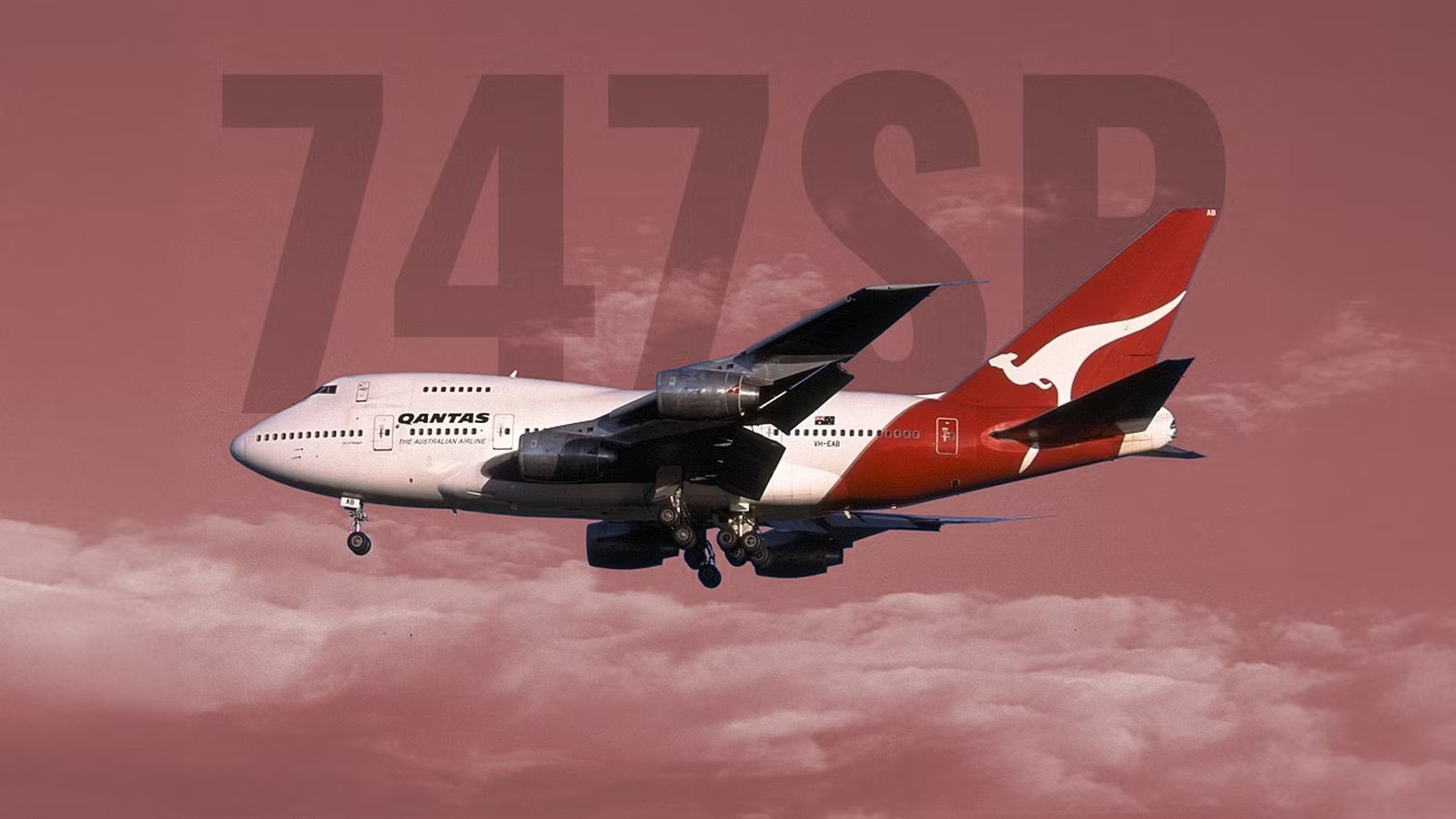
The Boeing 747 is perhaps the most famous subsonic airliner of all time. With its distinctive partial upper deck, four engines, and historical provenance, the 747 is an icon of aviation. Boeing has produced the 747 in six major variants: the 747-100, 747-200, 747-300, 747-400, 747-8, and 747SP, with 1,573 examples sold across 55 years of production. Within each variant came a set of subvariants, typically including a cargo and short-range model for each series.
Most of the 747 variants follow a straightforward line of progression, with each being more capable than the last. The 747-400 introduced technological advancements and fuel efficiency improvements, while the 747-8 was even more advanced and also came with a stretch of the entire fuselage, a first for the 747 line. The 747SP, however, was a shrink of the 747, having been introduced in the late 1970s between the 747-200 and the 747-300. Let’s examine why Boeing shrank the 747 to create the 747SP.
The Boeing 747SP In A Nutshell

The Boeing 747SP (‘Special Performance’) is a shrink variant of the 747-100. Early proposals for the 747SP included changing the plane into a trijet, but the final product was less radical. The aircraft was shrunk from a length of 231 feet 10 inches (70.6 meters) to just 183 feet three inches (55.85 meters), while retaining the 747’s wingspan of 195 feet eight inches (59.64 meters). With these dimensions, the 747SP is most comparable to a Boeing 787-8 or Airbus A330-200.
Sections of the fuselage were removed forward and aft of the wing. The center sections were modified, and the tail section was redesigned to accommodate a significantly taller vertical stabilizer due to the reduced length. The outer section of the wings used a simpler single-slotted flap system rather than the triple-slotted flaps of the standard 747. Certain components of the airframe were also redesigned to be lighter than on the standard 747.
The 747SP featured a lower Maximum Takeoff Weight than the Boeing 747-100, but its overall smaller size means that it had a reduced fuel burn compared to the 747-100. The 747SP also had a higher cruising speed, and while it retained the same service ceiling of 45,100 feet, the aircraft could routinely cruise near this altitude, while other variants cannot. Of course, the real benefit of the 747SP was that it could fly as far as 6,650 NM (12,325 km), although real-world range for airliners depends on weight and weather conditions.
Why Did Boeing Build The 747SP?

The Boeing 747SP was born out of a joint request by Pan Am and Iran Air for a large airliner that could reliably fly nonstop between New York JFK and Tehran. By the time the 747SP was launched in 1973, Boeing was already producing the 747-200, which had a longer range than the 747-100, but still insufficient for many of the world’s prospective long-haul routes. The 747SP’s improved range not only opened up new routes, but it could operate existing routes with an economical payload more consistently than the 747-200.
While the 747SP was originally intended to operate from New York to Tehran, Pan Am’s first route with the new jet was from New York to Tokyo. In addition, the 747SP came with significantly improved field performance, a benefit that notably benefited Qantas. Not only did Qantas use the 747SP for nonstop transpacific routes to the United States, but it also flew the shrunken quad from Sydney to Wellington. This was, in fact, Qantas’s original purpose for acquiring the aircraft, due to Wellington’s short runways and challenging weather.
Origin | Destination | Distance (NM) | Distance (km) |
|---|---|---|---|
New York John F. Kennedy International Airport | Tehran Mehrabad International Airport | 5,328 NM | 9,867 km |
Los Angeles International Airport | Auckland Airport | 5,652 NM | 10,467 km |
New York John F. Kennedy International Airport | Tokyo Haneda Airport | 5,885 NM | 10,899 km |
Los Angeles International Airport | Sydney Kingsford Smith Airport | 6,507 NM | 12,051 km |
The other reason why Boeing developed the 747SP was competition. While the 747’s widebody design proved far more economical than first-generation airliners like the 707, it was a huge plane that could seat more than double what a 707 could carry. This created a market for the smaller McDonnell Douglas DC-10 and Lockheed L-1011 TriStar. In the early 1970s, Boeing didn’t have the funds to develop a small clean-sheet widebody, and instead developed the 747SP to compete directly with McDonnell Douglas and Lockheed.
Why Was The Boeing 747SP A Flop?

On paper, the prospect of a smaller 747 derivative that had more range, competed with the DC-10 and L-1011, and had excellent field performance seemed promising.  Boeing anticipated demand for 200 747SPs, and considering that McDonnell Douglas sold 386 DC-10s and Lockheed sold 250 TriStars, it appeared to be a reasonable figure. However, the 747SP entered service during a difficult period for airlines, and it fell victim to the same flaws that plague any shrink.
While the 747SP was comparable in size to the DC-10 and L-1011, it was a derivative of a significantly larger, heavier aircraft. While Boeing made efforts to cut the 747SP’s weight, it still carried over most of the weight of the 747-100, an aircraft nearly 50 feet (16 meters) longer. In addition, the 747SP remained a quadjet, whereas the DC-10 and L-1011 were trijets. These factors combined made the aircraft far more fuel-thirsty than the competition, thereby killing its economics.
The 747SP was formally launched in 1973, when jet fuel was cheap and optimism for opening flashy new long-haul routes was as high as ever. Later that year, however, came the 1973 oil crisis, which resulted in a spike in fuel prices that severely hampered the economics of long-haul flying. The 747SP entered service in 1976 and ultimately failed to find a true market. Only a handful of airlines found real use for the aircraft’s capabilities, and Boeing only sold 45 examples, well short of the 200 that was originally expected.
The Final Straw For The Boeing 747SP

The Boeing 747-100, while an economical and iconic airliner, was a bit of a dog performance-wise in its early days. Its four Pratt & Whitney JT9D-3 engines barely produced enough thrust for the enormous jet, resulting in long takeoff rolls and a limited range. The 747SP was the more extreme solution to improve the aircraft’s versatility, but the other was the 747-200. This variant featured increased fuel capacity and structural improvements to support a higher MTOW, made possible by the Pratt & Whitney JT9D-7.
The Boeing 747-200 , as pictured above, could fly significantly further than the 747-100, and for most airlines, this was enough. Pratt & Whitney continued to improve the JT9D to add thrust, and Boeing also added more powerful variants of the General Electric CF6-50 and the Rolls-Royce RB211-524. All of this extended the 747-200’s range, making it a more versatile aircraft. While the 747SP remained the range queen of the skies, its market space was gradually shrinking.
In 1978, Pratt & Whitney introduced the JT9D-7Q, and it introduced the JT9D-7RG2 in 1982. Improved variants of the RB211-524 and the CF6-80 were also introduced in the early 1980s. By this point, the 747-200’s range was close enough to the 747SP that it was more economical to fly a 747-200 with blocked seats than a fully loaded 747SP, so many airlines chose later 747-200s over the 747SP. The final commercial 747SP rolled off the assembly line in 1982, with one more example for a VIP customer produced in 1989.
The Impact Of The Boeing 747SP

By the early 1980s, flying a 747SP over a 747-200 meant giving up potential revenue due to the similar operating costs, even if the 747SP had a marginally longer range. When it first entered service, the 747SP was the longest-ranged airliner in history, a title that it held until the introduction of the Boeing 747-400 in 1989. It can be thought of as similar to the Boeing 777-200LR or Airbus A330-800, a highly capable airliner that costs nearly the same to operate as its larger counterparts, but with fewer revenue opportunities.
But while the 747SP was a sales dud, the aircraft’s development influenced future variants. More specifically, the hump on the 747SP ended over the aircraft’s wings, whereas prior 747s had the hump stop well before the wings. The engineering decisions were carried over to the 747-300, as pictured above, which was essentially a 747-200 with a stretched upper deck. The 747-400 carried over the same upper deck design, and it was also offered as a retrofit to 747-100s and 747-200s.
Aircraft | Entry Into Service |
|---|---|
Boeing 747-100 | 1970 |
Boeing 747-200 | 1971 |
Boeing 747SP | 1976 |
Boeing 747-300 | 1983 |
Boeing 747-400 | 1989 |
The 747SP was the fastest 747 model, with a typical cruising speed of Mach 0.86. This partially enabled its incredible range. In addition, it was the only 747 model that could regularly cruise close to its service ceiling of 45,100 feet, making it the highest cruising subsonic airliner of all time. It also set world records, such as three round-the-world flights that set a record for the shortest duration, along with a delivery flight made from Seattle to Cape Town that held the record for the longest nonstop unrefuelled flight for over a decade.
The Bottom Line
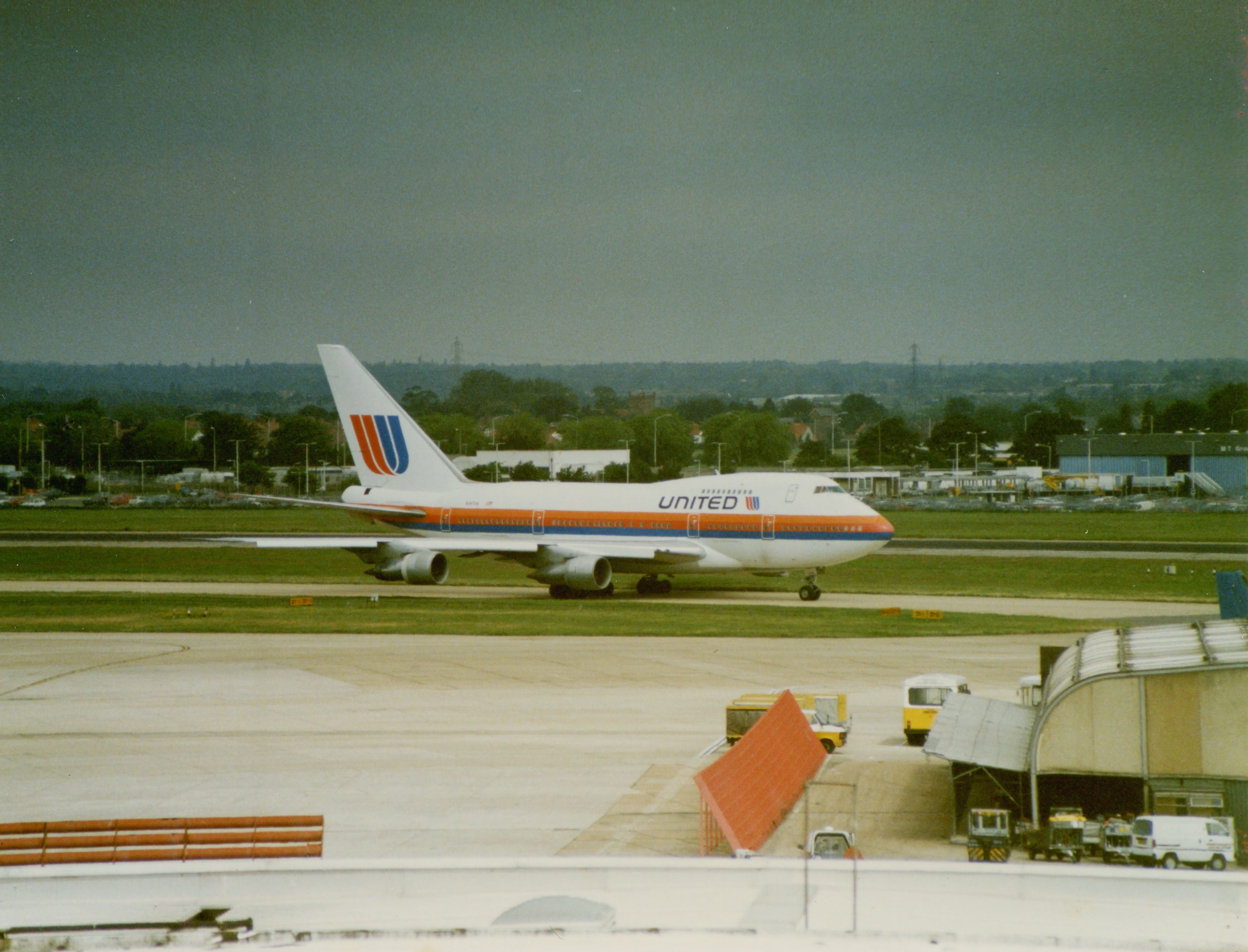
There were three primary benefits of the 747SP: it was smaller and thereby easier to fill than other 747 variants, had far superior field performance, and was the world’s longest-ranged airliner, able to reliably carry more payload than an early 747-200 despite its smaller size. Ultimately, however, very few airlines required the field performance that the 747SP offered.
Its high per-seat operating costs, due to its weight and quadjet configuration increasing fuel burn, made it uncompetitive against the McDonnell Douglas DC-10 and Lockheed L-1011 TriStar. Finally, it entered service during a time of high fuel prices, and the 747-200, with its lower per-seat costs, grew more capable over time, gradually shrinking the 747SP’s market until it no longer had a market.