dailynewsnblog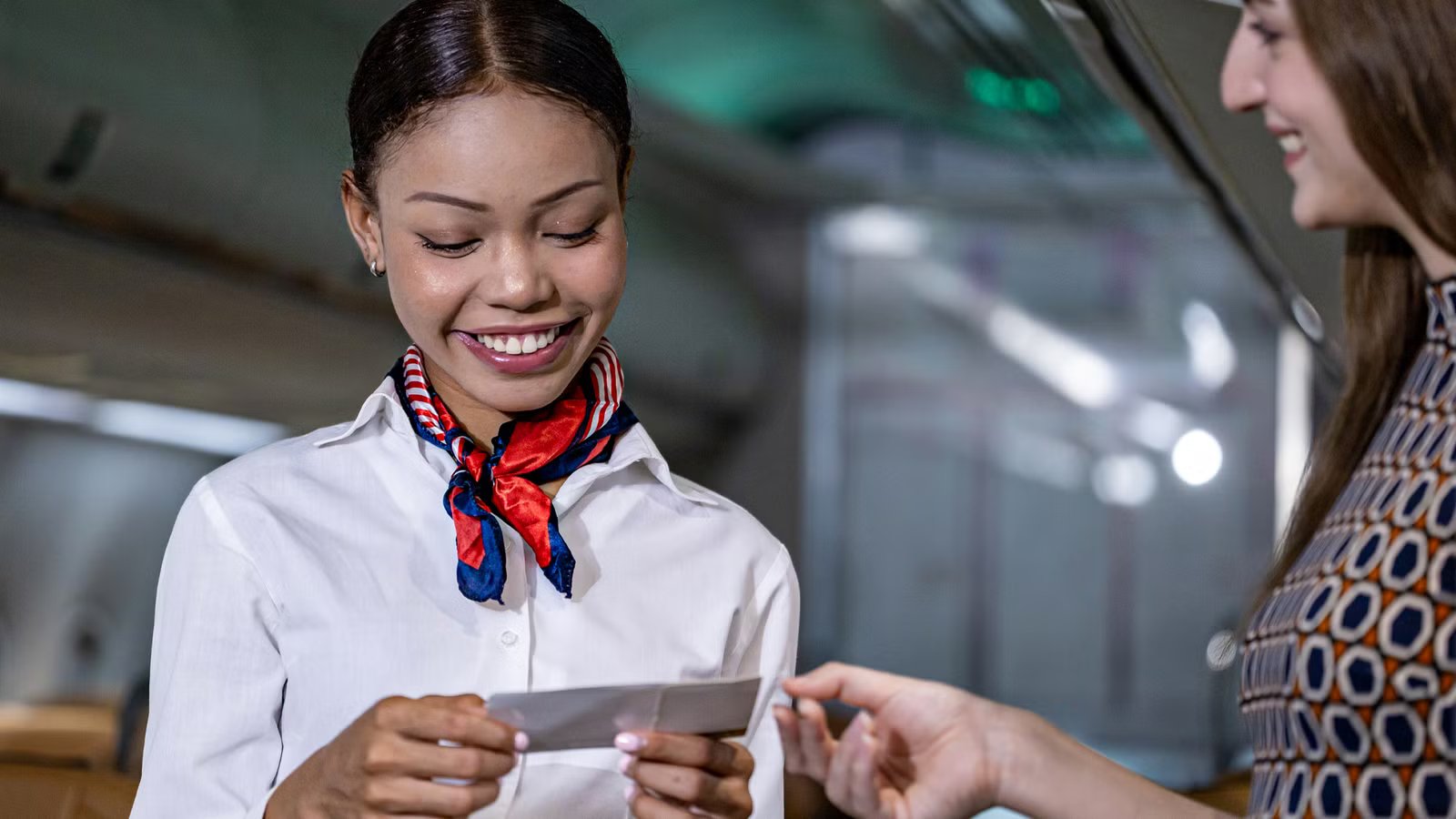
On every flight, passengers will notice the flight attendants at the door who greet them with a smile and check their boarding pass to see that they are on the correct flight. They will then be directed to their seat, and another flight attendant will assist with finding their seat and space for their baggage. This might seem like good customer service and setting the tone of the flight. After all, flight attendants are the face of the airline and wish to make a good first impression.
However, there is something much more going on during these brief moments that passengers are unlikely to be aware of. The flight attendants are actually assessing every passenger before takeoff for a number of things. It is a form of safety and security screening, a risk assessment if you will, to stop any potential issues prior to closing the door. In this article, we will take a look in more detail at the importance of this assessment and what flight attendants are actually looking for.
Fit To Fly?

One of the first things flight attendants will look for is whether a passenger is fit to fly, which could be in terms of sickness, if intoxicated, or potentially incapacitated. This means scanning a passenger from head to toe, looking for any visual clues about how they look, act, and respond to the crew, as well as anything unusual. They may have an injury or look sick, wear unusual clothing, or be wearing a lanyard or medical bracelet.
Flight attendants will note passengers who may require extra assistance, like passengers with reduced mobility, visually or audibly challenged, and those with injuries, such as a broken arm or leg. As noted by Daily Passport, those with hidden disabilities indicated by sunflower lanyards may need extra help and assistance. Nervous passengers will also be noted and kept an eye on, and given extra reassurance before and during the flight. Unaccompanied minors also have to be carefully looked after.
They will also watch for anyone with visible signs of illness during the boarding process. As it is an enclosed environment, diseases that can be easily transmitted are not ideal, like measles, COVID-19, and norovirus. If a passenger is suspected of carrying a disease and passing it on during a flight, they can also be offloaded as a threat to others. Flight attendants are trained to deal with a medical emergency onboard, but if someone looks visibly ill before boarding, they can be offloaded.
Help In An Emergency

During the boarding process, flight attendants carefully study passengers in their assigned area. They are observing for any unusual behavior and those who may require extra assistance in an emergency evacuation. At the same time, they are subtly looking for those passengers who may be able to assist in an emergency. This may be a medical emergency or an emergency evacuation, for example. They are classified as able-bodied passengers (ABPs) or able-bodied assistants (ABAs), depending on the airline’s individual terminology.
They will look for passengers who are physically fit and able to help in an emergency. Typical profiles for ABPs include firefighters and police officers. Doctors and pilots, for example, are often listed by their title on the passenger information list, and therefore can easily be identified pre-flight in case assistance is needed. Off-duty flight attendants are sometimes listed too, or could be flying on staff tickets and already have safety training and know how to evacuate the aircraft.
ABPs or ABAs could be assigned roles such as opening a door if a crew member is incapacitated, helping passengers off the evacuation slide, and moving passengers away from the aircraft. These roles will be assigned in case of a planned emergency, for example, and are part of the flight attendant’s duties, and a mandatory 30-second review, sometimes known as the silent review, as noted by Global Air. Exit rows also have very specific rules about who can be seated there.
As such, Ground staff are informed of who can and cannot be seated there, but flight attendants double-check during boarding to ensure that suitable passengers are seated there. Passengers who cannot be seated there include the obese, those seated with an infant, children, pregnant, have a disability or injury, among other things. As an extra measure, flight attendants will brief passengers on the use of the exit, check that they speak English, and that they are willing to follow the crew’s instructions.

Why Do Airlines Turn Off The Cabin Lights During Takeoff And Landing?
This practice ensures that passengers are better prepared during an emergency.
The Rise In Disruptive Passengers

Almost every day, a new video appears online showing passengers being disruptive in the cabin, which can mean fighting, being rude, or not following the crew’s instructions. Many of these are caused by passengers being intoxicated, taking prescription medicine, or both, or an in-flight dispute. During boarding, it is important to observe for any potentially disruptive behavior that could include a passenger who is drunk, drugged, aggressive, or rude.
Wherever possible, problems should be stopped before they start, especially when they can occur at 36,000 feet. It is not only an inconvenience to everyone on board, but it can also threaten the safety of a flight. Other passengers or crew members may get hurt too; the disruptive passenger may be restrained, and a diversion will be necessary to offload the passenger. As such, if the crew spots a potential issue on the ground, it is better dealt with there and then.
Since the global pandemic, the number of disruptive passengers has risen considerably. To combat this rise since 2021, the FAA brought in fines for disruptive passengers that range from $15,000 to $100,000. US airlines logged over 2,100 unruly passenger cases in 2024. In the same year, the Irish Aviation Authority recorded 1,432 events, and Switzerland’s Federal Office of Civil Aviation reported 1,730. Since the FAA’s zero-tolerance and fine system came into play, the number of disruptive passengers has reduced.
A Definitive Process

A viral TikTok by a TUI flight attendant (@MrsMiva) recently talked about this screening process during boarding and what cabin crew are really looking for. The video has amassed over 1.8 million likes and 2473 comments and sparked widespread discussion about the true nature of the boarding greeting, according to The Mirror. Let’s look at this in more detail and at why such interest occurred.
Screening during boarding is a standard airline procedure, and one that is identified in our manuals, training, and everyday life experience. Each airline may have its own protocol for what they specifically look for, and this will be specified during training and updated as necessary. This may reflect societal issues or current trends in disruptive behavior. It may also differ depending on the airline and where they fly to. Some regions may be associated with specific issues.
The sources linked in this article confirm that the primary purpose of the boarding greeting by flight attendants is a safety and security visual assessment. It is also based on personal experience as a flight attendant myself. It is designed to look for intoxicated or aggressive individuals, those who are sick, and those needing assistance. It is also necessary to look for ABPs to help in case of an emergency. Although it can also be considered common knowledge, not every aspect of such airline procedures can be discussed fully in a public arena.

The Safest Seats On A Plane To Survive A Deadly Crash
Experts have analyzed whether seats such as the exit row, the aisle, the middle, and the window have higher survivability rates.
Other Hazards In The Cabin

During boarding and also when securing the cabin, the flight attendants will also notice clothing or items that may damage the evacuation slide. This could include high-heeled shoes, spiky jewelry, and anything in a person’s possession that may have a sharp edge. Clothing that may cause offense or be inappropriate should be avoided on an aircraft. This can include curse words, inappropriate images, or simply wearing skimpy clothing. In these cases, it is permissible that the passenger may be asked to change their clothing or cover up with a blanket.
During the safety demonstration, flight attendants will note if passengers are not watching, talking to others, or playing with their phones or wearing headphones. Those who do not watch it are less likely to be compliant and follow crew instructions, but also will be less likely to know what to do if an emergency should occur. It only takes a few moments of a passenger’s time and could save their lives or those of others.
There are also other issues and behaviors that are noted during flights. These are related to issues such as human trafficking and the smuggling of drugs. Flight attendants are specifically trained to notice any strange or suspicious behavior. Any suspected issue will be reported to the captain, and assistance will be sent to meet the aircraft on landing. Passengers also cannot drink their own alcohol on the aircraft. It is illegal and will be confiscated by the crew until disembarkation.
The Bottom Line

Boarding is a very important time for flight attendants to assess passengers and make risk assessments. This may include potentially disruptive passengers, those who are sick and unfit to fly, and issues such as drug smuggling and human trafficking. They are also looking for those who can help in an emergency and those who would need extra assistance during the flight, or should an emergency situation occur. They mentally map where those passengers are in their section of the aircraft.
If a passenger is seated on an exit row but is not physically able to open an exit door, they must be moved to another seat and replaced by a passenger who can open an exit and is willing to do so. Passengers who do not watch the safety demonstration or follow crew instructions are likely to be noncompliant in an emergency or not know what to do, and they will be noted by flight attendants working in their area.
Flight attendants always plan for a safe and efficient flight, and early detection of potential issues can help. If a passenger is visibly sick, intoxicated, medicated, or aggressive or abusive, they can be removed from the flight prior to takeoff. In turn, stops problems before they start, which can result in someone being harmed, flight diversions, and costs incurred. This screening can result in real-time seating adjustments or passenger removal before the cabin door closes, therefore an effective airline practice.