dailynewsnblog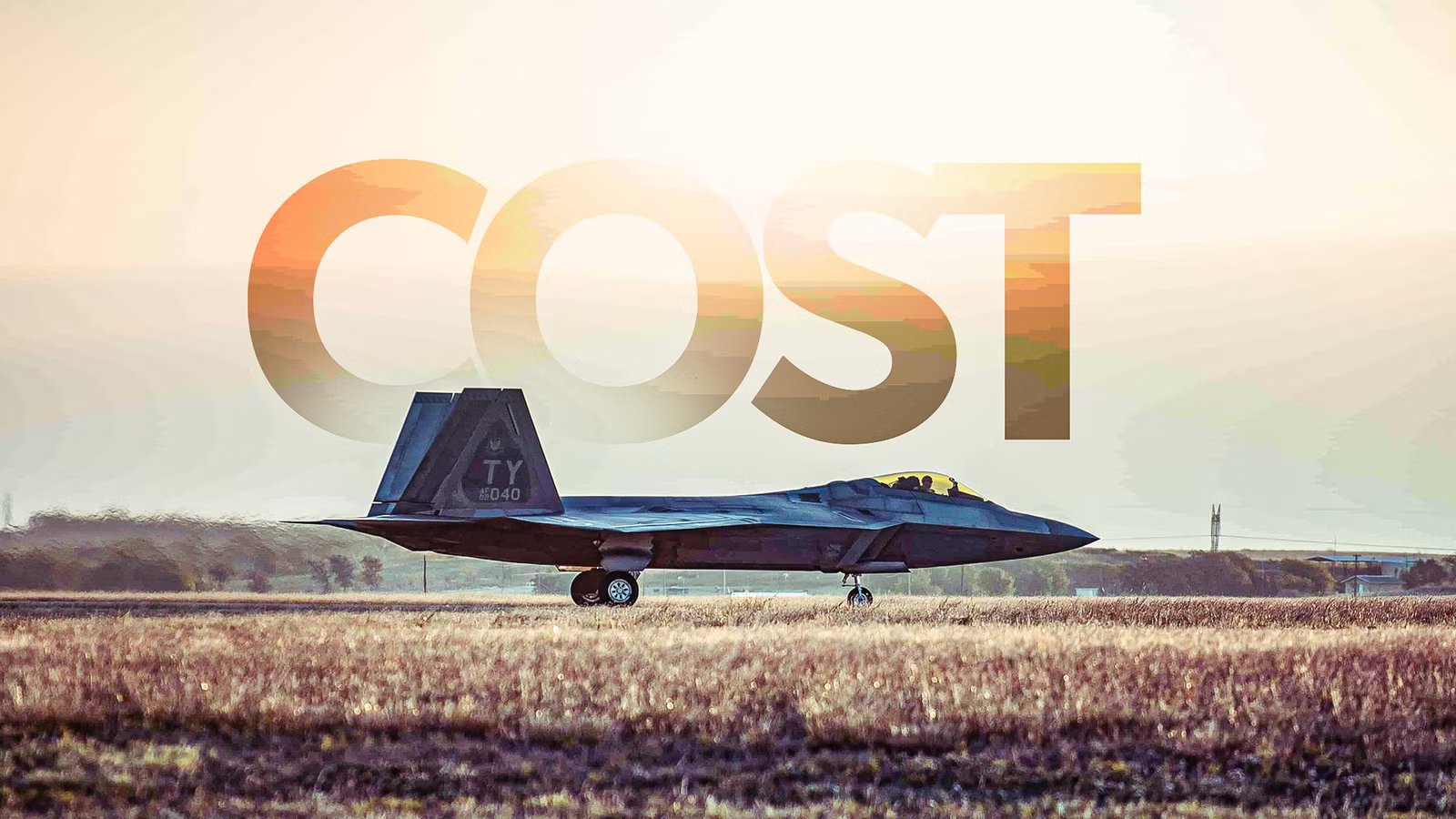
The Lockheed Martin F-22 Raptor costs roughly $70,000 to $90,000 per flight hour in 2026, with most estimates landing close to $80,000–$85,000 per hour when full operating costs are included. That makes it one of the most expensive fighter jets in the world to operate, which is significantly higher than aircraft like the Lockheed Martin F-35A, which is typically listed at around $42,000 per hour based on US defense cost data and analyses such as those compiled by MilitaryMachine. The real reason behind the F-22’s high operating cost lies in its design: stealth coatings that require constant upkeep, powerful twin engines, and maintenance demands that go far beyond conventional fighters. Drawing on maintenance-focused breakdowns from FlyAJetFighter and publicly available defense data, these factors explain why the aircraft remains expensive to operate even decades after entering service.
We will break down five key points in our article: the real cost per flight hour, what that figure actually includes, the main cost drivers, how the F-22 compares to other fighters, and why different reports often show very different numbers. For our readers, the question is particularly relevant, as the F-22 continues to play a central role in the US Air Force’s air superiority strategy despite its high operating cost.
What Is The Real Cost Per Flight Hour Of The F-22 Raptor In 2026?

The F-22 Raptor costs roughly between $70,000 and $90,000 per flight hour in 2026, with many estimates clustering around $80,000 per hour when full operating costs are included. This figure comes from various defense cost reports and aviation industry analyses that calculate the Cost Per Flying Hour (CPFH), which includes fuel, maintenance, workforce, and spare parts. Some simplified estimates may show lower numbers, but these often exclude long-term maintenance and overhaul costs. When those are included, the F-22 becomes one of the most expensive fighter aircraft in the world to operate.
Earlier estimates from the 2010s often placed the F-22 cost per flight hour at around $60,000–$65,000. However, as the fleet aged and maintenance requirements increased, operating costs rose significantly. According to some aviation cost analyses and defense budget data summarized by military aviation sources such as FlyAJetFighter, the cost increased over time due to aging airframes, expensive stealth coating maintenance, and the need for specialized spare parts that are no longer in full production.
It is also important to understand that the F-22 fleet is relatively small compared to aircraft like the Lockheed Martin F-16 or F-35, which increases the cost per aircraft because logistics, training, spare parts production, and maintenance infrastructure are spread across fewer aircraft. Economies of scale play a major role in military aviation costs, and the F-22 program ended at only 187 operational aircraft, which significantly increased long-term operating costs per aircraft and per flight hour.
Why Does The F-22 Cost So Much To Operate?

Several factors influence the F-22’s cost per flight hour, and understanding these is essential to understanding why the number is so high. The aircraft is not expensive simply because it burns a lot of fuel. The main cost drivers include:
-
Fuel consumption: The F-22 uses twin
Pratt & Whitney
F119 engines, each capable of producing over 35,000 pounds of thrust. While the aircraft is designed for supercruise (sustained supersonic flight without afterburner), fuel burn still increases significantly during high-performance maneuvers and especially when afterburners are engaged. Mission profile plays a major role here: training sorties with limited afterburner use consume far less fuel than combat training involving sustained supersonic flight, which can rapidly drive up hourly costs. - Stealth maintenance: One of the defining features of the F-22 is its radar-absorbent material (RAM) coating, but this is also one of its biggest cost drivers. The stealth coating is sensitive to heat, weather, and aerodynamic stress, meaning it must be regularly inspected, repaired, and in some cases reapplied after flights. Even minor surface imperfections can affect radar signature, requiring meticulous and time-consuming maintenance in controlled environments, which adds significantly to operating costs.
- Maintenance hours per flight hour: The F-22 has historically required a high number of maintenance hours for every hour flown, particularly in its early years, when estimates exceeded 30 maintenance hours per flight hour. While reliability improvements have reduced this ratio, the aircraft still demands intensive inspections and servicing due to its advanced systems and stealth requirements. These maintenance hours translate directly into labor costs, downtime, and increased logistical complexity.
-
Spare parts: Many F-22 components are expensive and difficult to manufacture, partly because the aircraft is no longer in production and uses specialized, low-volume parts. Advanced
avionics
, sensors, and stealth-related components often require custom manufacturing or refurbishment rather than simple replacement. This limited supply chain increases both the cost and lead time for spare parts, which in turn raises the overall cost per flight hour. - Workforce: Maintaining the F-22 requires a highly specialized workforce trained in stealth materials, advanced avionics, and fifth-generation fighter systems. Unlike older aircraft, where maintenance procedures are more standardized, the F-22 demands technicians with specific expertise and certifications. This increases labor costs and limits flexibility in maintenance operations, as fewer personnel are qualified to work on the aircraft.
-
Aging fleet costs: With the F-22 fleet now over two decades old, age-related maintenance is becoming an increasingly important factor. Older airframes require more frequent inspections, structural checks, and component replacements to ensure safety and performance. Fatigue on critical structures, obsolescence of certain parts, and the need for modernization upgrades all contribute to rising operating costs as the fleet continues to age.
When these factors are combined, they create a cost structure where maintenance and sustainment dominate overall spending. Conceptually, fuel may account for roughly 15–20% of the total cost per hour, while maintenance labor, spare parts, and stealth upkeep together represent the majority. Additional costs, such as engine overhauls, structural programs, and logistics support, further increase the long-term average. This distribution highlights a key point: the F-22 is expensive not because it flies, but because of what it requires before and after each flight.
6 Aircraft That Represent The Future Of Air Combat
Discover six aircraft redefining modern air warfare, from stealth fighters to missile trucks, shaping the balance of air power in 2026 and beyond.
Expert Insights On F-22 Operational Costs
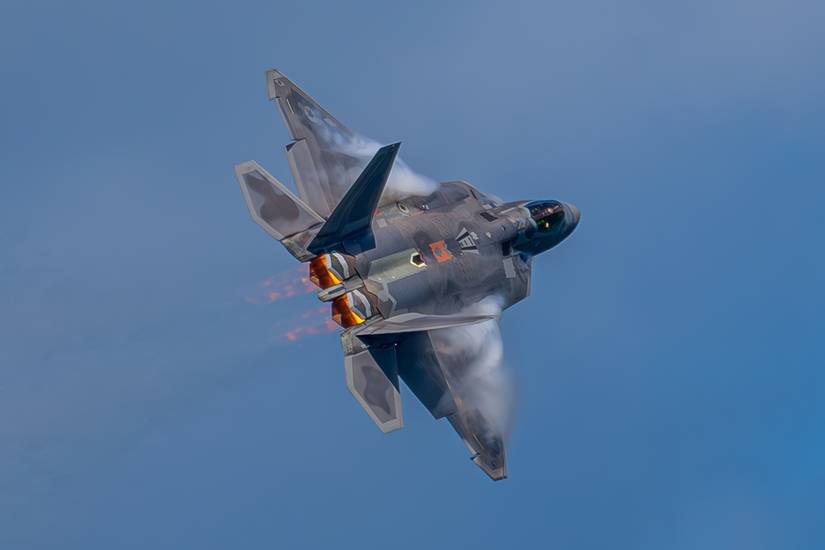
Experts and maintenance professionals stress that the published $80,000-per-hour figure for the F-22 is best understood as an average accounting tool, not the literal cost of a single flight. It represents the total lifecycle expense, fuel, labor, spare parts, inspections, and long-term overhauls, spread across the aircraft’s operational life. This perspective is essential for understanding why cost-per-flight-hour numbers can differ so widely between sources and reports. Maintenance discussions, including insights from professional forums like Reddit’s aviation community, highlight that many high-cost items occur infrequently. Engine overhauls, structural inspections, and stealth-coating refurbishments happen only after dozens or even hundreds of flight hours. Averaging these infrequent but expensive events across all flight hours gives planners a realistic long-term cost picture, even if the immediate expense for a single training sortie is far lower.
From a practical standpoint, this means that while the F-22 is extremely expensive to maintain overall, mission planning and flight type heavily influence immediate operating costs. Training flights or short-range sorties may cost far less than combat-readiness missions, yet the average cost per flight hour is a key metric for budgeting, force management, and evaluating cost-effectiveness over decades of service. Experts emphasize that understanding this distinction is critical for policymakers and aviation planners, who must balance the aircraft’s extraordinary capabilities with its substantial sustainment demands.
How Does The F-22’s Cost Per Flight Hour Compare To Other Modern Fighters?

To understand the F-22’s operating cost, it is essential to compare it with other modern fighter aircraft using verified cost-per-flight-hour estimates. The F-22 is not the only expensive fighter jet, but it consistently ranks among the most costly to operate. According to a recent MilitaryMachine article citing Government Accountability Office data, the F-22 costs approximately $85,325 per flight hour, placing it well above most other Western fighters. For example, the F-35A is widely cited at around $42,000 per flight hour, a figure referenced in multiple defense summaries and industry analyses. Meanwhile, aircraft like the F-16 are estimated at roughly $22,000–$27,000 per hour, depending on mission and configuration, while the F-15 family typically falls in the $30,000–$40,000 range. European fighters follow a similar pattern: aircraft such as the Dassault Rafale are often estimated at between $15,000 and $22,000 per hour, depending on mission intensity and accounting method. What becomes clear from these figures is that stealth aircraft, especially early-generation stealth platforms like the F-22, carry a significant cost penalty. As highlighted in technical breakdowns, stealth coatings, specialized materials, and complex maintenance procedures dramatically increase lifecycle costs compared to conventional fighters.
Taken together, this comparison shows that the F-22 can cost roughly two to four times more per flight hour than many non-stealth fighters. The reasons are consistent across sources: stealth maintenance requirements, twin high-performance engines, advanced avionics systems, and the relatively small fleet size, which drives up logistics and spare parts costs per aircraft. In fact, the limited production run, fewer than 200 aircraft, has been identified as one of the primary drivers of higher operating costs due to reduced economies of scale. As a result, the F-22 is typically reserved for high-end air superiority missions and strategic deterrence roles rather than routine patrols, which are instead handled by more cost-efficient platforms.

Shutterstock | Simple Flying
The Striking Differences Pilots Notice Between The F-35 Lightning II & F-22 Raptor
Explore how F-22 vs F-35 cockpit design, helmet tech & VTOL shape radically different pilot experiences in modern stealth fighters.
Why Do F-22 Operating Costs Vary So Widely Between Reports?
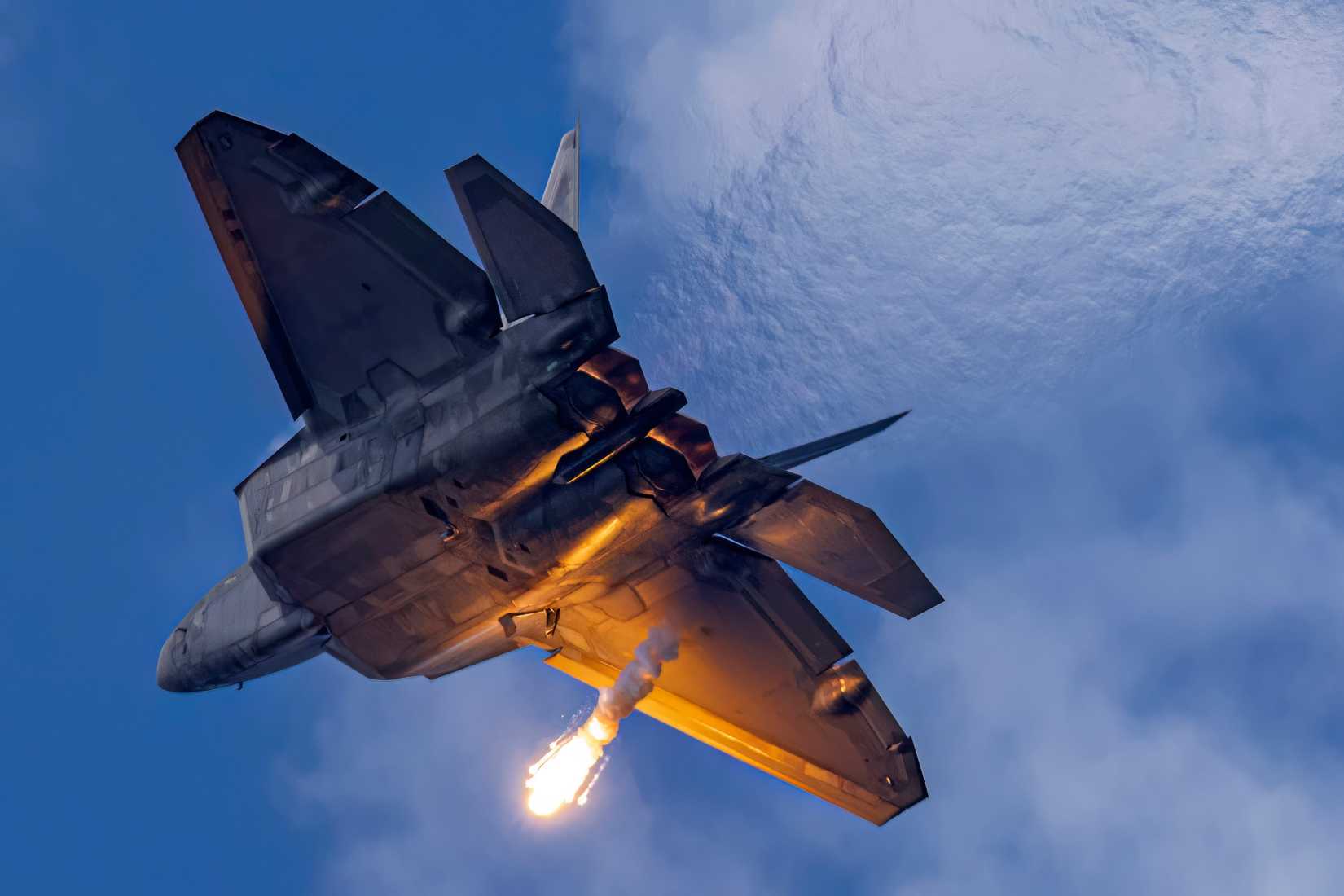
One of the main reasons F-22 operating cost estimates vary so widely is that different reports use different accounting methods to calculate cost per flight hour. As previously examined, US Department of Defense terminology metrics such as Cost Per Flying Hour (CPFH) include fuel, maintenance, workforce, and spare parts, while more comprehensive calculations may also incorporate long-term overhaul programs and lifecycle sustainment costs. As highlighted in analyses from platforms such as MilitaryMachine, some estimates place the F-22 at over $85,000 per hour when full operational costs are included, while lower figures often exclude deeper maintenance and long-term support expenses. This creates a wide spread in reported numbers depending on methodology. According to maintenance-focused analyses such as those published by FlyAJetFighter, stealth aircraft like the F-22 require particularly intensive post-flight inspections and repairs after demanding sorties, which drives up the average cost per hour over time.
Ultimately, these variables explain why different reports can present significantly different cost figures for the F-22. Some analyses focus on marginal operating costs, such as fuel and routine maintenance, while others include full lifecycle expenses, from spare parts inventories to long-term modernization and overhaul programs. Aircraft age further complicates the picture, as older airframes typically require more maintenance and inspection time.
What’s The Overall Takeaway?

So, how much does an F-22 Raptor cost per flight hour in 2026? The most realistic estimate is around $80,000 per flight hour, with typical estimates ranging between $70,000 and $90,000 depending on how costs are calculated. The high cost is driven primarily by maintenance, stealth coating upkeep, spare parts, and manpower rather than just fuel consumption. Despite its high operating cost, the F-22 remains one of the most capable air superiority fighters ever built. Its stealth, supercruise capability, advanced avionics, and maneuverability make it extremely effective in air combat, which is why the US Air Force continues to operate and upgrade the aircraft rather than retire it early. In the future, newer aircraft programs such as next-generation fighters are being designed with operating cost in mind as much as performance. The experience with the F-22 has shown that building the most advanced fighter in the world is only part of the challenge — operating it affordably over decades may be even more important.