dailynewsnblog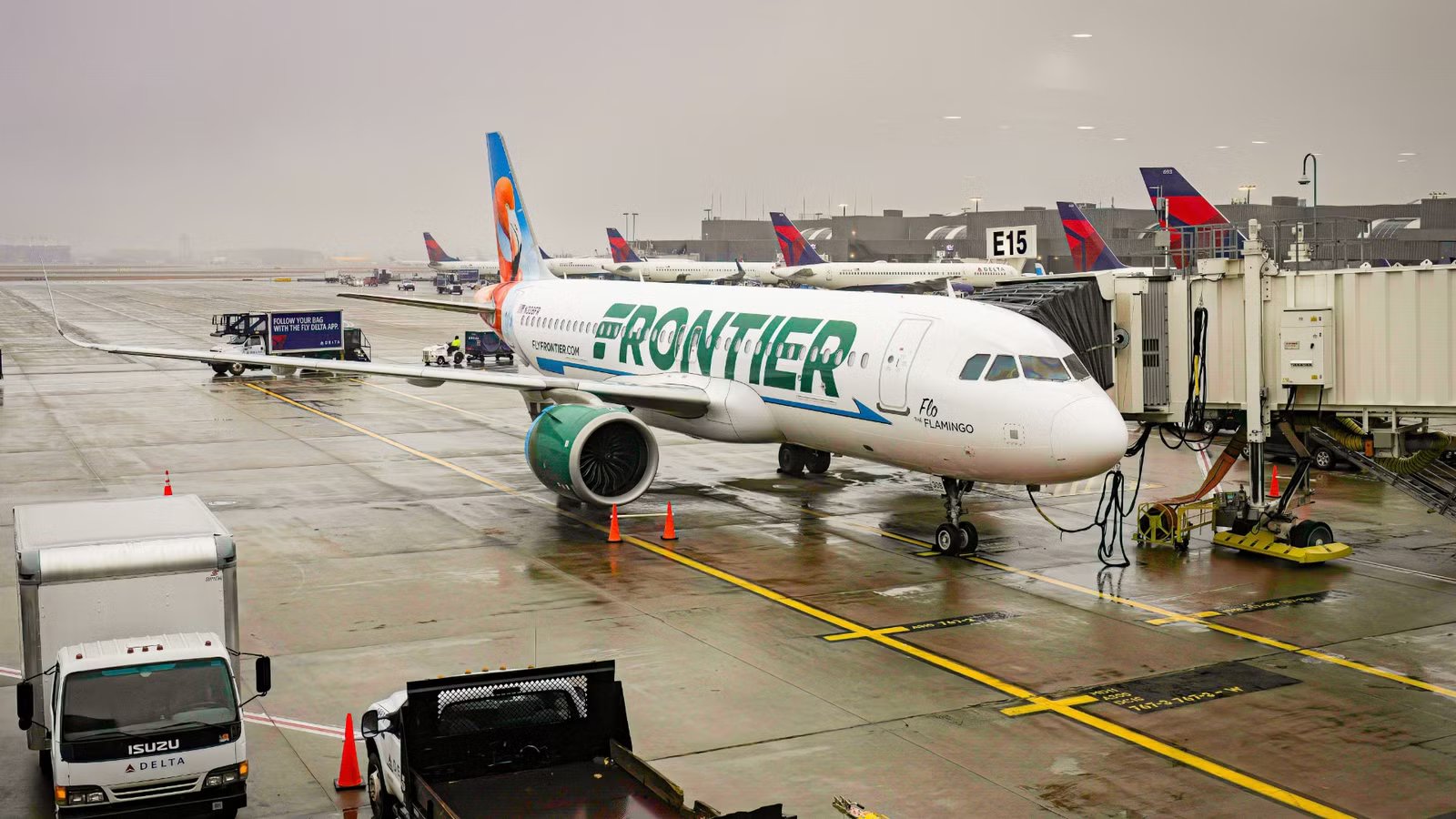
A Frontier Airlines flight from  Detroit Metropolitan Wayne County Airport (DTW) to
  Hartsfield-Jackson Atlanta International Airport (ATL) was forced to divert to Knoxville, Tennessee, after severe weather disrupted operations at its intended destination, leaving passengers stranded overnight. The aircraft landed at
  McGhee Tyson Airport (TYS) on Friday, but the crew subsequently reached its legal duty limit before the flight could continue. As a result, some passengers were stranded in Knoxville while the airline arranged transportation to their destinations.
The incident shows how a weather disruption can quickly become a much larger operational problem when an aircraft and its crew are displaced from their planned schedule. Although the initial diversion was weather-related, the subsequent crew timeout created a separate challenge for Frontier and its passengers. Crew-duty limitations are an important safety requirement, meaning pilots cannot continue operating once they reach their legally permitted working limits.
Weather Diversion Leaves Frontier Passengers Stranded

The Frontier flight was diverted to Knoxville after weather prevented it from completing its planned journey to Atlanta, according to the local channel WBIR. Historical details of the same Frontier operating pattern illustrate how diversions into Knoxville can create significant logistical problems when the aircraft is not scheduled to serve the airport. In the documented 2015 case discussed on Travel StackExchange, a Frontier flight from  Denver International Airport (DEN) to Atlanta was similarly diverted to McGhee Tyson due to the bad weather, and the crew later ran out of legal flight time.
Once a crew reaches its duty-time limit, the airline cannot simply ask the pilots to continue flying. Federal flight and duty-time regulations are designed to ensure that pilots receive sufficient rest and are not required to operate aircraft while excessively fatigued. For passengers, however, the result can be particularly frustrating, as a weather diversion can effectively become an overnight delay or cancellation when the crew becomes unavailable.
The situation can be especially difficult at an airport where an airline has limited or no operational infrastructure. Frontier had temporarily suspended its scheduled service at McGhee Tyson Airport in August 2026, with the carrier’s final scheduled Knoxville-Denver flight planned for August 17.
A Frontier spokesperson said the following, as shared by Yahoo News:
“Yesterday, flight 3409 from Detroit (DTW) to Atlanta (ATL) was forced to divert to Knoxville due to weather in Atlanta, and was subsequently forced to cancel due to legal time constraints. Passengers are receiving $150 vouchers for ground transportation to their final destination, and were offered hotel vouchers upon request. We regret the inconvenience this has caused and, as a customer service gesture, are also issuing each passenger $100 Frontier vouchers for future travel.”
Why Crew Duty Limits Complicated the Situation

Weather diversions are routine in airline operations, especially when thunderstorms, low visibility, or other severe conditions make an airport temporarily unsuitable for arrivals. Crews may hold, divert to an alternate airport, or wait for conditions to improve, but every decision must consider remaining fuel, the weather forecast, and crew duty limits. Once an aircraft lands at a location other than its planned destination, the airline must also determine how to reposition the aircraft, crew, and passengers.
For Frontier, a low-cost operating model can make irregular operations particularly challenging. Unlike a major connecting hub with substantial airline staffing and multiple spare aircraft, an outstation may have limited resources available when something goes wrong.
Previous Frontier disruptions, like the one in Cleveland in 2016, have similarly left passengers stranded at airports after crews reached their legal operating limits.
The distinction between the original weather problem and the later crew timeout is also important. Weather is generally considered outside an airline’s control, while crew availability is an operational consideration that airlines must manage within the constraints of aviation safety rules. Frontier’s own stated policies have historically distinguished between uncontrollable disruptions, such as weather and air traffic control restrictions, and controllable operational problems.
Knoxville Diversion Highlights Frontier’s Operational Challenges

The Knoxville incident reminds us that reaching an alternate airport does not necessarily mean a disrupted flight is close to being resolved. An aircraft may require refueling, ground handling, and a new departure clearance, while the crew may simultaneously be approaching the end of its permitted duty period. Even when the weather improves, passengers may remain on the ground for hours because the original crew is no longer legally permitted to operate the flight.
McGhee Tyson’s changing relationship with Frontier also adds another layer. The airline announced in July that it would temporarily pause its regular Knoxville service, with no firm return date so far. For passengers stranded there due to an irregular operation, the absence of a normal Frontier schedule can make recovery considerably more complicated.
This episode demonstrates how several relatively ordinary airline problems can combine into a major disruption. A weather diversion can be unavoidable, but once an aircraft is displaced from its planned route, crew availability, aircraft positioning, and passenger reaccommodation all become critical. For affected Frontier travelers, what began as a weather problem ended in an unexpected overnight stay far from their intended destination.