dailynewsnblog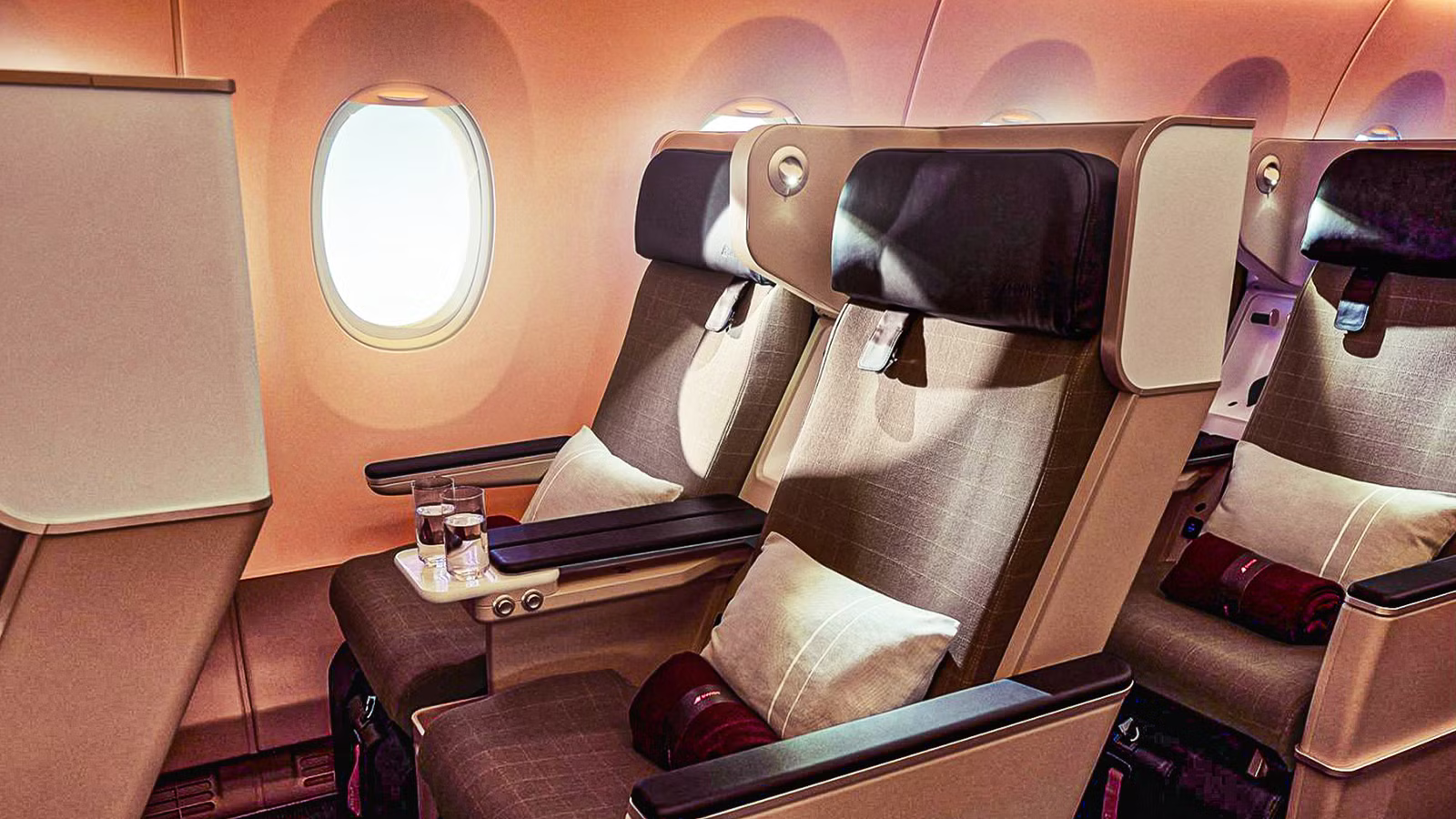
SWISS International Air Lines sees the future of transatlantic premium economy encapsulated within a fixed hard shell, prioritizing personal boundary protection while accepting a severe ergonomic trade-off in passenger legroom. As the carrier rolls out its new SWISS Senses cabin on the Airbus A350-900, the enclosure guarantees that no reclining neighbor will ever invade a traveler’s personal space, but the mechanism required to achieve zero-encroachment isolation extracts a steep price from taller flyers, creating an ergonomic compromise that competing global carriers have explicitly chosen to avoid.
The decision places SWISS in direct conceptual opposition to rival transatlantic operators like  Emirates and
  Air India, setting up a clear test of passenger priorities on long-haul sectors. The airline has selected ZIM’s fixed-back shell rather than traditional cradle recliners, holding the viewpoint that corporate travelers care more about unviolated workspace than traditional knee clearance. Whether long-haul passengers will accept restricted legroom in exchange for absolute privacy, only time will tell.
Even Space, But Not Too Much

SWISS introduced the hard-shell design as part of its Senses cabin overhaul across ten incoming A350-900 aircraft, which entered service on the Zurich (ZRH) to  Boston (BOS) route in late 2025. The 242-seat aircraft features a dedicated 38-seat premium economy cabin arranged in a 2-3-2 configuration across six rows. Within this dedicated space, every seat offers approximately 39 inches (99 cm) of pitch and 19 inches (48 cm) of width, paired with a 13.3 inches (34 cm) 4K QLED screen, wireless armrest charging, and Bluetooth audio pairing.
Choosing a fixed-shell structure allows SWISS to maintain consistent spatial boundaries across the entire 38-seat space. In a traditional cabin, a reclining passenger in one row immediately reduces the usable living space of the passenger behind by up to 8 inches (20 cm). By housing each seat inside a rigid composite shell, the distance between seat backs remains locked regardless of whether the flyer ahead is upright or fully reclined.
However, establishing boundaries between rows forces all recline motion to occur inward within the seat’s assigned area. It solves the problem of back-row encroachment, but it creates a secondary restriction that becomes immediately apparent once a passenger attempts to relax.
Cannot Cater To Every Preference

To recline within a fixed shell, the seat pan needs to slide forward and drop down while the seat back articulates downwards within the rigid composite casing. The shell back wall does not tilt backward into the row behind, so every degree of recline directly reduces the forward knee clearance between the passenger’s legs and the hard plastic structure in front of them. For travelers over six feet tall, sliding forward to achieve a recline angle eliminates vital legroom, pushing knees against the hard seatback structure or feet under the seat ahead.
The mechanical compromise extends to cabin usability as well. The manual adjustment controls built into the armrest require a noticeable effort to engage, placing mechanical levers at awkward angles for taller flyers trying to adjust their posture mid-flight. While the fixed structure provides absolute head and shoulder privacy via built-in headrest wings, the container restricts lower-body movement in ways that conventional aircraft seats do not.
This rigid spatial trade-off explains why passenger feedback remains sharply divided between those who value undisturbed laptop space and those who prioritize leg stretch. The issue for any airline, especially SWISS, that is going into a new era of long-haul luxury, trying to cater to all passenger preferences, is just not possible.
Competitors Thought Differently

Leading long-haul competitors have evaluated fixed-shell architecture and explicitly rejected it, opting instead for traditional cradle recliners like the Recaro PL3530. Both Air India and Emirates have selected Recaro’s platform for their flagship widebody fleets, prioritizing open knee clearance and deep recline over zero-encroachment isolation. These carriers argue that long-haul comfort depends on body extension rather than rigid perimeter containment.
Air India is installing the Recaro PL3530 across its international fleet with a 38-inch (97 cm) pitch, 7 inches (18 cm) of recline, and three-position articulating calf and leg rests, as reported by Aircraft Interiors International. Emirates takes the same Recaro seat frame further on its Airbus A380s, offering 40 inches (102 cm) of pitch, a 19.5 inches (50 cm) seat width, and 8 inches (20 cm) of deep cradle recline, as per Aerospace Global News. Instead of sliding the passenger forward into their own knee space, the Recaro seat pivots the entire seat bucket while tilting backward into the row behind, preserving lower-leg clearance at the expense of back-row personal space.
Carrier & Product Specs | Air India (Recaro PL3530) | Emirates (Recaro PL3530) |
Seat Architecture | Traditional Cradle Recliner | Premium Cradle Recliner |
Seat Pitch | 38 inches (97 cm) | 40 inches (102 cm) |
Seat Width | Standard widebody | 19.5 inches (50 cm) |
Recline Distance | 7 inches (18 cm) | 8 inches (20 cm) |
Leg Rest Type | Three-position calf rest | Articulating calf and footrest |
Tilt Type | Standard backward tilt | Deep backward tilt |
As a result of selecting the Recaro PL3530, Emirates and Air India cater to flyers who want maximum body extension during overnight flights, highlighting a fundamental split in global cabin design strategy. So if these airlines actively reject the fixed-shell seat type, then why is SWISS opting for it to lead its new generation flagship?
A Focus On Business Passengers

Selecting a fixed hard shell reflects SWISS’ main focus on high-yielding corporate travelers flying between Zurich and North American commercial hubs. On eight-hour daylight sectors like Zurich to Boston, corporate flyers see premium economy as a mobile office. For a passenger working on a laptop, a neighbor reclining backward can instantly crush an open laptop screen. Eliminating back-row encroachment entirely, SWISS guarantees that business travelers can maintain an open workspace throughout the flight.
This focus on workspace security aligns with broader Lufthansa Group business strategies across transatlantic joint venture routes. While leisure passengers prioritize sleeping comfort and knee room, business-budget travelers value predictable personal boundaries, quiet surroundings, and stable tray tables. The 39-inch (99 cm) pitch provides sufficient clearance when upright, allowing SWISS to position its A350-900 premium economy as a productivity-focused option between standard Economy and business class.
Reallocating cabin space around productivity highlights how different airlines define the purpose of premium economy on competitive long-haul routes. Emirates or Air India see it as a space for luxury and comfort above all else, whereas the likes of SWISS see it as a space for business travelers to continue working if they so desire.
The Global Passenger Experience Divide

SWISS’ adoption of the fixed shell on the A350-900 solidifies a growing divide in long-haul passenger experience. Travelers booking premium economy across the North Atlantic must now have a choice between two distinct environments. One of these is guaranteed workspace isolation with constrained knee room on SWISS, or generous leg clearance with variable back-row encroachment on carriers using Recaro recliners.
A practical comparison highlights the daily reality of this choice. On an overnight flight from Boston to Zurich, a six-foot traveler in the SWISS Senses cabin will have complete freedom from neighbor intrusion, but may struggle to find a natural resting posture as their knees meet the forward shell wall. Conversely, the same traveler on an Emirates or Air India flight will have deep leg support and 8 inches (20 cm) of recline, but will experience a significantly reduced living area when the passenger ahead tilts backward.
What this therefore means is that physical height and flight purpose make more of a difference than ever before when it comes to deciding which airline to choose, because ultimately, seat choice directly dictates long-haul comfort. Making the wrong choice can make or break a flight entirely, regardless of any soft product or additional benefits that may be included within the fare.
New Routes Coming Soon

SWISS’ hard-shell investment will be tested on long-term passenger retention once the A350-900 fleet expands across additional long-haul routes to Asia and Africa. As SWISS deploys the Senses cabin on routes to Shanghai and Johannesburg in late 2026 and 2027, booking patterns will reveal whether corporate flyers continue to favor workspace privacy over physical leg stretch.
If corporate satisfaction remains high on key business routes, SWISS’ fixed-shell configuration could pressure other Lufthansa Group hubs to standardize on rigid backshells for future widebody deliveries. Conversely, if tall flyers migrate toward competitors offering traditional cradle recliners, SWISS may have to go and adjust cushion thickness or recline articulation on future cabin retrofits.
Whether fixed-shell privacy becomes the standard for European carriers or remains a unique outlier, SWISS has drawn a clear line in the sky. As long-haul widebodies become increasingly segmented, the battle for mid-cabin supremacy will be decided not by lavish amenities, but by how airlines engineer the space around the passenger. Soft products are becoming ever less critical for passenger satisfaction, and now, getting the best seat is what airlines want.
Catch what other trackers miss
Emergency squawks, holds, NOTAMs — live signals, no signup.
Open tracker
Catch what other trackers miss
Emergency squawks, holds, NOTAMs — live signals, no signup.
Open tracker