dailynewsnblog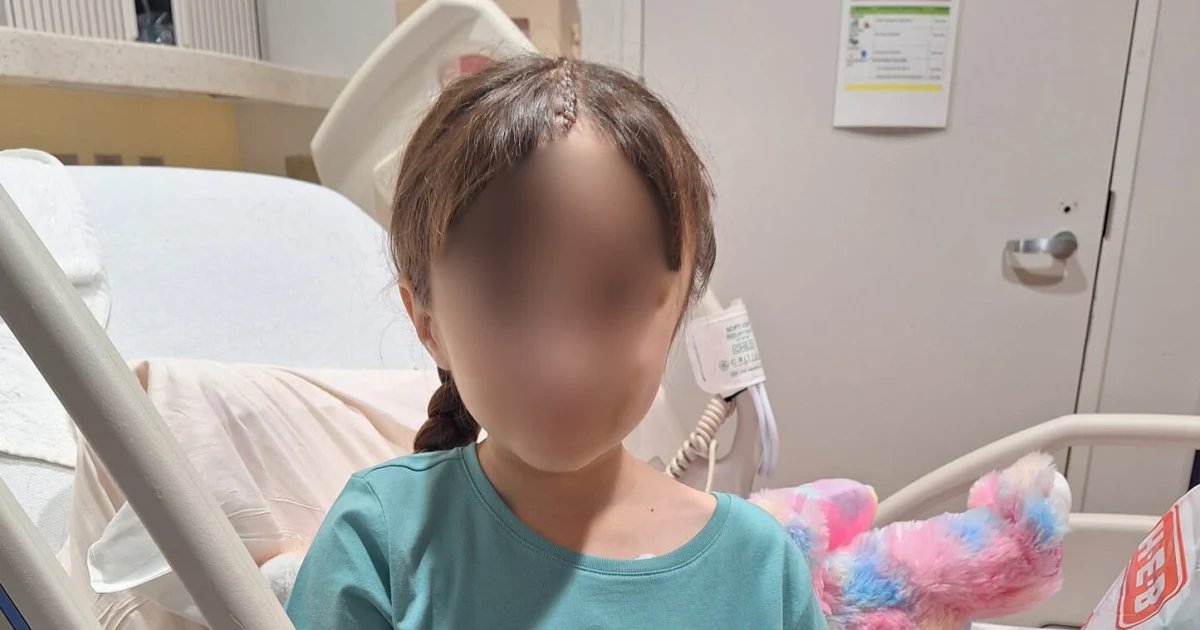
The deported mother of a U.S. citizen child who was recovering from a rare brain tumor recently found out she was denied a humanitarian request to return to the United States to continue her daughter’s specialized medical treatment.
Subscribe to read this story ad-free
Get unlimited access to ad-free articles and exclusive content.

It was not the answer she was hoping for after a more than 10-month wait.
“It was something very frustrating … and very difficult,” the mother said from Mexico in Spanish. “It felt like a bucket of boiling water — or maybe cold water, I don’t even know — was thrown at me.”
The child was 10 years old when immigration authorities deported both of her parents, who were undocumented, to Mexico more than a year ago. The girl and four of her siblings, three of whom are also U.S. citizens, also left with their parents.
NBC News is withholding the name of the mother and family members because they now live in an area of Mexico where U.S. citizens have been kidnapped.
Their removal interrupted months of lifesaving treatment the girl had been receiving in the U.S. after undergoing emergency surgery in 2024 to remove the brain tumor, which her doctors are still studying because it is so unusual.
Now 12, her health has significantly deteriorated since she started living in Mexico without access to the care she needs, her mother said in an exclusive interview with NBC News.
That reality became inescapable last month when her daughter had a seizure so intense she fell and suffered bruising, the mother said. They rushed to the nearest hospital, which was 2 1/2 hours away by car from where they live with the mother’s elderly parents. There, an MRI and tests returned abnormal results, the mother said.
The girl’s specialist doctors in the U.S. told the mother the results show the girl’s brain is not regenerating, an important part of recovery that helps restore lost neurological functions such as motor skills and speech. It also reduces the likelihood of a new tumor forming, she said.
“Instead of improving, my daughter’s health is actually regressing,” the mother said.

Since that episode, the girl suffers frequent muscle spasms, especially in her partly paralyzed right arm, according to her mother. When the twisting pain intensifies, it reaches her shoulder and is so intense she can barely sleep. Dizziness and headaches have also become more recurrent.
Her daughter “lives with her hand clenched shut, in pain,” the mother said. The girl is also growing increasingly more terrified as she feels her condition worsening.
Throughout April, the family received three separate refusal letters — for the mother, the father and one noncitizen sibling — that did not specify why they were denied. Denial letters customarily do not give cause.
A spokesperson for U.S. Citizenship and Immigration Services, the agency that processes humanitarian parole applications, told NBC News that “ICE has jurisdiction” over parole decisions for previously deported people. ICE did not respond to a request for comment.
“As a parent, I want to move heaven and earth to help her,” the mother said. “But receiving the news that it couldn’t be done, that everything had been denied, and on top of that, getting the news that my daughter wasn’t doing well … it was even more stressful.”
A mother’s care — and worries over what’s next
The mother said she hasn’t found a medical provider in the part of Mexico where she lives willing to take on her daughter’s case, because they’re worried they can’t get a comprehensive understanding of the girl’s medical history.
Further limiting her options is the fact that her daughter is not medically cleared to travel by plane due to her condition, the mother said.
Medical records obtained by the family’s attorney as part of their efforts to obtain humanitarian parole say the girl’s brain tumor was caused by an “unnamed ‘novel’ condition.” In addition to treating the girl, her specialist doctors are also studying the tumor to better understand what caused it and tailor her treatment accordingly. This means that few medical specialists can effectively treat and monitor the girl’s condition.

Additionally, the mother said, the girl was dependent on a team of therapists. Without that support, all the skills the girl had managed to gain back after the surgery such as writing, speaking in complete sentences and improving her memory have “now been completely lost,” the mother said. “At this point, her mental capacity is practically that of a 7- or 8-year-old child.”
Without care from her medical team in the United States, the burden of her daughter’s recovery has fallen solely on the mother, who once was a rehab technician and a certified nursing assistant.
“Thank God, all of that training has been of immense help to me,” the mother said. “But that can’t make up for all the resources I’m missing like having the right equipment, a special education teacher who can help her with school, and nearby hospitals in case of an emergency. I don’t have any of that here.”
Because the girl often struggles to voice the symptoms she is feeling, the mother said she keeps a watchful eye over her daughter 24/7, even during her sleep. She added that no one else in the U.S. could give the girl the constant care she needs — not even the girl’s oldest brother, also a U.S. citizen, who remained in the country by himself after the family’s deportation.
“My daughter never leaves my side. It would be extremely detrimental to her, in every respect, if I were separated from her,” the mother said, adding she doesn’t think the girl would be able to understand that or handle it well.
The mother said she is “so proud of” her eldest son, who is 19, and acknowledged he already “sacrifices a lot.” After finishing high school while living on his own, he has worked multiple jobs over the past year to help him afford the anti-seizure medication he sends for his sister every couple of weeks.
He also attended the State of the Union address in February as the guest of Rep. Adriano Espaillat, D-N.Y., who is among the Congressional Hispanic Caucus members who visited the family in Mexico and wrote letters of support accompanying their humanitarian parole applications.

Since the applications were denied, the young man is working with the Texas Civil Rights Project, a legal advocacy and litigation organization that has supported and represented the family since they were deported, to figure out what he can do next to continue advocating for his family’s return.
Attorney Danny Woodward of the Texas Civil Rights Project said the family can reapply for humanitarian parole down the line. But the process is costly, and because it costs more than $1,000 per application, Woodward said it is important to be strategic. For now, they are focusing on doing outreach to members of Congress from across the aisle and continue garnering more support for the family, he said.
A hospital trip — followed by a deportation
NBC News has followed the family’s yearlong struggle to return to the U.S. since Feb. 3, 2025, when Border Patrol officers detained them at a mandatory immigration checkpoint near the Rio Grande Valley in Texas, where they lived.
On that morning, their then-10-year-old daughter woke up dizzy, with headaches and body pain. Worried the symptoms signaled setbacks in her recovery from her rare brain tumor, her parents piled their children — now ages 17, 14, 12, 10 and 8 — into a car and rushed to the Houston hospital where the girl had been receiving treatment.
More coverage on this family
The family had successfully passed through the same checkpoint several times before, Woodward said. They would present letters from the Houston hospital and from an immigration attorney, as well as the children’s birth certificates.
In February of last year, however, the family never made it to the hospital. Instead, the entire family was put in an immigration holding facility before being loaded into a van and driven to Mexico the following day.
“This is a family with no criminal record,” Woodward said.
According to the Department of Homeland Security, immigration officials were enforcing “expedited removal orders” previously placed on the parents, stating that when someone “chooses to disregard them, they will face the consequences.”
Rochelle Garza, president of the Texas Civil Rights Project, said they were “one of the first families that was separated and deported this way under the new administration.”
DHS has said it doesn’t deport American children. It instead asks deported parents whether they prefer to be removed with their U.S. citizen children rather than be separated.
Humanitarian parole was one of their last options to return to the U.S. for the girl’s treatment.
An NBC News analysis of data from USCIS found that the number of denials of humanitarian parole applications more than doubled during the first nine months of President Donald Trump’s second term compared to the last year of the Biden administration.
From January to September 2025, according to the most recent publicly available data, the Trump administration denied about 14,500 humanitarian parole applications and approved close to 1,400. The Biden administration denied 5,122 humanitarian parole applications and approved 3,935 during its last year.
Even though fewer new applications were being filed under Trump, the rate of denials grew, the data shows. As of Sept. 30, there were 32,013 pending humanitarian parole applications, and waiting times are up, averaging between six and 15 months.
USCIS did not comment on the findings, but it has previously said that the agency has been working to stop “broad abuse of humanitarian parole authority” as well as terminating various types of family reunification and parole programs over the past year.
“Parole was never intended to be used in this way, and DHS is returning parole to a case-by-case basis as intended by Congress,” the USCIS 2025 end-of-year review document says.
Meanwhile, the girl has celebrated two birthdays since being sent to Mexico. The birthdays are bittersweet, the mother said. While they mark “another year of life” since her daughter survived emergency brain surgery, they are also a reminder of the limited options she has left.
“We’re talking about a vulnerable U.S. citizen child who cannot come into the country without her parents and her family to get the care that she needs,” Garza said.