dailynewsnblog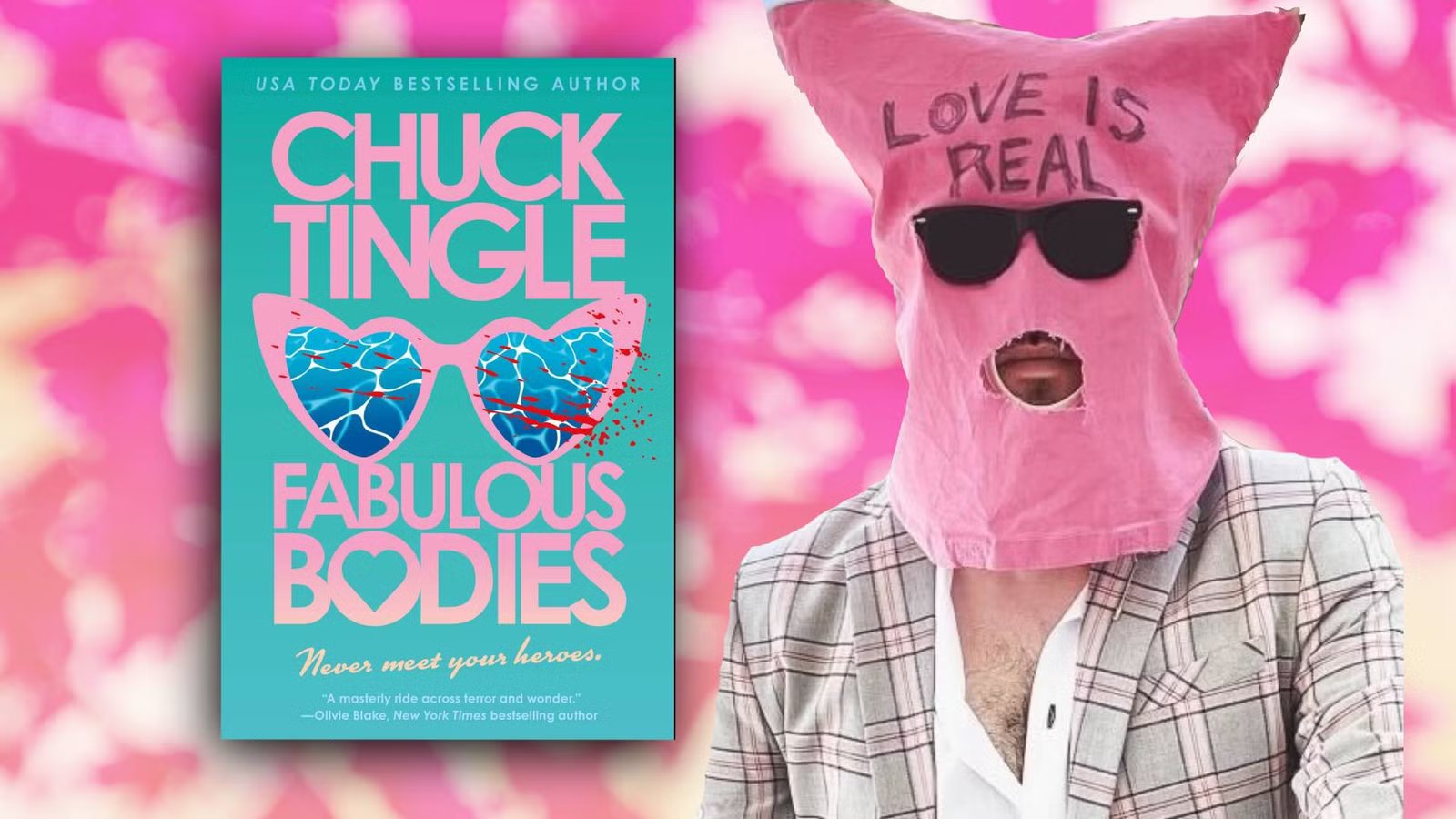
While he cut his teeth writing absurdist and satirical gay erotic fiction such as Pounded by President Bigfoot and I’m Gay for My Billionaire Jet Plane, Chuck Tingle — his true identity kept secret from readers behind sunglasses and a pink mask that reads “Love Is Real” — has since proven himself to be a talented and prolific horror writer.

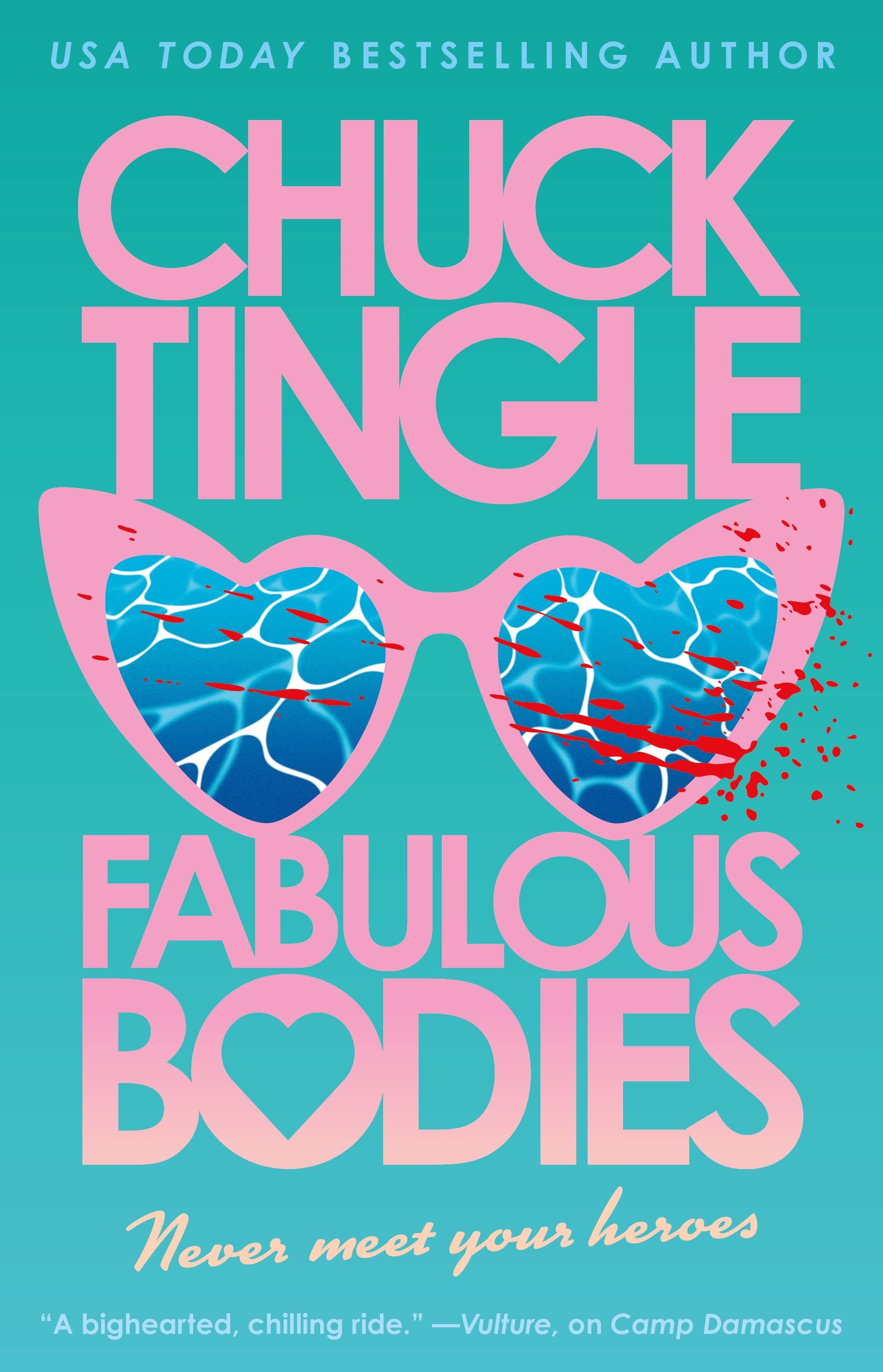
Tingle’s upcoming novel, Fabulous Bodies (out July 7), is billed to readers as “Drive meets Beetlejuice.” It’s a perfect summer blockbuster of a book that you’ll want to read on the beach or while you’re sitting poolside.
When Eddie Michaels — a piano playing rock star and queer icon à la Elton John — suddenly and unexpectedly dies, Poppy Stringer is tasked with collecting his body from the medical examiner’s office. A fashion influencer by day and grave robber that transports dead bodies across LA by night, Poppy can’t believe her luck: jobs as lucrative as these are few and far between. But what begins as a routine delivery to a client takes an unexpected and bloody turn when Eddie Michaels wakes up.
Polygon spoke to Tingle about his love for horror, whether love and horror go hand-in-hand, and what Poppy’s theme song would be. After the interview, check out an excerpt from Fabulous Bodies.
Polygon: When did your love of horror first develop? Was there a piece of media in particular that sparked that interest?
Chuck Tingle: I have a few early horror memories, but the one that really sticks with me is catching Night of the Living Dead on late-night TV. It wasn’t the original, either, it was the 1990 remake starring Tony Todd. When you stay up watching TV because you can’t sleep, there’s this sort of isolated feeling, like you’re disconnected from the whole of human existence. I remember watching these characters hunkered down in a farmhouse, feeling the same kind of isolation that I was, and suddenly I was like “Oh, I’m right there with them. The world is a scary place, but we’re all here being scared together.” It was a really powerful moment.
How does the process of writing horror differ from the process of writing satirical queer erotica?
Well, I usually write my Tinglers, which are short form erotica, in 24 hours. So the biggest difference between the two is how much I can interact with current events. If something happens on the news and there’s feelings about it that I need to process, I just sit down and write a Tingler. Suddenly, those feelings are a piece of short form erotica that’s out the next day. It’s a pretty fascinating and exciting way to distribute art. When there’s a worldwide conversation happening about some issue, that kind of speed really breaks down the barrier between artist and audience, which I think is really beautiful.
A traditionally published horror novel takes me a few months to write, but even after I turn it in, there’s going to be a whole year of that book moving through the publishing system before it’s on the shelf of your local bookstore. That means I’m usually dissecting a cultural theme instead of some specific event, although for some reason I keep stumbling into particular things that feel very current. There’s a lot of stuff about generative AI’s relationship to Hollywood in my book Bury Your Gays, and when I wrote it I kept thinking “Dang, I’m gonna need to change some of this stuff because people will think it’s too ridiculous. Nobody is going to understand what I’m talking about if I mention an AI generated performance being created after an actor’s death.” But by the time that book worked its way through the system and got released, the whole world had basically changed. Now, it seems like I wrote it just a few days ago.
You’ve written a lot of horror about queer characters being preyed on by straight society. Does Fabulous Bodies continue in that vein? What interests you about exploring that real-life dynamic through supernatural lenses?
That’s a great observation, and interestingly, I think Fabulous Bodies shifts that trend. This time around, it’s much more an example of queer culture critiquing itself. Obviously, the “stan culture” of unwavering celebrity loyalty is everywhere, but I do feel like it has a particularly strong hold on the queer community. We love our icons, which is great in some ways, but it can become a little toxic in others.
As far as using horror to talk about queer issues, though, I really just feel like my interest is more of an inevitable product of who I am as an artist, not necessarily some universal thing. I love horror, and I love exploring sexuality through art, so this is just what comes out of me. It’s not any sort of master plan.
What have you learned at this point in your horror writing career that you wish you’d known at the start? How has writing horror evolved for you over the course of five novels?
We are obviously always learning as we move through life, but there’s nothing that I wish I’d known from the start, because I like art that captures the moment it’s written. Imperfection is the only real “perfection”, and any amount of extra sanding down doesn’t necessarily make a sculpture better. Would all the songs of young punk bands be better if they went back and rerecorded them as adults? Made sure everything was a little less rushed and in tune? I don’t think so.
So as far as I’m concerned, the thing we are trying to capture is ruthless honesty at the moment of creation. Everything I’ve written is a product of its own unique moment. Sometimes that means it’s a little off kilter, but that’s where all the flavor and beauty is.
Fans know your slogan and philosophy at the core of your work has been “Love is real.” Familial love plays a large role in Fabulous Bodies, and queer love in general has been an important part of your writing. Why do you think horror and love go hand in hand?
People are often curious why someone with such a positive message would be so drawn to a genre known for its darkness, but I feel like that’s kind of the point. If you want to shine a light, there’s no better place than the dark.
Tonally, Fabulous Bodies is a little different from your previous works. How did you figure out where you wanted to land on the balance of gag-worthy body horror and undead hijinx?
This will probably surprise a lot of people, but when I write, I rarely set out to be funny. This goes for my horror, as well as my short form erotica. It’s totally fine if people laugh, though, and I can objectively step back and think “Oh, that’s a funny situation or idea,” but humor is almost never my intent.
Comedy and horror work in a really similar way, though. They both deal with something unusual that breaks through into our daily life, and how someone reacts to that breakthrough is generally going to determine if it feels funny or scary. It’s absurd to find a clown in a sewer, for instance, but the tone and the way that idea is handled will shape the genre.
I have always had a high tolerance for things that others might feel are too absurd to “work” in a story, and I kind of associate this with my autism. Having a neurodivergent mind can strip away a lot of preconceived notions about how things are typically done or reacted to. As an autistic person, I tend to look at these ideas like “Why not? Do I care if it’s typically done this way? Is there a reason for this rule?” Then, I choose to either follow it, or I chart my own path. Most of the time I chart my own path.
To circle back, I think this perspective just kind of inherently starts making things funny. I’m constantly straddling this line between absurd in a funny way, and absurd in a horrific way, because I think my internal meter is slightly off.
Is there a genre or style of horror you haven’t written in yet that you would like to try one day?
I’m fortunate enough to have these large, multi-book contracts with my publisher, so if I have a style or subgenre idea, I’m just gonna write it. There’s nothing stopping me in a business sense. The real issue is finding a story that moves me enough to actually write it. There has to be an emotional reason to explore whatever subgenre I’m interested in.
For instance, I’ve had an idea for a vampire book for a really long time, but there were a few things about it that I just couldn’t get right. But the second I realized what I wanted to say emotionally, the whole thing just fell into place. I’m about halfway through that one, but the thing is, I usually have one or two books already finished at any given time, so the vampire book is deeper in line and will probably come out three years from now.
It’s far enough away that I usually wouldn’t even mention it, but it’s kind of the perfect answer for what you’re asking.
What would Poppy’s theme song be? Did you listen to any music in particular while writing this book?
Poppy’s theme is definitely “A Star Like Me” by Eddie Michaels, but that’s a fictional song, so if we’re talking about something real, then I’d say Rocket Man by Elton John. Just an incredible song musically, but the lyrics also really fit: someone with a professional life that’s isolated them from their family, and a sort of bittersweet recognition of “well, I’m really good at this job in the middle of nowhere, but I also miss everyone down on Earth.”
Every one of my horror novels has a thematic musical genre, and Fabulous Bodies was groovy seventies rock, so Rocket Man fits.
If you could spend an evening with one deceased musical celebrity, who would it be and why?
Sammy Davis Jr. would be a wild time.
Are you reading or watching any horror right now that you’d recommend?
Headlights by CJ Leede is coming out this summer and it’s fantastic. Highly recommended.
And now, here’s an exclusive excerpt from Fabulous Bodies. The book comes out July 7.
Excerpt from
“How’s work?” I ask.
Noah leans back in his chair and stretches with his whole chest, taking up space in the world. He’s fit, and it shows when he moves in this tight shirt that can barely contain his biceps. If I were straight I’d already have broken his heart by now, but for-tunately I’m not, and instead I’ve found myself with something I never thought I’d have: a best friend.
Still, the moment causes a faint lump in my throat as I notice that his muscles aren’t quite as swollen as they used to be. Slowly but surely, his battle with cancer has been chipping away at him, his own body betraying itself.
“It’s fucking wonderful,” Noah says. “I’m happier than I’ve ever been.”
“Working at the Palm Springs Aerial Tramway is fucking wonderful?” I blurt. “You don’t wanna, like, travel the world or something?”
“I like my job,” he replies. “I like going up into the mountains every day, and it only takes ten minutes.”
Despite his toned features, Noah wouldn’t be caught dead in a gym. He’s an outdoorsman at heart, one of the rare Palm Springs Guys who love this city for the proximity to hiking trails, not the ample dick.
Because of this, I actually kinda understand why a job run-ning the Palm Springs Tram feels right to him. Technically speaking, he works for the parks department, which makes all kinds of sense.
The waiter soon returns with our drinks, carefully placing each beverage before us and then taking our orders. Noah gets the bacon cheeseburger, while I opt for a salmon salad with vin-aigrette dressing.
Of course, this doesn’t stop him from reaching over a few times and stealing one or two bites of my salad. He does this without asking, not because he’s a prick, but because he’s too impulsive to even register the movements of his own hand. Like a giant child, Noah has a habit of acting without thinking, or speaking without knowing where the words will lead. That’s probably why he and Marlo get along.
As the sky continues its transition from day to night, I can’t help reveling in how normal it all feels. Marlo will be home later—she’s currently enjoying herself at a friend’s birthday party—but for the next few hours it’s just me and Noah kicking back and appreciating each other’s company.
I notice now that “Another Long Day” by Eddie Michaels is playing over the restaurant speakers, his undead voice floating along behind the chatter of the other patrons and the clink of busy silverware. I momentarily consider bringing up the crash, asking if Noah saw the video this morning, but I stop myself.
The specter of death has loomed enough over tonight’s con-versation.
“Any hot dates?” Noah asks.
I almost spit out my drink, literally reaching up to cover my mouth so I don’t accidently spray him. I wipe up the tiny stream of French 75 that runs down my chin and then swallow what’s left, shaking my head.
Noah is laughing, too. “That crazy of a suggestion, huh?” “I don’t have time to date,” I remind him.
Every woman I meet is already dead, I think, but I don’t say this part out loud.
“I told you to get on Raya,” he presses. “Or date one of your many fans. What are we up to now? Like a hundred thousand followers?”
I scoff. “ Please. Two hundred and sixteen thousand.”
“And you don’t want to date any of those beautiful ladies?” I shake my head. “I think that’s problematic—dating fans.” “It is?”
“I don’t know, actually.”
Noah takes a long sip from his drink, slowing the conversation down again. “It might be nice to find someone who can look after Marlo with you.”
“That’s what you’re here for,” I reply.
Noah rolls his eyes, but the wry smile on his face assures me that, when push comes to shove, he appreciates the posi-tion. I’m not entirely sure how it all happened, but one day I looked up and realized that we’d built ourselves a strange little family. I’m suddenly struck with a powerful desire to tell Noah about my other life, to confess it all and finally have someone to talk to about the objectively bizarre shit that I go through on a monthly, sometimes weekly, basis. It would be so nice to not always be the—
I stop right there, cutting off the blooming weed of a thought before it grows any larger and starts infecting the rest of my per-fectly pruned mental garden.
My phone buzzes, cutting into my thoughts with a sharp, sudden jolt.
“Sorry,” I blurt, pulling out the device and revealing an un-known number. “This might be the birthday party mom.”
Noah gives me a gesture to pick up. I take the call. “Hello?” I start, putting the phone against my ear.
“I need you to get me a body,” says a woman’s voice, calm and direct.
An icy chill shoots through my veins. I don’t react, however, forcing a smile as I lift my finger to Noah. My lips move in a silent, exaggerated face of annoyance as I scoot my chair back and stand.
One second, I mouth.
I weave my way through the crowded restaurant, adrenaline kicking my heart into overdrive.
“How the fuck did you get this number?” I hiss. “Do not call me.” I half expect the voice to apologize, to immediately offer some fumbling excuse about a friend of a friend who passed along my contact info and how they didn’t know the rules yet. I’m prepared for an endless barrage of begging and pleading, groveling for me to stay on the line as they make their case.
But moments later, I realize even that wouldn’t make any sense, because nobody has my number in the first place. There’s nothing to pass along.
I erupt from the restaurant, now standing on a darkening street corner. A few other diners mill about, smoking and chat-ting, but it’s a far cry from the bustling eatery I’ve just emerged from.
“I run a flower delivery service,” I stress, “and if you’d like to order flowers, you’ll have to do it online.”
“I’m ready to offer you five million dollars,” the woman says. I laugh. “Five million dollars? Yeah, right.”
“Five million dollars,” she repeats. “I’ll wire you ten percent up front so you know I’m serious.”
My mouth opens to shut her down again—to dismiss the very thought of this ridiculously large sum—but I suddenly find my-self hesitating. Somehow, this woman has my personal phone number, and apparently, she knows exactly what business I’m in. There are plenty of things a stranger might try with that kind of sensitive information, but a silly little joke is not one of them.
The danger bells are ringing loud and clear. However, there’s another bell chiming along with them. It’s something even more primal than fear, a siren’s call that I can never seem to ignore.
Opportunity.
If this offer is genuine, I’d be an absolute fool to pass it up, and if it is some kind of trap, I’ll figure out a way to trap them back. I’m not afraid.
What if you get arrested? What if Marlo loses her mother?
There’s a stock answer for this, something I’ve been telling myself since I first stumbled into the dead-body trade. As de-plorable as most people would find my actions, the legal system is hardly as rough on grave robbers as one might expect. Sure, there would be consequences, but compared to a bank heist, my worst-case scenario is pretty fucking solid.
That’s the whole point of this, after all. I’m taking advantage of the dead, not the living, and the potential legal repercussions reflect that simple fact.
“How did you get my number?” I repeat.
“If I’ve got the money to retain your services, then I’ve also got the money to find your number.”
For the briefest moment I pick up on someone in the back-ground, a slightly deeper voice whispering something.
“Who is that?” I snap.
Another long pause. When the woman speaks again, her tone has shifted completely, much more casual and relaxed. “Listen,” she begins, “I know it’s strange to get a call like this, but there’s not enough time to move through the usual channels. This needs to happen now.”
“ Tonight?!” I scoff.
“Five million dollars,” she reminds me.
I let out a frustrated sigh, my disbelief steadily growing. “Fuck you. There’s no way this is real.”
“It’s real. The ten percent up front is already in your account,” she replies flatly.
I laugh. “Sweetie, how would you even know what account to put it in?”
“Does it matter?”
I pull my phone away from my head, blown away by the au-dacity of this caller, then curiously open my banking app.
When I see the most recent deposit, my breath catches. “Oh my God,” I murmur.
I refresh the app, as if this might somehow reveal an error in the code, then again, and again. The payment remains. My mind is working frantically now, sorting through a whole new cascade of information and context. “How do you know I won’t just take this money and run?”
There’s a little more hushed talking on the other end of the line, the deeper background voice returning for a moment. They add a few unintelligible words, then disappear.
“Because you’ll never be happy with second place,” the caller finally says. “That cash in your account is good enough for some people, but five million is the blue ribbon.”
This time the number really hits home, no longer bouncing off me in the chaos of the moment but actually puncturing my skin and sinking deep. I’ve had plenty of giant paydays in this morbid line of work, but none of them come anywhere close to five mil-lion dollars. Certainly not in a single night.
Finally, I break, letting out a long sigh. “Alright, what kind of flowers am I getting you?”
“I don’t think there’s a code for this one,” she replies. “Something personal?”
The voice hesitates. “I want you to bring me the body of Eddie Michaels.”
1 / 13