dailynewsnblog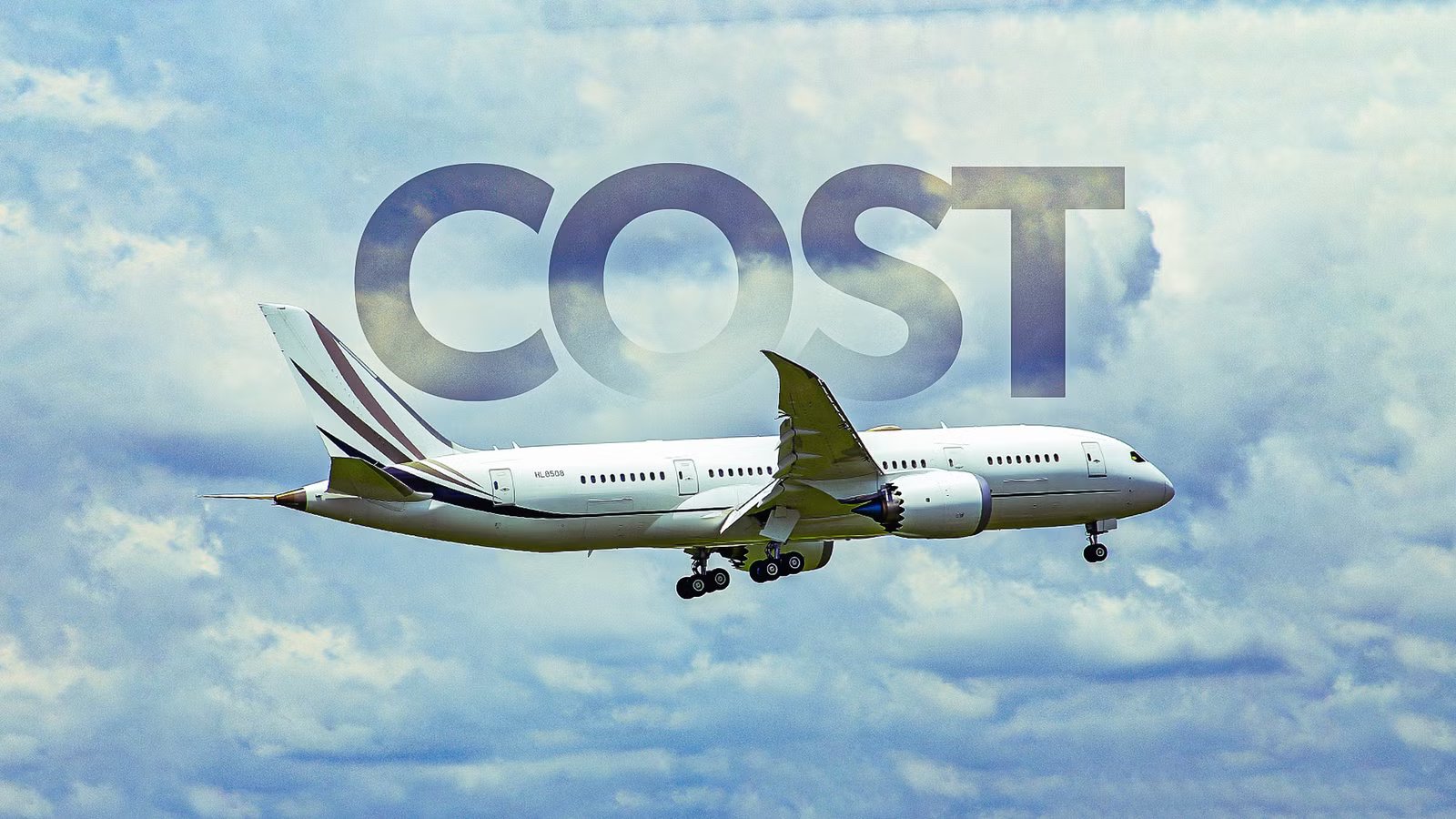
Global connectivity is deepening, and the ability to transport a large delegation across oceans and continents in a single leap has become a hallmark of modern diplomacy and business. For those in the upper echelon of wealth,  Boeing provides aircraft that were originally designed for hundreds of passengers to be opened up for only a select few, truly some of the largest private aircraft in the world.
Originally conceived as narrowbody and widebody commercial workhorses, the BBJ line consists of airframes that have been stripped and reimagined with master bedrooms, boardrooms, and gourmet galleys. This article will explore the varying price points across the entire Boeing family, from the entry-level 737 models to the ultra-long-range 787 and the legendary 747-8. We will clarify the difference between base hourly rates and the all-inclusive operating costs, while also highlighting the technical refinements, such as lower cabin altitudes and increased fuel efficiency, that distinguish these aircraft.
A Worthy Investment?

The most commonly used of the selection is the Boeing Business Jet 737 (including the BBJ1, BBJ2, BBJ3, and the newer MAX variants), which typically costs between $15,000 and $22,000 per flight hour. This price range represents the foundational cost of operating the aircraft, covering the specialized flight crew, basic maintenance reserves, and standard fuel consumption. This entry point is significantly higher than a mid-size or even some super-mid-size business jets, but the price reflects the massive increase in cabin volume and mission flexibility that only a converted airliner can offer.
These aircraft offer full-scale luxury with long-range capability, often featuring private bedrooms and dedicated office spaces that allow a principal to work without distraction. For a standard transcontinental mission, the BBJ1 can perform journeys of up to 11,112 kilometers (6,000 nautical miles). Although most commercial variants of the 737 carry over 150 passengers, VIP configurations typically accommodate between 18 to 80 travelers, ensuring that every individual on board has ample space to move, dine, and rest in total comfort.
The depth of the investment becomes even clearer when examining the newer BBJ MAX series, which features a 15% increase in fuel efficiency over the previous generation. In the current market, these aircraft are highly sought after because they combine the heavy-lift capacity of an airliner with operating economics that are increasingly competitive with purpose-built large-cabin jets. Crucially, the MAX series offers a lower cabin altitude of just 6,500 feet (1,981 meters), which dramatically reduces the physical toll of a long journey.
The Hidden Costs

A charter price might be presented as an all-inclusive figure, but it is fundamentally built upon several shifting variables that can cause the final invoice to fluctuate by tens of thousands of dollars. The most significant of these is often the positioning fee, which covers the cost of flying the empty aircraft from its home base to the client’s departure airport. There are relatively few BBJs available for charter globally compared to smaller jets, so an aircraft might need to fly for three or four hours just to reach the passenger, a cost that is passed directly to the charterer.
The final price is also heavily dictated by the specific year of manufacture and the bespoke nature of the interior. A BBJ1 from the late 90s may be available at the lower end of the pricing spectrum, while a factory-fresh BBJ MAX 7 commands a premium for its advanced avionics and ultra-quiet cabin. The choice of an aircraft is purely dependent on the passenger and baggage totals at any given time. As the weight of the aircraft increases, so does the fuel burn, especially on ultra-long-haul missions that push the aircraft toward its 6,000-nautical-mile (11,112-kilometer) limit.
|
BBJ Variant |
Typical Charter Rate (2026) |
Cabin Size (Metric) |
Max Range (Metric) |
|
BBJ 737 (MAX/1/2/3) |
$12,000–$22,000/hr |
75–104 square meters |
10,001–12,223 km |
|
BBJ 787-8/9 |
$22,000–$70,000/hr |
~223 square meters |
~18,418 km |
|
BBJ 747-8 |
$30,000–$40,000/hr |
481 square meters |
16,436 km |
The operational footprint of a BBJ also introduces invisible costs that smaller business jets rarely have to encounter. These aircraft are essentially commercial airliners and require specialized ground handling and larger parking slots at international airports. Landing fees and handling charges at a major hub can range from $2,000 to $5,000 for a standard jet, but a BBJ 747-8 can easily generate between $10,000 and $20,000 in similar fees. When you add the cost of international permits, specialized ramp equipment, and the per diem for a crew that may include two or three pilots and four or five cabin attendants, prices can rise to heights higher than the cruising altitude.

A Look At The Private Boeing Business Jet 747 Jumbo Jet
The role of the Boeing 747 in private aviation.
Every Flight Must Be Special

The BBJ market is generally viewed across the board as a proven-platform economy, but not without its complications. Due to the much-anticipated Boeing 777X program having faced continued certification delays, with commercial deliveries now pushed back to 2027, many high-net-worth individuals and even some royal families have shifted their focus back to existing widebody airframes. Experts note that this uncertainty has actually increased the charter value of the BBJ 787 and the 747-8, as customers prioritize aircraft with a track record of reliability over the promise of future technology. In this climate, having a ready-to-fly widebody has become a symbol of strategic readiness, particularly for the 56% of the VIP widebody fleet currently operated by Middle Eastern entities.
The real-world costs of these massive charters reflect their scarcity and the specialized infrastructure required to maintain them. For example, Deer Jet, a prominent management company out of China, offers a BBJ 787-8 for approximately $70,000 per hour. While this figure is striking, airline executives emphasize that the value lies in the human performance benefits of the airframe. The 787 is famous for its lower cabin altitude and advanced humidity control, which allows government delegations and CEOs to cross many time zones while significantly minimizing the effects of jet lag.
For those who require the absolute maximum in floor space, the BBJ 747-8 remains the only option that can accommodate multiple formal dining rooms, Turkish baths, and even onboard gymnasiums. Heads of state are typically seen being pulled toward the largest option. For example, the Qatari government operates multiple 747-8s and even offered one as a gift to the US government. Even with the high operating costs of $30,000 to $40,000 per hour, the largest Boeing jets remain in high demand for missions where a standard business jet would simply feel too small.
The Purpose Built Jets

When evaluating the cost of a Boeing Business Jet, the purpose-built ultra-long-range jets that dominate the 2026 market, such as the Gulfstream G700 and the Bombardier Global 8000, are always brought into the picture. The primary trade-off in this decision is the choice between absolute speed and cavernous volume. A Global 8000 can reach speeds of Mach 0.95 (1,152 kilometers per hour), and the G700 is nearly as quick at Mach 0.935, much higher than the Boeing 737 series, cruising at a more conservative Mach 0.82. A speed differential like this can mean the difference of nearly two hours in the air, a factor that often steers time-sensitive solo travelers toward the sleeker, faster alternatives.
However, the BBJ occupies a category of real estate that these purpose-built jets are far from. A Gulfstream G700 offers five customizable living zones, but it is limited to a maximum of 19 passengers and a cabin width of 2.49 meters (8.17 feet). In contrast, even the smallest BBJ 737 provides a cabin width of 3.53 meters (11.58 feet), allowing for a true residential feel where passengers can walk past one another without turning sideways. The BBJ is essentially a flying embassy, capable of carrying an entire board of directors or an extended family in an environment that is vastly different from what a typical passenger 737 would look like.
The decision between these platforms often comes down to what the aircraft’s intended purpose actually is. The Global 8000 claims the industry’s lowest cabin altitude at just 2,691 feet (820 meters) at cruising level, a technical feat that ensures passengers arrive feeling exceptionally refreshed. The BBJ MAX has narrowed this gap with its 6,500 feet (1,981 meters) cabin altitude, but it remains a larger, heavier aircraft that requires more logistical planning and higher ground fees. Ultimately, the BBJ is chosen when the flight itself is intended to be a collaborative or social experience, whereas the Gulfstream and Bombardier models are the precision tools for those who value reaching their destination in the shortest possible time.

Widebody Private Jet: A Look At The Private Boeing Business Jet 777 Jumbo Jet
A guide to the iconic Boeing 777 and what makes it so unique
No Real Backup

The allure of a Boeing Business Jet is undeniable, but the logistical reality of operating a commercial-scale airframe comes with significant physical and financial caveats. The most immediate restriction is airport access because the largest BBJs are often restricted to major international hubs, whereas a standard business jet can utilize thousands of smaller airfields. For instance, the Boeing 747-8 VIP requires a minimum runway length of 2,286 meters (7,500 feet) and a pavement strength capable of supporting its maximum takeoff weight of 447,696 kilograms (987,000 pounds). This rules out popular executive airports where smaller business jets dominate, forcing travelers to use larger, more congested hubs like John F. Kennedy International or  Los Angeles International, which can add hours of ground transit time to a journey.
The BBJ aircraft are rare and not always readily available, often requiring a 10-hour empty leg flight just to reach the departure point. New environmental levies have further complicated the operational reality; for example, as of April 1, 2026, the United Kingdom has implemented a substantial increase in air passenger duty for private flights, with long-haul journeys attracting a charge of £1,141 ($1,424) per passenger. When combined with France’s existing solidarity tax and the mandatory 2% sustainable aviation fuel uplift required at European Union airports, the secondary costs of a single transcontinental mission can easily exceed $50,000 before the aircraft even leaves the ground.
Boeing has stabilized production of the 737 MAX at 40 units per month as of March 2026, but the fleet is still subject to frequent airworthiness directives that can ground an aircraft for unscheduled maintenance at short notice. For anyone with a rigid schedule, the lack of a backup aircraft is a genuine risk. A large charter fleet might have five G650s ready to swap in the event of a mechanical issue, whereas a BBJ operator often has only one or two airframes.
In A League Of Its Own

The decision to charter a Boeing Business Jet ultimately rests on a calculation that balances immense financial cost against the unmatched value of space and range. For those requiring a mobile headquarters for a large delegation, the $15,000 to $22,000 hourly rate for a BBJ 737 MAX is often more justifiable than booking multiple smaller private jets. This price provides the foundational utility of an airliner packaged in an environment that allows for true privacy and productivity. However, as the aircraft size scales up to the widebody Dreamliner or the 747-8, the investment becomes more about prestige and global reach, with all-inclusive costs often reaching into the seven-figure range for a single international tour.
The landscape of VVIP travel is being shaped by two primary forces: technological delays and the push for sustainability. The continued uncertainty surrounding the Boeing 777X entry into service, currently anticipated for 2027, ensures that existing widebody assets like the 787 will remain a necessity for long-haul charters. Furthermore, the progression toward sustainable aviation fuel and the integration of advanced air purification systems have become mandatory requirements for the environmentally conscious corporations that dominate the globe.
Where the BBJ shines in the current era lies in its ability to bridge the gap between getting there and arriving prepared. For the global leader or the high-net-worth individual, the Boeing Business Jet remains the ultimate expression of airborne power, showing that even at $70,000 an hour, some luxuries are actually strategic necessities.