dailynewsnblog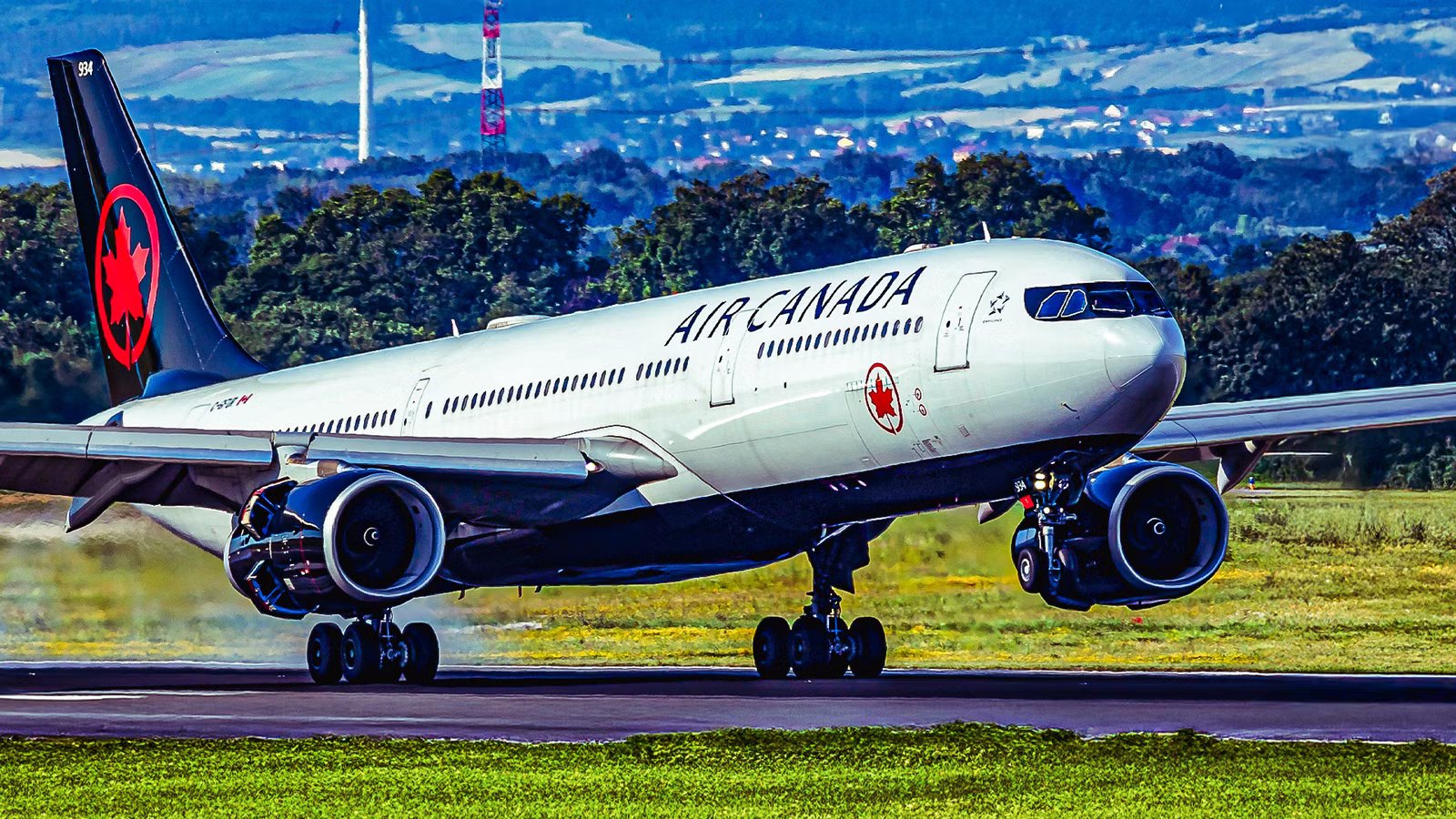
Air Canada is gearing up for a very summer on its wide range of European routes. In fact, data made available by Cirium, an aviation analytics company, shows that the Montréal-based Canadian flag carrier and  Star Alliance founding member has scheduled a record number of Europe-bound departures in the third quarter of this year (July-September). This total is 8% higher than 2025 and 5% higher than the previous record (2018).
All in all,  Air Canada has penciled in 4,775 one-way departures on its various routes to Europe this Q3, with these services offering collective grand totals of 1,476,688 seats and 5,670,079,188 available seat miles. Meanwhile, its offering on this front last year amounted to 4,428 flights, 1,412,784 seats, and 5,429,492,311 ASMs. Let’s dive deeper into the data and take a look at what’s changed to make this summer a record one.
The Narrowbody Revolution

A key reason behind Air Canada’s transatlantic growth is its increasing rollout of long-range narrowbody twinjets on European corridors. These have allowed it to establish itself on secondary routes that it could not have previously served with larger widebodies. However, as pictured above, guests on the Airbus A321XLR can still expect widebody comfort, with Air Canada announcing at AIX that Collins will provide Aurora business class suites.
Air Canada’s top transatlantic narrowbody by frequency is the Boeing 737 MAX 8, which it will use to fly from Halifax, Montréal, and Toronto to cities like Brussels, Edinburgh, London, Nantes, Ponta Delgada, and Reykjavík. Meanwhile, the Airbus A321XLR will fly from Montréal and Toronto to the likes of Berlin, London, Lyon, Nantes, Porto, and Toulouse. Air Canada also recently announced Tenerife flights with the A321XLR, explaining that:
“The airline’s brand-new Airbus A321XLR aircraft features lie-flat seats in the business class cabin, bringing a widebody experience to a narrowbody jet, with capacity for 182 passengers.”
Air Canada’s Top European Routes By Frequency & Growth

This summer, Cirium’s data shows that Air Canada will serve seven brand-new European routes: Halifax to Brussels, Montréal to Berlin, Catania Nantes, and Palma de Mallorca, and Toronto to Budapest and Ponta Delgada. There do not appear to be any routes served in 2025 that aren’t returning in 2026.
Meanwhile, in terms of existing routes that have had their frequencies boosted from Q3 of 2025 to the third quarter of 2026, Montréal to Porto is the biggest grower in terms of both the raw number of flights added (25 more) and the proportional year-on-year increase (64.1%). Other corridors to have seen big boosts include Montréal to Edinburgh, Geneva, Rome, and Toulouse, Toronto to Copenhagen, Manchester, Prague, and Stockholm.
When it comes to Air Canada’s top European routes by frequency this Q3, Toronto to London Heathrow is the runaway leader, with 341 flights planned. This puts it way ahead of Toronto to Frankfurt and Montréal to Paris CDG, both of which will be served twice a day throughout Q3 for a total of 184 flights apiece. Other more-than-daily routes include Montréal to Athens, Frankfurt, London, and Rome, and Toronto to Athens and Rome.

The New Air Canada Long-Haul Aircraft Coming In The Next Decade
Eight new A350-1000s will make up the first in Air Canada’s fleet.
Aircraft Breakdown

As previously mentioned, narrowbody aircraft are playing an increasingly important role in Air Canada’s European operations. While the Airbus A321XLR is a new addition, with 218 Europe-bound departures in the third quarter of this year compared to none in Q3 of 2025, the Boeing 737 MAX 8 is also on the up on this front. Indeed, its figure has jumped from 249 to 329, representing a boost of 32.1, with seat capacity up by some 35.4%.
However, transatlantic flying is still dominated by widebodies at Air Canada, with such aircraft accounting for a whopping 4,228 of its 4,775 scheduled one-way departures on its routes to Europe this Q3 (88.5%). The Airbus A330-300 is the most commonly used type, with 1,321 flights, followed by the Boeing 777-300ER on 1,248, the 787-9 on 882, and the 787-8 on 574. Meanwhile, the 777-200LR is its least-used widebody, with just 203 flights.