dailynewsnblog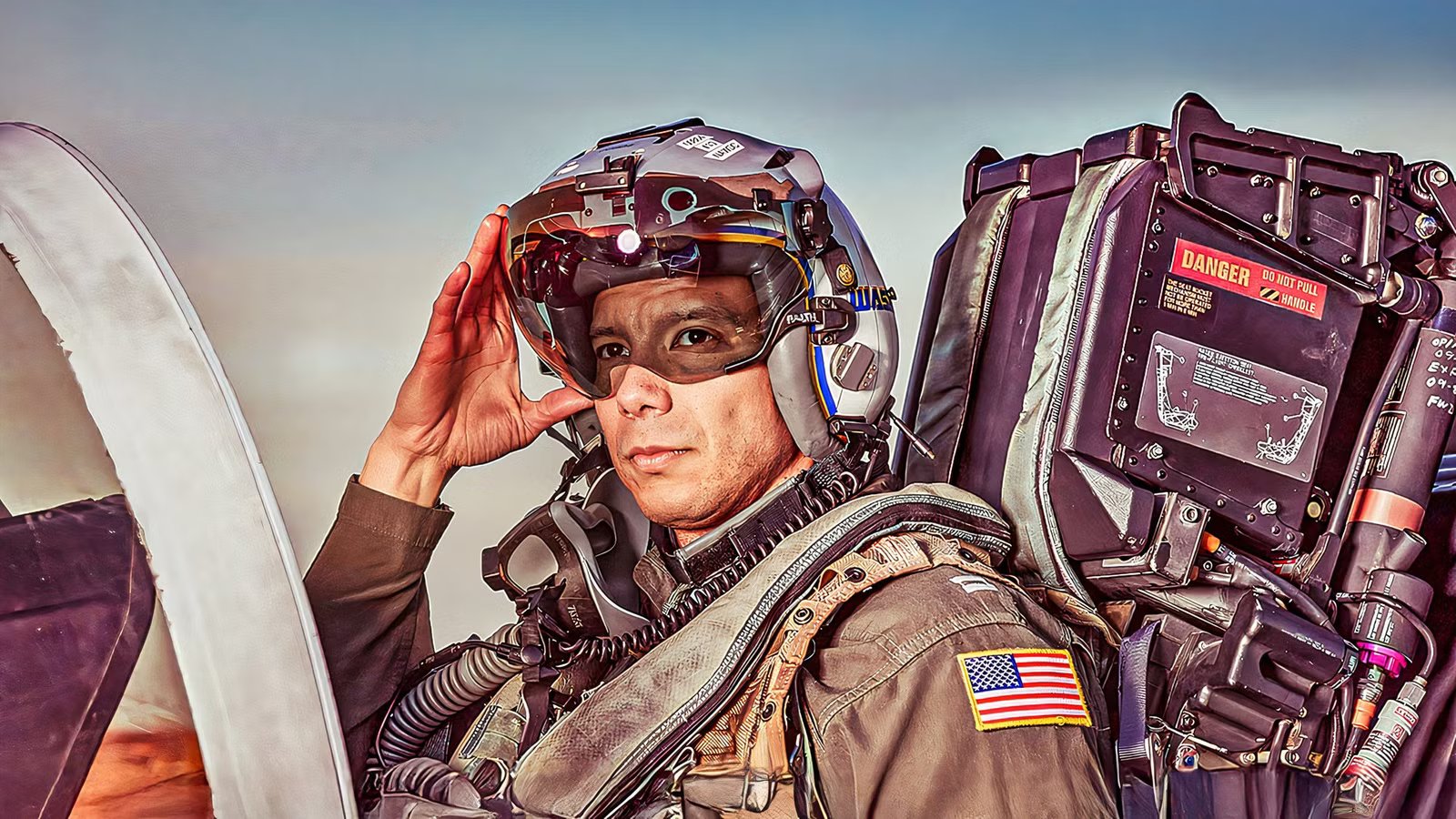
At the inception of US Naval aviation, the Navy ironically had an aviator before it acquired its first aircraft. Lieutenant Theodore G. Ellyson received orders to begin training in 1910 at the Glenn Curtiss aviation camp in San Diego. One year later, in July 1911, the Navy received its first aircraft from the Curtiss Company. Curtiss offered free flight training to naval officers, provided they demonstrated the plane’s military potential. These officers would be operating out of a hay barn that doubled as a hangar, and the training was informal and remained so for the next two years.
Much has changed since these early days of naval flight. Rather than one very simple aircraft, the US Navy operates a wide array of highly sophisticated and mechanically complex aircraft, and the training to become a naval aviator is time-consuming and rigorous.
Given the extensive training, the demands and responsibilities of flying a Military aircraft, which, like the civilian world, can be very dangerous, the compensation that pilots receive is likewise commensurate with this demanding field.
Earning Your “Wings Of Gold”

Upon earning a commission, which can lead a prospective aviator through the US Naval Academy at Annapolis, Officer Candidate School, or Naval Reserve Officers Training Corps, the prospective aviators will then head to Naval Air Station (NAS) Pensacola. From the beginning of training until earning the coveted “Wings of Gold” takes approximately 18 to 24 months.
During this time, the student will go from the classroom, learning such academics as: “…Aerodynamics (Basic Principals[sic] of Flight)… Engines (Jet and Reciprocating)… Navigation, and [sic] additional course on Aviation Flight Physiology…” to going down a route that will ultimately teach them how to fly a jet, prop-driven aircraft or helicopter.
The aforementioned training programs are largely located in Florida, Mississippi and Texas. The length and duration vary due to numerous factors, but generally, learning to fly a Jet will last around 50–54 weeks, prop-driven aircraft take approximately 17–22 weeks, and learning to fly a helicopter will take about 20–24 weeks.
After earning their “Wings of Gold,” the newly minted naval aviator will head to Fleet Replacement Squadron (FRS), which is also termed the “RAG” (Replacement Air Group) for six to twelve months. Here, the aviators will learn to fly their specific fleet aircraft and follow-on training, including advanced tactics, systems, and mission qualifications. Following FRS, the aviator will be assigned to their fleet squadron.
The Pay For An Ensign At The Stick Of An MH-60S Sea Hawk

At the base level of the commissioned officer corps is the Ensign (O-1), affectionately called a “nugget.” With two or fewer years of experience, they can expect to make $4,150.20 (£9,149.62) per month and 75,268.80 (£58,942.07) per year before taxes.
Once they have completed Fleet Replacement Squadron and been assigned a squadron, a primary task of this newly minted officer will be to continue building on their flying skills by logging flight hours as a co-pilot initially.
Some of the activities that an ensign can expect to perform are studying tactics, aircraft systems, emergency procedures, and mission planning, and working on building their portfolio of qualifications.
MH-60S Sea Hawk Specifications | Related Data |
|---|---|
Propulsion | Two General Electric T700-GE-700 or T700-GE-701C engines |
Length | 64 feet, 10 inches (19.6 meters) |
Height | 13 to 17 feet (3.9 to 5.1 meters) |
Rotor Diameter | 53 feet, 8 inches (16.4 meters) |
Weight | 21,000 to 23,000 pounds (9,450 to 10,350 kg) |
Airspeed | 180 knots maximum |
Range | Generally about 380 nautical miles (600 km); range becomes unlimited with air refueling capability |
Crew | 3 to 4 |
As the Sea Hawk is a multi-mission aircraft, the ensign will participate in training in anti-submarine warfare, surface warfare, electromagnetic warfare, command and control, and non-combat operations. As secondary missions, they could additionally be involved in fire support, medical evacuation, search and rescue, logistics, special warfare, and ISR-related missions.
The Pay For A Lieutenant Junior Grade Flying C-2A Greyhound

A Lieutenant Junior Grade (LTJG, O-2) with two or more years of experience would have an initial pay of $5,446 (£4,016) per month and would make an annual salary of $65,354 (£48,175) before taxes.
While the LTJG remains a junior commissioned officer, this rank marks a highly important developmental phase in the officer’s career. At this point, there is a transition from basic duties to more complex responsibilities, with foundational skills being honed and solidified. This process depends on the officers’ base of knowledge and prepares the LTJG for higher leadership roles.
Onboard the AC-2A Greyhound, the LTJG could likely be assisting a senior pilot (generally a lieutenant or lieutenant commander) with the aircraft’s operations. Additionally, the LTJG will operate the radio, handle navigation, manage operational systems and assist with approach and landing procedures.
C-2A Greyhound Specifications | Related Data |
|---|---|
Contractor | Grumman Corporation |
Propulsion | Two Allison T56-A-425 turboprop engines; 4,600 shaft horsepower each |
Length | 56 feet, 10 inches (17.3 meters) |
Height | 17 feet, 2 inches (5.28 meters) |
Wingspan | 80 feet, 7 inches (24.56 meters) |
Weight | Max. Gross, take-off: 57,500 lbs (26,082 kg) |
Airspeed | Cruise – Approximately 260 knots true airspeed; Max – Approximately 343 knots |
Ceiling | 30,000 feet (9,144 meters) |
Range | 1,000 nautical miles (1150.77945 statute miles) |
Crew | 4 |
As the Greyhound primarily serves as a logistical connector, the LTJG will be involved in missions supporting carrier strike groups, such as transporting high-priority cargo between carriers and ashore bases. This could be transporting jet engines, mail or even a litter of patients.
The Pay For A Lieutenant In the Cockpit Of An F/A-18 Hornet Strike Fighter

A Lieutenant (O-3) with four or more years of experience will have a monthly income of $7,383 (£5,442.34) and would make an annual salary of $88,596 (£65,308) before taxes.
A lieutenant is a mid-level junior officer, and they have generally completed their initial training tour and are on their first operational fleet tour, or possibly on their second tour.
At this stage, a Lieutenant F/A-18 pilot is expected to be fully combat qualified (including carrier operations and mission-ready), with these qualifications typically completed during or by the end of their first operational tour.
F/A-18 Hornet (E/F) Specifications | Related Data |
|---|---|
Contractor | McDonnell Douglas |
Propulsion | Two F414-GE-400 turbofan engines. 22,000 pounds (9,977 kg) static thrust per engine |
Length | 60.3 feet (18.5 meters) |
Height | 16 feet (4.87 meters) |
Wingspan | 44.9 feet (13.68 meters) |
Weight | Maximum Take Off Gross Weight is 66,000 pounds (29,932 kg) |
Airspeed | Mach 1.8+ |
Ceiling | 50,000+ feet (15,240+ meters) |
Range | Combat: 1,275 nautical miles (2,346 kilometers) Ferry: 1,660 nautical miles (3,054 kilometers) |
Crew | 1 or 2 Depending on the model |
Lieutenants also serve as key mentors to junior officers while handling significant collateral duties, including training, safety compliance, scheduling, administration, and possibly serving as a division officer.
The Pay For A Lieutenant Commander Flying A P-8A Poseidon

A Lieutenant Commander (O-4) with six or more years of experience will have a monthly base income of $8,332 (£6,142) and would make an annual salary of $99,984 (£73,703) before taxes.
As a seasoned senior pilot, the lieutenant commander will be in overall command of the aircraft and its entire crew of nine. The crew composition includes a co-pilot, tactical coordinators, sensor operators, and an inflight technician. Some key responsibilities of a lieutenant commander will be to act as weapons and tactics instructors, mentor junior pilots, enhance aircrew qualifications, and mission planning.
P-8A Poseidon Specifications | Related Data |
|---|---|
Contractor | Boeing IDS |
Propulsion | Two high-bypass CFM56 turbofan engines |
Length | 129.5 feet (39.47 meters) |
Height | 42.1 feet (12.83 meters) |
Wingspan | 117.2 feet |
Weight | Maximum gross takeoff, 188,200 pounds |
Airspeed | 490 knots |
Ceiling | 41,000 feet (12,497 meters) |
Range | 1,200 nautical miles radius with four hours on station |
Crew | 9 |
Missions that the Poseidon is designed for are anti-submarine and anti-surface warfare, maritime and overland ISR search and rescue and operational communications. This aircraft fulfills a vital role in fleet protection, adding to the protective bubble around a carrier strike group and acting as a highly sophisticated communications node for inter-theater communication.
The Pay For A Commander Operating An F-35C

A Commander (O-5) with ten or more years of experience will have a monthly base income of $9,929 (£7,328) and would make an annual salary of $119,148 (£87,933) before taxes.
The primary role of a commander who pilots an F-35C would be the commanding officer of a squadron. In this position, the commander will issue operational orders, oversee mission planning and execution, and ensure the squadron can generate combat-effective sorties. They are also responsible for personnel evaluations, administration, safety, and discipline within their command.
In terms of training, particularly prior to deployment, the commander will conduct a “workup.” This includes squadron-level training and individual certifications. Eventually, the training will move to wing-level training and finally strike-group-level training.
F-35C Specifications | Related Data |
|---|---|
Contractor | Lockheed Martin |
Propulsion | 1x F135-PW-100 |
Length | 51.5 feet (15.7 meters) |
Height | 14.7 feet (4.48 meters) |
Wingspan | 43 feet (13.1 meters) |
Weight Empty | 34,800 pounds (15,785 kilograms) |
Airspeed | Mach 1.6 |
Combat radius (internal fuel) | >600 nautical miles (1,100 kilometers) (USN profile) |
Range | >1,200 nautical miles (2,200 km) |
Crew | 1 |
The latter involves day and night operations in all types of weather, in addition to the fleet F-35s, which involve themselves in multi-axis attack scenarios. This could be a scenario in which the F-35’s penetrate defended airspace or conduct joint training with B-2 bombers for long-range maritime strikes. In addition, the commander may conduct training with other naval vessels, such as destroyers and cruisers, for anti-submarine warfare support, surface strikes, or command-and-control exercises.
Naval Aviators, Men & Women Who Serve With Honor

The pilots of the US Navy operate a wide range of aircraft, fulfilling the needs of the fleet and serving in other critical roles. These tasks are demanding and require immense skill, particularly in the dangerous conditions to which US naval aviators may be called upon to operate.
In addition to the dangers and challenges of flying, naval aviators are leaders, mentors, and key components of their squadron’s daily operations. They ensure that the sailors and junior officers, their subordinates, are adequately led and trained and function as an effective unit, thus fulfilling the mission at hand and the mission of the Navy.
The Navy is, of course, a large organization, and it cannot function without proper leadership or without the enlisted personnel to faithfully carry out their officers’ orders. Therefore, it is incumbent upon the Navy to ensure that its officer corps is continually bringing in the best candidates who seek to take the mantle of leadership and lead the next generation of sailors or airmen within their respective squadrons.