dailynewsnblog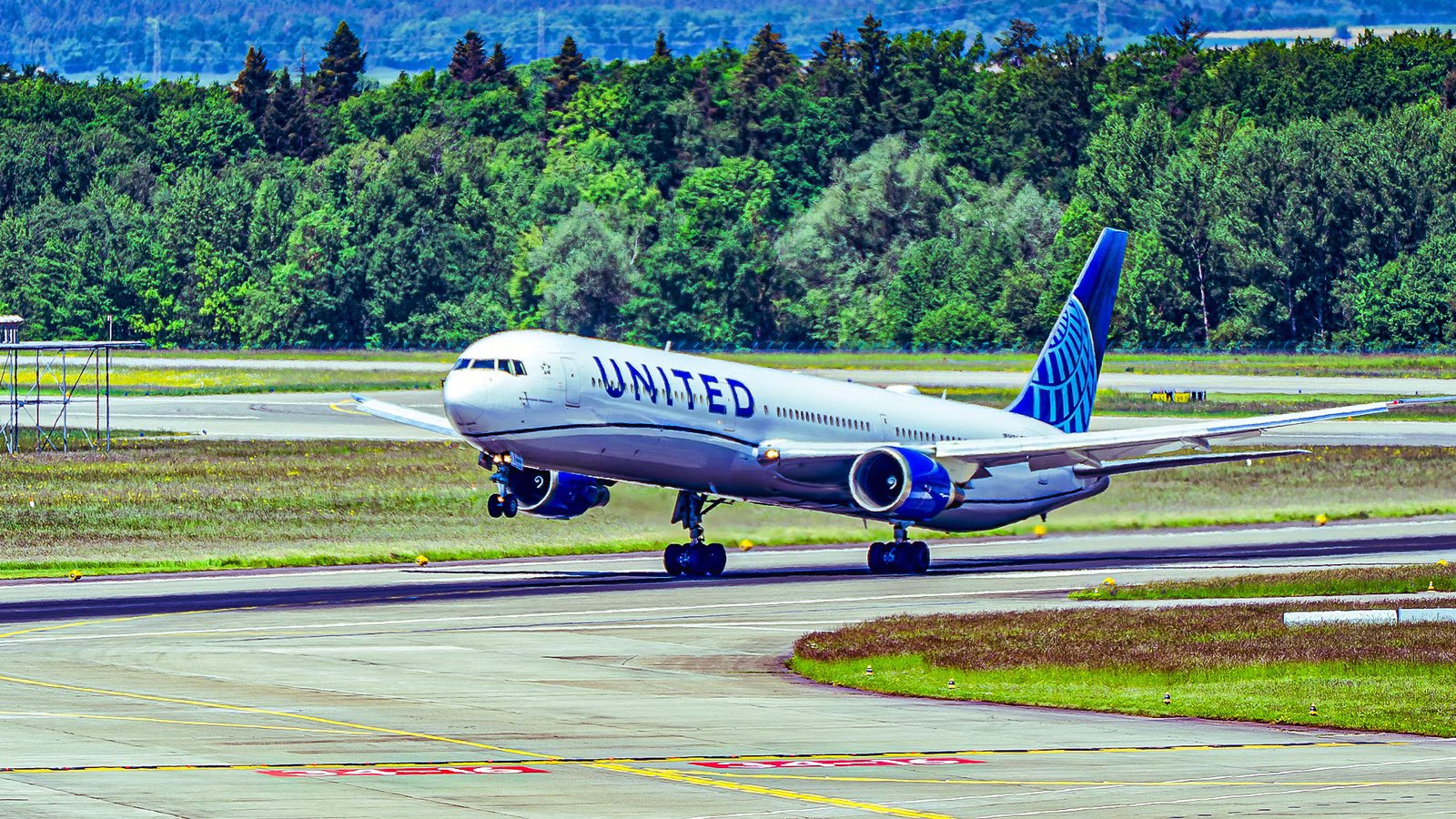
 United Airlines’ latest international expansion contains some striking choices. As reported by Simple Flying earlier today, the carrier will begin flying to cities such as Ljubljana, Olbia, Catania, Ibiza, Valencia, Marseille, and Terceira in the summer of 2027. Notably, eight of its ten new international cities have no other nonstop service by a US airline. Yet United still has no flights to seemingly obvious European markets, including Copenhagen, Manchester, Oslo, Stockholm, Hamburg, and Birmingham.
This is no longer a one-off experiment. United’s new routes over the past few years have increasingly favored more obscure sun-drenched destinations such as Palermo, Madeira, Faro, Bari, Split and Santiago de Compostela. Almost all have returned after their first season. The single exception to the rule and the only northern European addition has been Glasgow International Airport (GLA), which started in May.
The stark geographic split raises a fundamental question: why is United repeatedly choosing smaller, less obvious Southern European markets over much larger Northern European cities with established transatlantic demand? The answer lies less in market size than in exclusivity, competition, aircraft economics, and United’s growing willingness to create demand rather than simply follow it.
United Has Tried The Obvious Markets Before

Let’s start with the obvious explanation: United is not simply overlooking Northern Europe. Speaking as the 2027 network additions were announced, SVP of Global Network Planning Patrick Quayle directly addressed why the airline had not returned to the region:
“Going north of Lufthansa hubs has been a challenge for us, neither Bergen nor Stockholm worked.”
That is significant because United had originally scheduled  Newark Liberty International Airport (EWR) to Stockholm Arlanda Airport (ARN) to return daily in June 2026 before canceling the entire season. Nor are Stockholm and Bergen isolated examples. United (and predecessor Continental Airlines) have already tried many of the apparently obvious Northern European opportunities, with many of the routes running for years:
Previous Destinations | Why The Omission Stands Out | What Happened |
|---|---|---|
Copenhagen | Scandinavia’s largest hub with extensive US flying | United withdrew in 2012 |
Stockholm | Large capital and business market | 2026 return canceled |
Oslo | Affluent market with established US demand | Fare pressure hurt economics |
Manchester | Major UK catchment; no current EWR nonstop | United service ultimately withdrawn |
Hamburg | Major German business city with no US nonstop routes | United ended long-running route |
Birmingham | Large UK Midlands catchment | United cited poor financial performance |
Copenhagen, Stockholm, Oslo, Manchester, Birmingham and Hamburg have all had Newark service at various points. United turned Oslo and Stockholm seasonal after poor winter financial results, eventually left Oslo completely, explicitly blamed Birmingham’s closure on “poor financial performance,” and discontinued Hamburg after more than a decade. Manchester Airport (MAN) survived longer, but its latest United service disappeared after the pandemic period.
Copenhagen Airport (CPH) has another complication.  SAS left
  Star Alliance and joined
  SkyTeam in September 2024, removing the obvious alliance connectivity United could once have obtained beyond Copenhagen. Meanwhile, SAS itself has a formidable Copenhagen-US network, including Newark, and is further fortified by its growing integration with partners like
  Delta Air Linesand Air France-KLM.
So it makes little sense for United to fly its own metal to CPH, arrive without its former SAS feed, and compete against the home carrier. Not when the alternative option is to leverage its very successful joint venture with Lufthansa Group and instead sell Scandinavian journeys over hubs like  Frankfurt Airport (FRA),
  Munich Airport (MUC) or Vienna International Airport (VIE).
There is also a crucial distinction between a route that could make money and the best use of an aircraft. United made the argument when Oslo became seasonal more than a decade ago: management said the aircraft could be deployed in more profitable markets. Today, with dozens of possible transatlantic additions competing for limited aircraft, Copenhagen or Manchester does not merely need to work; it needs to outperform United’s next-best alternative.
A Small Monopoly Can Beat A Big Market

But let’s take a closer look at the example of Copenhagen (which I incorrectly predicted yesterday) versus Ljubljana (my favorite of the new routes), as this shows how that alternative can look.
Copenhagen offers a far larger established market, but it also already offers passengers numerous nonstop options to North America — 15 different routes offered by five carriers. Ljubljana Jože Pucnik Airport (LJU) offers the opposite proposition: United is creating the first nonstop link between Slovenia and the United States, and will face no competing airlines. The same exclusivity applies to eight of the ten destinations announced for 2027, continuing a strategy that Simple Flying has documented across United’s recent international expansions.
Factor | Copenhagen | Ljubljana |
|---|---|---|
Overall market | Much larger | Much smaller |
Existing North American nonstops | 15 cities, 5 carriers | None |
Direct Newark competition | SAS | None |
United uniqueness | Low | Extremely high |
European partner feed for United | Weaker since SAS left Star Alliance | Not central to the proposition |
Scope to stimulate new nonstop demand | More limited | High |
Low-frequency seasonal schedule | Less attractive for business demand | Well suited to leisure traffic |
First-mover advantage | Limited | Very strong |
That matters because United is selling something genuinely different in Ljubljana. A passenger traveling from New York to Copenhagen already has nonstop alternatives; United would be competing for existing demand. A passenger heading to Ljubljana, or most of United’s other secondary destinations, generally has to connect. Replacing a one-stop journey with a nonstop gives United greater pricing power while also persuading some travelers to visit a place they might otherwise have ignored. Or as Quayle bluntly states:
“People are increasingly looking to United to tell them where to fly.”
Quayle has been unusually explicit about this demand-creation strategy. When United unveiled its 2025 expansion, he described the new places as “undiscovered gems” and said sophisticated travelers (the ones more likely to pay for premium seats) have already visited Paris or London, and are looking for something different. In other words, United is increasingly willing to influence where people vacation instead of simply measuring where they already go.
The growing strength of Newark also makes a small European market considerably larger than its local population suggests. United can aggregate Slovenia-bound travelers from throughout its US network onto one flight, rather than relying purely on New York-Slovenia origin-and-destination traffic. This is fundamental to United’s international growth strategy, and helps explain why the airline can contemplate destinations that would struggle to sustain a purely point-to-point long-haul service.
The Airbus A321XLR Changes The Opportunity Cost

United has spent years operating in the “long and thin” transatlantic market with the Boeing 757. Quayle previously cited Tenerife and Reykjavík as examples of destinations where a larger Boeing 767 or Boeing 787 would not make sense, while acknowledging that the aging 757 was becoming increasingly uneconomical. But now that is all changing.
United’s new Airbus A321XLRs have only 150 seats, but include 32 premium seats (20 Polaris suites and 12 Premium Plus) and provides substantially more range with modern operating economics. Its first international deployments begin in December, while the type will now fly to Luxembourg, Toulouse, Ibiza, Valencia and Marseille in summer 2027.
New 2027 XLR Market | Frequency | What It Demonstrates |
|---|---|---|
Newark — Luxembourg | Daily | Small but high-value financial/business market |
Washington DC — Toulouse | Daily | Strong aerospace and corporate niche |
Newark — Ibiza | 4x weekly | Premium seasonal leisure |
Newark — Valencia | 3x weekly | Secondary Spanish city with no US nonstop |
Newark — Marseille | Daily | Large secondary French market without US competition |
Frequency is just as important as aircraft size. A vacationer can comfortably organize a week in Sardinia around a three-times-weekly flight; a corporate customer flying regularly to Copenhagen or Manchester is much more likely to expect daily flights and year-round service. The A321XLR gives United the ability to test a wider range of leisure markets with no competition and a much smaller commitment of capacity. Therefore, the counterintuitive result is that the A321XLR actually makes Copenhagen less likely, because it makes dozens of alternatives possible at the same time.
United Wants Its Route Map To Be Part Of The Product

The unusual destinations are not accidental side effects of United’s expansion. When announcing its 2026 routes, Quayle said “we pride ourselves on connecting our customers to unique, trendsetting destinations that no other US airline serves.” Today he went one step further, saying United wants a network capable of setting travel trends and inspiring customers to discover somewhere new. That philosophy neatly describes the progression from Madeira and Palermo to Bari and Split, and now Ibiza and Ljubljana.
“We’ve added flights to nearly 60 new international cities in the last decade, building a global network with the breadth and reach to set travel trends.”
Premium leisure demand makes those bets easier to justify. Reuters reported that Quayle described European demand as “incredibly strong” and said United is increasingly able to extend seasonal flying into October and November. United executives have previously pointed specifically to growing demand for Southern European vacations outside the traditional peak period, helping reduce the historic winter weakness of the transatlantic network.
There is also real value beyond the profitability of an individual Newark-Ljubljana or Newark-Ibiza flight. Quayle has said that adding more unusual destinations grows United’s customer base, while Travel Weekly reported that the strategy helps differentiate the carrier and even supports co-branded credit-card acquisition.
“As we’ve added more unique content into the network, what we’ve found is we grow our customer base.”
That’s ultimately why Copenhagen, Manchester and other apparently obvious destinations remain absent. There is little evidence that United could not make some of them work, and the A321XLR certainly makes many technically easier than ever. But United already knows from previous experiments that market size alone does not guarantee attractive returns. It sees more incremental value in being the airline that introduces Americans to Ljubljana, Ibiza, or Sardinia, rather than in becoming just one more competitor flying to a Northern European city.