dailynewsnblog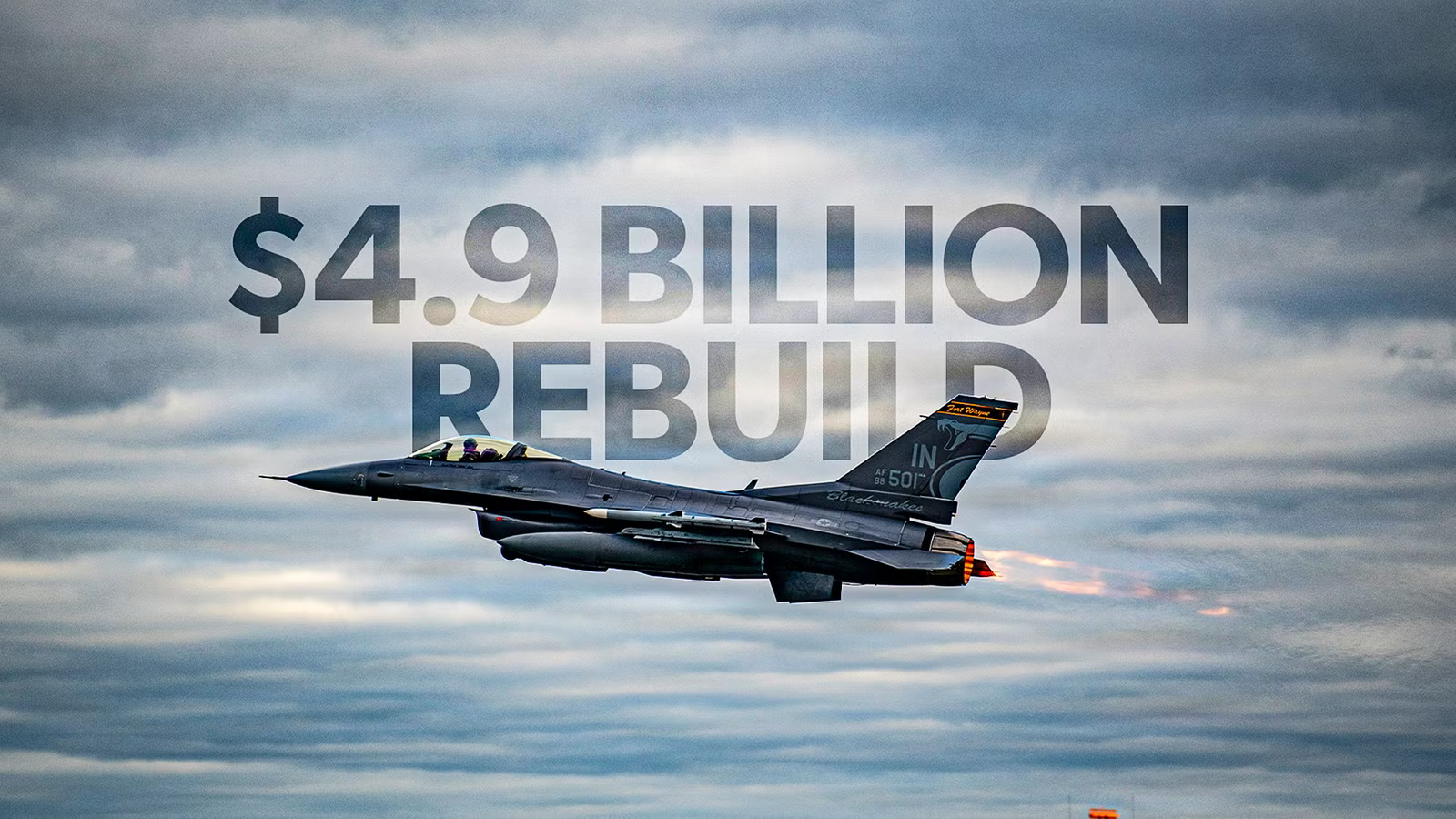
On October 10, 2018, Hurricane Michael made a direct hit on Tyndall Air Force Base on the Florida Panhandle as a Category 5 hurricane with 155 mph (250 km/h) sustained winds. The storm damaged or destroyed 484 buildings, forced the relocation of 11,000 personnel, and inflicted approximately $4.7 billion in damage. Two weeks later, the Air Force confirmed the base would not be abandoned. It would be rebuilt from the ground up as the “Installation of the Future.”
The rebuild is now approaching $5 billion in total investment across 12 construction zones producing more than 120 facilities. The base is transitioning from an F-22 training installation to a combat-coded F-35A wing hosting three operational squadrons with 78 jets. Every new structure is designed to withstand at least 165 mph (265 km/h) winds and is elevated above projected storm surge levels.
What Hurricane Michael Did To Tyndall

Hurricane Michael made landfall on October 10, 2018, at Tyndall Air Force Base near Panama City, Florida, as a Category 5 hurricane with sustained winds of 155 mph (250 km/h) and a storm surge of 9-14 feet (2.7-4.3 meters). The base took a direct hit. The hurricane damaged or destroyed 484 buildings across the installation, leaving none salvageable in their pre-storm condition. The Air Force relocated 11,000 personnel and evacuated 46 aircraft to other bases ahead of the storm. The estimated damage to the base totaled approximately $4.7 billion.
Tyndall was at the time home to the 325th Fighter Wing, which operated as an F-22 Raptor training wing, and the 53rd Weapons Evaluation Group, which flew unmanned QF-16 target drones over the Gulf of Mexico test range. The base’s location on the Florida Panhandle coastline gave it direct access to one of the largest and most versatile military training ranges in the country, a capability that made the installation strategically valuable but also placed it in one of the most hurricane-exposed positions of any Air Force base in the continental United States. The forests surrounding the base were flattened. Hangars were shredded. Housing, administrative buildings, and support facilities were left unusable.
On October 24, 2018, two weeks after the hurricane, Vice President Mike Pence visited Panama City and confirmed that Tyndall would be rebuilt. The decision was significant because some within the defense establishment had questioned whether reconstructing a base on the same exposed coastline was the right approach given the likelihood of future storms. The Air Force chose not just to rebuild but to reimagine the installation entirely, designating it the “Installation of the Future” and committing to a reconstruction effort that would produce a base designed from the ground up to withstand the next major hurricane while supporting a new generation of fighter operations.
The $4.9 Billion Rebuild Across 12 Zones

The rebuild is organized across 12 construction zones, each containing multiple facilities with staggered completion dates. The Natural Disaster Recovery Program accounts for approximately 40 projects producing over 120 individual facilities at a cost of roughly $3 billion. Additional projects covering facility sustainment, restoration, modernization, and operations and maintenance funding bring the total program to approximately $4.9-5.1 billion depending on which expenditures are included. The Air Force Civil Engineer Center’s Natural Disaster Recovery Division manages the program in partnership with the US Army Corps of Engineers.
The largest single contract in the program, and the largest military construction contract in Air Force history, was a $532 million award to Hensel Phelps in May 2022 for 11 facilities in Zone 1, the area devoted to flightline operations for the F-35. With $72 million in contingencies and oversight included, the total investment in Zone 1 reached $604 million. The 11 facilities include three squadron hangars, flight simulator buildings, maintenance support facilities, and the infrastructure required to receive, house, and sustain three squadrons of fifth-generation fighter aircraft. Col. Travis Leighton, chief of the Air Force Civil Engineer Center’s Natural Disaster Recovery Division, described the contract as an opportunity to “reimagine how we accommodate the needs of the F-35.”
The 12 zones cover every function of a major Air Force installation beyond the flightline. Base housing, administrative facilities, a medical clinic, a fitness center, dining facilities, a new base exchange, and civil engineering support buildings are all being constructed or reconstructed across the remaining zones. At peak construction activity, up to 4,000 construction workers are operating on the installation simultaneously alongside active-duty personnel who continue to conduct flight operations and training while the base is rebuilt around them.
Three F-35 Squadrons And 78 Jets

The 325th Fighter Wing at Tyndall transitioned from an F-22 Raptor formal training unit to a combat-coded F-35A Lightning II wing as part of the rebuild. The wing will eventually host three operational F-35A squadrons with a total of 78 aircraft. This is a fundamentally different mission from what the base performed before the hurricane. Rather than training F-22 pilots for other units, the 325th will deploy as a complete combat wing, training and fighting as a single formation.
The 95th Fighter Squadron was the first of the three squadrons to stand up at Tyndall, reactivated in 2023. The squadron received its first four F-35As in early August 2023, with additional deliveries continuing through 2024 despite delays caused by the F-35 program’s TR-3 software issues that slowed aircraft deliveries across the entire program. By late 2024, deliveries had resumed with upgraded aircraft. The remaining two squadrons will stand up afterward to complete the wing’s transition to a fully operational three-squadron F-35 formation.
The F-35s arrived before the hangars were ready. The three squadron hangars in Zone 1 were not completed when the first jets landed, which meant the aircraft sat on the open ramp in the Florida sun without shade structures. Maintainers worked out of refurbished office space with tools and spare parts stored away from the flightline. Maj. Benjamin Flores, who commanded the initial maintenance unit, described the conditions as manageable but acknowledged the challenge of maintaining fifth-generation stealth aircraft outdoors in a subtropical climate. The hangars are expected to be complete by the end of 2026, at which point the maintenance operation will move into permanent facilities purpose-built for the F-35.
Built To Survive The Next Hurricane

Every facility being constructed at Tyndall is designed to withstand winds of at least 165 mph (265 km/h), 10 mph (16 km/h) above the sustained winds Hurricane Michael produced when it hit the base. The Air Force’s Design Wind Speed Memo requires all new construction and modifications to be capable of surviving a future Category 5 hurricane with winds ranging from 165 to 186 mph (265 – 300 km/h). Buildings are elevated above projected storm surge levels calculated for a 75 to 100-year planning horizon. Construction uses low-maintenance materials selected for durability in the salt-air coastal environment. Robert Bartlow, chief of the Natural Disaster Recovery Program, stated the approach directly: “We’re not going to treat a Category 5 storm as an exceptional event. That’s the new standard.”
The structural hardening is paired with nature-based coastal resilience solutions that the Air Force developed through a first-of-its-kind Coastal Resilience Implementation Plan. Tyndall sits on a peninsula with more than 40 miles (64 km) of coastline along St. Andrew Bay and the Gulf of Mexico. Sand dunes on the 18 miles (29 km) of barrier islands surrounding the base form the first line of defense against storm surge. Hurricane Michael swept over those dunes and stripped the vegetation that held them in place. The Nature Conservancy, partnering with the Air Force through the Readiness and Environmental Protection Integration program, is restoring the dunes and constructing oyster reef breakwaters starting in 2026. The oyster reefs break wave energy before it reaches the shoreline, and once established, they are self-sustaining, growing and repairing themselves as living structures. Seagrass plantings and marsh restoration along the base’s northern shoreline on East Bay provide additional wave attenuation and sediment stabilization.
The combined approach, which the Air Force calls a “coastal resilience triad” of nature-based, structural, and non-structural solutions, is designed so that no single failure point can leave the base exposed. If the dunes are overtopped, the oyster reefs have already reduced wave energy. If the reefs are damaged, the elevated and hardened buildings are designed to withstand what reaches them. The strategy accepts that another major hurricane will eventually hit the base and builds multiple layers of protection rather than relying on any one of them to hold.
Where The Rebuild Stands In 2026

As of June 2026, the rebuild is approaching its eighth year. The Air Force reported that approximately $4.5 billion in military construction and facility modernization projects are underway or complete across the installation. Around 95% of the Natural Disaster Recovery Program is under construction, up from approximately 30% one year earlier. Completed facilities already in use include a 360-room temporary lodging facility built to the 165 mph (265 km/h) wind standard, administrative buildings, and support infrastructure across several of the 12 construction zones. The 95th Fighter Squadron is conducting F-35 flight operations from the base daily while construction continues around it.
The F-35 hangars and flightline facilities in Zone 1 remain the highest-priority incomplete component. The three squadron hangars are expected to be finished by the end of 2026, at which point the maintenance operation will transition from its temporary facilities on the open ramp into permanent buildings purpose-built for fifth-generation fighter aircraft. Once complete, the hangars will include integrated maintenance tracking systems, environmental controls designed for the F-35’s stealth coatings, and workspace configurations informed by the Air Force’s experience at other F-35 bases, including Hill, Luke, and Eielson.