dailynewsnblog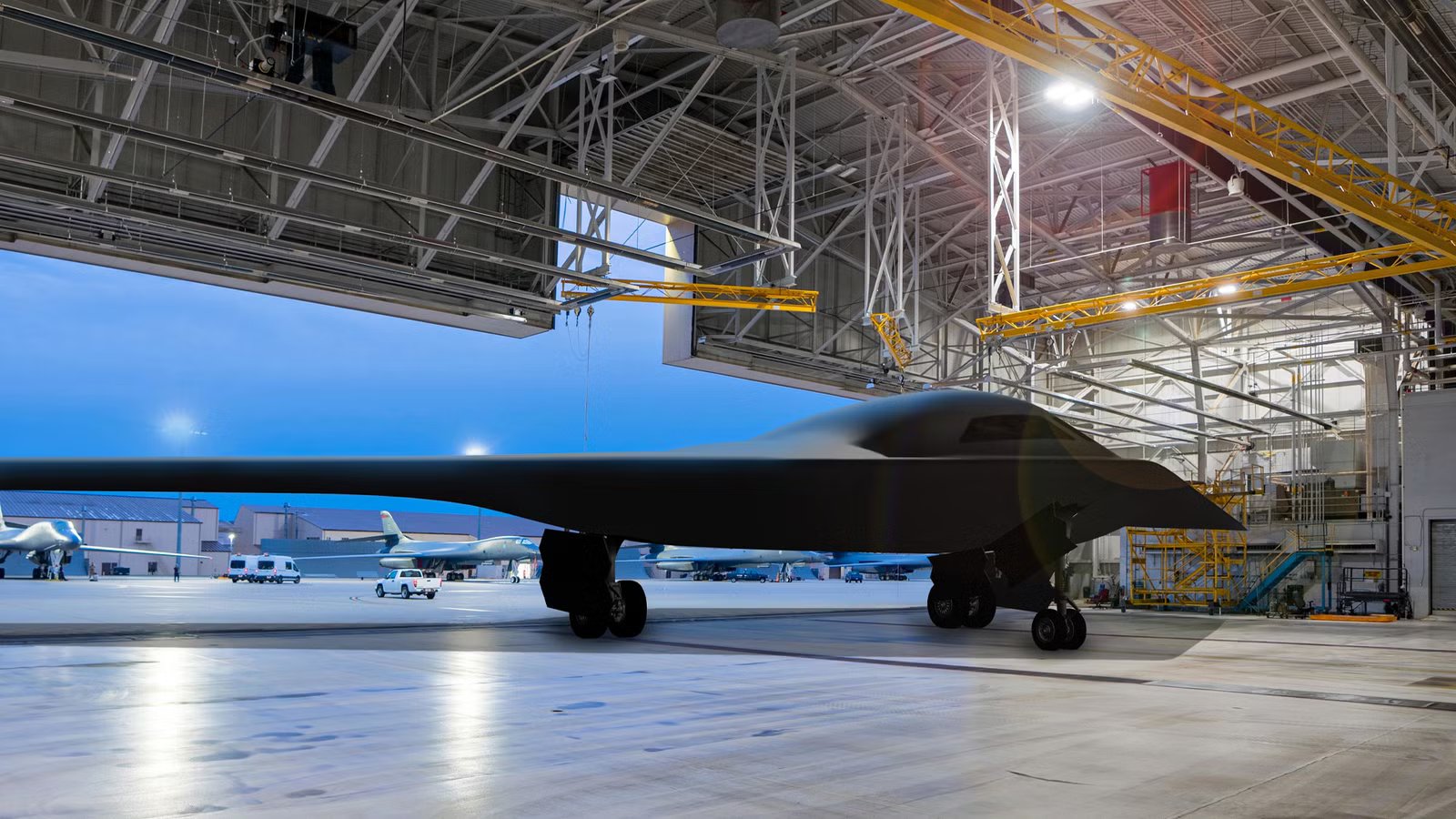
The United States Air Force has a couple of test Northrop Grumman B-21 Raiders that are blurring the line between testing and fielding. The B-21 Raider is expected to enter service in 2027, making it the world’s first all-new strategic bomber to enter service since the B-2 Spirit entered service in 1997. China is also working to develop its Xi’an H-20 stealthy strategic bomber, but it is unclear when it will enter service.
Russia is falling behind with wartime attrition, wear and tear, and mishaps largely whittling away its Tu-22M3 bombers, forcing it to increasingly rely on its limited fleet of prestige Tu-160 bombers. Lacking a credible next-generation modern bomber, Russia has put the Cold War-era Tu-160 back into production. Let’s examine why the Air Force’s test B-21s will eventually enter combat service and how the type is similar to, and different from, the B-2.
The US Air Force Is Rushing B-21 Testing

In September 2025, the US Air Force announced it had taken delivery of the second test B-21 Raider. In early 2026, Northrop Grumman announced that one of their test B-21s had been sold to the United States Air Force. As of mid-2026, it is unclear how many units are being operated by Northrop and the Air Force. The type is in low-rate production with around one to two units being produced annually.
Today, the Air Force is pushing through tests for the aircraft with urgency to bring it into service in 2027. In June, the USAF announced another milestone as an operational test pilot flew the bomber with a development test pilot sharing the cockpit. The integration of operational test marked a major shift in how the Air Force evaluates its new-generation aircraft.
Matt Guasco, AFOTEC Det. 5 Commander, said that “we put an operational test member in the pilot seat with an Air Force Test Pilot School graduate in the other. In the history of modern test, we’ve never done that so early in a program.” This means the Air Force is able to conduct both developmental testing and operational testing on the aircraft at the same time, allowing the aircraft to progress through to coming into service earlier.
Test B-21s Are Set To Become Operational B-21s

But there is something else different about these aircraft. Typically, the initial test and prototype aircraft of a new type of aircraft are only used for testing and prototyping and are discarded afterward, while others are retained for iterative testing. Generally, test aircraft are not intended to become operational aircraft. However, the B-21 Raider is different. The Air Force had deliberately designed these units to be much closer to the final production standard.
This means the Air Force can cut back on the expensive step of building a handful of unique prototypes that would later be discarded. These test aircraft are expected to transition into service after testing is complete and are part of the Air Force’s broader effort to shorten the development time and reduce costs.
Dale White, the Department of Defense’s Direct Reporting Portfolio Manager for critical major weapon systems, spoke about this in April. He said that “every test proves the success of empowering our leaders to deliver integrated capability from the start.”
White also explained that the program’s use of digital engineering and modern production processes is “delivering a mature, highly capable system, giving us confidence as we continue to smartly scale our production capacity at the speed of relevance.” As such, these test aircraft being flown by the Air Force are not pure prototypes: rather, they are early production-representative test vehicles that will be converted and upgraded into operational combat aircraft.
The B-2 Spirit Was Originally Planned To Have Dedicated Test Aircraft

Test B-21s being brought into service is not wholly without precedent, as all six B-2 flying test aircraft (AV-1 through AV-6 ) were also eventually brought into service. The B-2 development program (part of the Advanced Technology Bomber / ATB effort) produced six flying test aircraft in the late 1980s and early 1990s.
These were also production-representative air vehicles (AVs) that were used for comprehensive flight testing. After they completed their test roles, they were upgraded to the operational Block 30 standard, which is the full production standard with all stealth, avionics, and mission capabilities. However, originally, the Air Force had planned to acquire 132 B-2s (reduced to 75 by the late Cold War).
The United States Air Force’s Strategic Bomber Fleet | Number (Per USAF) |
|---|---|
Northrop Grumman B-21 Raider | 2+ (testing) |
Northrop B-2 Spirit | 19 (two written off) |
Rockwell B-1B Lancer | 44 (45 mandated) |
Boeing B-52 Stratofortress | 76 (possibly 75 after mishap) |
For a fleet of that size, having a fleet of several permanent test aircraft was considered reasonable. Not all of them were originally intended to become operational, with the expectation being that some of them would remain dedicated test assets.
At the same time, these aircraft were built on the same production line and had much the same structure as the production aircraft. That fact meant that conversion was technically feasible. It is common for aircraft types (both military and commercial) to have a few dedicated test aircraft. This is why Airbus has a test aircraft of every type of aircraft it builds, including the Airbus A380.
Converting The B-2 Test Aircraft

By 1992, the Cold War had ended, and the Soviet Union had ceased to exist. Production was effectively capped at 20 operational aircraft, and with such a small fleet, every aircraft suddenly became more valuable. The Air Force then turned to examine whether the test aircraft could be upgraded and pushed into service, rather than being left as a dedicated research asset. The aircraft AV-2 to AV-6 were relatively close to the operational configuration, and they were soon upgraded, bringing the fleet to twenty.
The original test vehicle, AV-1, was more difficult. It was the first flying aircraft and represented an earlier design standard, and had been planned to remain a permanent test vehicle. The Air Force still opted to bring it into service, but it required a more extensive rebuild. The decision was taken in 1996 to convert it, and it received new landing gear, redesigned avionics, structural modifications, updated weapons bay doors, stealth improvements, the installation of full combat systems, and more.
The aircraft eventually entered service in 2000 as Spirit of America (registered 82-1066) after considerable expense. The other aircraft are AV-2 Spirit of Arizona, AV-3 Spirit of New York, AV-4 Spirit of Indiana, AV-5 Spirit of Ohio, and AV-6 Spirit of Mississippi. Since then, two B-2s, Spirit of Kansas (2008) and Spirit of Hawaii (2022), have been written off after mishaps, reducing the fleet to 19 examples.
Test Aircraft Are Designed To Enter Regular Service

While this is similar to the B-21 Raider, it is not the same. The key distinction is that the B-2’s test aircraft were initially built as true developmental prototypes, with some intended to remain test vehicles, while the B-21’s test aircraft are being designed from the outset to be both flight test vehicles and fully combat aircraft. The decision to upgrade the B-2s was only taken after the Air Force saw its production numbers slashed.
As such, it was a choice of either using them or having fewer operational aircraft. The Air Force is currently mulling expanding its future fleet size from 100+ aircraft to at least 145 or even up to 200. The B-2 experience taught the Air Force that the first planes should be designed as production-representative aircraft from the beginning.
This significantly reduces the amount of rework they need to become operational, especially after converting AV-1, which is estimated to have cost a whopping $493 million or around $1 billion in 2026 dollars. That is more than the per-unit cost of a new B-21. While the B-21s used for flight testing still carry additional instrumentation, they are close to the final production standard.
B-21s Will Serve Alongside The B-1, B-2 & B-52

Even though the B-21 Raider program remains largely on budget and on schedule, the Air Force is pushing back the expected retirement dates for its aging, worn-out B-1 Lancers and expensive B-2 Spirits. These aircraft can not be retired until the B-21 is available in sufficient numbers and has become a reasonably mature platform.
In FY 2025, the Air Force had envisioned phasing out its swing-wing B-1s between FY 2028 and around FY 2032. But in April 2026, the Air Force documents showed it is gearing up to invest almost $1.7 billion in modernizing its B-1B Lancers and B-2 Spirits over the next five years. This includes $342 million on B-1 modernizations between 2027 and 2031. The aircraft is now not expected to end its service until 2037. The bulk of the investment is in the B-2 fleet.
It is unclear when the new retirement date for the B-2s is expected to be, but it could be in the 2040s. The Air Force is moving forward with its plans to re-engine and upgrade its B-52s to the B-52J standard to serve as the ‘missile truck’ carrying standoff munitions to complement the B-21 penetrator bomber. While the B-21 is designed to be a workhorse bomber (as opposed to the ‘first day’ B-2), it is limited in how many munitions it can deliver, meaning the B-52 can play a supporting role.