dailynewsnblog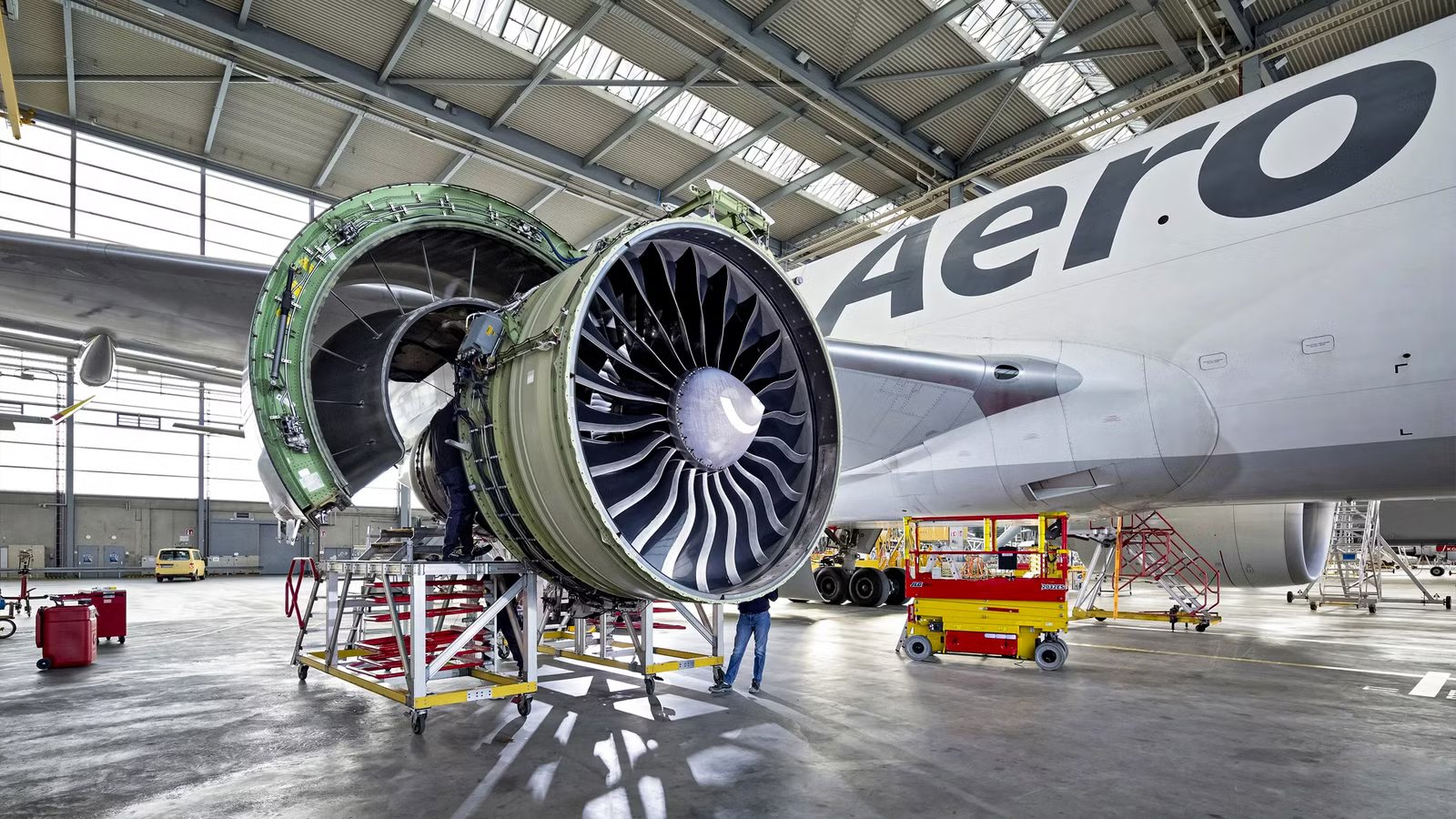
The aviation industry has long relied on breakthrough engine architectures to deliver major leaps in performance. From the introduction of the high-bypass turbofan in the 1960s to geared turbofan technology in the past decade, each new generation has fundamentally changed how commercial aircraft fly. However, the next step in propulsion may look very different from previous revolutions.
Nowadays, many manufacturers believe that future gains will come from refining existing technology by maximizing today’s successful engine concepts through better materials, manufacturing techniques, digital engineering, hybrid systems, and sustainable fuels. Speaking to Simple Flying at the Farnborough Airshow, MTU Aero Engines explained why evolutionary improvements, and not a clean-sheet engine architecture, could define the next era of commercial aviation.
The Future Of Aircraft Engines May Be About Evolution Rather Than Revolution

For decades, aviation has progressed through landmark engine designs that dramatically improved efficiency. Turbojets gave way to turbofans, bypass ratios steadily increased, and geared turbofan ( GTF) technology introduced an entirely new approach to decoupling fan and turbine speeds. Historically, these breakthroughs arrived every few decades, often requiring billions of dollars in research and certification.
Today, however, the industry’s priorities are changing. Airlines remain focused on reducing fuel burn, emissions, maintenance costs, and noise while also demanding greater reliability. Instead of waiting another generation for a completely new propulsion concept, manufacturers can now find substantial gains by continuously improving today’s most advanced engines.
That is precisely the philosophy shared by MTU Aero Engines. André Sinanian, Senior Vice President, Commercial Engine Programs, explained that the current geared turbofan platform still has significant untapped potential:
“We believe that with our current GTF engine, we have an excellent basis to further develop the engine to achieve the next generation requirements. We don’t believe that we need a completely new engine architecture. We see a lot of potential in the current geared turbofan concept, and we are working on technologies that will make it even more efficient for the future.”
The statement reflects a broader trend across the aerospace industry. Engine manufacturers increasingly believe that future improvements will come through incremental innovations that collectively deliver meaningful reductions in fuel consumption rather than relying on a single revolutionary breakthrough.
MTU Aero Engines Plays A Much Larger Role Than Many Passengers Realize

Although many travelers recognize names such as Pratt & Whitney, GE Aerospace, and Rolls-Royce, fewer are familiar with MTU Aero Engines despite its central position within the global aerospace supply chain. Sinanian explained that the company operates across three major business segments:
“MTU is one of the leading engine manufacturers in the world. We have three business areas. One is the OEM business, where we develop and manufacture engine components together with our partners. The second is commercial maintenance, repair and overhaul, and the third is military engines.”
Unlike companies that perform complete engine assembly, MTU specializes in designing and manufacturing critical engine components before delivering them to major engine manufacturers. He added:
“We design the components, we manufacture the components and deliver them to the OEM for final assembly. That’s our business model in the OEM area.”
Its partnerships span virtually every major Western commercial engine manufacturer, with Sinanian saying that “we work together with Pratt & Whitney, with GE Aerospace and with Rolls-Royce in different engine programmes around the world.” Those partnerships have created remarkable market penetration. For instance, the company’s involvement extends particularly deeply into Pratt & Whitney’s geared turbofan family. As Sinanian noted:
“Every third engine in the world has an MTU component. (…) One third of the GTF engine is finally assembled in Munich by MTU.”
This level of participation gives MTU unique visibility into how current engine technology continues to evolve. It also allows it to contribute directly to the next generation of improvements.
Efficiency Improvements Now Come From Combining Many Technologies

Engine development is becoming more multidisciplinary than ever. Manufacturers are simultaneously improving numerous aspects of engine design, rather than depending on a single innovation. According to Sinanian, hybrid technologies represent only one element of this broader strategy. He said:
“There will be specific features, like hybrid features, where you can optimize the efficiency of the engine. There will be some specific technologies that we can apply to optimize the efficiency of the engine. It’s not one single technology. It’s really a combination of technologies that will deliver the next step in efficiency.”
That combination includes aerodynamic improvements, more efficient compressors and turbines, lighter rotating components, improved cooling systems, digital controls, and very sophisticated predictive maintenance systems. Each improvement may produce only modest gains, but together they can significantly reduce operating costs over an engine’s service life. Modern engine designers also evaluate efficiency far more broadly than simply measuring fuel consumption. Sinanian explained:
“It’s all about efficiency. It’s about the thermal efficiency, the propulsive efficiency. It’s about the weight of the engine. It’s about the noise. So there are a lot of parameters where we continue to improve.”
Thermal efficiency determines how effectively fuel energy becomes useful power, while propulsive efficiency measures how efficiently that power moves the aircraft through the air. At the same time, reducing engine weight allows airlines to burn less fuel on every flight, while lower noise levels help airports meet strict environmental regulations. Together, all these improvements allow manufacturers to deliver meaningful performance gains without fundamentally redesigning the engine architecture itself.
Advanced Materials & Manufacturing Are Transforming Engine Design

Some of the largest advances in today’s engines are invisible to passengers. Materials science has become one of the most important drivers of improved engine performance. Modern high-pressure turbine blades operate in temperatures exceeding the melting point of the metal itself thanks to sophisticated internal cooling passages, ceramic thermal barrier coatings, and advanced nickel-based superalloys. These technologies allow engines to operate hotter and more efficiently while maintaining durability.
Manufacturing methods are evolving just as quickly. Traditional machining is being complemented by additive manufacturing, or 3D printing, enabling engineers to create lighter, stronger, and more complex components that were previously impossible to produce. 3D printing, in particular, is driving this revolution and has also become much more common across numerous industries, including aircraft manufacturing. Sinanian emphasized that progress comes from integrating all these developments:
“The material is an important element. The design is an important element. How you manufacture the part is an important element. There are even some 3D-printed components now coming into the engines. So it’s really a combination of all these technologies that enables us to further improve the engine.”
Additive manufacturing offers several advantages beyond weight reduction. Engineers can consolidate multiple parts into a single component, reducing assembly complexity while improving reliability. Internal cooling channels can also be optimized to improve heat transfer, supporting higher operating temperatures and greater fuel efficiency.
Meanwhile, digital engineering tools allow manufacturers to model entire engine systems, including the so-called “digital twins”, as noted in MTU’s Aeroreport, with unprecedented accuracy before physical prototypes are built. This shortens development timelines while reducing costs.
Sustainable Aviation Fuel & Production Capacity Remain Equally Important

While engine efficiency continues improving, reducing aviation’s carbon footprint also depends heavily on fuel itself. Sustainable aviation fuel ( SAF) is currently viewed as the industry’s most practical near-term pathway toward lower lifecycle emissions because it can often be used in existing aircraft without major modifications. Sinanian highlighted this compatibility as one of today’s greatest advantages.
“The engines naturally can just run on SAF. That’s another important contribution to reducing emissions.”
Unlike hydrogen-powered aircraft or fully electric propulsion, SAF allows airlines to leverage existing fleets, infrastructure, and engine technology while gradually lowering lifecycle carbon emissions depending on the feedstock used. However, manufacturers face another challenge: meeting extraordinary market demand. Airlines continue ordering new aircraft at record levels, while maintenance requirements also continue growing. According to Sinanian:
“Our priority today is clearly execution. Delivering, delivering, delivering. Demand is very high, and we’re ramping up our production and MRO capacity as fast as we can.”
Engine efficiency improvements beyond architecture | |
|---|---|
Area | Current direction |
Engine architecture | Continued evolution of the geared turbofan |
Materials | Advanced superalloys, ceramic coatings, composites |
Manufacturing | Increased use of 3D-printed components |
Sustainability | Full compatibility with Sustainable Aviation Fuel |
Digital technologies | Better engine monitoring and predictive maintenance |
Hybrid technologies | Supplemental efficiency improvements |
Maintenance | Expanded global MRO capacity |
Supply chain | Increased production capability across suppliers |
MTU has responded by expanding its maintenance footprint internationally. Sinanian told Simple Flying that “we just opened our new engine MRO shop in Dallas-Fort Worth, and we’re increasing roughly 20% of MTU’s maintenance capacity in the US.”
Despite these investments, the aerospace industry’s largest obstacle remains manufacturing capacity. Sinanian concluded that “demand is still very high. The biggest challenge remains the supply chain across the industry. Everybody is working to increase capacity, but it takes time.”
Incremental Innovation May Define Aviation’s Next Decade

For much of aviation history, every new engine generation represented a dramatic technological leap. Today’s reality appears different. Many manufacturers see greater value in continuously refining proven architectures rather than replacing them entirely. The geared turbofan has already demonstrated significant improvements in fuel efficiency, noise reduction, and emissions compared with previous engine generations.
According to MTU, there remains considerable room for further gains through better materials, additive manufacturing, hybrid technologies, advanced aerodynamics, digital optimization, and sustainable fuels, and all without abandoning the core engine concept. That philosophy also aligns with airlines’ priorities. Incremental improvements reduce technical risk, accelerate certification, lower development costs, and enable new technologies to enter service more quickly.
Instead of waiting decades for a revolutionary engine, passengers may benefit from continuous performance improvements introduced generation after generation. If MTU’s outlook proves correct, the next major leap in aircraft propulsion will not come from reinventing the engine, but from perfecting every part of the one already flying.