dailynewsnblog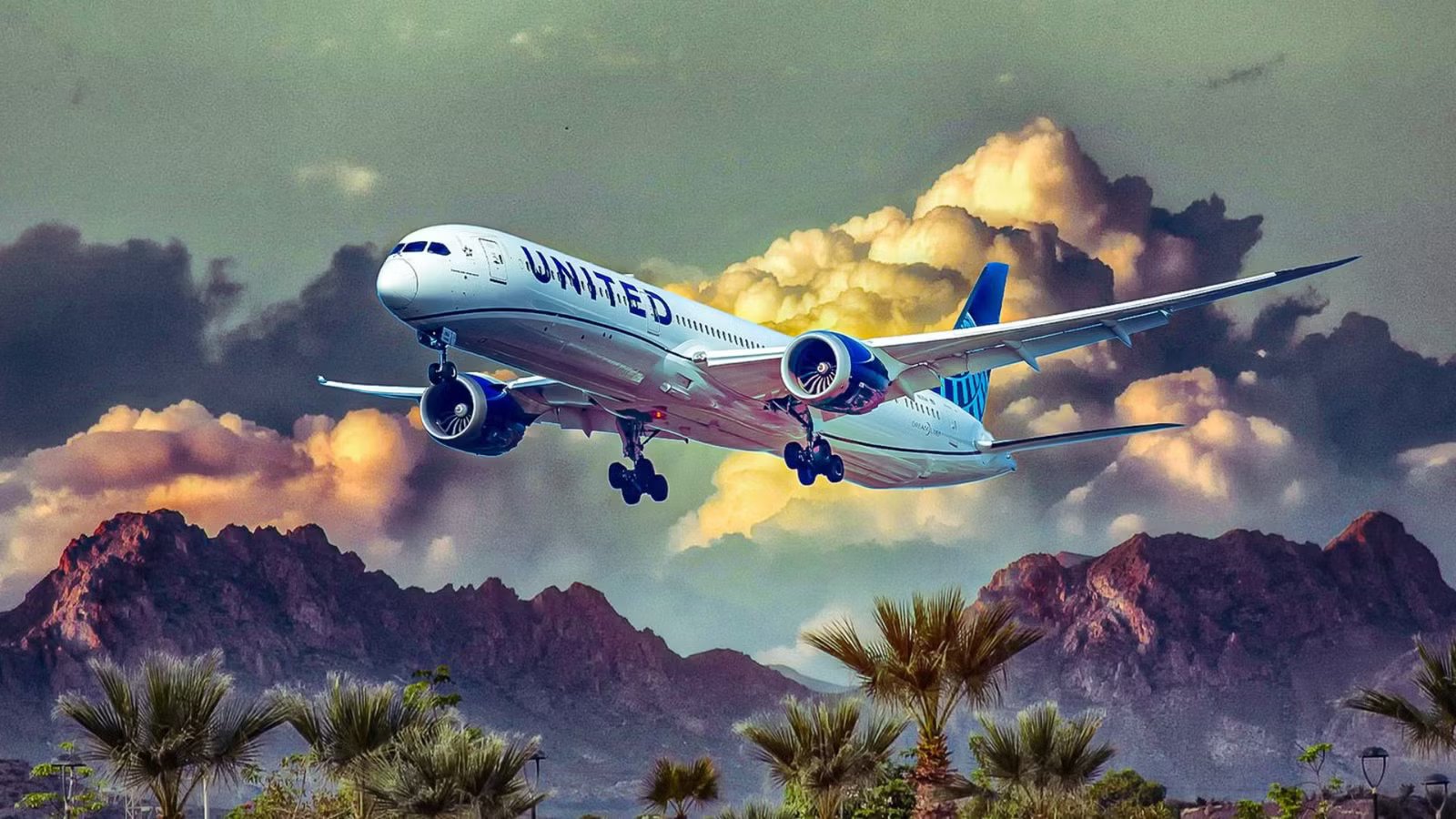
The Boeing 787 Dreamliner represented one of the most ambitious commercial aircraft programs of the modern aviation era. Officially launched in 2004 and entering airline service in 2011, the aircraft introduced significant technological changes, including extensive use of composite materials, improved fuel efficiency, and long-range capabilities designed to reshape the economics of long-haul travel.
Since then, the Dreamliner family has become one of Boeing’s most successful widebody programs. Alongside the aircraft’s commercial success, one figure that has increasingly attracted attention is the rise in its published list price. Early launch-era estimates placed the 787-8 at approximately $120 million, while Boeing’s final publicly released price catalog for 2018, as reported by The Points Guy, listed the 787-8 at $239 million, 787-9 at $281.6 million, and 787-10 at $325.8 million.
At face value, the numbers suggest a dramatic increase over time. However, the explanation goes beyond a simple rise in aircraft costs. Indeed, it reflects a combination of annual pricing adjustments, program evolution, market maturity, large-scale airline purchasing dynamics, and the broader economics of producing a modern commercial aircraft.
Annual Boeing 787 Dreamliner Price Escalation Over Time

Commercial aircraft pricing historically follows a pattern of incremental revisions rather than abrupt increases. Manufacturers periodically update pricing to account for inflation, labor costs, supply-chain expenses, currency fluctuations, engineering investment, and changing production costs.
While these adjustments can appear small in a single year, they accumulate significantly across aircraft programs that may remain in production for decades. Boeing’s pricing history illustrates this effect clearly. The company increased commercial aircraft prices by approximately 4.1% in its 2018 adjustment, compared to Airbus‘s 2% rise. In 2015 and 2016, Boeing made no adjustment to list prices until 2017, when the manufacturer implemented an increase of 2%.
Even if yearly adjustments average only a few percentage points, the effect becomes substantial over a period exceeding ten years. A recurring increase of 3–4% compounded over fourteen years can result in a total rise of more than 50–70%, even before accounting for broader program changes and aircraft evolution.
The Dreamliner spans exactly this type of timeline. The aircraft was launched in 2004, entered airline service in 2011, and Boeing’s final public list prices arrived in 2018. Comparing a launch-era figure from the mid-2000s directly with pricing more than a decade later captures the cumulative impact of long-term economic and industrial adjustments rather than a sudden increase in a single period.
The Aircraft Family Expanded Beyond The Original Concept

Boeing’s Dreamliner family itself evolved considerably over time. The original 787-8 was designed as a mid-sized long-haul aircraft, but the program later expanded into the larger 787-9 and 787-10 variants. The 787-9 typically accommodates approximately 290 passengers in a two-class configuration, while the larger 787-10 can seat around 330 passengers depending on the airline’s layout.
These larger variants provided airlines with additional capacity while maintaining many of the fuel-efficiency advantages that made the Dreamliner attractive in the first place. The aircraft also introduced technologies that differentiated it from previous generations of widebody aircraft. Approximately 50% of the aircraft’s primary structure by weight uses composite materials, helping reduce overall airframe weight while improving efficiency.
Boeing promoted fuel burn reductions of approximately 20–25% compared with many aircraft types that the Dreamliner was intended to replace. Over time, airlines also increasingly selected premium cabin products, upgraded business-class suites, enhanced connectivity systems, and route-specific configurations, further expanding the aircraft’s capabilities.
The Dreamliner family has continued evolving beyond cabin and interior improvements. Boeing’s newer increased Maximum Takeoff Weight option for the 787-9 and 787-10 introduced additional operational capability. The 787-9 received an approximately 10,000 lb (4,540 kg) MTOW increase, allowing roughly 6,600 lb (3,000 kg) of additional payload or more than 300 nautical miles (560 km) of additional range.
Meanwhile, the 787-10 gained approximately 14,000 lb (6,350 kg), enabling nearly 11,000 lb (5,000 kg) of additional payload or over 400 nautical miles (740 km) of additional range. The addition illustrates how the Dreamliner program has continued improving years after entering service, demonstrating that the aircraft offered to airlines today is more capable than the original product introduced during the program’s early development years.
Market Validation Increased The Aircraft’s Commercial Value

As with all new aircraft, when the Dreamliner was first introduced, airlines were evaluating a largely unproven platform. Much of the aircraft’s value proposition centered on projected performance targets, including lower fuel consumption, improved operating economics, and the ability to profitably serve long-haul routes with fewer passengers than larger widebody aircraft.
Catch what other flight trackers miss
Emergency squawks, holds, NOTAMs — live signals, no signup.
Open tracker
Catch what other flight trackers miss
Emergency squawks, holds, NOTAMs — live signals, no signup.
Open tracker
Following entry into service in 2011, real-world operating data gradually reduced that uncertainty.  Boeing promoted fuel-burn improvements of approximately 20–25% relative to several aircraft types the Dreamliner was designed to replace. Airlines eventually gained access to millions of flight hours of operational data across a wide range of routes and operating conditions.
As performance assumptions became measurable outcomes rather than projections, the aircraft’s commercial appeal strengthened. The Dreamliner fleet has since accumulated more than 30 million flight hours and carried over one billion passengers, demonstrating how the aircraft moved from a developmental concept to a mature commercial product. Supply and demand dynamics also likely played a role in strengthening the aircraft’s broader market position.
During the 2010s and early 2020s, many airlines faced large fleet replacement requirements as aging widebody aircraft such as the Boeing 767, Boeing 777-200ER and Airbus A330-200 approached retirement cycles. At the same time, production capacity for modern widebody aircraft remained finite, while global air travel demand continued to recover and expand. As demand for fuel-efficient long-haul aircraft increased, mature and proven platforms naturally became more commercially valuable.
Global Adoption Strengthened The Dreamliner’s Position

When the Dreamliner entered service, airlines were introducing it gradually across selected routes and operational environments. As additional carriers adopted the aircraft and operational experience increased, confidence in the platform expanded throughout the market. Airlines increasingly viewed the aircraft as a versatile option capable of serving both dense long-haul routes and lower-demand city pairs that previously may not have supported larger widebody aircraft.
Catch what other flight trackers miss
Emergency squawks, holds, NOTAMs — live signals, no signup.
Open tracker
Catch what other flight trackers miss
Emergency squawks, holds, NOTAMs — live signals, no signup.
Open tracker
The growth in orders illustrates this transition. As of 2026, the Boeing 787 Dreamliner family has surpassed 2,400 firm orders and reached over 1,270 deliveries worldwide. The 787-9 emerged as the most popular member of the family with more than 1,450 orders, indicating strong demand for its combination of range and passenger capacity.
The aircraft also contributed to route expansion strategies. The 787 has led to the opening of more than 540 new nonstop routes globally because its economics allowed airlines to connect cities that previously may not have supported traditional long-haul aircraft. Greater market adoption and a larger installed fleet naturally strengthened the aircraft’s commercial standing over time.
Published Prices & Transaction Prices Are Often Different

One of the most important aspects of commercial aviation pricing is understanding that published catalog values are not necessarily equivalent to what airlines ultimately pay. Historically, list prices functioned primarily as benchmark figures used by manufacturers and industry analysts. Multiple variables influence final transaction values.
Airlines negotiate based on order size, fleet replacement strategies, delivery timing, financing arrangements, maintenance support packages, training agreements, spare-parts provisioning, and long-term service contracts. The difference in scale between buyers can be considerable. A carrier purchasing six aircraft for regional expansion presents a different commercial case from one committing to a multi-decade fleet modernization plan involving dozens of widebody aircraft.
Large orders illustrate the scale involved.  United Airlines became the largest 787 customer with commitments for more than 220 jets. At Boeing’s final published 787-9 catalog price of $281.6 million, 220 aircraft would equate to approximately $61.95 billion before any negotiated discounts, maintenance agreements, financing arrangements, or associated commercial terms were applied. Such transactions demonstrate why list prices have increasingly become less representative.
Production Complexity Also Changed Program Economics

Modern widebody aircraft are among the most complex products manufactured anywhere in the world, and the 787 introduced several significant technological shifts. By volume, approximately 80% of the aircraft structure uses composite materials, while the remaining composition consists of approximately 20% aluminum, 15% titanium, 10% steel, and 5% other materials, making it the first major commercial aircraft designed around composites at such a scale.
The engineering scale extends far beyond materials alone. Each aircraft contains approximately 70,500 lb (32,000 kg) of carbon-fiber-reinforced plastic manufactured using roughly 50,700 lb (23,000 kg) of carbon fiber, alongside millions of individual components sourced through a globally distributed supplier network. Major sections, including fuselage barrels, wings, engines, landing gear assemblies, avionics systems, and cabin systems, are produced separately before final assembly.
Managing production at this scale requires coordination across thousands of suppliers and multiple countries, but the program’s economic scale extends far beyond the manufacturing cost of an individual aircraft. Large commercial aviation programs operate across lengthy development timelines and involve extensive investment in engineering, production systems, supplier networks, certification processes, and long-term operational support.
As aircraft programs mature, the economics surrounding them evolve alongside the product itself. The Dreamliner’s changing value over time, therefore, reflects more than the cost of building an aircraft. It also reflects the broader economics associated with sustaining a global program, continuously improving capabilities, supporting operators worldwide, and maintaining production across a highly interconnected industrial network.