dailynewsnblog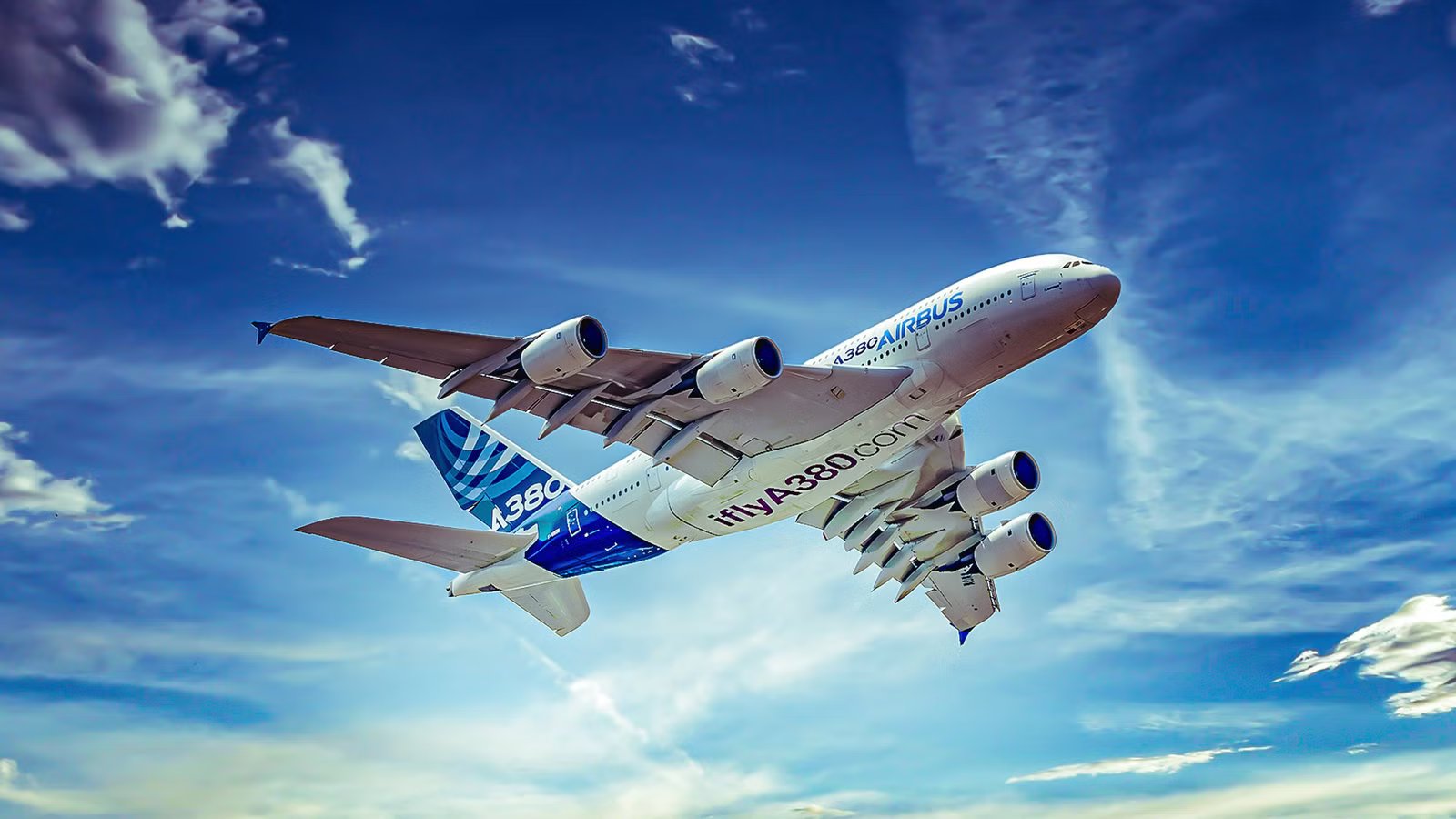
The era in which the entire aviation industry has gathered around twin-engine efficiency has left the legendary four-engine giants facing an unsustainable financial reality. The Airbus A380 remains a passenger favorite for its unmatched cabin space and smooth ride, yet behind the scenes, its quad-engine layout imposes massive economic penalties on the airlines that operate it. Operating a double-decker aircraft with four separate powerplants costs millions of dollars more each year compared to deploying modern, highly optimized twin-engine widebodies.
When Airbus designed the superjumbo, fuel prices were stable, and legacy transoceanic routing regulations favored aircraft with more than two powerplants. Decades later, a combination of intense fuel price volatility and rapid advancements in materials science completely upended those foundational assumptions. As airlines aggressively streamline their fleets to maximize profitability per block hour, the steep financial penalty of maintaining four turbines instead of two has transformed the A380 from a flagship pride into a highly specialized niche asset restricted to a select few high-density trunk routes.
The Quad-Engine Fuel Penalty

At the very core of the superjumbo’s financial deficit is its relentless consumption of Jet-A fuel during everyday flight operations. The A380 consumes approximately 4,600 gallons (17,412.9 liters) of fuel per hour during standard cruise conditions. This volume translates to a staggering hourly burn rate of more than 13 short tons (11.8 metric tons) of fuel. In direct contrast, a contemporary twin-engine widebody like the Airbus A350-900 handles identical transoceanic sectors while burning roughly half that volume per hour.
This massive gap in fuel efficiency becomes glaringly evident when analyzing actual flight telemetry data over identical long-haul corridors. Academic studies examining operational flight logs show that twin-engine alternatives deliver nearly double the fuel efficiency per payload unit compared to the heavy quad-jet. The main culprit for this is the immense dead weight of the second passenger deck combined with the structural reinforcement required to mount four separate powerplants under the wings. Even when the superjumbo achieves a high passenger load factor, the sheer physical energy required to propel its 1,268,000 pound (575,155 kilogram) maximum takeoff weight through the air strains airline fuel budgets past the breaking point.
When these consumption metrics are translated into current corporate balance sheets, the hourly financial penalty can amount to millions of dollars over a standard annual operating schedule. Assuming a baseline fuel cost of $2.50 per gallon (0.66 per liter), the superjumbo racks up an isolated fuel bill of $11,500 for every single hour spent in the air. Over a typical annual utilization pattern of 4,000 flight hours per airframe, a single A380 incurs millions of dollars in excess fuel overhead compared to an agile twinjet family.
Four Sets Of Turbines

Operating an A380 also means maintaining four complex turbofans, such as the Rolls-Royce Trent 900 or the Engine Alliance GP7200. Every single hour flown counts as an individual lifecycle across four separate sets of high-pressure turbine blades, fuel pumps, and electronic control systems. Having this duplication instantly doubles the baseline engineering labor and spare parts inventory required for a single airframe compared to a twin-engine rival.
Catch what other flight trackers miss
Emergency squawks, holds, NOTAMs — live signals, no signup.
Open tracker
Catch what other flight trackers miss
Emergency squawks, holds, NOTAMs — live signals, no signup.
Open tracker
Direct engineering and component maintenance expenses for the superjumbo routinely range between $6,000 and $8,000 per flight hour, driven largely by engine wear tolerances. When an airframe triggers its mandatory C-check or D-check overhauls, the scope of work requires overhauling four massive propulsion systems simultaneously, which exponentially increases the cost of specialized labor and replacement materials. Having four engines also doubles the likelihood of an unexpected component failure or an unscheduled engine change away from a primary maintenance hub, leading to costly network disruptions.
Widebody Aircraft Family | Number of Engines | Average Hourly Upkeep Cost | Relative Spare Parts Footprint |
Airbus A380 | Four Engines | $6,000 to $8,000 per hour | Maximum (requires separate dual supply lines) |
Boeing 777-300ER | Two Engines | $3,500 to $4,500 per hour | Baseline standard widebody footprint |
Airbus A350-900 | Two Engines | $3,000 to $4,000 per hour | Optimized modern twinjet architecture |
This continuous engineering drain heavily shapes long-term fleet management strategies for prominent global carriers. A twinjet requires overhauling only two sets of machinery, whereas the superjumbo demands an expansive secondary supply chain for specialized engine components and dedicated technicians. The long-term capital required to fund these multi-million-dollar turbine overhauls severely dampens the asset’s overall return on investment, as, over a standard ten-year operating horizon, these aggregated maintenance premiums create an immense financial gap, making the upkeep of four engines an unsustainable luxury in a highly competitive market.
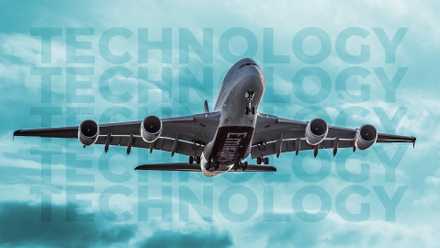
Why Did Airbus Build The A380 With 4 Engines?
A closer look at why this relatively modern double-decker has an outdated engine configuration.
Erasing The Four-Engine Mandate

When the superjumbo was first conceptualized, international safety rules strictly barred twin-engine aircraft from flying remote oceanic routes that lacked nearby diversion airports. This regulatory wall handed a natural geographic monopoly to quad-engine configurations, leaving carriers with no choice but to accept their higher operating costs to legally connect distant global hubs.
The rapid maturation of Extended-range Twin-engine Operational Performance Standards, commonly known as ETOPS, permanently shifted this structural dynamic. Modern turbine engines achieved such high levels of mechanical reliability that aviation regulators granted twinjets ETOPS ratings exceeding 180 minutes, and eventually scaled past 300 minutes. It allowed twin-engine aircraft like the A350 and 787 to fly the exact same optimized transoceanic tracks as the superjumbo, stripping the quad-jet of its primary operational justification.
With twinjets legally cleared to cross any ocean on earth, the economic penalty of carrying two extra engines purely for regulatory compliance became completely unjustifiable. Airlines quickly realized they could achieve identical network reach and identical safety margins while instantly halving their engine-related financial exposure. The ETOPS framework basically converted the quad-engine layout from a mandatory safety asset into an expensive, obsolete design philosophy that penalizes a carrier’s bottom line on every single departure.
The Load Factor Trap

The absolute baseline cost to keep the A380 in the air sits between $40,000 and $55,000 per flight hour, meaning network planners face immense pressure to consistently fill its massive multi-deck passenger cabin. A twin-engine widebody can fly half-empty on off-peak days and still clear a modest profit margin. The issue is that a partially empty superjumbo actively drains corporate cash reserves at an alarming rate.
The economic imbalance heavily penalizes airlines that operate across highly seasonal international travel markets, such as Global Airlines. During peak summer travel windows, the massive double-decker aircraft performs exceptionally well, capturing immense passenger volumes on core trunk corridors. However, when demand naturally softens during shoulder seasons, the operator remains legally tied to the exact same high fixed operating overhead. Swapping a high-capacity quad-jet for a more flexible twin-engine aircraft allows scheduling teams to scale their capacity dynamically, matching seasonal fluctuations without risking catastrophic trip-revenue deficits.
The sheer scale of the cabin layout inside the A380 demands a constant, hyper-aggressive booking volume that is incredibly difficult to sustain outside of major global aviation hubs. If a network route experiences even a minor dip in premium business traffic or a sudden macroeconomic slowdown, the superjumbo instantly transitions from a high-yield flagship into a profound financial liability. Unfortunately, the high break-even threshold exposes carriers to immense network volatility, which explains why the vast majority of international operators have abandoned the platform in favor of smaller, more resilient twin-engine configurations that protect corporate liquidity during market contractions.
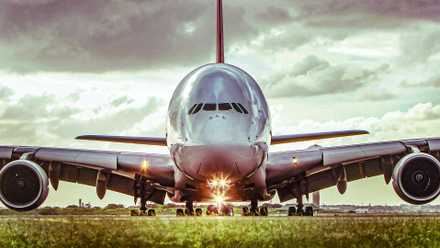
Rolls-Royce Built A Jet Engine So Powerful That It Forced A Redesign Of The Aircraft It Powers
Rolls-Royce produces some of the world’s most powerful widebody engines, including one of the two engines that power the A380.
Code F Complexities

Boasting an expansive wingspan of 262 feet (79.86 m) and a maximum takeoff weight scaling up to 1,268,000 pounds (575,155 kg), the A380 is officially classified as a strict Aerodrome Code F aircraft by the International Civil Aviation Organization. Having the heavy tier designation separates it completely from standard twin-engine widebodies, which typically occupy the more compact and logistically manageable Code E category.
Operating a specialized Code F aircraft means global carriers must pay steep premiums to cover the customized ground infrastructure required to handle a double-decker departure. Global airport authorities assess significantly higher landing, parking, and navigation tariffs for the A380 to aggressively recoup the steep capital expenditures required to reinforce taxiway bridges, widen runway shoulders, and install dual-level upper deck boarding gates. Furthermore, handling the sheer volume of a fully loaded superjumbo requires a massive mobilization of ground support equipment, including heavy-duty pushback tugs, multiple catering trucks operating simultaneously, and specialized high-flow fueling lines, which inflate baseline turn costs.
These intense infrastructure constraints fundamentally restrict the aircraft’s overall operational flexibility, heavily limiting its utility during unexpected scheduling disruptions. It puts many network teams in a sticky situation, one where there is a need to build highly rigid but vulnerable flight tracks that lack the agile routing alternatives effortlessly utilized by modern twin-engine sub-fleets.
Twin-Engine Standardizations

The overarching corporate rush to permanently retire the superjumbo highlights a profound migration toward total fleet simplification across the global airline sector. Modern airline executives have recognized that operating a fragmented widebody portfolio containing niche, low-volume quad-jets introduces an immense layer of secondary system friction.
The tangible financial advantages of this streamlined philosophy manifest clearly across an airline’s long-term human capital and training divisions. Maintaining a unified fleet centered on advanced twin-engine platforms allows flight operations teams to utilize highly versatile common type ratings for flight crews, vastly lowering expensive flight simulator overhead and maximizing daily pilot scheduling efficiency. Maintenance departments benefit just as directly, allowing engineering networks to consolidate their spare parts inventories, streamline technician training protocols, and negotiate far more favorable volume-based purchasing contracts with single-source component manufacturers.
Looking deep into the future of international long-haul travel, the permanent economic realities of fuel volatility and strict emission caps ensure that twin-engine widebodies will remain the undisputed backbones of global connectivity. Specialized network giants like  Emirates will naturally continue to use the massive scale of the superjumbo to bypass physical slot constraints at congested mega-hubs, but the broader industry has irrevocably spoken. The high-altitude era of the quad-jet has drawn to a formal close, replaced by highly optimized twinjets that prove maximum profitability is ultimately achieved through aerodynamic efficiency rather than raw physical scale.