dailynewsnblog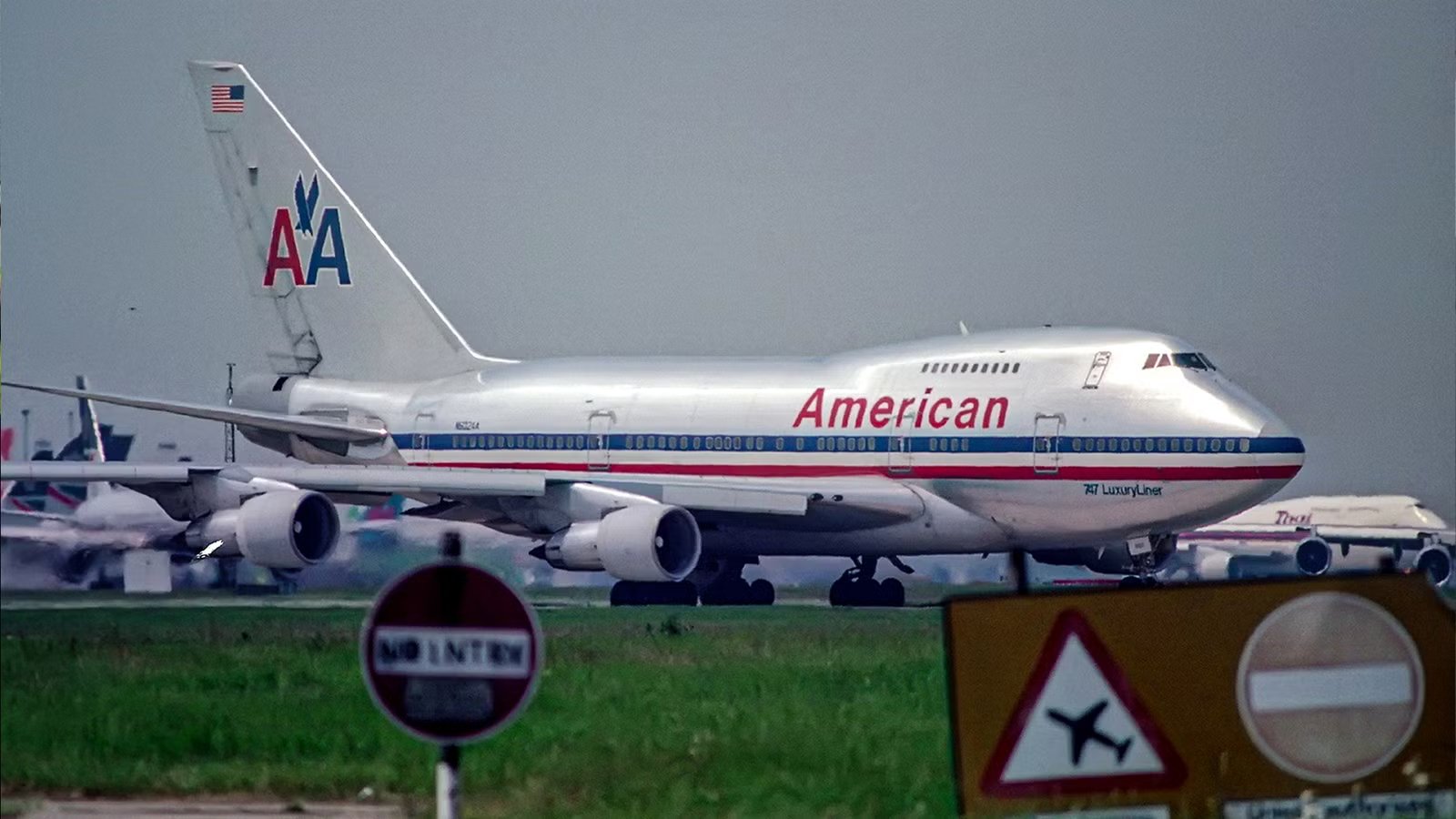
The Boeing 747SP entered service in 1976, and airlines faced a challenge that no existing airliner could adequately solve. The world’s largest aircraft could carry hundreds of passengers across oceans, while smaller widebody jets offered better economics on lower-demand routes. Yet there remained a growing market for routes that were both extremely long and relatively thin. Airlines wanted to connect distant cities nonstop without filling a giant jumbo jet, but the aircraft available at the time forced compromises in range, payload, or profitability.
Boeing’s answer was unconventional. Rather than designing a completely new aircraft, the company took its flagship Boeing 747 and shortened it significantly. The resulting Boeing 747SP, with SP standing for “Special Performance,” looked almost disproportionate compared with other members of the 747 family. Its shortened fuselage and oversized tail gave it a distinctive appearance that earned it nicknames such as the “Baby Jumbo.” Yet every unusual design choice served a specific purpose. The 747SP was engineered to fly farther than any commercial airliner of its era while carrying fewer passengers, enabling routes that had previously been impossible. Although only 45 examples were ultimately built, the 747SP demonstrated that ultra-long-haul travel was feasible decades before modern aircraft made such operations commonplace. Its short-body design was not merely a curiosity. It was a highly targeted engineering solution to a problem no other aircraft could solve at the time.
The Market Gap That Existing Airliners Could Not Fill

By the early 1970s, long-haul aviation was evolving rapidly. Widebody aircraft such as the McDonnell Douglas DC-10 and Lockheed L-1011 TriStar offered airlines efficient alternatives to the original 747. These trijets carried fewer passengers and generally suited routes that could not consistently support the capacity of a full-sized jumbo jet. However, certain airlines faced a different challenge. Pan-American World Airways wanted an aircraft capable of operating extremely long routes from New York to destinations in the Middle East and Asia. These sectors stretched beyond the practical range limits of the DC-10 and L-1011 while also creating economic difficulties for a standard 747.
The problem was not simply fuel capacity. The standard 747 had been designed around very high passenger volumes. Filling more than 400 seats on every flight was difficult on some long-distance routes. Carrying a large fuselage and a large passenger cabin reduced the aircraft’s ability to maximize range on lower-demand routes. Airlines did not need all the seats. They needed more distance.
This created what became known as the “long and thin” route problem. Airlines wanted nonstop service between cities separated by vast distances, but passenger demand was insufficient to justify a conventional jumbo jet. No aircraft in production offered the ideal combination of capacity and range. Boeing recognized that a unique solution was required.
Boeing’s Answer: Make The Jumbo Jet Smaller

The obvious response might have been to design a completely new aircraft. Boeing instead pursued a far more economical and innovative approach. Led by chief engineer Joe Sutter, the company proposed removing large sections of the 747’s fuselage ahead of and behind the wing. Initially designated the 747SB for “Short Body,” the project later became the 747SP, emphasizing its performance advantages rather than its size reduction. According to Boeing 747 historical records, the board approved the program in September 1973. Pan Am quickly committed to 10 aircraft, with the order valued at approximately $280 million.
Catch what other flight trackers miss
Emergency squawks, holds, NOTAMs — live signals, no signup.
Open tracker
Catch what other flight trackers miss
Emergency squawks, holds, NOTAMs — live signals, no signup.
Open tracker
The resulting aircraft was approximately 47 to 48 feet shorter than a standard 747. Passenger capacity fell to roughly 280 travelers in a typical three-class arrangement, a substantial reduction from the standard jumbo’s potential seating levels. Yet Boeing retained the defining features of the 747, including its widebody cabin, iconic upper deck, and four-engine configuration.
Aircraft Comparison | ||
|---|---|---|
747SP | 747-400 | |
Length | 183 feet 3 inches (55.85 m) | 231 feet 10 inches (70.66 m) |
Wingspan | 195 feet 8 inches (59.64 m) | 211 feet 5 inches (64.44 m) |
Height | 65 feet 10 inches (20.06 m) | 63 feet 8 inches (19.41) |
Empty weight | 337,000 pounds (152,906 kg) | 404,600 pounds (183,523 kg) |
Range | 5,830 nm | 7,285 nm |
Importantly, Boeing did not pursue efficiency by reducing engine count. The 747SP retained four turbofan engines capable of generating the thrust necessary for long-distance operations. The company’s strategy focused on lowering structural weight while preserving fuel capacity and aerodynamic capability. The shortened fuselage significantly reduced empty weight, allowing more of the aircraft’s overall capability to be devoted to fuel and payload rather than carrying unnecessary structure. In essence, Boeing transformed the 747 from a high-capacity people mover into a specialized long-range machine.
Why The Boeing 747SP’s Ultra-Long-Range Fuselage Design Will Be Nearly Impossible To Replicate In 2026
The Boeing 747SP remains one of the most unique aircraft in commercial aviation history.
Why A Shorter Fuselage Created New Engineering Challenges

Shortening the aircraft solved one problem but immediately created another. Aircraft stability depends heavily on the relationship between the wing and tail surfaces. By removing nearly 50 feet of fuselage, Boeing reduced the distance between the aircraft’s center of gravity and its tail. Engineers refer to this distance as the moment arm. A shorter moment arm decreases the leverage available to stabilize and control the aircraft, particularly in yaw, which is movement around the vertical axis.
To compensate, Boeing significantly enlarged the vertical stabilizer. The 747SP’s tail became roughly five feet taller than that of the standard 747, creating the aircraft’s distinctive appearance. The horizontal stabilizer was also enlarged. These modifications restored the directional stability lost through fuselage shortening and ensured the aircraft met certification requirements. The changes extended beyond the tail. Engineers sought every practical opportunity to reduce weight. The complex triple-slotted flap system used on standard 747 variants was replaced with a lighter single-slotted design. The prominent flap track fairings, often called “canoes,” were eliminated entirely. Boeing also incorporated lighter materials and redesigned portions of the center fuselage structure.
These measures collectively produced significant weight savings. Historical Boeing 747SP documentation indicates that the aircraft weighed approximately 45,000 pounds less empty than a Boeing 747-200. The reduction directly enhanced range performance while preserving much of the operational flexibility associated with the larger aircraft. What appeared to casual observers as an oddly proportioned jumbo jet was actually a carefully optimized engineering package. Every visual difference existed because it contributed to the aircraft’s mission.
Unrivaled Performance Advantages

The ultimate purpose of the 747SP was not aesthetics or novelty; it was performance. Boeing’s confidence in the design became evident during flight testing. In November 1975, a 747SP flew nonstop from New York to Tokyo, covering nearly 7,000 miles in just 13 hours and 33 minutes while landing with substantial fuel reserves remaining. The demonstration highlighted capabilities that few commercial aircraft could approach at the time.
The aircraft’s maximum range reached approximately 6,650 nautical miles under optimal conditions, making it the longest-range airliner in the world of its era. For years, no other commercial aircraft could consistently match its combination of payload and distance. These capabilities allowed airlines to pioneer routes previously considered impractical or impossible. Pan Am used the aircraft to operate nonstop services linking New York with Tokyo and Cape Town. Iran Air employed the type on Tehran to New York flights. South African Airways also utilized the aircraft on extremely long international routes that pushed the boundaries of commercial aviation.
Before the 747SP, many of these journeys required intermediate fuel stops. Such stops increased travel time, complicated scheduling, and reduced operational efficiency. By enabling true nonstop service, the 747SP fundamentally altered what airlines could offer passengers on long-haul routes. Today, nonstop intercontinental flights are common. In the mid-1970s, however, the ability to connect cities separated by thousands of miles without stopping represented a major technological achievement.
The Boeing 747 Was Never Supposed To Be A Passenger Jet: What It Was Truly Designed For
The original designs for the Boeing 747 were made with a different purpose in mind. Find out how the 747 came to be as we know it today.
Why The Concept Was Both Visionary And Difficult To Repeat

Despite its impressive capabilities, the 747SP never became a high-volume commercial success. Boeing originally anticipated far greater demand than ultimately materialized. Several factors contributed to its limited sales. The energy crisis of the 1970s increased fuel costs, making airlines more cautious about operating specialized aircraft. Although the SP delivered exceptional range, many carriers struggled to justify purchasing a dedicated aircraft optimized for a relatively small number of niche routes. As a result, only 45 units were produced.
Yet history has largely vindicated the aircraft’s underlying concept. Modern aviation increasingly relies on long-range routes connecting distant city pairs without intermediate stops. Aircraft such as the Boeing 777-200LR and Boeing 787 family routinely perform missions that closely align with the vision behind the 747SP. The difference is that advances in engine efficiency, materials, and aerodynamics have made these operations economically viable on a much larger scale.
Ironically, replicating the exact philosophy of the 747SP today would be challenging. The aircraft relied on four engines and a highly specialized airframe optimized for a narrow mission. Modern airlines overwhelmingly prefer twin-engine aircraft because of their lower operating costs and maintenance requirements. Manufacturers also focus on scalable platforms capable of serving multiple market segments rather than highly specialized derivatives. The willingness to create a visually unconventional aircraft solely to address a specific operational challenge reflects a different era of aerospace development. Boeing was prepared to alter its flagship product dramatically to satisfy a small but important market need.
Final Thoughts

The 747SP’s short-body design solved a problem that no other aircraft of its time could address because it balanced two seemingly conflicting requirements: extraordinary range and moderate passenger capacity. Airlines needed an aircraft capable of flying ultra-long-haul routes that were too distant for contemporary widebody competitors but too lightly traveled for a standard 747. Boeing’s solution was deceptively simple. By shortening the fuselage, reducing weight, and redesigning key aerodynamic components, the company created an aircraft with unprecedented range while retaining the strengths of the 747 platform.
The enlarged tail, lighter structure, modified flaps, and reduced seating capacity were not isolated design choices. Together, they formed a coherent response to a specific market challenge. The result was an aircraft that opened new nonstop routes, set performance records, and demonstrated the feasibility of ultra-long-haul travel decades before modern technology made it routine. The 747SP occupies a unique place in aviation history. It was a highly specialized engineering solution that expanded the boundaries of commercial flight and proved that sometimes the best way to go farther is to make something smaller.