dailynewsnblog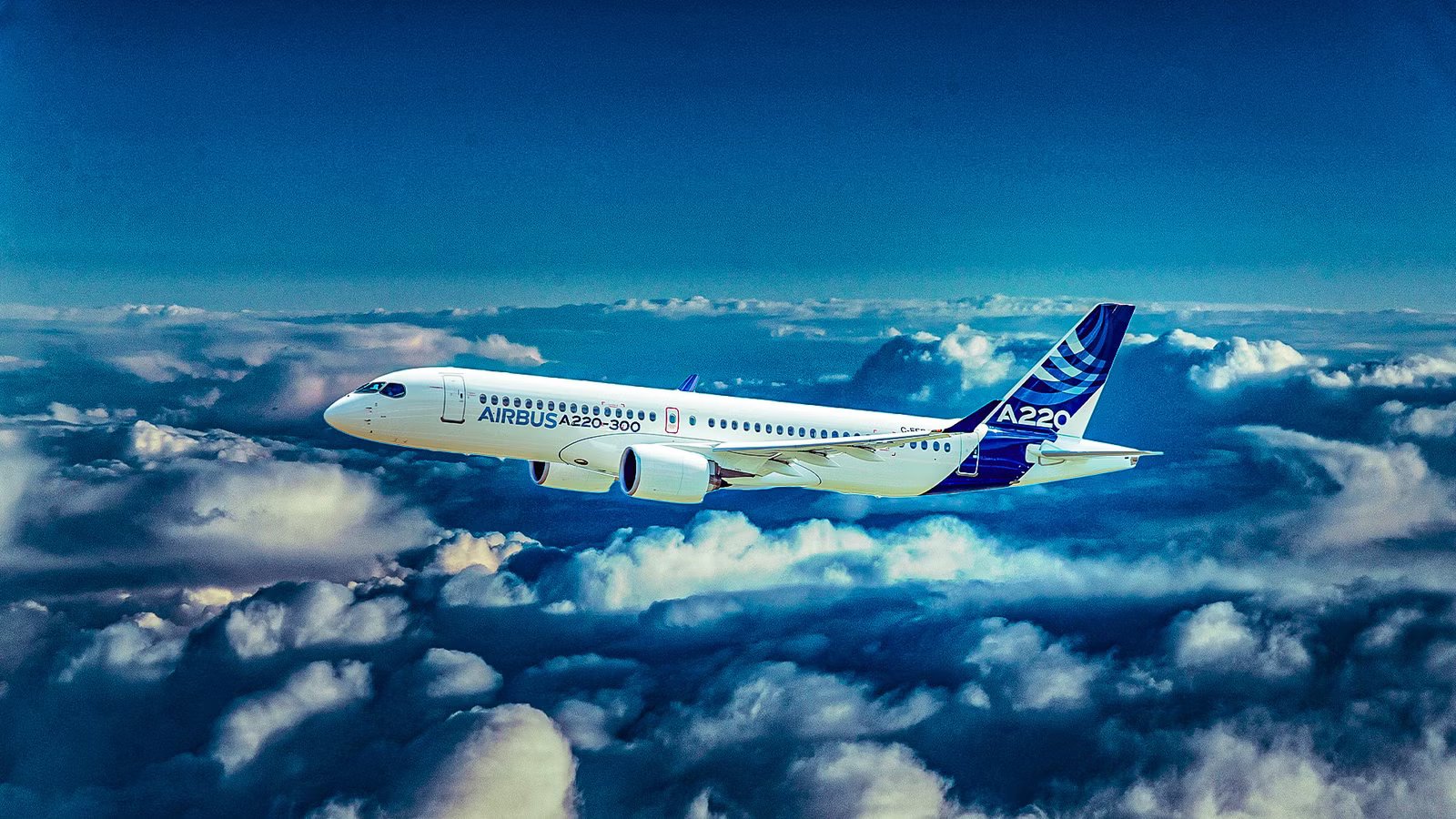
The efficiency of modern single-aisle commercial aviation is frequently judged by the performance of household-name aircraft models that pack high-density passenger configurations into legacy airframes. However, focusing exclusively on the largest mainline jets causes many industry analysts to overlook a highly optimized platform that is quietly revolutionizing short-to-medium-haul networks. The Airbus A220 stands out as an exceptionally versatile clean-sheet design that delivers unprecedented fuel economics, route flexibility, and passenger space. This comprehensive guide provides an in-depth look at why this twin-engine jet remains the most underrated commercial aircraft flying today, outlining its structural advantages, operational challenges, and long-term market potential that is only growing more and more.
The journey of this unique aircraft family highlights how geopolitical shakeups and corporate acquisitions can completely reshape global aerospace manufacturing. Originally developed by Canadian manufacturer Bombardier as the CSeries, the advanced aircraft program faced intense trade disputes before Airbus assumed a majority stake and officially rebranded the family. Under European industrial management, the jet transformed from an ambitious regional disruptor into a core pillar of mainline fleet strategies worldwide.
The World Is Noticing

The real success story of the Airbus A220 family stems from its precise positioning within a neglected corner of the commercial aviation market. Optimized specifically to operate within the 100-to-150-seat category, the jet occupies a highly strategic niche that allows airlines to transition smoothly between regional demands and mainline routes. Older aircraft in this capacity bracket relied on shrunk legacy frames, and they historically suffered from excessive weight penalties and outdated aerodynamics. Designing a brand-new airframe from a blank canvas allowed engineers to maximize structural efficiency without inheriting the design flaws of previous generations.
This unique placement gives Airbus a massive competitive advantage over its primary Western rival. Boeing currently lacks a certified, purpose-built single-aisle aircraft to contest this specific sub-150-seat arena. The American manufacturer’s smallest available single-aisle variant, the Boeing 737 MAX 7, remains bogged down in protracted regulatory delays and lines up closer to the larger Airbus A319neo in overall weight and configuration. It therefore leaves an entire market segment wide open for Airbus to dominate, providing operators with a highly specialized tool that faces no direct Western substitute.
The commercial success of this uncontested market positioning is clearly reflected in the program’s surging order books. The aircraft has successfully surpassed 500 deliveries to global operators, proving its operational maturity across a wide array of business models. The delivery milestone is backed by a robust order book of over 1,000 firm orders, representing a capital valuation of over $40 billion at list prices. These numbers indicate that airlines are increasingly recognizing the immense value of operating a right-sized, clean-sheet jet on lines where larger narrowbodies are financially inefficient.
A Win For Passengers

The internal dimensions of the aircraft challenge the historically cramped expectations of narrowbody travel. The designers have abandoned traditional regional configurations and engineered an environment that closely mimics the spatial comfort of a twin-aisle widebody. It shifts the emphasis from packing maximum passenger volume to optimizing individual physical space, which directly enhances the overall travel experience on multi-hour flights.
The execution of the interior provides several notable structural upgrades over legacy single-aisle platforms. Passengers benefit from wider seats, broader aisles that allow effortless movement even during active galley cart service, and significantly taller lavatories. The oversized overhead stowage bins are designed to ensure every single traveler can fit a standard rolling carry-on bag, eliminating gate-checking friction. Also, the cabin is illuminated by massive 11×16-inch (27.9×40.6 cm) cabin windows, the largest available on any single-aisle commercial airliner, which work alongside the newly integrated Airspace cabin interior to flood the space with natural light.
Cabin Feature Metric | Legacy Narrowbody Standard | Advanced Airspace Interior |
Window Dimensions | Standard small viewports | 11×16 inches (27.9×40.6 cm) panoramic glass |
Aisle Clearance | Restrictive cart bottlenecks | Expanded width for passenger passing |
Overhead Stowage | Limited shared volume | Oversized bins matching total passenger count |
Interior Styling | Standard baseline trim | Next-generation Airspace aesthetic integration |
The unique asymmetrical layout represents another major victory for passenger ergonomics. Utilizing a 2-3 seating configuration across the economy deck means that a significant portion of the cabin completely avoids the physical confinement of a middle seat. This clever geometry reduces boarding bottlenecks and minimizes the localized friction of long-haul travel and successfully alters consumer expectations for regional and transcontinental routing alike.

The Airbus A220 Is Rewriting The Rules Of Short-Haul Economics
The aircraft is revolutionizing short-haul aviation, offering airlines a highly versatile solution to adapt to shifting demand.
Efficiency In Mind From The Start

The operational viability of the aircraft is anchored securely to its cutting-edge propulsion technology and low-maintenance architecture. Powering a modern airline network requires engines that drastically reduce daily fuel expenditure while maintaining high reliability scores. The mechanical systems driving this family of jets were built from the ground up to maximize thermodynamic efficiency, establishing a highly competitive baseline for short-to-medium-haul networks.
At the heart of this economic performance is the highly advanced Pratt & Whitney Geared Turbofan engine family. The specialized powerplant introduces a unique gearbox system that allows the engine fan to rotate at a slower speed than the internal turbine, yielding an impressive 25% reduction in overall fuel burn per seat compared to older aircraft. Such a massive efficiency leap enables a commercial strategy known as right-sizing, liberating airline network planners from the restrictive choice between tiny regional turboprops and oversized narrowbodies.
The underlying cost advantages become incredibly obvious when analyzing thin, highly competitive secondary routes connecting mid-sized cities. When regional operators attempt to deploy legacy narrowbodies on these lines, the excessive weight and higher fuel consumption often render the routes financially unviable. The right-sized economics of this clean-sheet jet drop the operational break-even point significantly, allowing airlines to open entirely new point-to-point markets that were previously impossible to serve profitably.
Powering The Newcomers

The operational flexibility and efficiency of this single-aisle aircraft family directly explain why it is expanding its presence across major global networks. Moving far beyond its original industry perception as a localized short-hop feeder jet, the platform has completely rewritten the rules of range capability for smaller narrowbody airframes. In the United States, commercial operators are increasingly drawn to this platform because it seamlessly resolves multiple network challenges simultaneously.
It delivers exceptional fuel efficiency, supports aggressive new point-to-point route development, and offers an onboard experience that is vastly superior to older narrowbody fleets. A compelling example of this operational success is Breeze Airways, the most heavily dependent operator of this aircraft family in North America. The carrier reported its very first quarter of net profitability in 2025, a commercial milestone built almost entirely around the unique deployment economics of this specific jet.
The top ten longest flights operated by the airline each spanned the entire width of the United States, highlighting a transcontinental flexibility that was never anticipated during its initial design phase. Airlines can now connect mid-sized metropolitan areas separated by thousands of miles without taking on the prohibitive financial risks or high trip costs associated with operating larger single-aisle mainline jets.
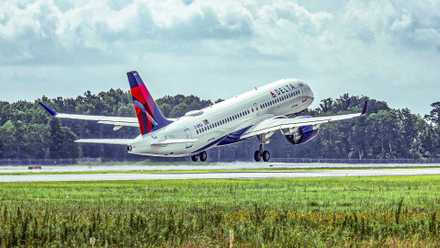
Why The Airbus A220 Is Quietly Becoming The Most Important Narrowbody In The Sky In 2026
Here is why the Airbus A220 is quietly reshaping narrowbody aviation in 2026.
Fraught WIth Troubles?

Despite its massive technological and aerodynamic achievements, a persistent operational shadow has complicated the widespread deployment of the A220 over the last few years. The structural vulnerability originates directly from ongoing reliability constraints affecting its advanced propulsion hardware, something that many other aircraft development programs have been facing over the last few years
Throughout 2024 and 2025, hundreds of these aircraft were forced into temporary storage globally due to premature wear discovered on specialized engine components, generating substantial revenue losses for prominent operators. However, coordinated technical mitigation strategies, new maintenance agreements, and accelerated shop turnarounds have finally begun clearing the heavy logjam. For instance, JetBlue Airways recently reported that its aircraft-on-ground metrics for this specific model dropped by 40% year-over-year, demonstrating a steady return toward standard operational capacity.
Fleet Management Metric | Historic Peak Disruption Period | Current Recovery Trajectory |
Engine Component Status | Premature wear causing widespread groundings | Accelerated shop visits and new maintenance deals |
Operator Revenue Impact | Significant financial losses from idle airframes | Steady stabilization of daily flight schedules |
JetBlue Fleet Readiness | Elevated aircraft-on-ground numbers | 40% year-over-year reduction in grounded jets |
Resolving these supply chain bottlenecks is absolutely critical for commercial carriers that have entirely aligned their growth projections with the jet’s low operating costs, with carriers like Breeze being especially vulnerable. While early durability issues with the powerplants temporarily dampened industry enthusiasm, the rapid deployment of revised components has steadily restored confidence among major aircraft leasing companies and mainline executives.
The New Global Leader?

The rapid evolution of this clean-sheet single-aisle platform is approaching a highly critical definitive moment as the international aviation sector prepares for the July 2026 Farnborough Airshow. Aerospace analysts and industry insiders widely expect the manufacturing team to announce the formal launch of a highly anticipated stretched variant, widely designated as the A220-500. The larger iteration will accommodate up to 180 passengers, positioning the design to compete directly against the ubiquitous Airbus A320neo and the Boeing 737 MAX 8.
A massive landmark order from AirAsia for 150 aircraft in early May 2026 is interpreted by market experts as the final industrial push needed to officially greenlight the larger model. Longtime operators of the smaller variants, including  Delta Air Lines and
  Air Canada, have already been identified as prime target customers for this upcoming stretch version. For everyday travelers and corporate flight departments alike, the scaling of this product line means that widebody-style cabin comfort and elite fuel mechanics will soon dominate dense mainline routes.
As manufacturing assembly lines continue to ramp up their production rates to satisfy a massive multi-billion-dollar backlog, the platform is rapidly shedding its status as an overlooked niche asset. The precise combination of unrivaled cabin dimensions, exceptional transcontinental range, and optimized right-sized economics makes it a foundational tool for the next decade of commercial flight. Ultimately, the ongoing success of this twin-engine jet solidifies that true innovation in modern aviation is defined by an airframe’s capacity to seamlessly adapt to an unpredictable global market.