dailynewsnblog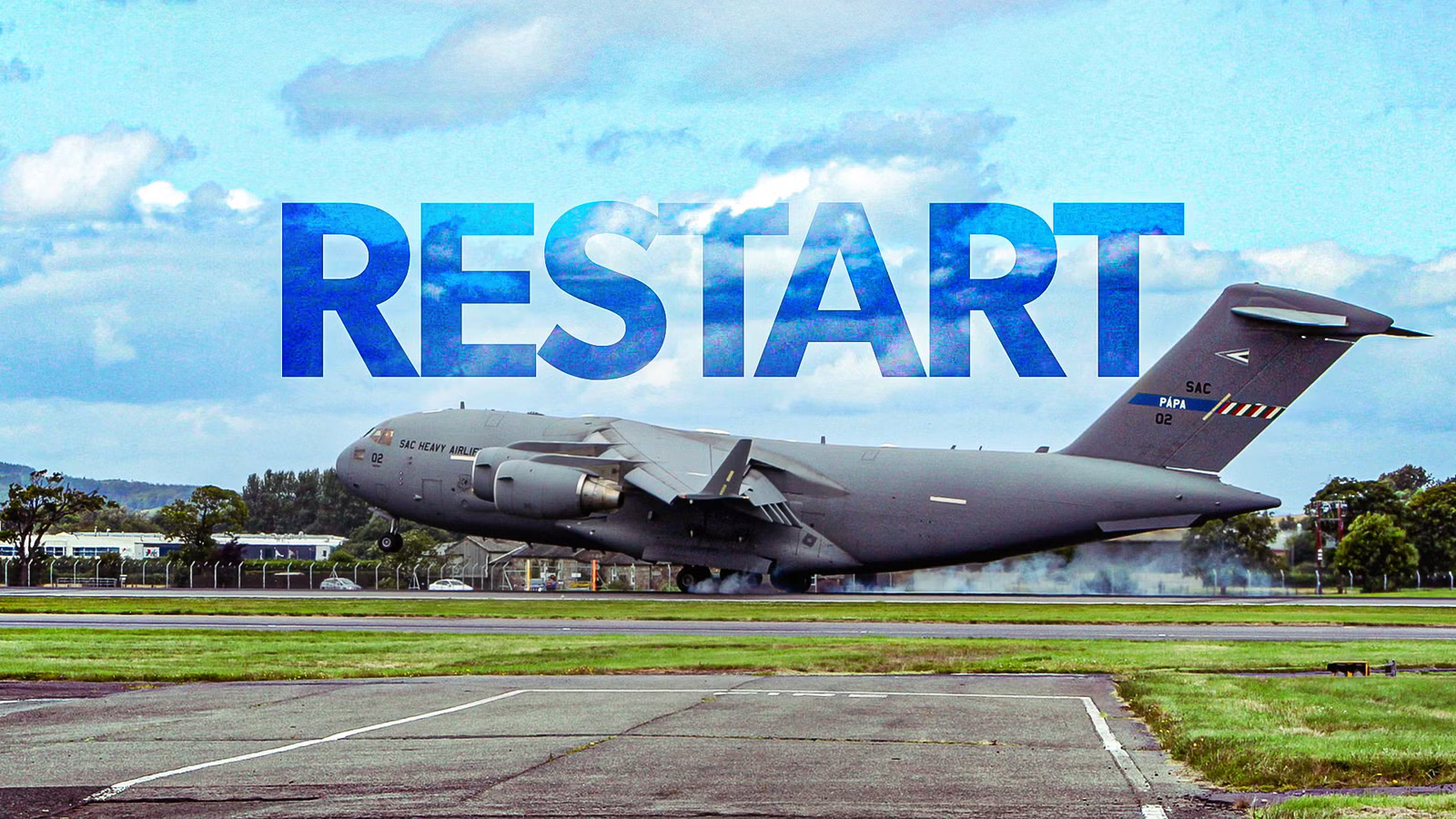
The United States Air Force’s most promising answer to a 2041 capability gap might not be a new aircraft at all. It could be reopening an assembly line  Boeing shut down 11 years ago, using tooling nobody outside the program can currently confirm still exists.
On September 16, Air Mobility Command chief Lt. Gen. Daniel Tulley confirmed publicly what insiders had been signaling for months: the Air Force is formally evaluating a production restart of the Boeing C-17 Globemaster III, folded into the Next-Generation Airlift (NGAL) Analysis of Alternatives.
Congress wants an answer by March 1, 2027, and that answer will hinge on questions nobody in the Pentagon has had to ask about a heavy-airlift line in over ten years. The result will not entirely depend on strategy, but on one unglamorous question: can Boeing actually find the tooling?
Why The Air Force Is Suddenly Talking About New C-17s Again

Tulley’s confirmation answered the easy part of the puzzle. This is now a formal line item inside the NGAL AoA, and the House Armed Services Committee has already ordered a feasibility report covering tooling status, supplier viability, and cost, due on the Committee’s desk by March 1, 2027, according to airdatanews.com. That deadline is the current clock the program is running against.
As much as the project might sound ambitious, there are math limits. The Air Force flies somewhere between 219 and 222 C-17s today, out of 279 built before the Long Beach, California production line closed in 2015, according to armyrecognition.com. That fleet is absorbing an outsized share of current operations, from shifting Patriot missile battalions across theaters to sustaining the war effort against Iran, and there is little slack to draw on elsewhere. Its backup, the Lockheed MartinC-5M Super Galaxy, is sitting at just 37% availability, according to meta-defense.fr, which means the aircraft that is supposed to absorb overflow demand when C-17s are down for maintenance is itself unavailable more often than it flies.
None of this automatically makes reopening the C-17 line the obvious solution. The Air Force could convert some commercial aircraft into freighters, as Simple Flying has documented in the civilian market, buy additional aircraft already in production, or wait for NGAL. The interesting question is therefore not simply whether the Air Force needs more airlift. It is why it would consider bringing back an aircraft whose production line has been cold for more than a decade.
The “Industrial Archaeology” Problem Nobody Talks About

The obstacle here is represented by physical reality rather than political will. Restarting the C-17 line means recovering tooling that was abandoned, scrapped or dispersed after the 2015 closure, qualifying a tier-2 supplier base that since then has moved on to other contracts, and rebuilding a specialized workforce that hasn’t touched a C-17 jig in more than ten years, a challenge one assessment by migflug.com bluntly labeled as “industrial archaeology”.
That is a very different situation from reopening a production line that never really stopped. When an aircraft remains in production for export customers, the jigs, fixtures, drawings, manufacturing processes and experienced workers remain part of an active system. With the C-17, the Air Force has to determine how much of that system survived the intervening years. Whether specialized fixtures are still sitting intact somewhere in a warehouse or exist only in engineering records is exactly the kind of question the March 2027 report is supposed to answer. There is an interesting parallel in the Air Force’s efforts to keep the aircraft it already owns in service. Boeing and the Air Force are preparing a full digital cockpit overhaul for the existing C-17 fleet because critical mission computers and multifunction displays are expected to run short of spare parts by fiscal year 2027. Reviving old hardware is clearly an option, but reviving an old production is entirely a different order of problem.
Recovering all of that has a price tag, and whether that price even beats the alternatives already on the table is still unclear. Simple Flying has covered how hard Air Mobility Command is already leaning on the existing fleet just to generate a single mass-mobility exercise, which raises a pointed follow-up: what, exactly, would the Pentagon be buying if it commits to reopening Long Beach?
What Reopening The Line Would Actually Cost

Cost estimates for a C-17 restart aren’t new, and they aren’t cheap. A 2011 RAND study placed the benchmark cost of restarting C-17A production at between $2.1 billion and $2.7 billion before a single new aircraft left the factory, according to migflug.com. A more capable C-17B variant, the kind that would close a serious capability gap instead of simply adding more of the same hulls, could run as high as $6.4 billion in that same pre-production phase. It would not be Boeing’s first attempt to keep the line relevant past its military run either: a civilian BC-17X freighter concept was suggested years earlier, but collapsed under fuel burn, cost, and ITAR export restrictions, a reminder that reviving this airframe for any customer has failed before.
Billions of dollars in non-recurring costs are easier to absorb when spread across a larger number of aircraft. That is one reason Boeing has reportedly identified Japan and India as potential partners that could help share the development burden, according to armyrecognition.com. The logic is familiar in defense procurement. A fixed industrial cost becomes less painful when it is distributed across more airframes, but there is another variable that could matter even more than the eventual unit price: time.
A few billion dollars is a rounding error next to a modern fighter program, so cost alone isn’t going to sink this idea. The real test is getting the timing right: what would reach a flight line first, a brand-new C-17 from a restarted line, or its clean-sheet alternative does?
Could C-17s From A Restarted Plant Actually Beat NGAL To The Flight Line?

This is where the restart case gets compelling. Simple Flying has previously covered how the Air Force now envisions a single NGAL airframe eventually replacing both the C-17 and the C-5 Galaxy, but that program’s own Analysis of Alternatives will not start until FY2027, after which NGAL still needs to reach production, projected no earlier than FY2038, and initial operational capability, not expected until 2041, according to aviacionline.com. A restarted C-17 line would not have to wait for an entirely new aircraft design to mature. The basic aircraft is already flying, has accumulated decades of operational experience, and has an established certification and maintenance history. That does not mean Boeing could simply turn the lights back on and start producing aircraft. The industrial problem remains. But the development risk would be fundamentally different from creating an entirely new heavy airlifter.
The NGAL requirement itself hints at how close a modernized C-17 could land to the target. The RFI specifies a wingspan under 223 feet (68 meters) and a minimum payload of 160,000 lb (72,575 kg) at 2,500 nautical miles (4,360 km), according to the same reporting. The in-service C-17, with a wingspan of 169 feet, 10 inches (51.75 meters), already carries up to 170,900 lb (77,519 kg) over tactical ranges, comfortably clearing that payload floor. That means a restart wouldn’t need to reinvent airlift performance, just rebuild the production capacity to keep making an airframe that already clears the bar the Air Force itself just set for its successor.
Meeting a payload number isn’t the same as meeting a threat environment, and NGAL’s entire premise rests on a survivability standard the C-17, designed in the 1980s and fielded starting in 1993, was never built to satisfy against modern integrated air defenses. That leaved the Air Force weighing an uncomfortable trade: buy relatively fast capacity now, on a proven airframe, or hold out for the airframe actually designed for what’s coming.
What A Restart Buys The Air Force — Even If It Isn’t The Final Answer

A restart should be considered as a bridge for NGAL, and bridges get judged by their capacity to hold up the traffic already crossing them. Under current sustainment plans, existing C-17s are expected to keep flying until 2075, according to interestingengineering.com, which means airframes delivered during the original 1990s production run would be nearly 80 years old before retirement, years past the service life McDonnell Douglas originally designed them for.
New-build tails from a restarted line wouldn’t erase that math, but they would let the Air Force retire its oldest airframes first instead of stretching every jet in the inventory to its structural limit. That would ease the sustainment bill on a fleet already flying at a tempo that’s straining the C-5M’s 37% availability rate, and it would give Air Mobility Command more margin the next time it needs to push its airlift generation model as hard as it has this year.
The challenge now is whether the C-17 line can actually restart, and that may come down to a document the public has not yet seen. One date, however, is already circled on calendars at the Pentagon and on Capitol Hill.
The Date That Will Actually Decide This

The C-17 question is ultimately becoming a question about how the Air Force manages the years between an aging fleet and its next generation of airlifters. NGAL is intended to solve a future requirement, but the force still has to move people and equipment through the 2030s while that aircraft moves from analysis to development and, eventually, production. That makes the value of a C-17 restart dependent less on how attractive the aircraft looks on paper than on whether it can fill that gap without creating a second industrial problem of its own.
The March 1, 2027 feasibility report will provide the first hard test. The decisive details will be mundane ones: which C-17 tooling still exists, how many suppliers can be brought back into the program, how long the qualification would take, and what the resulting nonrecurring cost would be. If those numbers point toward a restart that can deliver aircraft well before NGAL reaches operational service, the idea becomes a very different proposition from simply bringing an old aircraft back because it is familiar.
Until then, the most interesting part of the story may be happening inside Boeing’s industrial base rather than on a flight line. Whether Long Beach ever produces another Globemaster will depend on what can still be recovered from a production system that has been dormant since 2015, and on whether the Air Force decides that recovering it is worth buying time for the aircraft that comes next.