dailynewsnblog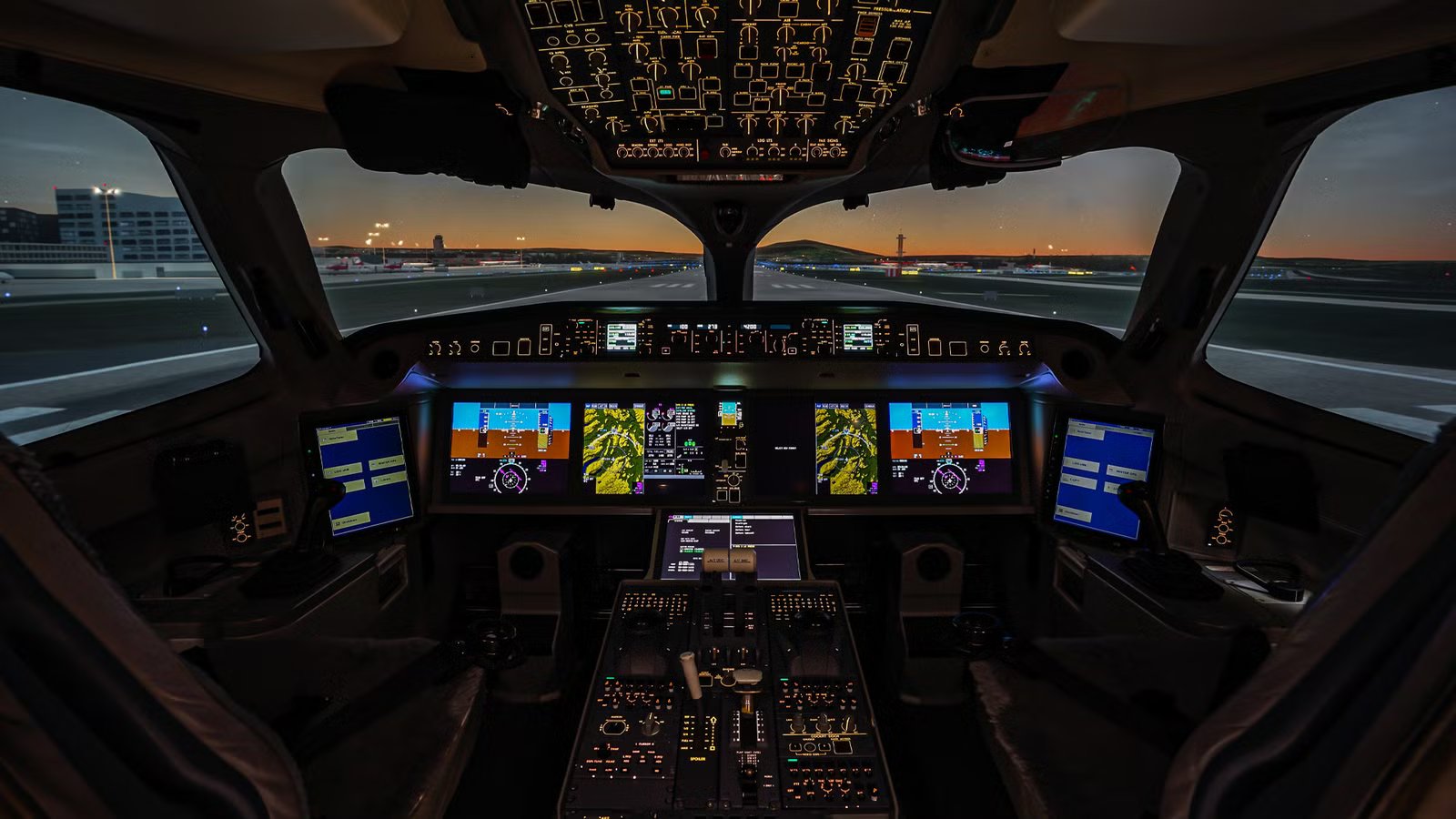
A commercial flight requires a significant amount of planning beforehand. This includes commercial planning, as well as operational planning by operations. Meanwhile, the pilots spend a significant amount of time preparing for their flight. Even before getting on the plane, flight crew members meet each other at the airport, review the route, data, NOTAMS, weather, and other factors that could impact the flight, then brief the cabin crew on the flight.
They usually arrive roughly 60 to 90 minutes before the flight, and after the briefing, the real work begins. Most of the data that pilots work with is provided beforehand, and it’s the crew’s job to check the data, as well as to input the data into the aircraft’s computers.
In addition, one pilot has to perform the pre-flight walkaround to check the aircraft’s condition, while the other will usually input the aircraft’s flight plan. They will also perform crucial performance calculations and check current weather reports, among other tasks. In the last few minutes, when boarding is completed, the crew have to double-check their work before pushing back.
On The Plane Before The Passengers

Pilots rarely arrive to find their aircraft ‘cold and dark’, because airliners don’t typically spend more than a few hours on the ground. When the aircraft is fully turned off, the pilots need to turn on the plane’s battery switches before connecting to external power or switching on the APU. From there, exact procedures differ by airline and aircraft, although they are typically fairly similar. First, they have to scan the aircraft’s overhead panel, the main instrument panel, and the center pedestal.
The next step is to program the flight plan into the aircraft’s flight management computer, which includes the flight number, origin and destination airports, cruise altitude, as well as additional information that may be provided to the pilots. At the same time, the other pilot will perform the pre-flight walkaround. This essentially consists of checking the aircraft for external damage, while also ensuring that the pitot and static tubes are not blocked.
As pushback time approaches, the pilots will usually start the APU and are also tasked with obtaining the airfield’s current weather report via the automatic terminal information station. This can either be a local radio frequency or obtained digitally, and with this information, the two pilots will discuss their departure, including the taxi route, departure runway, departure procedure, initial altitude, engine failure procedure, and rejected takeoff plan.
The Pilots’ Work During Boarding

The progress that the flight crew makes through their pre-departure procedures by the time boarding begins is highly variable. When passengers begin to board the aircraft, the flight deck becomes busier, because then flight attendants may need to come into the flight deck more often, while the door is often kept open. Sometimes a young avgeek will want to snap a photograph, and because most pilots are nerds themselves, they’ll often accept if their airline allows it, depending on their workload.
Ground operations will provide the pilots with a final loadsheet, which includes the passenger count, cargo weight, fuel confirmation, center of gravity, and actual takeoff weight. With these numbers, the crew can finalize their takeoff figures, which they verify using airline-supplied performance software on their electronic flight bags. This includes the V1, rotate, and V2 speeds, as well as the flaps and trim setting. In addition, the pilots use this data to verify the optimal thrust rating.
Once the aircraft doors are shut and the flight deck door is closed, the crew sets the trim, while also double-checking their work. The data is verified again, and the pilots begin coordinating with the ramp for pushback. What makes the environment particularly dynamic is that the airfield information may change. The ATIS may get updated with new weather conditions, the airport may perform a runway change, and the taxi procedures may change. As such, the pilots sometimes need to update their calculations again.
Preparing For Pushback

After the door is shut, the pilots will make their passenger announcement and begin talking with Clearance Delivery. This is a position in the air traffic control tower dedicated to assigning routes and clearances to flights. Upon contact, Clearance Delivery will clear the flight to the destination, assign the departure procedure and route, the initial altitude, a second altitude to be reached at a specific time after departure, the departure control frequency, and the transponder code.
Only after receiving this information can the pilots contact Ground in most cases. The crew also needs to speak with ramp control, which is responsible for operations within the ‘non-movement area’ of the airport. In addition to moving the aircraft out of the gate, the pushback crew also positions the aircraft for taxi
Air Traffic Control Positions | Description |
|---|---|
Clearance Delivery | Assigns routes and transponder code to flights |
Ground | In charge of aircraft operations in the movement area |
Tower/Local | Handles runway operations and operations within an airport’s airspace |
The pilots maintain communications with the tug driver performing the pushback, but they’re largely focused on other tasks more closely related to the aircraft functions. It’s typically during pushback or right after pushback when the flight crew requests clearance to start the engines.
Pushback can be a challenging task because of the physics of moving a massive airliner backwards in a tight space. Stopping distances can be long, and turning the plane can be difficult. With increasing airport congestion, there’s been a notable rise in aircraft ground collisions, which highlights the difficulty in safely managing airport operations. In addition, these operations also pose a risk to the ground workers, particularly regarding the engines, and communication is crucial in maintaining safety.
Taxi & Departure

Once the pushback is completed, the pilots perform the engine start checklist, typically one at a time (quadjets can start two engines at a time, while the Boeing 787’s engines can start simultaneously), and they will then switch off the APU afterward. From there, the flight crew will set the flaps and perform a control check before awaiting taxi instructions from the Ground controller. During the taxi, one pilot will operate the aircraft, while the other will monitor and handle ATC communications.
At some airlines, the designated pilot flying will taxi the aircraft, while other carriers will only permit captains to taxi the aircraft, even if the first officer is otherwise the designated pilot flying. While the flight crew will announce for cabin crew to prepare for takeoff, the flight deck is generally less hectic than during boarding. The crew will usually talk to Ground during taxi, but they may need to switch to another ground controller at larger airports or switch to Tower if crossing a runway.
Before departure, the flight crew speaks to Tower to secure their takeoff position, and will check their instruments to verify their fuel load as well as engine performance. The pilots also verify the trim position and flap settings, while switching on the strobe lights, landing lights, and runway/taxi turnoff lights. Many airliners are now equipped with a Runway Awareness and Advisory System which announces the runway that the aircraft is lining up. From there, the flight takes off.
Reducing Risk Makes Commercial Aviation Safe

The basic concept of operating an airliner comes with risk, so everything in aviation is centered around reducing risk. As such, flying is by far the safest method of travel, and a major component of this is cockpit procedures. Many of the actions that crew perform on the ground and in-flight are memory items, which pilots are trained to perform without fail.
However, pilots also have checklists for every necessary action, grouped into flight phases. The purpose of the checklist is to ensure that all memory items are performed and that no action is left undone. Pilots don’t always follow the checklist item by item, but rather, they use the checklist after all actions have been done as a form of redundancy.
Aircraft | Entry Into Service | Flight Crew Roster |
|---|---|---|
Lockheed L-049 Constellation | 1951 | Captain, first officer, flight engineer, navigator, radio operator |
Boeing 707 | 1958 | Captain, first officer, flight engineer |
Airbus A350 XWB | 2015 | Captain, first officer |
In addition, the two crew members verify their performance data multiple times to ensure that their numbers are accurate and current. As a whole, pilots rigorously check their actions and information, thereby minimizing the potential for error. Airliners have become increasingly automated, and as technology becomes more advanced, there have been recent discussions around cutting out one of the pilots in the flight deck.
However, even as other members of the flight deck have disappeared, there have always been two pilots who focus on flying the plane, and redundancy is crucial to maintaining safety. This works not just in the case of one pilot becoming incapacitated, but also by having two sets of eyes and ears in the flight deck to verify data and manage the operation of the flight.