dailynewsnblog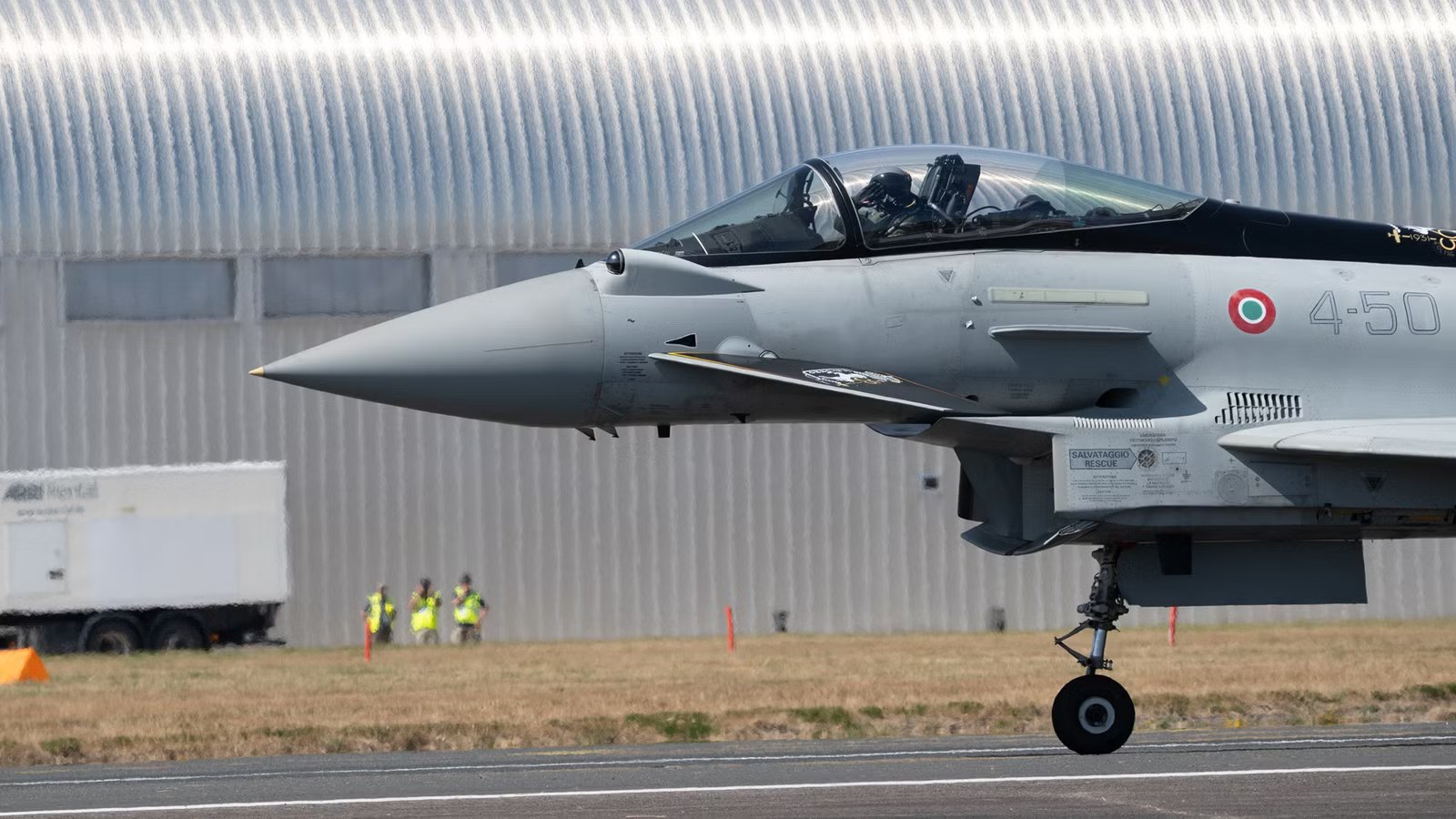
Vilnius International Airport (VNO) briefly closed on Sunday afternoon after radar detected what was initially believed to be a drone. NATO fighter jets were scrambled from an airbase in northern Lithuania, while residents in Vilnius and the surrounding area were sent alerts advising them to seek shelter.
However, radar had detected what turned out to be a flock of birds, which a NATO jet visually identified before the air alert could be lifted. Vilnius’ airport reopened 38 minutes later, although the security scare nevertheless forced multiple flights already in the air to divert or turn back.
Flock Of Birds Prompts Security Alert In Lithuania

The detected object was thought to be a drone that may have crossed into Lithuanian airspace from Belarus. The National Crisis Management Centre declared a yellow air alert at 12:59 PM local time, with Vilnius Airport suspending arrivals and departures for a total of 38 minutes before the alert was lifted at 1:37 PM.
Airport operator Lithuanian Airports (LTOU) confirmed that two inbound flights diverted to Kaunas Airport (KUN), located roughly 85 kilometers from Vilnius. Flight tracking data also shows a flight from Warsaw Chopin Airport (WAW) turned back halfway through its journey, while another flight diverted to Gdańsk (GDN) before canceling its diversion and flying back to Vilnius once the airport was reopened.
As reported by Delfi, head of the National Crisis Management Centre, Vilmantas Vitkauskas, told local radio station LRT that radars can pick up bird flocks as a dangerous drone-like object “if a large concentration of birds are moving in one direction.” The National Crisis Management Centre added in a statement:
“In the initial radar information, the signals of birds and drones may be similar. Therefore, an additional check was carried out to accurately determine the nature of the object.”
What It Costs To Scramble A Typhoon

Reports differ on how many NATO jets were put in the air, although most sources have reported the jets as plural, suggesting at least two were scrambled. The airspace is currently overseen by the Italian Air Force, which flies the Eurofighter Typhoon from Šiauliai Air Base (SQQ), taking over from French and Romanian forces this summer.
This base is roughly 185 km from Vilnius, and operating these fighter jets does not come cheap. The Typhoon has an estimated operating cost of $60,000 to $65,000 per flight hour, which is roughly a third higher than the F-35.
Residents in Vilnius received widespread alerts on their phones as the incident occurred, warning them to find a safe place or move to shelter. The city’s annual Vilnius Marathon was also underway at the time, although the race was not interrupted despite the possibility being discussed by authorities.
Not Lithuania’s First Alert Of The Day

Earlier on Sunday, radars picked up a track at 4:25 AM heading towards the Kaliningrad region, which then left Lithuanian airspace across the border. The data was not sufficient to identify the object, and because it was outbound, no air alert was issued, and there was no fighter jet response.
Given its proximity to the ongoing Russia-Ukraine conflict, Baltic airspace has been a hotspot for airspace violations. Vilnius Airport was involved in a more serious red air alert in May after a drone was tracked near the city, shutting the airport down for 40 minutes and halting rail services around the Lithuanian capital.
Catch what other flight trackers miss
Emergency squawks, holds, NOTAMs — live signals, no signup.
Open tracker
Catch what other flight trackers miss
Emergency squawks, holds, NOTAMs — live signals, no signup.
Open tracker
Vitkauskas added that at least 22 smuggling drones had been logged in Lithuanian airspace this month alone. Last week, fellow NATO member Poland was forced to scramble helicopters after a possible drone sighting near the Belarusian border. However, much like Sunday’s incident in Vilnius, this was later determined to be a large flock of birds.