dailynewsnblog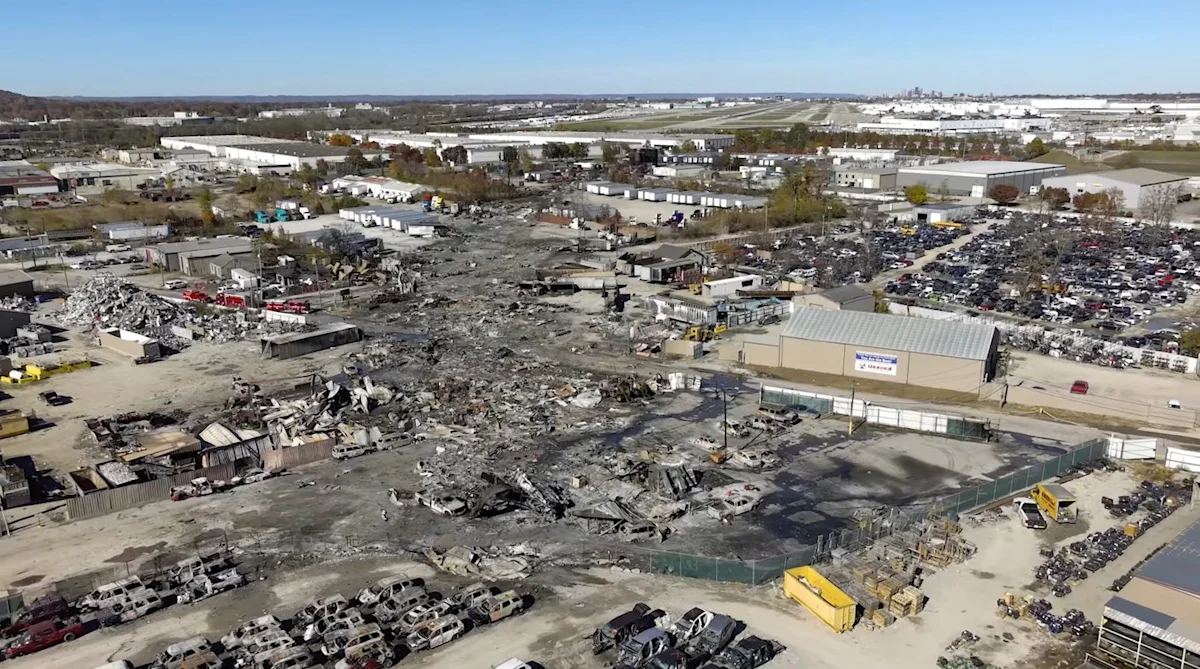
UPS never required the detailed inspections needed to spot the problem that led to an engine to fly off one of its planes before it crashed even after Boeing recommended it years earlier, according to new documents posted Wednesday by crash investigators.
But UPS said in its own submission to the National Transportation Safety Board that the reason it never required those enhanced bearing inspections inside the pylons that hold the engines to the wings of its MD–11 freighters is because Boeing said incorrectly that the failure of those bearings wouldn’t jeopardize the safety of flight. And the enhanced inspections were never required.
The plane crashed last fall while accelerating down the runway at Louisville’s Muhammad Ali International Airport, killing killed all three pilots and 12 people on the ground. Twenty-three more were injured.
The failures that kept mechanics from taking a close look at the key parts securing the engines to the wings were highlighted at two days of investigative hearings on the crash in May, but the documents released Wednesday provide additional details.
The NTSB might not publish its final report on the cause of the fiery crash that happened as the UPS plane was trying to take off in Louisville, Kentucky, last November until late this year or possibly early next year. But UPS said it’s clear “once the pylon separated from the aircraft, the crash was inevitable.”
Boeing and Federal Aviation Administration officials acknowledged during the hearings that they misunderstood the risks related to the potential failure of a steel bearing and metal sheath in the engine mount before the crash, not realizing that it could lead to the lugs that secure engines to an MD-11’s wings breaking. The bearings are tucked deep inside near the pylons, so problems are hard to spot without removing each engine for detailed inspections.
Aviation safety expert Jeff Guzzetti said the actions of Boeing, UPS, FAA and the maintenance company STE San Antonio Aerospace all contributed to this crash.
“There’s just lots of subtleties and semantics that these four entities are using. But in the end, this got missed and to some degree, all four have some role to play in that,” said Guzzetti, who used to investigate crashes for both the NTSB and FAA. “Safety is a shared responsibility, and I think the NTSB’s task now is to apportion that responsibility.”
Failure of key part securing the engine never identified
Chris Hentz, who is Vice President of STE San Antonio Aerospace, said UPS only required its mechanics to check for corrosion and not for signs of bearing failure. But Hentz and UPS both pointed out that even as Boeing said “changes to the inspection requirement of the spherical bearing were warranted” the planemaker said in the same letter that the existing inspection requirements were sufficient.


![Qatar Airways Finally Confirms 18-Hour Australia Flights Return [Full Schedule]](https://dailynewsnblog.com/wp-content/uploads/2026/07/1111.jpg)