dailynewsnblog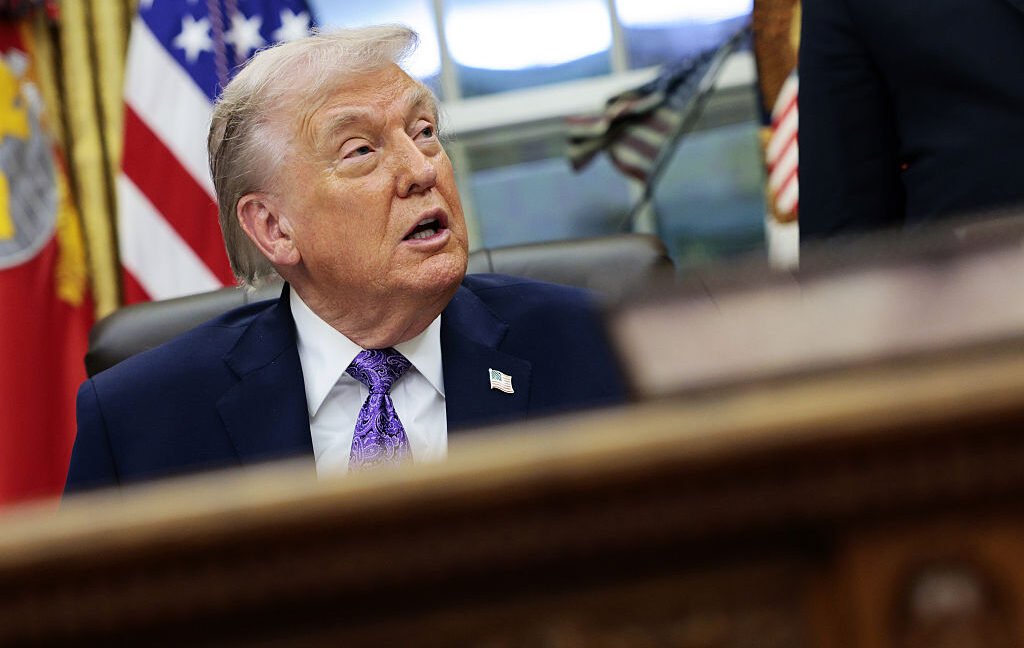
Secret rules allegedly hide corruption
According to Protect Democracy, the framework could potentially be “corrupt,” with officials from the Office of the National Cyber Director, the Office of Science and Technology Policy, the Treasury Department, and the Commerce Department potentially favoring rapid deployments for AI firms that Trump likes. And on the flip side, the public has already seen Trump retaliate against an AI firm for being too woke, Protect Democracy noted, pointing to a judge’s recent ruling that it was illegal for Trump to blacklist Anthropic.
As AI technology advances and cybersecurity risks escalate—OpenAI’s model hacking Hugging Face is the most obvious recent example—the public can’t afford to blindly trust Trump to act in good faith when choosing which frontier models should be rigorously tested, Protect Democracy said. And perhaps even worse, the public cannot know if new vulnerabilities discovered in the real world are due to agencies failing to complete a proper review, running outdated or ineffective tests, missing important checks, or missing steps that align with the latest mitigation strategies advanced by leading AI safety experts.
“We deserve to know what’s in the framework,” the group said, joining other calls for the agencies to be more transparent about AI model deployments.
In a post on X last month, US Representative Greg Casar (D-Tx.) accused Trump of “completely failing to keep us safe from the dangers of AI” while taking “millions from AI billionaires.”
“Now, in the wake of extremely dangerous AI cybersecurity problems, he says he’s set up ‘voluntary’ review that no one has seen,” Casar said. “Asleep at the wheel. Too busy cashing in to protect our jobs or national security.”
More recently, another Democrat, California state Senator Josh Becker, urged the court to grant Protect Democracy’s request. In a declaration supporting their complaint, Becker noted that California is mulling a bill, SB 813, that would establish a process where independent organizations would set baselines for AI safety standards. If passed—unlike Trump’s approach—California’s plan would make the latest benchmarks, standards, and methodologies used to evaluate risks posed by AI systems transparent to the public, Becker said. Already, public input has shaped the bill, he noted, with one provision withdrawn following public backlash.