dailynewsnblog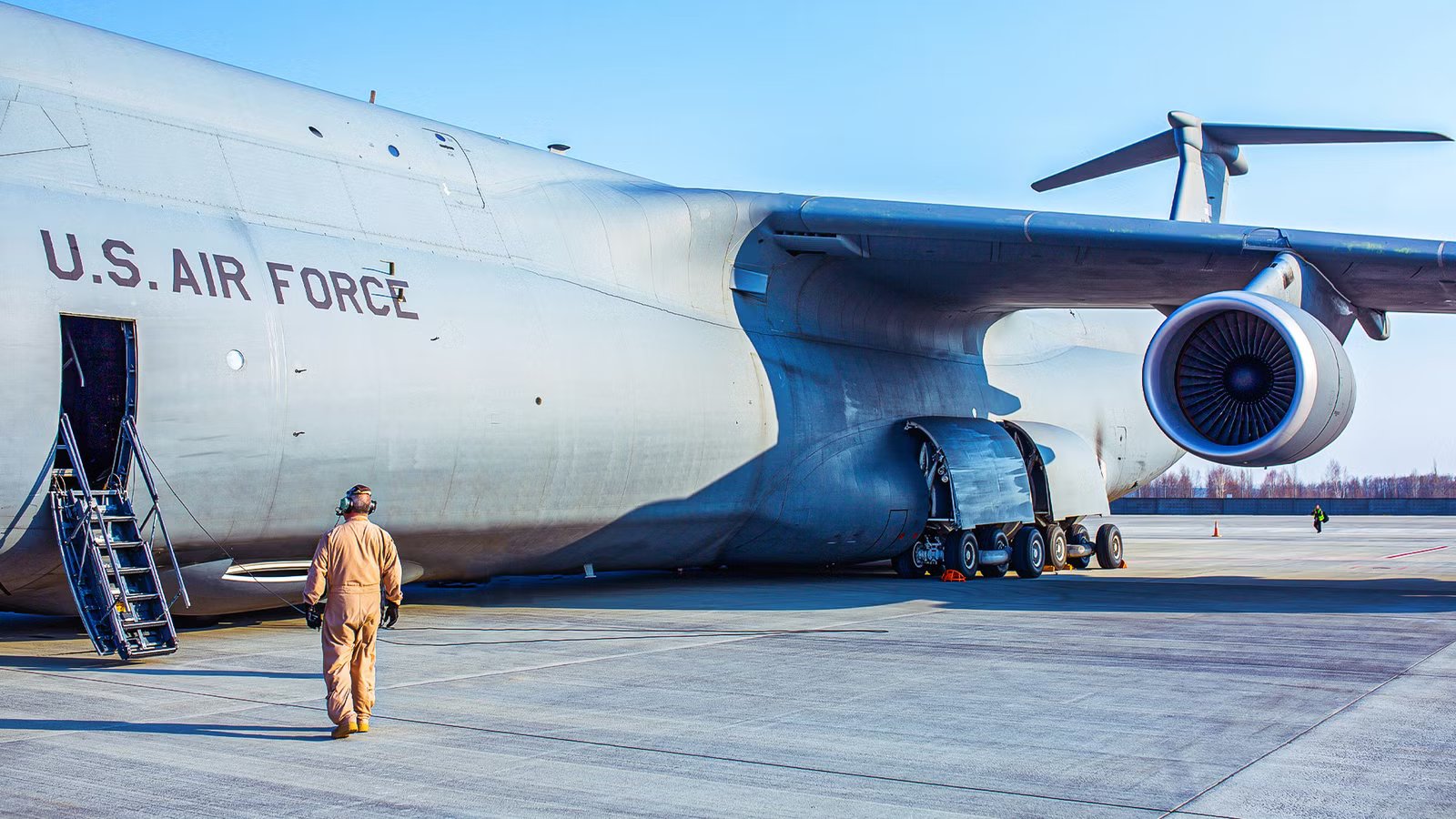
The Lockheed C-5 Galaxy has been a cornerstone of American strategic airlift for more than half a century, carrying outsized cargo that no other aircraft in the US military inventory can transport. Yet despite repeated discussions about retirement, the Air Force now expects the aircraft to remain in service until at least 2050, extending the lifespan of some airframes to more than 60 years.
This article explores why the Air Force continues to rely on the C-5M Super Galaxy despite worsening readiness rates and growing sustainment challenges. It examines the aircraft’s unique capabilities, the modernization programs designed to keep it relevant, the maintenance and supply-chain problems affecting availability, and why the Next Generation Airlifter remains too far away to replace the fleet anytime soon.
A Galaxy-Class Capability That No Other Airlifter Comes Close To Matching

To understand why the C-5M’s retirement keeps getting pushed back, we need to understand precisely what the aircraftcan do that nothing else can. The Galaxy’s cargo compartment measures 121 feet (36.9 meters) in length, 19 feet (5.79 meters) in width, and 13.5 feet (4.1 meters) in height — dimensions that allow it to accommodate cargo that would be physically impossible to load into any other jet transport in the US inventory, military or civilian. It can carry six M1 Abrams main battle tanks simultaneously, or multiple Boeing helicopters, or AH-64 Apache attack helicopters, tucked into configurations that photographs routinely go viral for. The upper deck accommodates up to 73 passengers or troops, with their equipment stored in the hold below.
As previously detailed on Simple Flying’s comparison of the C-17 Globemaster and the C-5 Galaxy, the size difference between the two aircraft is not marginal. The C-5M is significantly longer, wider, taller, and heavier, with a maximum takeoff weight of approximately 840,000 pounds (381,024 kg) versus the C-17’s 585,000 pounds (265,352 kg), and carries roughly twice the cargo by volume.
The C-17 is one of the most flexible tactical airlifters, capable of operating from runways as short as 3,500 feet (1,067 meters) and landing in the forward areas that the C-5 cannot reach. But the Galaxy carries what the Globemaster simply cannot fit: an outsized cargo that does not compress, fold, or disassemble, and must travel to its destination in one piece at intercontinental range. According to The War Zone, C-5s have routinely transported satellites and other space-related items, missions that require the unique combination of the Galaxy’s nose-loading door, cargo dimensions, and range that no other US military aircraft can provide.
The C-5M’s four General Electric CF6-80C2L1F turbofan engines, each rated at 50,580 pounds of thrust (224.9 kN), give the aircraft a cruise speed of approximately 515 miles per hour (829 km per hour) and an unrefueled range of roughly 5,524 miles (8,890 km) at maximum payload, extending significantly at lighter loads. Those performance numbers, while not exceptional by modern standards, are sufficient for an intercontinental strategic airlift: the C-5M needs to reach any point on Earth from a US base with enough payload to matter, not to race there. It has been fulfilling that mission for over 50 years, and it was actively supporting operations during the 2026 Iran Crisis, underlining that the USAF’s most antiquated airlifter is still one of its most operationally relevant.
How A Multi-Billion-Dollar Upgrade Transformed The Galaxy — And Why Readiness Still Collapsed

The C-5M is the product of a two-pronged modernization effort that began in the early 2000s and ran through 2018: the Avionics Modernization Program (AMP), which replaced the Galaxy’s legacy cockpit with a fully digital glass flight deck, and the Reliability Enhancement and Re-engining Program (RERP), which replaced the original TF39 turbofans with CF6-80C2L1F engines delivering approximately 22% better fuel efficiency and meaningfully improved climb performance. The combined cost of these programs, according to Aeronautics Magazine, approached $10 billion across the full program lifecycle, an enormous investment in an airframe whose basic structure dates to the 1960s.
The RERP was explicitly intended to extend the C-5’s reliable service life into the 2040s. That goal has not been met. According to Air & Space Forces Magazine, Air Force Chief of Staff Gen. Kenneth S. Wilsbach disclosed at a House Appropriations Committee hearing in April 2026 that the C-5 fleet’s mission capable rate had fallen to 37 percent — down from 49 percent in FY2024 — meaning that of the 52 C-5Ms in the inventory, fewer than 20 are ready to fly a mission on any given day. Metal fatigue, parts availability for systems designed 50 years ago, and a supply chain that has been winding down in anticipation of the Galaxy’s retirement are all contributing to a readiness trajectory that is moving in the wrong direction at an accelerating pace.
The Air Force’s FY2027 budget request addresses the readiness problem in part through a $24.7 billion total aircraft sustainment budget request intended to fund parts procurement and improve fleet-wide availability. The C-5 component of that sustainment spend is not separately disclosed, but the direction is clear: the Air Force is spending money to keep these aircraft flying at a rate that reflects their age and complexity rather than the capabilities they deliver.
As reported by The War Zone, Lt. Gen. Rebecca Sonkiss, Air Mobility Command’s Deputy Commander, who has been serving as interim AMC commander since January 2026, addressed the tension between capability and readiness directly: ”There’s a financial risk to having to sustain an older aircraft. And we’ve shown in the Air Force that we’re capable of doing that. The C-5, we’ve invested a lot of money to keep it on board, and it is, and there is no other aircraft that can provide the capacity that the C-5 does.”
The Aircraft Set To Replace The Iconic C‑17 Globemaster In US Air Force Service
From the C-141 Starlifter to the C-17 Globemaster III, the USAF’s airlift capabilities have evolved over time.
The 900-Day Depot Problem: When Maintenance Becomes The Mission

The 37% mission capability rate is a fleet-level average that does not fully convey the severity of individual airframe situations. According to Aeronautics Magazine, some C-5M airframes are sitting in depot maintenance for as long as 900 days before returning to flying status. A strategic airlifter that is unavailable for 900 days is an expensive hangar occupant.
The depot maintenance backlog reflects several overlapping problems: aging components that must be repaired or manufactured to specification rather than replaced with existing stock; a workforce trained on unique systems that exist on only 52 aircraft worldwide; and supply chain constraints caused by reduced demand from suppliers who anticipated the fleet’s retirement before that retirement date kept moving.
The comparison with the C-17 fleet makes the C-5’s situation more legible. As previously noted on Simple Flying, all 279 C-17s ever built flew with essentially the same powerplant, the Pratt & Whitney F117-PW-100, a commercial PW2040 derivative, and the USAF fleet of 222 aircraft is large enough to sustain an active industrial support base for its major systems. The C-17’s readiness rates, while not perfect, consistently exceed those of the C-5 by a significant margin. The C-5M’s problems are partly a function of age, but also of scale: a fleet of 52 unique aircraft does not generate enough demand to keep specialized suppliers viable when a retirement date looms, even if that date keeps moving.
The NGAL Gap: Why The Only Replacement Won’t Arrive Until 2041

The Next Generation Airlifter program is preparing to begin an Analysis of Alternatives. The USAF’s FY2027 budget request includes just $8.9 million for the NGAL AoA and related concept development work, along with a Milestone A approval target that would allow the program to enter its Technology Maturation and Risk Reduction phase.
According to the Air Force’s own Airlift Recapitalization Strategy document, dated November 18, 2025, the first NGAL aircraft could be produced as early as FY38, with an Initial Operational Capability target of FY2041. That is 15 years away. The youngest C-5M airframes are approximately 36 years old today. By the time NGAL reaches IOC, they will be 52 years old. As Simple Flying has detailed in its analysis of the USAF’s decision to field a single aircraft to replace both the C-5 and C-17, the NGAL program is structured for a one-for-one replacement of C-5Ms first, then C-17As. The mathematics of that replacement schedule are daunting: 52 C-5Ms must be replaced before NGAL begins replacing the 222-strong C-17 fleet, and C-17s are planned to remain in service through 2075 — some would be 80 years old by final retirement.
The Air Force is effectively planning to operate two aircraft types that, between them, represent the entire US strategic airlift force past mid-century, on a single replacement program that doesn’t yet have an approved design concept. The C-5’s retirement extension to 2050 is the most direct consequence of that timeline: the program simply cannot deliver replacements fast enough to permit an earlier sunset. Another potential factor is the emergence of commercial heavy-lift aircraft such as Radia’s WindRunner.
While not a military airlifter and unrelated to the NGAL program, its cargo volume highlights growing private-sector interest in transporting outsized loads traditionally associated with strategic airlift missions. For now, however, such concepts remain complementary rather than a replacement for dedicated USAF transport aircraft.
The FY2013 National Defense Authorization Act established a Strat Air program floor of 223 C-17A aircraft and 52 C-5M aircraft, a combined 275-aircraft strategic airlift capability that Congress determined was the minimum required for US power projection. Neither type is in production today. The C-17 line at Long Beach closed in 2015 after the final of 279 aircraft were delivered; while Boeing is reportedly in early-stage discussions about a potential production restart, no contract has been awarded.
Why Doesn’t The Largest Military Transport Aircraft In US Have Winglets?
A look at the key factors that led to the engineering decision, such as structural trade-offs, mission profile, and operational realities.
What 61-Year-Old Airframes Actually Look Like In Operation

The practical question of what it means to operate a 61-year-old airframe in high-intensity airlift missions in 2050 is one that the Air Force is grappling with now, even though its airframes are currently 36 years old. The answer, based on the current readiness data, is that it is expensive, unreliable, and increasingly manpower-intensive. But the Air Force‘s position, articulated consistently by Lt. Gen. Sonkiss and confirmed by the USAF’s institutional willingness to fund expensive sustainment programs, is that the alternative, a strategic airlift capability gap, is worse than the cost and unreliability of the aging fleet.
The C-5M’s operating costs have risen substantially as the airframes have aged, and the sustainment math will become more punishing as the 2030s progress. Spare parts for systems designed in the 1960s require either custom manufacturing at small-batch prices or cannibalizing other airframes, the same problem that grounded so many of these aircraft in the first place. The threat environment in which the aircraft will operate through 2050 is also materially different from that which existed when the Galaxy entered service.
According to The War Zone’s reporting, the Air Force anticipates that adversaries may field anti-air missiles with ranges of up to 1,000 miles (1,609 km) by 2050 — an environment in which a non-stealthy, subsonic airlifter operating in or near contested airspace faces real vulnerability. The C-5M was never designed for survivability against peer-level air defenses, and no modification program will confer that capability.
The implication is that by the time the last C-5M is retired in 2050, the aircraft’s operational envelope will likely be restricted to permissive environments — theater entry points well behind the forward edge of battle, strategic bases with long runways and controlled airspace, and humanitarian and logistics missions where air defense threats are minimal. That is still a critical mission: moving 281,001 pounds of cargo from one continent to another remains a military necessity regardless of the threat environment.
But it is a narrower mission than the one the C-5 was originally designed to perform, and it will demand careful operational planning to avoid placing these aging, low-readiness airframes in situations where their vulnerability becomes a liability rather than a manageable risk.
The Impossible Question: One Aircraft To Replace Two Fundamentally Different Airlifters

The Air Force is facing a central challenge: replacing the unique combination of capabilities provided by both the C-5 Galaxy and the C-17 Globemaster III with a single future platform. One aircraft specializes in moving outsized strategic cargo across continents, while the other combines long-range transport with the ability to operate from austere, relatively short runways. Designing a successor that excels at both missions without becoming prohibitively expensive remains one of the most difficult procurement questions in modern military aviation.
The answer will shape American power projection for the second half of the century. Every delay to the Next Generation Airlifter program increases pressure on aging fleets that were never intended to remain in service this long. But retiring the C-5M before a replacement is available would mean accepting a strategic capability loss that neither the Air Force nor Congress appears willing to tolerate. For now, the service has chosen to absorb the growing sustainment costs rather than risk creating a gap in heavy airlift capacity.
That decision reveals a broader reality about military aviation procurement. Aircraft are often retired not when they become old, but when something better is available in sufficient numbers to replace them. The C-5M remains in service because no such replacement exists today. Until the NGAL moves from concept studies to operational squadrons, the Galaxy will continue performing a mission that remains indispensable, even as the aircraft itself becomes one of the oldest and most maintenance-intensive platforms in the US military inventory.