dailynewsnblog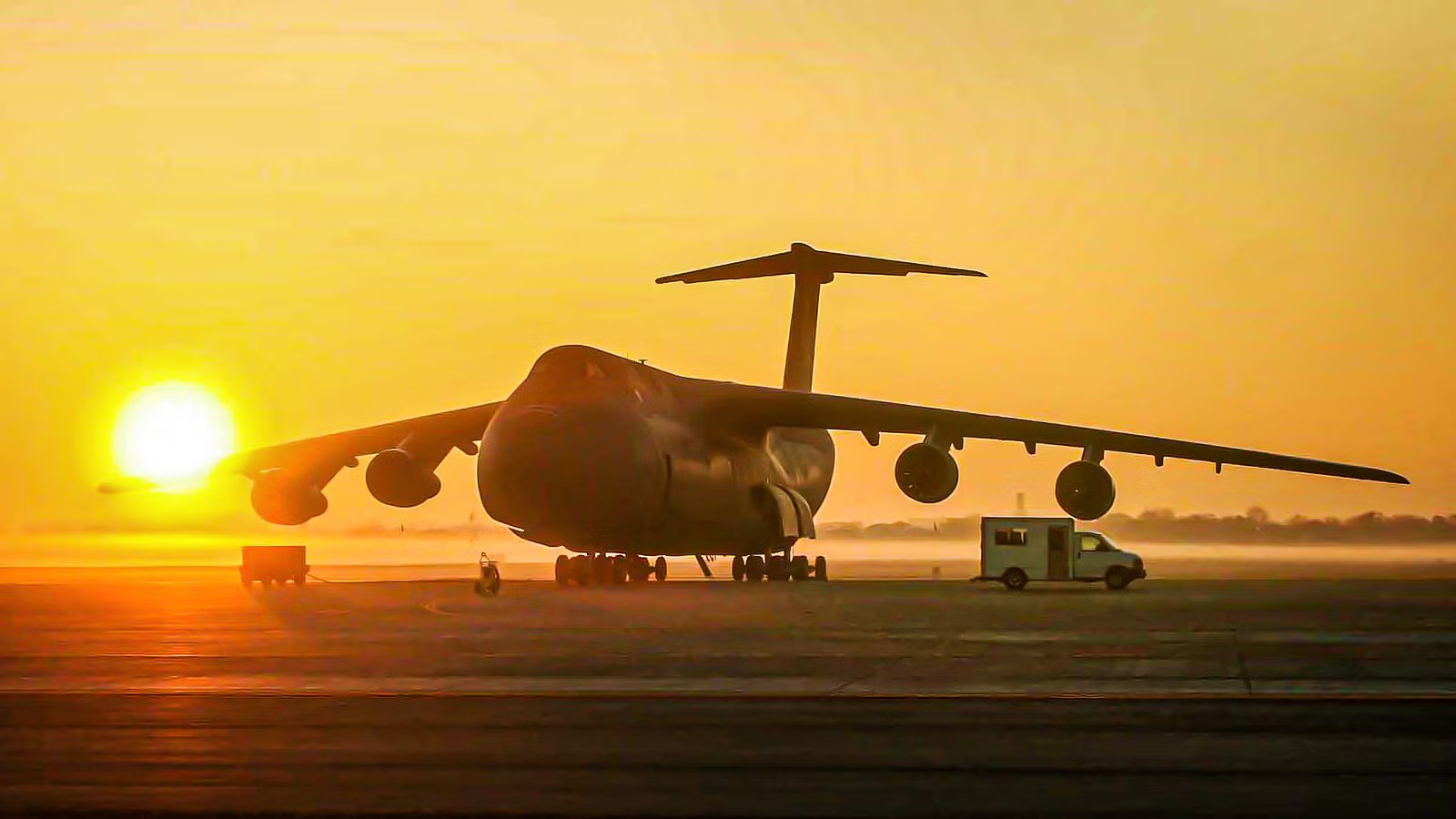
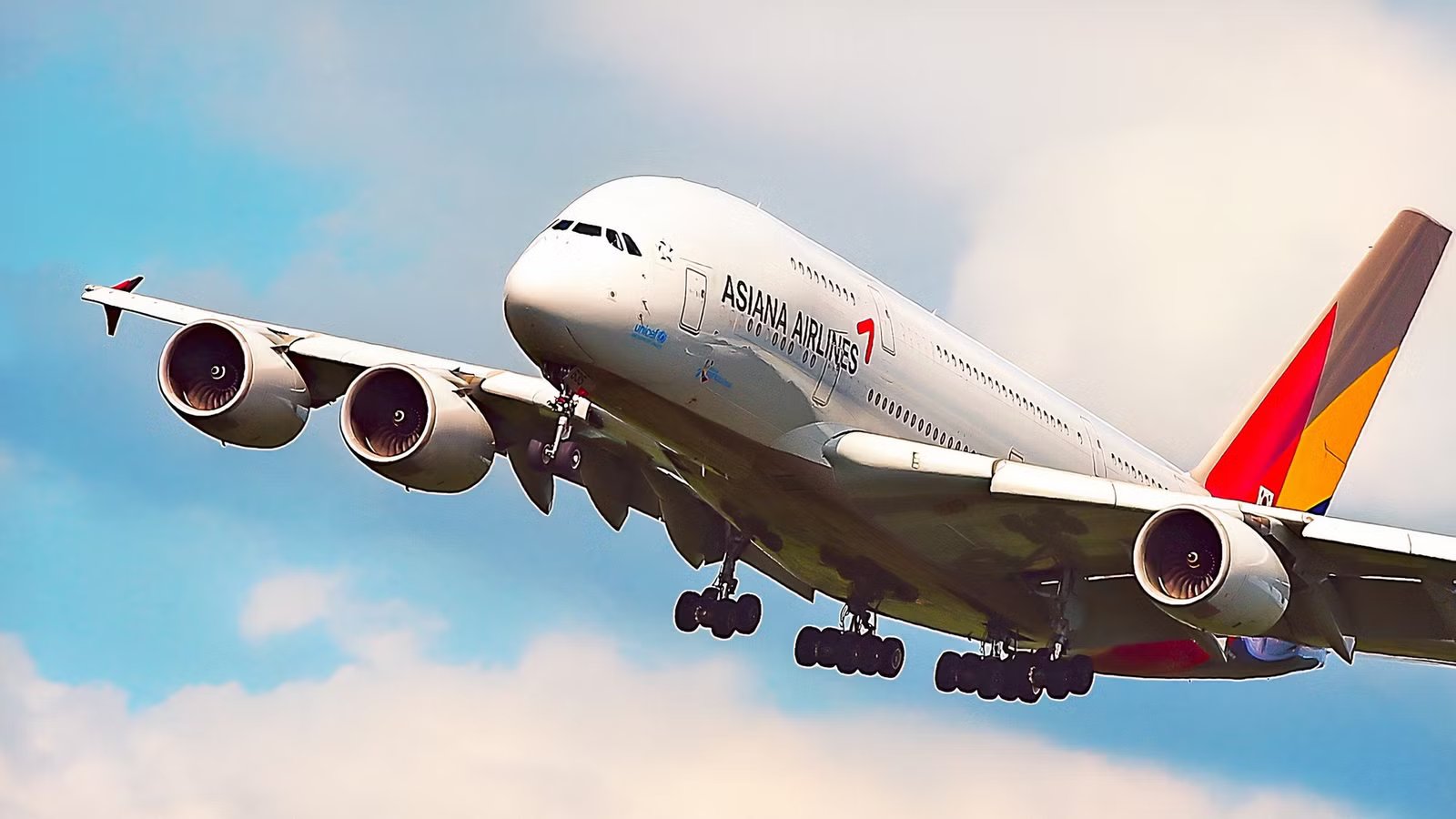
Winglets have become ubiquitous on the modern airliners found at the busiest airports around the world in 2026. These small upward curved wing tip additions are more than just sporty-looking flares for modern jetliners. They are very valuable aerodynamic features as they significantly improve the efficiency of the wing design to improve fuel burn and handling characteristics on the latest and greatest jetliners.
So if the most successful and best-engineered airliners have winglets, then the question becomes, why is there nothing similar found on the largest military transport aircraft in the world? With the notable exception of the McDonnell Douglas C-17 Globemaster III, many medium and heavy airlifters in air forces around the world do not feature any kind of winglet.
The engineering reason is a product of the era when most of these aircraft, like the Lockheed C-5 Galaxy and Antonov An-124 Ruslan, were made, and also intentional design. At the time when the very biggest military transports were made, winglets were not yet proven enough technology to implement. However, even Boeing’s upcoming Next Generation supersized twin jet, the 777X, does not have winglets and instead has a very wide wingspan with raked tips.
Taking It To The Extreme

The reason for the absence of winglets is simple. When a wing is efficient enough on its own, vertical winglets are often a hindrance rather than a help. Like the military giants, the 777X relies on high aspect ratio and raked wingtips to optimize drag and lift. Raked tips are integrated directly into the wing structure, requiring less heavy reinforcement than a vertical winglet. They achieve the same goal as winglets by disrupting wingtip vortices, but they are generally more efficient during a high-altitude cruise.
The extreme wingspan of the world’s largest military airlifters provides all the lift that these enormous jets need. Because they were engineered to sustain the enormous stress of aerodynamic forces and enormous turbofan engines mounted under them, winglets actually create more structural stress than they are worth. Winglets create a bending moment at the wingtip that requires heavy internal reinforcement, and every pound added to the wings is a pound of cargo they can no longer carry.
Currently, the world champion of military airlift is the Lockheed C-5. The Galaxy first took flight in 1968, long before winglets became a commonly viable design element. Even though the new C-5M Super Galaxy was modernized with engine upgrades and avionics, winglets were not added. The profile of the jet remains aerodynamically consistent with its original 1960s design. The next biggest airlifter in the world is the An-124. Antonov’s Ruslan follows a similar design philosophy to the C-5.
The Juggernauts Of Airlift

Winglets are typically a fix for aircraft that are physically restricted by airport gate sizes. Modern jetliners are constrained by a 262-feet (80-meter) box, which is used to ensure that they can operate from any airport with standard infrastructure in the terminal area. While the Lockheed C-5 Galaxy and Antonov An-124 Ruslan look nearly identical at first glance, they have nuanced differences owing to the mission requirements of their respective operators.
The C-5 is optimized for military rapid deployment, but the An-124 is the heavyweight champion for raw mass, often carrying payloads up to 150 tons, versus the 127 ton max of the C-5. The Ruslan was more frequently used to transport enormous industrial equipment, including locomotives and energy turbines. To the contrary, the Galaxy is strictly intended for defense and humanitarian operations.
Although the Ruslan is optimized for outside cargo and the Galaxy was engineered to haul a large volume of standardized cargo, they still have a great deal in common. Both use a high-wing configuration to keep the engines clear of ground debris. Both feature “drive-through” capability with nose and tail doors, allowing cargo to be driven in one end and out the other. And again, each aircraft has kneeling landing gear that allows the entire plane to angle down for loading heavy vehicles.
Thinking Outside The Box

The C-5 and An-124 were designed with the sole focus on maximizing performance and payload. That meant disregarding the standard 80-meter operational box used to set the dimensions of most commercial aircraft. Both the Galaxy, with a wingspan of almost 68 meters, and the Ruslan, at just over 73 meters, both need a code F ICAO airport in order to land and perform ground operations.
While they do not technically exceed the 80-meter wingspan limit, they exceed many other commercial standards, such as length, weight, and pavement loading. These aircraft were designed to operate primarily from dedicated military airbases with reinforced, extra-wide runways and taxiways specifically built to accommodate them, making commercial airport standardization a secondary concern.
Notably, although destroyed by Russian troops during the invasion of Ukraine, the An-225 Mriya had an even more massive wingspan of over 88 meters, which meant very few airfields could service the colossal airlifter. Unlike commercial jets restricted to paved runways, all of these giants were designed to land on unpaved or semi-prepared surfaces near front lines.
When these planes were made, the military required the ability to transport main battle tanks, helicopters, and mobile bridge units across oceans in hours rather than weeks by sea. The requirements of the Cold War arms race dictated that the most massive fuselage possible and the most powerful wing were the most important elements.

Why Did McDonnell Douglas Build The C-17 Globemaster With A T-Tail?
A deep dive into the design behind the distinctive C-17.
Why The Globemaster Is Different

Lockheed made the C-17 to bridge the gap between the incredible lifting power of the monstrous C-5 and the extremely adaptable agility of the C-130 Hercules. Not only does the Globemaster III have winglets like a commercial airliner, it actually shares its power plants with the Boeing 757 passenger twinjet. The C-17 incorporates many design features that evolved over decades of aerospace research and development after both the Galaxy and Hercules were developed.
The wing design of the Boeing C-17 Globemaster III is a radical departure from the traditional wings of the C-5 Galaxy and Antonov An-124. Unlike the C-5 and An-124, which use more traditional airfoils, the C-17 features a supercritical wing. While the older giants rely on massive surface area and sheer span to generate lift, the C-17 uses active aerodynamics. Famously, the jet uses its engines to blow more lift over the wing.
Because the C-17 wing handles low speeds so well, it is used for missions that the C-5 and An-124 are too cumbersome for. The C-17 not only offers greater efficiency than other military airlifters while providing the same capacity to haul a main battle tank, but maximizes performance to do both airborne and ground maneuvers, unlike any other tactical transport. The C-17 can make extremely aggressive descents and takeoff climbs, and even back itself up small hills while taxiing on the ground, thanks to its unique engines.
The combination of winglets and blown flaps means the C-17 can access thousands more runways globally than the C-5, making it the go-to platform for direct delivery. It can carry an M1 Abrams tank over an ocean and land it directly onto short, unpaved runways near the front. Its Pratt & Whitney F117-PW-100 even allows it to perform a three-point turn in only 90 feet, so it can operate in cramped airfields where a C-5 or An-124 would get stuck.

The B-2 Spirit Bomber’s Flat Architecture Explained: Radar Evasion Tactics For Pilots
Inside America’s tailless, flying wing stealth bomber.
Next-Gen Airlift

While in Russia, the next generation of massive airlifters could potentially produce a successor to the An-124 that has winglets, in America, the next evolution in military transport is likely to go in a very different direction. The Slon, or Elephant, was proposed by Antonov to use advanced wingtip and winglet technology to improve the efficiency of the Basel An-124 and An-225 airframe design, which has yet to manifest in the form of a physical airframe.
Meanwhile, in the United States, the USAF is looking to potentially produce its next-generation airlift in the form of a blended-wing-body aircraft. This aircraft would completely change wing design, instead maximizing lift by using the airplane’s fuselage as a primary surface. The project aims to eventually replace both the Lockheed C-5M Galaxy and the C-17A Globemaster III starting in the mid-2040s with a new plane that emphasizes greater speed, stealth, and operational flexibility.
The Next Generation Airlift platform is being designed to merge the strategic reach of the C-5 with the tactical flexibility of the C-17 into a single, highly survivable airframe. It is being specifically built for contested logistics with the ability to deliver cargo while under direct threat from modern air defenses. To survive against near-peer adversaries, the NGAL will move away from the massive, radar-reflective profiles of legacy transports.
The Air Force is heavily investing in BWB technology, which integrates the wings and fuselage into a single aerodynamic shape. This design naturally reduces the aircraft’s radar cross-section and eliminates the sharp angles of traditional tail fins. Unlike current transports that rely on basic flares, the NGAL will feature advanced defensive systems designed to defeat long-range surface-to-air missiles and drone swarms.
The NGAL will be shielded to reduce both heat and noise signatures, making the plane harder to track from the ground. This will enhance ‘all aspect stealth,’ or low observability from all forms of sensors. Complementing its stealthiness will be a host of features to reduce ground time, like automated loading and unloading through its massive cargo hold. Additionally, the NGAL is expected to operate from shorter, damaged, or unpaved runways, reducing its dependence on major, easily targeted airbases.