dailynewsnblog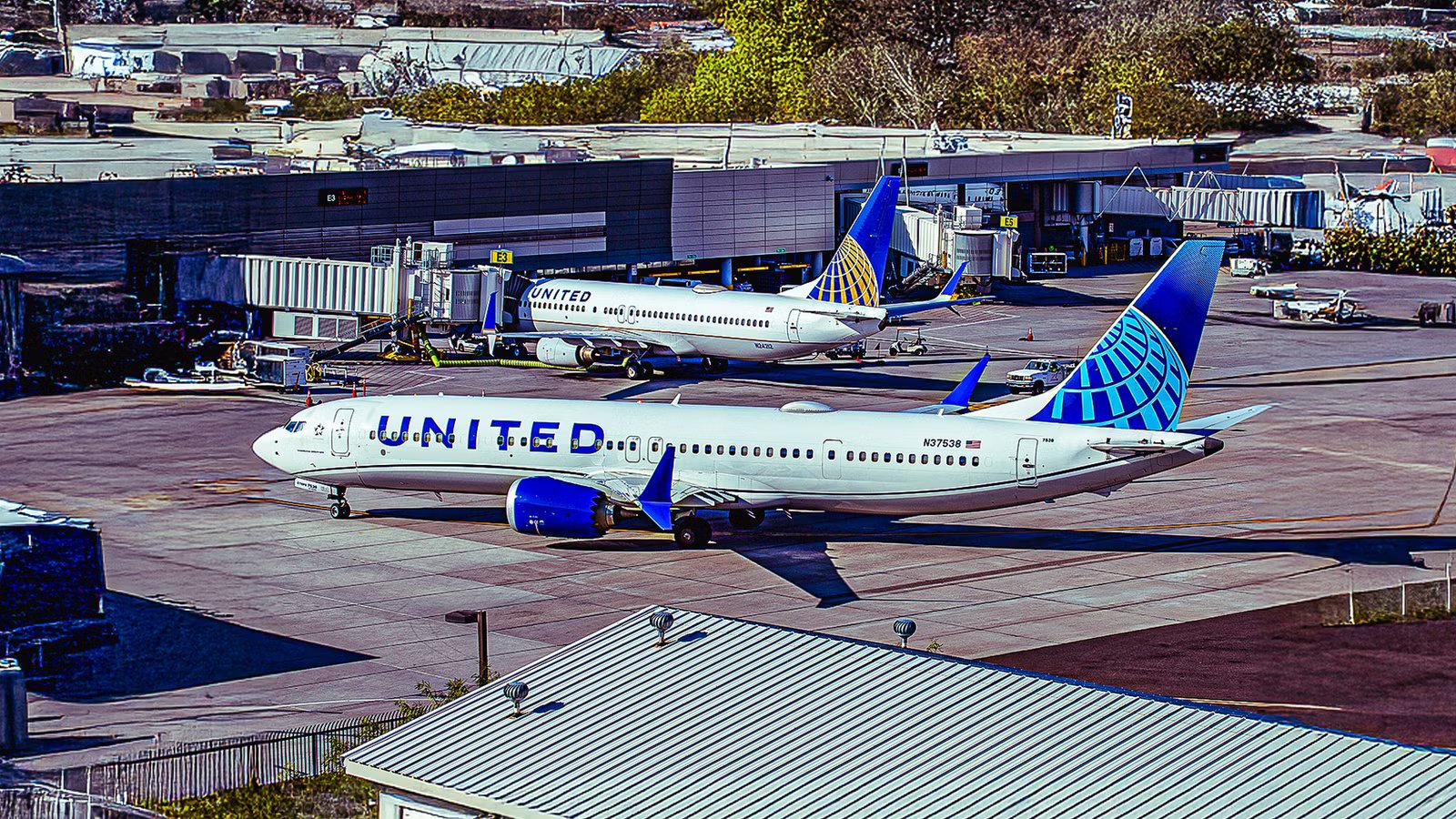
According to a recent Bloomberg report,  United Airlines CEO Scott Kirby, who previously served as president of
  American Airlines, proposed a mega-merger of the two airlines during a meeting with US President Donald Trump. Kirby believes the industry needs more scale to withstand pressures like high fuel costs, and the consolidation of the two major airlines could achieve this.
If this merger were approved, it would create the largest airline in the world and a single carrier that would serve roughly 30% of all US domestic traffic. However, it would face considerable push back under the current legal framework in the United States, which aims to prevent monopolies and ensure competitive economics in the civil aviation sector.
Teaming Up To Monopolize Air Travel In America

In a meeting in late February at the White House, Kirby is said to have floated the idea of an American-United merger to President Trump, who is known for his love of “big deals.” The market responded to Kirby’s pitch by pushing the share value of AA up by 5%, and UA followed with an increase of about 1% per share. So far, neither airline nor the White House has responded to the proposed plan. At this stage, there’s no indication that anything beyond an exploratory phase has been started.
American would stand to gain the most from this potential merger, as it was outperformed by United last year and has higher debt and lower margins on average. This is reflected in the proportionally higher share jump for AA stocks. Kirby is now President of UA, but he was fired by AA in 2018, and some observers, like A View From The Wing, see this as ‘trolling’ by the former executive now that his new airline is outperforming AA.
This merger would be highly unlikely under conventional antitrust policy. Just their combined positions in Los Angeles and Chicago alone would not be allowed. To the extent that Newark and the New York airports are regarded as one market, an anti-competitive share of the New York market would also be a major roadblock. Antitrust lawyer Seth Bloom said the deal would be unlikely, remarking to Reuters:
“The administration has said it really cares about the issues that affect the consumer’s pocketbook, and this would give the airlines more pricing power.”
A New Era Of Air Barons?

Transportation Secretary Sean Duffy has indicated openness to airline consolidation, according to Travel Pulse. The cost to customers has gone up under previous major consolidations, such as the United-Continental or American-US Airways mergers, which led to fare increases of 5% to 10% on overlapping routes, as per the Air Traveler Club.
The Department of Justice (DOJ) and the Department of Transportation (DOT) would subject such a deal to rigorous examination. Even with a business-friendly administration, merging two of the “Big Four” carriers is considered a major hurdle. A merger of this scale is widely viewed by consumer advocates and economists as harmful to Americans.
Eliminating a major competitor makes it easier for the remaining ‘Big Three,’ including Delta Air Lines and Southwest, to coordinate fare increases and baggage fees. To achieve efficiency, merged airlines also often cut service to less profitable cities. Smaller or medium-sized hubs often see dramatic drops in traffic after being absorbed by a larger carrier.
The technical challenge of merging two massive operations almost always results in short-term chaos for passengers. Merging two massive loyalty programs also creates a crowded club for elite members. With double the number of “Platinum” or “Elite” flyers under one roof, competition for free upgrades and award seats becomes significantly fiercer.
And even though combining two extremely large companies makes them more resilient to Market forces, in a worst-case scenario, the potential outcome is also exponentially more devastating. One-third of the domestic market introduces a systemic risk to the U.S. economy. If the merged giant faces a financial crisis or a major labor strike, the entire national transportation infrastructure could be paralyzed, potentially requiring taxpayer-funded bailouts.

United Airlines CEO Says Widebody Market Is “Even More Challenging Than Narrowbodies”
United Airlines’ executives also remarked that they have become more bullish about the Boeing 737 MAX 10.
Floating Share Prices Higher

Just as President Trump’s tweets or impromptu remarks about trade deals or policy shifts often caused sudden stock fluctuations, Kirby’s informal pitch to government officials on April 13, 2026, had an immediate effect. While there is no legal evidence of market manipulation, some analysts and critics draw parallels between Kirby’s reported merger pitch and the communication style often associated with US President Donald Trump.
The comparison between the two is how a public or ‘floated’ statement immediately triggered a market response despite the absence of any evidence that there will be follow-through. Kirby also specifically argued that a merged United-American would better compete against foreign carriers, echoing the administration’s focus on global trade protectionism.