dailynewsnblog
The Three Major Airports In The Area

Within New York and in close proximity are three major airports in the area, which are JFK, LGA, and EWR, which act as major gateways and hubs for various US-based carriers. The busiest is undoubtedly New York’s JFK airport, which is a hub for two major operators within the country,  American Airlines and
  Delta Air Lines. According to 2025 traffic data collected by the US Bureau of Transportation Statistics (BTS), JFK was the sixth-busiest airport within the US, handling over 30 million passengers last year, and the busiest in the New York area.
The second airport is Newark Airport, which, despite being within the state of New Jersey, has an overlapping catchment area with that of the airports in New York due to its proximity. Therefore, EWR can be considered as an alternative to travel to New York. The airport is a major hub on the East Coast for the other major US operator, United Airlines. According to data from the BTS, EWR ranked as the 14th busiest airport within the country, handling over 23 million passengers in 2025.
LaGuardia in New York, by comparison to the other two airports, is a smaller hub in terms of global network connectivity offered. That being said, the airline with the largest presence at the airport is Delta. The airport ranked as the 19th busiest in the country, handling over 16 million passengers last year.
Significant Levels Of Disruptions In 2025

To understand the context of the need for another airport better, it is important to establish the efficiency of passenger and flight traffic flow at these airports. While the three airports handled a total of over 60 million passengers in 2025, it is reported that a considerable number of passengers traveling to, from, and through these three airports faced travel disruptions.
Data from multiple sources, such as Travel And Leisure, and AFAR, indicate that last year, over 25% of passengers traveling through each of these three airports faced travel disruptions, while data presented by Upgraded Points indicate Newark, LaGuardia, and JFK had the highest flight cancellation rates of 6.6%, 6.2%, and 4.7%, respectively, during summer 2025. Considering these three airports are major hubs for various airlines, including the three major US carriers, any disruption here can have a cascading operational impact across the networks of all three carriers, especially in their domestic services.
With particular emphasis on disruptions at Newark, the US Federal Aviation Administration, in order to reduce potential disruptions, last September extended the operational cap placed on the airport, which limits the number of flight movements it can handle every hour. As per the latest statement, the FAA allows up to 72 operations per hour, and the cap is set to remain in place until October 24, 2026.
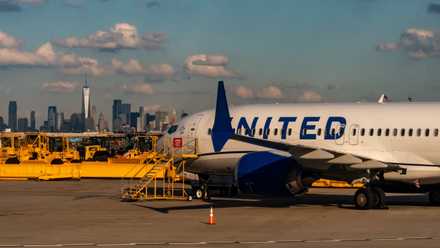
FAA To Extend Newark Flight Operations Limit At 72 Per Hour Through Summer 2026
Little progress has been made on resolving Newark’s air traffic control woes.
The Airports’ Existing Infrastructure

Considering the above, it is also important to understand the infrastructure available to these airports, because it has a considerable influence on how passenger and flight traffic flows through the airports. Infrastructure includes facilities such as terminals, the number of aircraft gates, passenger capacity, the number of runways, and more.
It is worth noting that all three airports have undergone recent upgrades and developments in recent years, which have increased the airports’ capacities. The three airports have the following facilities and capacities (capacity data as reported by Road Genius):
|
Airport |
Number of terminals |
Passenger capacity |
Number of runways |
Runway data |
|---|---|---|---|---|
|
JFK |
5* |
Increasing to over 90 million |
4 |
04R/22L 8,400 feet (2,560 meters) Asphalt surface |
|
04L/22R 12,079 feet (3,681 meters) Concrete surface |
||||
|
13L/31R 10,000 feet (3,048 meters) Concrete surface |
||||
|
13R/31L 14,511 feet (4,423 meters) Concrete surface |
||||
|
EWR |
4 |
Over 50 million |
3 |
04R/22L 9,999 feet (3,048 meters) Asphalt surface |
|
04L/22R 11,000 feet (3,353 meters) Concrete/Asphalt surface |
||||
|
11/29 6,725 feet (2,050 meters) Asphalt |
||||
|
LGA |
3 |
Over 35 million |
2 |
04/22 7,002 feet (2,134 meters) Concrete/Asphalt surface |
|
13/31 7,002 feet (2,134 meters) Concrete/Asphalt surface |
*A key factor regarding JFK is that a new passenger terminal (Terminal Six) is currently being constructed at the airport, which will replace the airport’s existing Terminal Seven, while the Terminal One expansion will include the areas of previous Terminals Two and Three.
The “new” terminals at JFK have faced some delays, but are now expected to be operational this year. The data from various sources indicate that, upon becoming operational, the new facilities and other expansions will increase the overall airport’s passenger capacity to a range of 90 to 100 million passengers per year in the years to come.
The Need For A New Airport And Challenges Faced

As seen above, despite the three airports still handling fewer passengers than proposed capacities, passenger data from previous years indicate that the passengers traveling through these airports faced significant travel disruptions. To alleviate the growing congestion of these three airports, a proposal was put forward decades ago for a new airport in the area. However, this project never came to fruition.
One of the key issues faced was the fact that there was no readily available land available within or around the New York area, which was large enough to facilitate a hub equivalent or larger than the three major hubs in the region. Furthermore, displacing communities and people to create a viable area would not be viable due to the societal resistance such a proposal could bring. This, paired with the environmental impacts of clearing and creating an area fit for an airport, will have further implications on the surrounding area’s flora and fauna.
One of the previously proposed alternate plans included runway capacity expansion at JFK airport onto the Jamaica Bay. However, this is an area that is a federally protected wildlife area, which means that it cannot be disturbed or altered in any way. Therefore, as an alternative, the Port Authority of New York and New Jersey has been implementing a massive $19 billion transformation of JFK airport, along with smaller upgrades to LaGuardia and Newark.
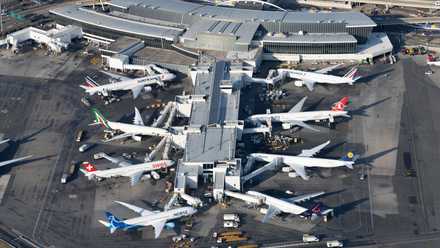
$19 Billion Redevelopment: New York’s JFK Airport Seeks New Terminal One Lounge Designers
The terminal is scheduled to open its doors in 2026.
New Terminals And Expansion Of Existing Terminals

The New York and New Jersey Port Authority’s multi-year investment plan, which sees $19 billion worth of upgrades at JFK airport, is a way of increasing airport capacity within the existing airport grounds by developing new infrastructure and upgrading existing facilities.
As stated above, the new Terminal Six is currently underway, with the first phase of the facility slated to become operational this year. Apart from this, the airport is also spending $9.5 billion on a “new” Terminal One, which will be large enough that it includes the area of the existing Terminal One, along with the areas of the previously demolished Terminals Two and Three. The first phase of this project is also expected to come online this year.
Apart from these two terminal projects, the investment also includes multi-billion-dollar expansion plans for the airport’s existing terminals four and eight at JFK. According to the data published by the Port Authority, Terminal Four has undergone a $1.5 billion expansion, which has seen more aircraft gates added to the airport, particularly benefiting Delta’s operations, while Terminal Eight will also have more aircraft gates, along with an area added to the terminal building, which can facilitate more commercial opportunities such as shopping and dining outlets.
How Will This Help Air Travel In & Out Of New York Area?

While the aforementioned $19 billion makeover plan will take many more years to be completed, the phased introduction of terminal expansions and facilities has already seen carriers agree to shift terminals within JFK airport.  Lufthansa has previously stated that it will move its operations from Terminal One to the upcoming Terminal Six. This is suggestive of the fact that, as more capacity opens up at JFK, airlines could potentially consolidate their operations within a single airport rather than multiple airports.
While Newark is the stronghold of United, the carrier has previously expressed interest in increasing its presence at JFK. In fact, several of Delta’s current slots at JFK are on long-term lease from United, and therefore, it is possible that United could make a stronger return to JFK in the years to come, depending on when the leased slots are returned. Consolidated operations allow airlines to achieve greater economies of scale, while also offering passengers greater itineraries and flexibility. Furthermore, if done right, it can also potentially reduce the traffic flow disruptions within the airspace in the area.
That being said, there are other areas of airport operations that still need to be addressed. ATC shortage is a major issue that has been highlighted across the US for the past few years. Therefore, if the airports in the New York area (or other airports in the country, for that matter) do not address the staffing levels at control towers, the levels of disruptions could potentially worsen as airports expand and airline operations increase.
Catch what other trackers miss
Emergency squawks, holds, NOTAMs — live signals, no signup.
Open tracker
Catch what other trackers miss
Emergency squawks, holds, NOTAMs — live signals, no signup.
Open tracker