dailynewsnblog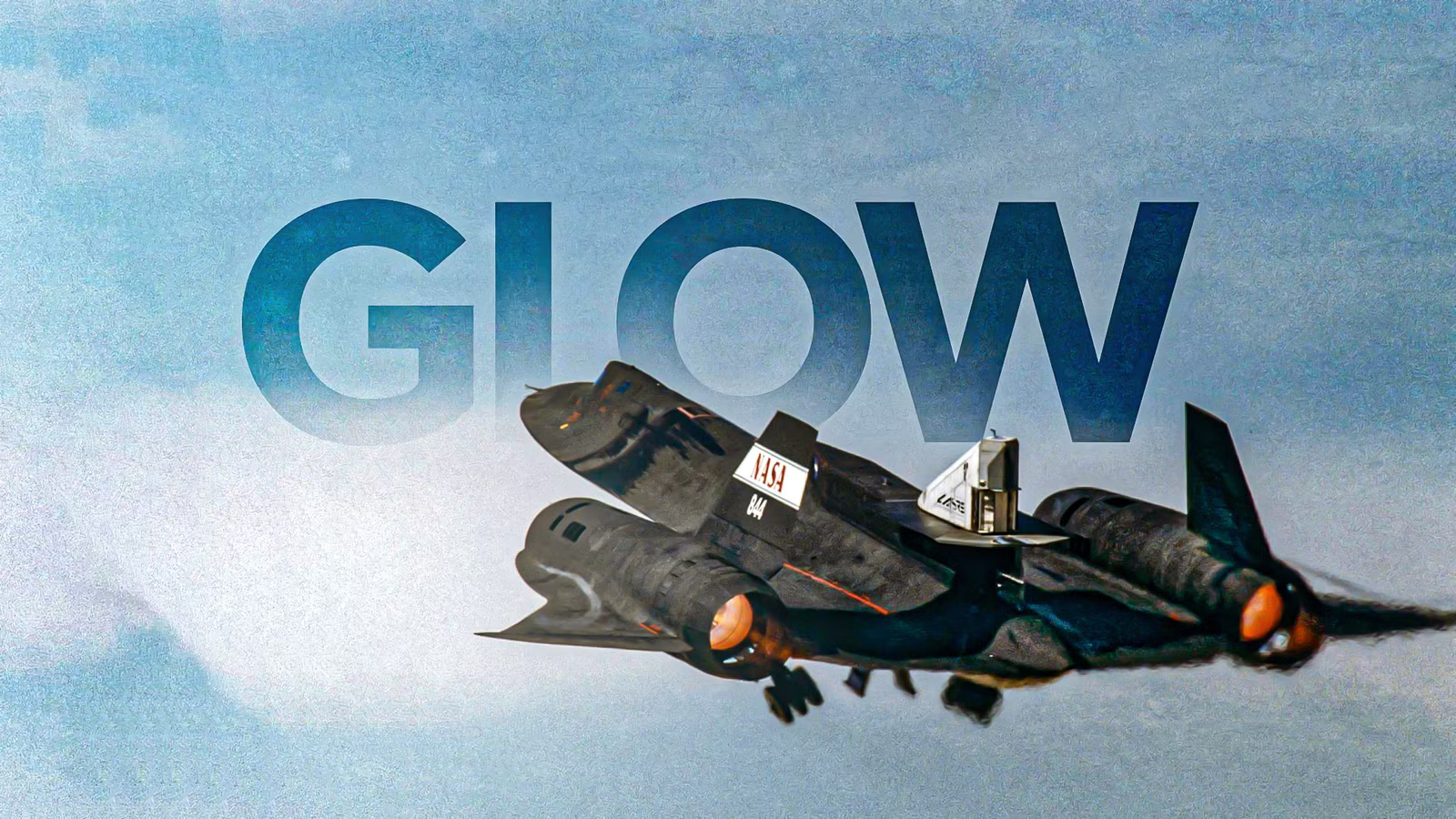
It may sound preposterous, but in one of the most novel twists of fate in aviation history, the legendary Mach 3 LockheedSR-71 got its incredibly powerful engine from a canceled US Navy flying boat. The Pratt & Whitney J58 was first conceived in order to power the Martin P6M amphibious jet. The company chose not to wait for the developmental issues holding back the J58 and proceeded with the Pratt & Whitney J75.
The P6M was ultimately canceled, and instead, Pratt proposed its J58 as an option for numerous other programs. The legendary engine maker’s turbo Ramjet was considered for the Convair B58 Hustler, the Vought F-8 Crusader III, and even the North American Vigilante, but was not selected. It was selected for the Convair Kingfish, which was also canceled but found its Saving Grace with the Lockheed A-12.
Ironically, the engine was almost completely re-engineered to meet Navy specifications, according to the SR-71 Blackbird. This was necessitated by the stress of continuously operating at Mach 3.2 and the immense temperature it would have to endure in that regime of sustained flight. The compressors were redesigned, and new metal alloys were selected for components, along with a host of other modifications that would make the J58 the fire-breathing heart of the fastest airplane in history.
Pratt & Whitney J58: Feeding The Beast In The SR-71

One of the most unique aspects of the J58 engine is that it is a partial Ramjet. The engine itself is broadly defined as a turbojet but is often referred to as a turbo-ramjet. This is due to its unique bleed-bypass air routing and reliance on the afterburner for primary thrust generation at cruise speed. The J58 uses recovered bleed air and Mach 3 speeds to bypass the turbojet compressor stages and funnel more air into the afterburner.
Catch what other flight trackers miss
Emergency squawks, holds, NOTAMs — live signals, no signup.
Open tracker
Catch what other flight trackers miss
Emergency squawks, holds, NOTAMs — live signals, no signup.
Open tracker
While the engine’s hybrid performance makes it functionally a Ramjet at cruise speed, it operates as a standard afterburning turbojet from takeoff to roughly Mach 2.5, before the afterburner becomes the main source of thrust. The transition is possible through six external bypass tubes that flow around the outside of the engine core.
Standard jet engines burn an immense amount of fuel in afterburner and quickly run out of gas. However, because the J58 transitions into a ramjet cycle at Mach 3, it actually becomes more fuel-efficient the faster and hotter it goes, allowing the SR-71 to cruise continuously in afterburner for thousands of miles.
The Unusual Aerodynamics Of The Blackbird’s Engine

The turbojet core of the J58 does not contribute to the SR-71’s performance at Mach 3 or higher and instead creates aerodynamic drag. Instead of generating forward thrust, it essentially acts as a gas generator that produces electrical power for engine accessories. However, this is critical for the jet to function, and its Ramjet engine features cannot power subsystems.
At very high supersonic speeds, it is necessary to divert inlet air around the turbojet core to prevent a catastrophic engine surge or stall. This is also why the engine nacelles have variable inlet spikes. From takeoff to around Mach 1.5, the spike is stationary, but after this threshold, it begins to recede in response to the higher speed of incoming air. As the spike retreats, the inlet’s internal geometry changes, trapping shock waves at the edge of the cowling.
Once the incoming mass of Mach 3 ambient air is converted into usable air pressure at the inlet spike, most of it is then fed through the six bypass tubes to the afterburner. At top speed, the afterburner produces about 80% of the thrust for the Blackbird. The complex air inlets also have forward and aft bypass doors to bleed off excess supersonic air. Another benefit of this system is cooling for the airframe, which protects the Blackbird from the incredible temperatures that the engine core can achieve, which can reach as high as 1,700°F (925°C).
Feeling The Heat In The Skunk Works Spyplane

Tearing through the sky at Mach 3 and 80,000 feet (24,384 meters) above the ground, the air going into the power plants of the SR-71 was preheated to over 800 degrees Fahrenheit before fuel was even introduced. Once the extremely low flashpoint JP-7 jet fuel is ignited, the temperature could spike to levels that would liquefy many aerospace alloys. This required Kelly Johnson and Lockheed’s Skunk Works division to virtually invent a new branch of metallurgy.
The team encountered many unexpected production issues due to the machining challenges of working with titanium. It is exceptionally hard and quickly work-hardens when friction increases. Normal high-speed steel drill bits would dull, heat up, and snap after drilling only two or three holes. But when welded with water that had too much chlorine content, the seams would crack. Johnson described the challenges of machining the unique metal, which his team codenamed Unobtanium, according to Mach3Ti.
“Titanium is such a rigid material that it cannot be shoved into place… The tough titanium actually is a very sensitive material to handle.”
This elite team of aerospace engineers crafted almost every component in the Blackbird from titanium that could withstand the conditions demanded by the SR-71. Working with Pratt, they crafted compressor blades from a titanium alloy that balanced an optimal strength-to-weight ratio while withstanding incredible preheating temperatures. For the core, they selected nickel-based superalloys to build the combustion chambers and afterburner ducts that had to tolerate 2,200°F.
Just as the J-58’s incredible temperatures would destroy most standard metals, common wiring, gaskets, and lubricants would also be incinerated or vaporized at Mach 3. To harden these components, engineers plated critical fuel and hydraulic lines inside the nacelles in gold because it reflected radiant heat exceptionally well, shielding the fluids inside. Engineers formulated specialized synthetic lubricants that would not break down at 600°F (315°C), along with specialized O-rings that maintained their seal under the extreme thermal cycles.
The Blackbird’s Six-Inch Stretch In The Stratosphere

Another valuable characteristic of the titanium alloy Skunk Works used to make the SR-71 was its resilience after being deformed by heat. The aircraft would grow six inches (15 cm) in length while flying at Mach 3 because air friction heated the fuselage skin. This is also why it featured the famous corrugated sections of external panels. Likewise, the P&W J58 engine had to withstand this incredible shrinking and contracting on every sortie.
Instead of fighting this force of nature acting on the exotic metals, Kelly Johnson’s engineering team worked around it. The J58 engine was anchored at the front of the airframe to a rigid mounting structure while the rear of the engine assembly ‘floated’ inside its frame. This allowed the engine to be unaffected by the movement of the air structures around it.
The immense material deformation throughout the SR-71 also explains why it notoriously leaked large amounts of JP-7 fuel on takeoff and landing. Despite being made from about 93% titanium for strength, the Blackbird had to be ‘cobbled together’ with loosely fitted panel gaps to prevent parts from warping in flight. The fuel tanks also weren’t sealed, as no material could be found that would survive the conditions; thus, everywhere the SR-71 went, it left a trail of jet fuel.
JP-7 Staying Cool In The SR-71

One of Johnson’s most brilliant strokes of genius was using the aircraft’s fuel as a primary coolant. Skunk Works co-developed a unique, high-flashpoint fuel called JP-7. It was so stable that you could drop a lit match into a bucket of it and it would not ignite. Before entering the combustion chamber, cold JP-7 fuel was pumped through a complex network of heat exchangers wrapped around the engine core and hydraulic systems.
The fuel absorbed the immense ambient heat, cooling the engine components down to manageable levels while preheating the fuel to optimize combustion efficiency. JP-7’s exceptionally low flashpoint required a system that injected a tiny dose of Triethylborane to ignite. TEB was also responsible for the characteristic green tint sometimes visible in the flame plume behind the Blackbird.
Where The Blackbirds Roost Today

Still the fastest crewed airplane ever flown, only 20 examples of the SR-71 remain on display. Nineteen airframes reside across the United States, and exactly one is housed internationally at the Imperial War Museum Duxford in the United Kingdom. The Museum of Aviation Foundation at Robins Air Force Base in Warner Robins, Georgia, is hosting its official Blackbird Days celebration culminating in Family Aviation Day on September 26.
The museum will bring together former engineers, maintainers, reconnaissance systems officers, and pilots who operated the incredible speed machine that was the Blackbird. The event at Robins AFB will give visitors the opportunity to speak directly to these American aviation veterans and ‘expert pods,’ but will be adjacent to the museum’s SR-71, Serial Number 61-7958. Simulators will also be set up to replicate the SR-71 flight experience and enhance the experience for visitors after hearing firsthand accounts from the experts.