dailynewsnblog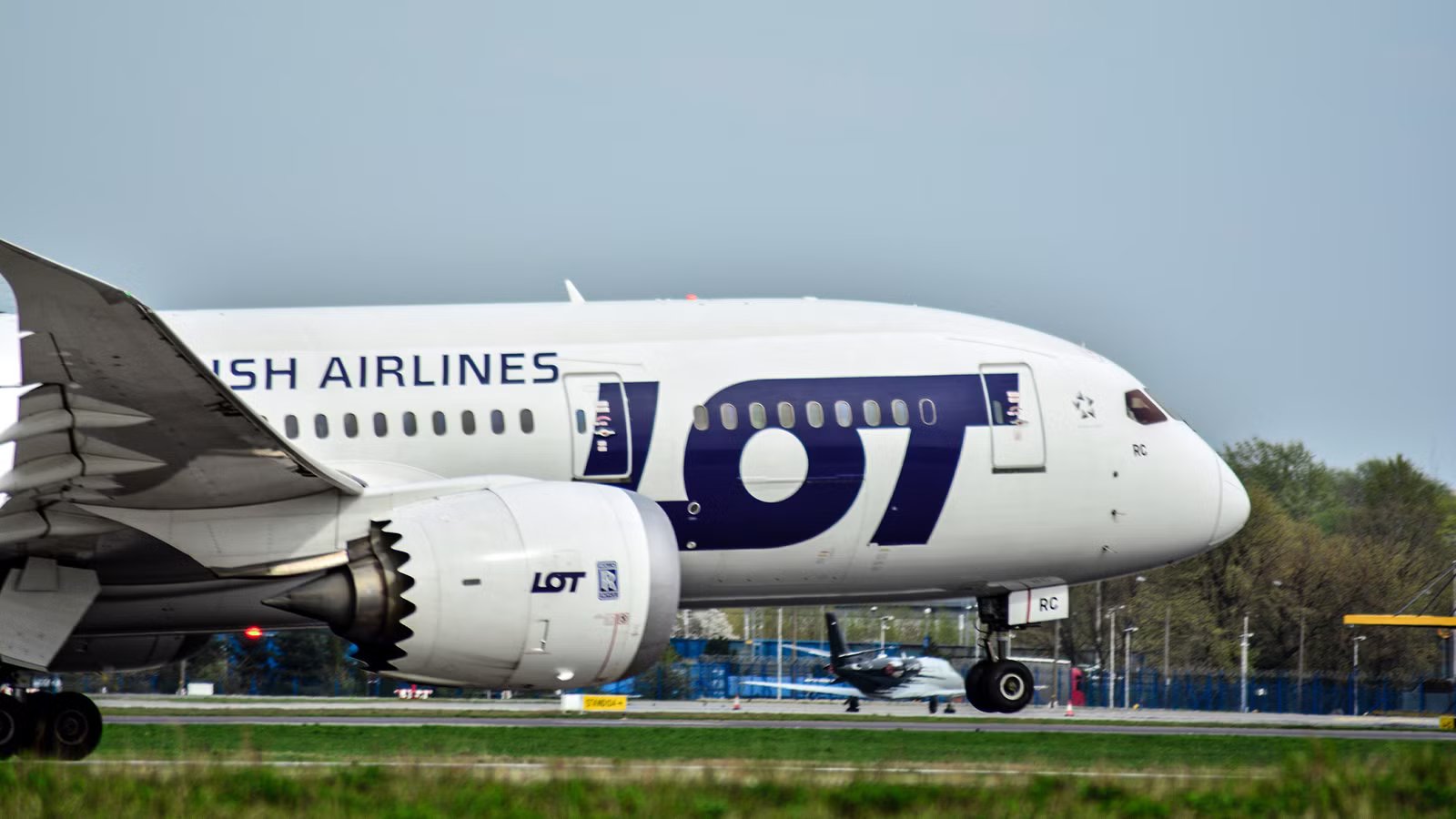
The distinctive sawtooth edges on several  Boeing engine nacelles are more than a styling feature. Specifically, they are chevrons, a technology developed through NASA research to reduce the noise produced when hot exhaust from a jet engine mixes with surrounding air. Boeing adopted the concept on aircraft including the Boeing 787 Dreamliner , 747-8, and 737 MAX family, accepting a small aerodynamic penalty in exchange for a quieter departure footprint. NASA’s documented flight testing demonstrated meaningful noise reductions, while industry assessments have ultimately placed the thrust penalty at about a 0.5 percent reduction.
The more revealing part of the story is what happened afterward. Airbus did not follow Boeing’s approach across its latest commercial engine families. Instead, Airbus and other manufacturers moved toward quieter internal engine architectures rather than relying on serrated exhaust nozzles. Today, the GE9X engine being used on the 777X has no visible chevrons, joining other manufacturers in using internal advancements to meet stringent noise targets. The chevron has therefore become an important transitional technology that helped one generation of aircraft meet noise requirements before propulsion engineers found ways to make the underlying engine quieter.
NASA Found A Simple Way To Quiet Jet Engines

The idea behind chevrons began as commercial aviation expanded. Jet engines had become quieter since the earliest generations of turbine-powered airliners, yet growing air traffic meant communities around airports still experienced substantial noise. Regulatory limits introduced during the 1970s gave manufacturers another reason to pursue quieter propulsion. NASA Glenn Research Center investigated whether technology already used in military aviation could help. Researchers discovered that notches around military engine exhausts for infrared-signature purposes could also influence how hot and cold airflow mixed. Dennis Huff and his colleagues subsequently found that a serrated shape offered a promising way to control that mixing process.
The principle is relatively straightforward. A turbofan produces different streams of air, including a much hotter exhaust stream from the engine core. When those streams mix, the resulting turbulent structures contribute to noise. A chevron changes the exhaust boundary geometry, encouraging the streams to mix differently and reducing some of the acoustic energy that would otherwise propagate outward.
NASA and engine manufacturers subjected numerous designs to extensive testing during the research process. In total, NASA-funded engine tests examined 14 promising configurations in 1998. The results showed that the chevron nozzle reduced thrust by only 0.25 percent, which researchers considered negligible given the acoustic benefit. That trade-off made the technology attractive, since airlines do not normally want to surrender thrust. Yet a small performance penalty could be acceptable if it allowed a manufacturer to meet noise requirements without redesigning an entire engine.
Boeing Turned The Research Into A Production Feature

NASA’s laboratory work became particularly significant when it moved from experimental aircraft to commercial service. In March 2001, NASA flight-tested a modified Learjet 25 equipped with an experimental chevron nozzle. The aircraft flew over microphone arrays while researchers compared the modified engine with an unmodified configuration. The flight campaign confirmed the noise reductions previously observed during ground testing.
The technology quickly moved toward commercial certification. NASA says the FAA began certifying General Electric’s CF34-8 with chevron technology just over a year after the successful flight tests. That engine entered service on the Bombardier CRJ900 in 2003, establishing that the concept could survive the transition from experimental research to airline operations. Boeing incorporated chevrons into several major programs. They became especially recognizable on the 787, whose nacelles have serrated trailing edges around the engine exhaust. The 747-8 and 737 MAX also use the technology.
A quieter propulsion system can also affect the aircraft’s overall noise-management strategy. If engineers can reduce the sound generated at its source, they may have less reason to rely on heavy acoustic treatments elsewhere in the aircraft. Any reduction in insulation weight can partially offset the nozzle’s performance penalty. That made chevrons particularly useful when manufacturers were trying to improve aircraft efficiency without completely reinventing the turbofan. The technology could be integrated into an existing engine architecture rather than requiring an entirely new propulsion concept.
The Price Of Quiet Was Not Really Six Decibels

The headline trade-off needs some qualification. The relationship between thrust loss and acoustic improvement is not a universal six-decibel-for-0.5 percent-thrust exchange. Noise is measured under specific conditions, and different measurement locations or flight phases can produce different results. NASA’s current historical account identifies a three-decibel reduction for the chevron application it describes and compares that reduction to the difference between the sound of two lawnmowers and one. Meanwhile, the agency’s early engine testing found a 0.25 percent thrust reduction.
The larger six-decibel figure can therefore serve as shorthand for the scale of the technology’s acoustic effect in particular configurations, but it should not be treated as a fixed engineering exchange rate. The actual result depends on engine design, operating condition, aircraft position, frequency, and the way noise is measured. The important engineering decision was that the performance penalty was small enough to be tolerable. The chevron did not turn an efficient engine into an inefficient one. Instead, it imposed a modest cost on propulsion performance in exchange for reducing one of the most difficult externalities associated with jet aviation.
Manufacturers did not have to choose between a loud engine and a completely new engine. They could modify the exhaust system and obtain a measurable improvement relatively quickly. The compromise was therefore successful precisely because it was modest. Chevrons were not intended to transform propulsion efficiency. They were intended to solve a specific acoustic problem while leaving the underlying engine architecture largely intact.
Airbus Chose A Different Route As Engines Improved

Airbus did not adopt chevrons across its latest commercial aircraft in the way Boeing did. The Airbus A320neo, Airbus A330neo, and Airbus A350 entered service with engines that pursued noise and efficiency improvements through broader propulsion changes rather than prominent serrated exhaust edges. The two manufacturers were working with different engine suppliers, aircraft architectures, and development timelines. By the time newer-generation propulsion systems arrived, engineers had more tools available to address noise at its source.
One of those tools was the high-bypass turbofan itself. Increasing the amount of air moved around the engine core allows the engine to produce thrust by accelerating a larger mass of air more gently. That can improve propulsive efficiency while reducing the need to generate extremely high exhaust velocities. Material evolution also expanded the available design space. Lightweight composite fan blades and advanced core components let engineers pursue larger fans and higher pressure ratios without accepting all the weight penalties older designs would have imposed.
The result was a gradual change in philosophy. Instead of adding a serrated nozzle to an existing architecture, manufacturers could increasingly engineer the fan, core, exhaust, acoustic liners, and surrounding nacelle as one system. This is why Airbus’ approach should not be described simply as “refusing” the chevron. The company operated at a time when the underlying technology was advancing. A solution that was highly useful for one generation of engines was not necessarily optimal for the next.
Boeing Eventually Abandoned The Chevron Too

The clearest evidence that chevrons were transitional comes from Boeing’s own 777X. Its GE9X engines do not use the prominent serrated exhaust treatment seen on the 787. Instead, the engine reaches its noise and efficiency targets through a fundamentally different combination of technologies. Boeing says the 777X will have a 40 percent smaller noise footprint than the aircraft it replaces, while the GE9X has an eight-decibel margin to Stage 5 noise limits.
The GE9X’s architecture explains why. Its fan measures 134 inches (340.4 cm) in diameter, and its bypass ratio is approximately 10:1. GE Aerospace says the engine uses advanced composite fan blades, a 60:1 overall pressure ratio, and ceramic matrix composites to achieve its efficiency and environmental targets. The larger fan moves more air around the engine core, which improves propulsive efficiency. The GE9X also uses fewer fan blades than the GE90, with 16 fourth-generation carbon-fiber composite blades compared with 22 on the predecessor. GE says the combination improves airflow and reduces drag.
GE9X-105B1A Performance Overview | |
|---|---|
Metric | Value |
Weight | 21,230 lb (9,630 kg) |
Maximum takeoff thrust | 110,000 lbf (489.3 kN) |
Maximum continuous thrust | 103,500 lbf (460.4 kN) |
Thrust to weight ratio | 5:2 |
Noise reduction is therefore no longer dependent on changing only the shape of the exhaust nozzle. The engine can address acoustic performance through its fan, airflow, core, materials, and acoustic treatments. GE describes the GE9X as its quietest turbofan per pound of static thrust and says it is designed to meet current and anticipated noise standards. The same philosophy is visible in future propulsion research. Rolls-Royce’s UltraFan program is pursuing major efficiency improvements through an architecture that includes a geared fan and advanced materials, while CFM’s open-fan research is exploring an even more radical approach to increasing propulsive efficiency.
The Chevron Solved Yesterday’s Problem

The chevron’s importance is easy to underestimate because its shape is now familiar. NASA’s research transformed a relatively simple exhaust modification into a commercially useful technology that helped aircraft meet increasingly demanding noise expectations. Yet the technology’s greatest contribution may have been temporary. As turbofans grew larger, more efficient, and more sophisticated, manufacturers found better ways to reduce both noise and fuel consumption at once. The GE9X illustrates the transition particularly well: its enormous fan, high bypass ratio, composite blades, advanced core, and acoustic engineering allow Boeing’s newest 777 family to pursue noise performance without the familiar sawtooth exhaust.
Manufacturers are increasingly designing propulsion systems around integrated aerodynamic, acoustic, thermal, and materials technologies. Open-fan concepts from CFM and next-generation architectures such as UltraFan suggest that the next major reduction in aircraft noise may come from changing how thrust is generated rather than modifying how exhaust leaves the engine. The chevron was therefore not a failed compromise. It successfully bridged generations of propulsion technology. Boeing used it when a small thrust sacrifice could buy a valuable acoustic improvement. Airbus reached the same broader objective through newer engine architectures. Boeing has now moved in the same direction. The future of quieter aviation will likely depend less on exhaust-nozzle shape and more on whether engineers can make the entire engine produce thrust more efficiently and with less acoustic energy in the first place.
Catch what other trackers miss
Emergency squawks, holds, NOTAMs — live signals, no signup.
Open tracker
Catch what other trackers miss
Emergency squawks, holds, NOTAMs — live signals, no signup.
Open tracker