dailynewsnblog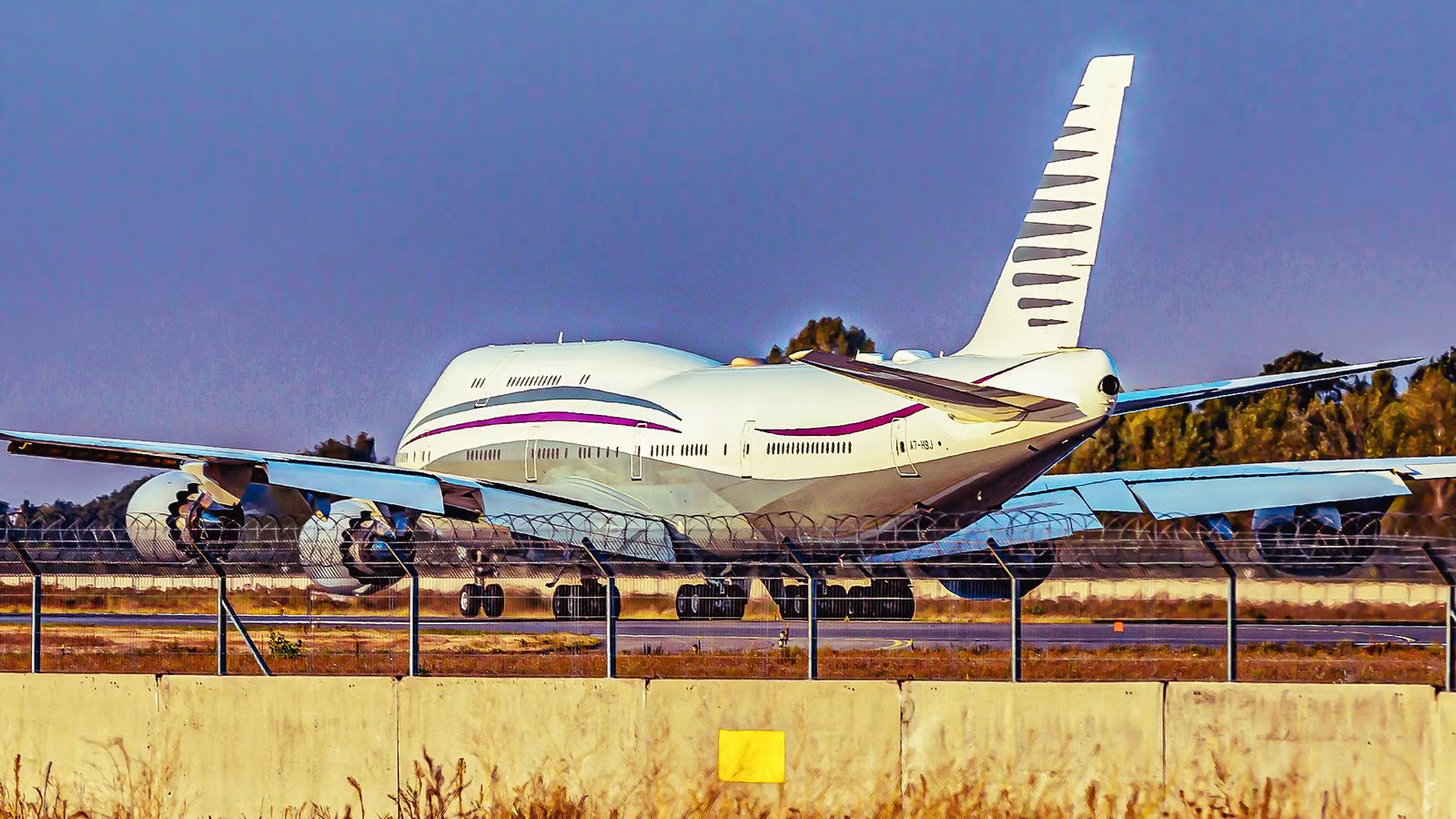
Government VIP aircraft occupy a unique and often misunderstood space in global aviation. To the public, they are frequently seen as symbols of luxury, prestige, or political excess. Images of world leaders stepping off customized jets can reinforce the perception that these aircraft exist primarily for comfort or status. In reality, the purpose of these aircraft is far more complex and deeply tied to national security, governance, and international diplomacy.
These aircraft function as highly specialized platforms that combine transportation with advanced communications, security systems, and operational autonomy. They are designed to ensure that heads of state and senior officials can maintain control of government functions regardless of location or circumstance. In an era defined by rapid geopolitical shifts and technological vulnerability, the ability to operate independently of ground infrastructure is considered a strategic necessity rather than a luxury. At the same time, the enormous costs associated with these aircraft have made them recurring subjects of political debate. Different countries approach the challenge in markedly different ways, reflecting their political systems, industrial priorities, and security concerns.
Examining how governments justify, design, and deploy these aircraft provides valuable insight into the intersection of power, perception, and accountability. The politics of VIP jets reveal not only how states protect their leaders, but also how they project authority and manage public trust.
Why Governments Simply Cannot Fly Commercial

The most fundamental question surrounding VIP aircraft is why governments do not rely on commercial airlines for official travel. In short, commercial aviation lacks the essential capabilities required for high-level government operations. Aircraft such as the United States’ Air Force One are engineered as airborne command centers rather than simple transport platforms. They incorporate encrypted satellite communications, secure data links, and classified systems that allow real-time coordination with military and civilian agencies. These systems operate at security levels far beyond those available on commercial aircraft.
Another critical feature is operational independence. In extreme scenarios such as national emergencies or conflicts, ground-based communication networks may be compromised or destroyed. A presidential aircraft must be capable of sustaining command and control functions without relying on external infrastructure. This is particularly important for countries that maintain nuclear deterrents, where uninterrupted command authority is essential. Aircraft like France’s Airbus A330-200 VIP transport illustrate that this capability is not unique to the US.
Medical readiness is another factor. VIP aircraft typically include onboard medical suites capable of handling emergencies during flight. This ensures that a head of state can travel globally without dependence on local healthcare infrastructure, which may vary in quality or availability. Ultimately, commercial aviation cannot meet these combined requirements of security, autonomy, and operational continuity. For governments, the risk of relying on external systems outweighs the financial savings, making dedicated aircraft a strategic necessity.
The United States: A Billion Dollar Headache

No country better illustrates the political and financial complexity of VIP aviation than the United States. The ongoing effort to replace the aging Air Force One fleet has become a case study in how technical ambition, procurement challenges, and political scrutiny can converge. The current fleet consists of two Boeing VC-25A aircraft based on the Boeing 747-200B platform, delivered in 1990. These aircraft have served reliably for decades but are increasingly affected by age-related issues. Reports of mechanical problems, including electrical faults and structural wear, have underscored the urgency of replacement.
In 2018, the United States government awarded a fixed price contract valued at 3.9 billion dollars to  Boeing for the development of two VC-25B replacement aircraft. Initially scheduled for delivery in 2024, the program has faced significant delays and cost escalations. Current estimates place total program costs at approximately 6.2 billion dollars. Several factors have contributed to these delays. The complexity of integrating advanced security systems into a commercial airframe has proven more challenging than anticipated. Labor shortages and high turnover among workers with the necessary security clearances have slowed progress. Additionally, the collapse of a key interior supplier created further disruption, forcing redesigns and schedule adjustments.
In 2025, the US accepted a Boeing 747-8i aircraft gifted by Qatar’s royal family, with an estimated value of 400 million dollars. The aircraft was modified into a temporary presidential transport, designated as a bridge aircraft, at a facility in Texas. While the Air Force estimated the conversion cost at under 400 million dollars, critics questioned both the financial transparency and the ethics of accepting such a significant foreign gift. This episode highlights how VIP aircraft programs can become entangled in political narratives, where questions of cost, influence, and national image intersect with technical realities.
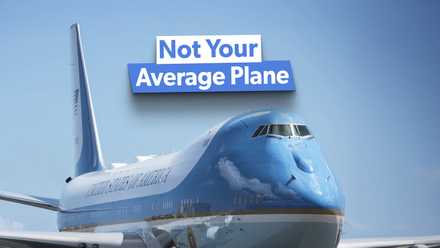
What Makes Air Force One Different From Commercial Boeing 747 Aircraft?
A review of the differences between the older B747-200 vs the older VC-25A Air Force One (AFO). Then review the newer B747-8i vs the new VC-25B AFO.
Germany: A Fleet Built On Reputation And Hard Lessons

Germany’s experience with VIP aircraft demonstrates how operational failures can drive rapid policy change. For years, the German government relied on a fleet that included Airbus A340 aircraft. This aircraft became emblematic of the fleet’s reliability issues as a series of high-profile technical failures culminated in a particularly embarrassing incident in 2018, when then-Chancellor Angela Merkel was forced to abandon the aircraft mid-journey and travel commercially to a G20 summit in Argentina.
In response, Germany accelerated its plans to modernize the fleet. In 2019, the government ordered three Airbus A350-900 aircraft, representing a significant upgrade in technology and reliability. These aircraft were outfitted with advanced communication systems and defensive technologies, including Directional Infrared Countermeasures designed to protect against missile threats. The modernization effort was completed in stages, with the final aircraft delivered in 2024 following extensive modification by Lufthansa Technik. The new fleet retained the traditional naming convention, symbolically linking modern capability with historical continuity.
Germany’s approach reflects a broader lesson in VIP aviation. Reliability is not merely a technical concern but a matter of national reputation. When a head of state is delayed or forced to rely on commercial alternatives, it can signal vulnerability or lack of preparedness. Investing in a modern, dependable fleet is therefore as much about maintaining credibility as it is about ensuring operational capability.
Italy And France: Sovereignty Through Industrial Choices

A country’s VIP fleet often reflects deeper industrial and political priorities. Italy and France provide contrasting examples of how these decisions are shaped by national strategy. Italy has recently undertaken a significant modernization of its government aircraft, replacing older Dassault Falcon models with five Gulfstream G650ER jets beginning in 2025. This decision reflects a focus on performance, range, and reliability. The G650ER is one of the most capable business jets available, offering long range and high speed that suit Italy’s global diplomatic and governmental needs. Interestingly, Italy’s fleet also serves the Pope during international travel, adding an additional layer of logistical and symbolic importance. The choice of an American aircraft highlights a pragmatic approach that prioritizes operational effectiveness over domestic industrial considerations.
France, by contrast, has taken a different path that emphasizes national industry. Its primary VIP aircraft is an Airbus A330-200, a European-built platform that underscores its commitment to its domestic aerospace sector. France also operates Dassault Falcon 7X jets for shorter trips within Europe. These aircraft complement the larger A330 and provide flexibility for different mission profiles. These differing strategies illustrate how VIP aircraft can serve as instruments of industrial policy. While both Italy and France achieve similar operational outcomes, their choices reflect distinct priorities in balancing sovereignty, economic interests, and global partnerships.

The World’s Largest Air Forces By Number Of Fighter Jets
This guide ranks the world’s largest fighter forces in 2026
China’s Unconventional Approach

China presents one of the most unusual cases in VIP aviation. Unlike other major powers, it does not maintain a dedicated presidential aircraft for its head of state. The decision traces back to an incident involving a Boeing aircraft that had been ordered for government use. Upon inspection, the aircraft was found to contain suspicious technical anomalies, raising fears that it had been compromised. The discovery prompted a reassessment of how China manages presidential travel.
Since then, China has relied on specially prepared commercial aircraft operated by  Air China. These aircraft undergo extensive inspections before each trip, often taking weeks to complete. During this process, the interior is reconfigured to meet the needs of the presidential delegation, including secure communication capabilities and private working areas.
After the trip, the aircraft is returned to standard commercial configuration and reenters regular service. This approach is logistically complex but allows China to maintain strict control over security without relying on a permanently dedicated platform. China’s strategy highlights the extent to which concerns about surveillance and technical integrity influence VIP aviation decisions. It also demonstrates that there is no single model for managing presidential transport, even among the world’s most powerful nations.
Power, Perception, And The Price Of Access

VIP government aircraft are far more than symbols of political privilege. They are critical tools that enable national leaders to operate effectively in an increasingly complex and unpredictable world. Equipped with advanced communication systems, defensive capabilities, and medical facilities, these aircraft ensure continuity of government under all circumstances.
At the same time, the high costs and visible nature of these programs make them focal points for political debate. The United States’ struggles with Air Force One replacement, Germany’s fleet modernization following public failures, and the contrasting approaches of Italy, France, and China all illustrate how technical requirements intersect with political realities.
Ultimately, the rationale behind these investments comes down to control and independence. A government that cannot guarantee secure, reliable mobility for its leadership risks being constrained by external factors. The billions spent on these platforms are not simply expenditures on transportation. They represent investments in national sovereignty, operational resilience, and global presence. In this sense, VIP government jets are not just aircraft but strategic assets that reflect how governments balance power, perception, and accountability in the modern era.