dailynewsnblog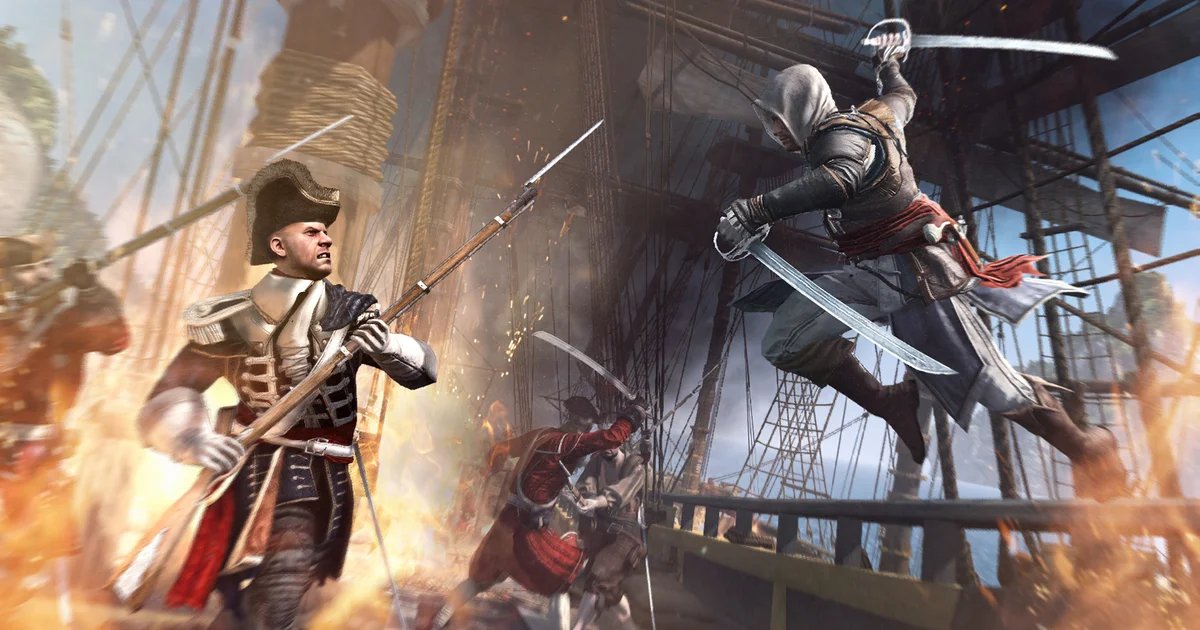
“Let’s call this round a draw,” says Coach Stilley, his amiable New York drawl soothing what could have been a tense standoff. “You head back to your end of the field. I’ll regroup my team, and we’ll see where things take us in the second half. What do you say?”
We’re several star systems away from New York, in the Halcyon colony set up by The Outer Worlds’ megacorps. And Coach Stilley’s team, the Firefly Freebooters, haven’t played tossball in a decade. Instead, they’re pirates-for-hire – carrying out raids for the highest bidder. What’s more, the players that made up Coach’s offensive line are lying dead at my feet – sizzled by my spaceship’s self-defence system during an attempted boarding.
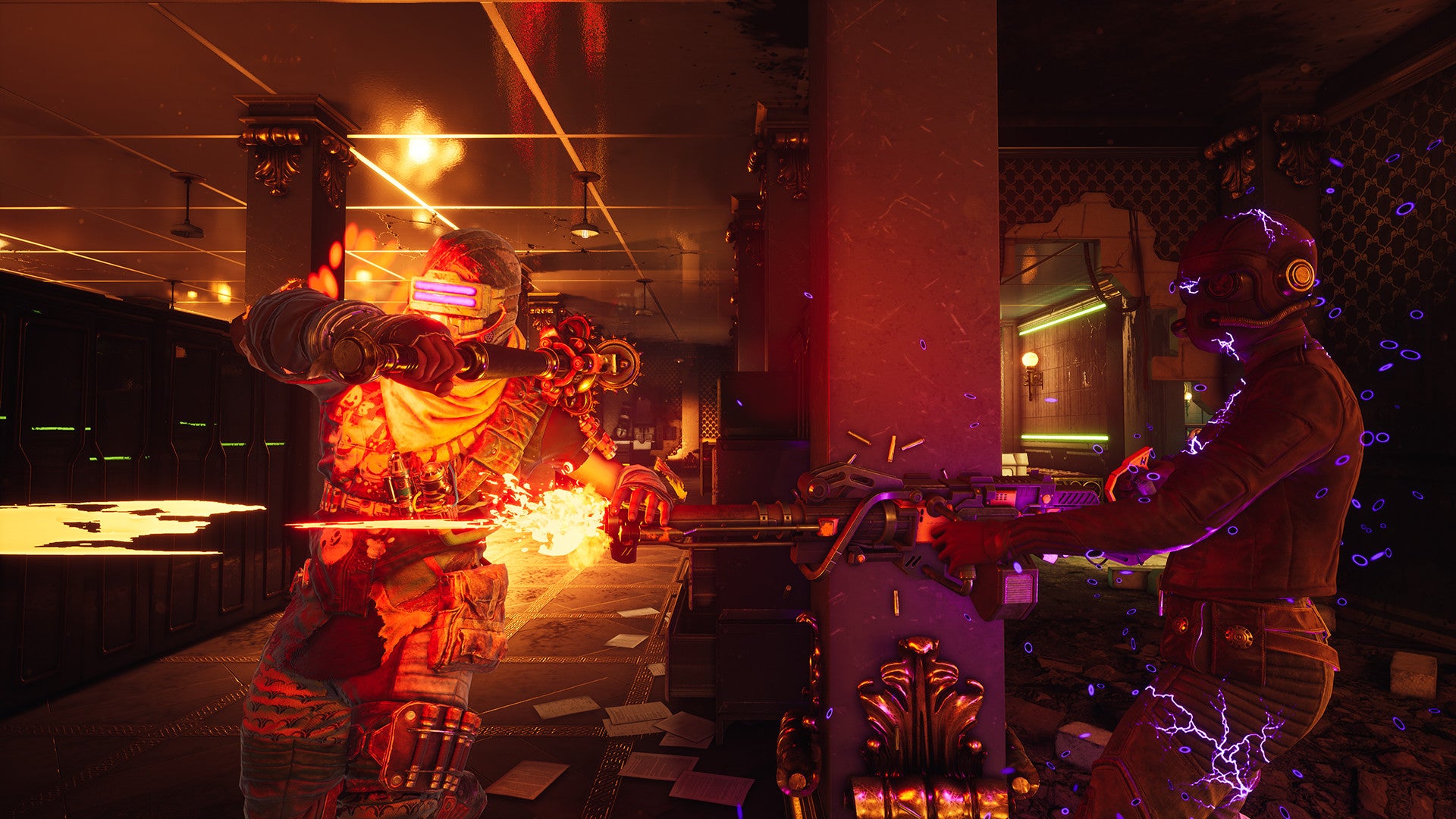
After calling a timeout, I head to the Coach’s cabin, and get to know him the old-fashioned way: by rifling through his computer for personal messages. A picture emerges of what happened 10 years ago. The Firefly Company experienced an “exciting period of growth and change”, and became an object of desire for other, circling corporations.
“As part of these negotiations, Firefly Company has agreed to dissolve its Freebooters Tossball property,” read the email from the Office of Clerical Oversight. “So as not to challenge, compete with, undermine, or in any way disrespect the tossball teams owned and employed by any company interested in acquiring us.”

While all the Freebooters’ positions were dissolved, their lifetime indenturement contracts were not. Were they to offer their services to any of Firefly’s competitors, they would risk arrest, imprisonment, mandatory re-education or, perhaps worst of all, a surprise audit.
The team drifted in a literal and professional void: unhireable in Halcyon, yet unequipped to make the long-haul cryosleep journey to Earth. And so the Coach marshalled his team, leaning on whatever sense of sporting bonhomie remained to reconfigure the Freebooters as professional plunderers. “Scripture tells us our lives are defined by our role in society,” he told his crew. “Our role is to play tossball. We are never off the field, because we never stop being tossball players.”
In his own way, by embracing the continued use of the lingo and hierarchy of sports, Stilley saved the lives of these abandoned colonists. In his memos to the squad, he dealt with the Freebooters’ limited skillsets, applying a Coach’s mixture of encouragement and flintiness. “There’s a time for improvisation,” he wrote, “and a time for following instructions.” Having asked for repairs to the piping in his toilet, he found that his players had resorted to using tossball sticks instead of chisels, and plasma rifles in place of welding torches. “These are all terrible ideas. Why, you ask? If you think about it, the answer will be as obvious as the hole in my lavatory wall.”
Growing indiscipline and boredom was met with teacherly admonishment. “Now, I understand you’re all eager to play. We haven’t had a lot of matches since corporate scuppered the team,” wrote the Coach. “But today I had to pry a tossball out of a shattered terminal. I expect you all to behave in a manner consistent with Freebooter values, which includes only destroying equipment while on board an enemy’s ship.”

The story of the Freebooters is very much a peripheral one in The Outer Worlds, but it resonated with me – and in doing so, vibrated an old strand of memory. It was while playing through Assassin’s Creed: Black Flag a decade prior that I learned, via a snarky yet informative Codex, that the golden age of piracy had been the result of mass layoffs.
As European empires bickered over control of the Caribbean, they commissioned private individuals to harry the merchant ships of their rivals. “In time of war, British captains might be issued with a privateering commission, or a ‘letter of marque’, which allowed them to intercept enemy shipping and thereby disrupt trade,” explained Dr Robert Blyth, in a blog post for the National Maritime Museum at Greenwich. “However, habits learned in wartime and the value of captured cargoes meant that privateering could easily give way to peacetime piracy.”

When conflicts ended, the oceans were flooded with jobless Europeans, many with well-honed talents for attacking vulnerable vessels and taking their goods. In this way, the wealthiest powers in the world created their own worst nightmares, ensuring there were plenty of pirates around to take advantage of the colonial shipping trade.
This pattern – of privateer boom and pirating bust – went on for hundreds of years. And unbelievably, unemployment is still fuelling piracy in the 21st century. In 2014, The Guardian interviewed Mohamed Ali Diini, director of the Iftiin Foundation – a nonprofit organisation focused on alleviating the struggles of Somalia’s youth. At the time, almost seven in every 10 young Somalians were unemployed, and over 70% of the population was under 35. “Where economic growth is not matched by an increase in economic opportunities for youth, risks of political instability and social unrest increase,” said Ali Diini. “Driven by poverty and unemployment, youth in Somalia turned to piracy as a solution, which in 2012 cost the global economy over $6bn.”
It’s an unheeded lesson of the past 500 years: when the most powerful are determined to hoard riches at the expense of those they’ve tossed aside, they end up paying for it. In treasure.

I don’t know where we’ll be by 2355, the year The Outer Worlds’ story kicks off. But there’s much that’s familiar in Obsidian’s blend of historical piracy and modern-day work culture. In particular, the corporate habit of leaning on non-competes, and refusal to work with those they’ve recently made redundant, for fear of being accused of unfair dismissal. In industries where a handful of companies hold sway, a layoff can leave you feeling as if you’ve been forced out of legitimate work, and left with few good options.
And so I have a lot of sympathy for the Freebooter Tossers – a term I use not judgementally, but in recognition of the important role the ball-tosser holds on the field. As I navigated Halcyon after my brush with the Coach, I went out of my way to avoid reducing Freebooters to ash with plasma fire, or zapping them with my shrink ray. They’ve already been made to feel small enough.