dailynewsnblog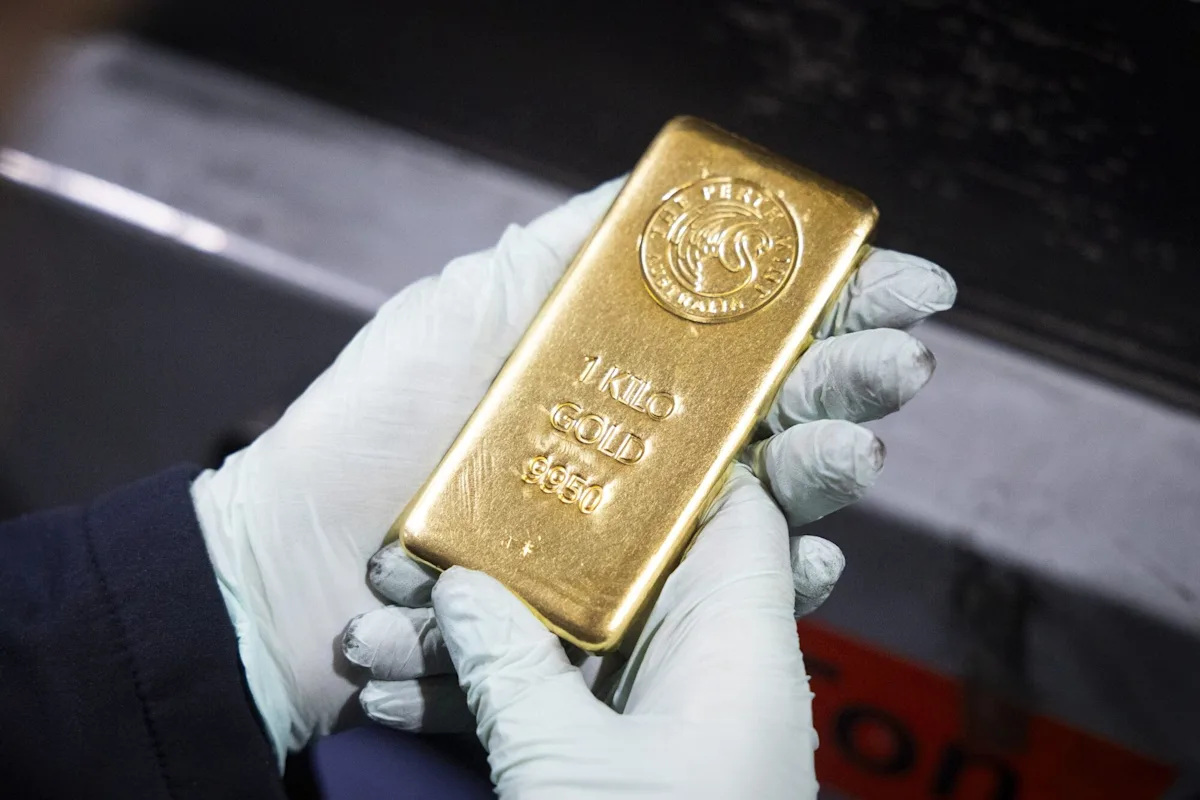
(Bloomberg) — Gold fell after vessels came under fire in the Strait of Hormuz at the weekend, renewing fears of energy-supply disruptions that have stoked inflation concerns during more than seven weeks of war in the Middle East.
Most Read from Bloomberg
Bullion dropped as much as 1.9% to below $4,740 an ounce, wiping out last week’s entire gain. President Donald Trump said the US Navy fired upon and seized an Iranian-flagged cargo ship, while Tehran warned that ships approaching the key waterway would be treated as violating a ceasefire. Several vessels were forced to abandon crossings only hours after the Islamic Republic had said Friday that the strait was “completely open.”
The latest incidents have jeopardized prospects for potential peace talks in Islamabad this week, with Trump saying he saw a chance for a deal while also renewing threats to destroy Iranian power plants and bridges. Tehran said there was no “clear prospect” for productive negotiations.
“The war trades are back on, and that means gold is being sold,” said Kyle Rodda, an analyst at Capital.com. “Things are going to be heavily headline-driven today. That means the potential for two-way volatility,” he said.
Oil and natural gas prices soared on Monday, having slumped in the previous session. US equity futures slipped and a gauge of the dollar rose as much as 0.3%, pressuring gold that’s priced in the US currency. Failure to achieve a lasting diplomatic agreement to end the war has driven market volatility in recent weeks, with the latest episode again underscoring the fragility of a ceasefire that’s due to end Tuesday.
The protracted conflict has triggered an unprecedented energy-supply shock that has intensified inflationary pressures, making central banks more likely to hold interest rates steady or even raise them — a headwind for non-yielding bullion. Gold has lost around 10% since the war began at the end of February.
Investors will be watching the US Senate confirmation hearing for Kevin Warsh, who will face questions on Tuesday as Trump’s next pick to lead the Federal Reserve. Any sense that Warsh would push for monetary easing later this year would likely support bullion, while greater caution around inflation — and a reluctance to cut rates — would be negative for gold.