dailynewsnblog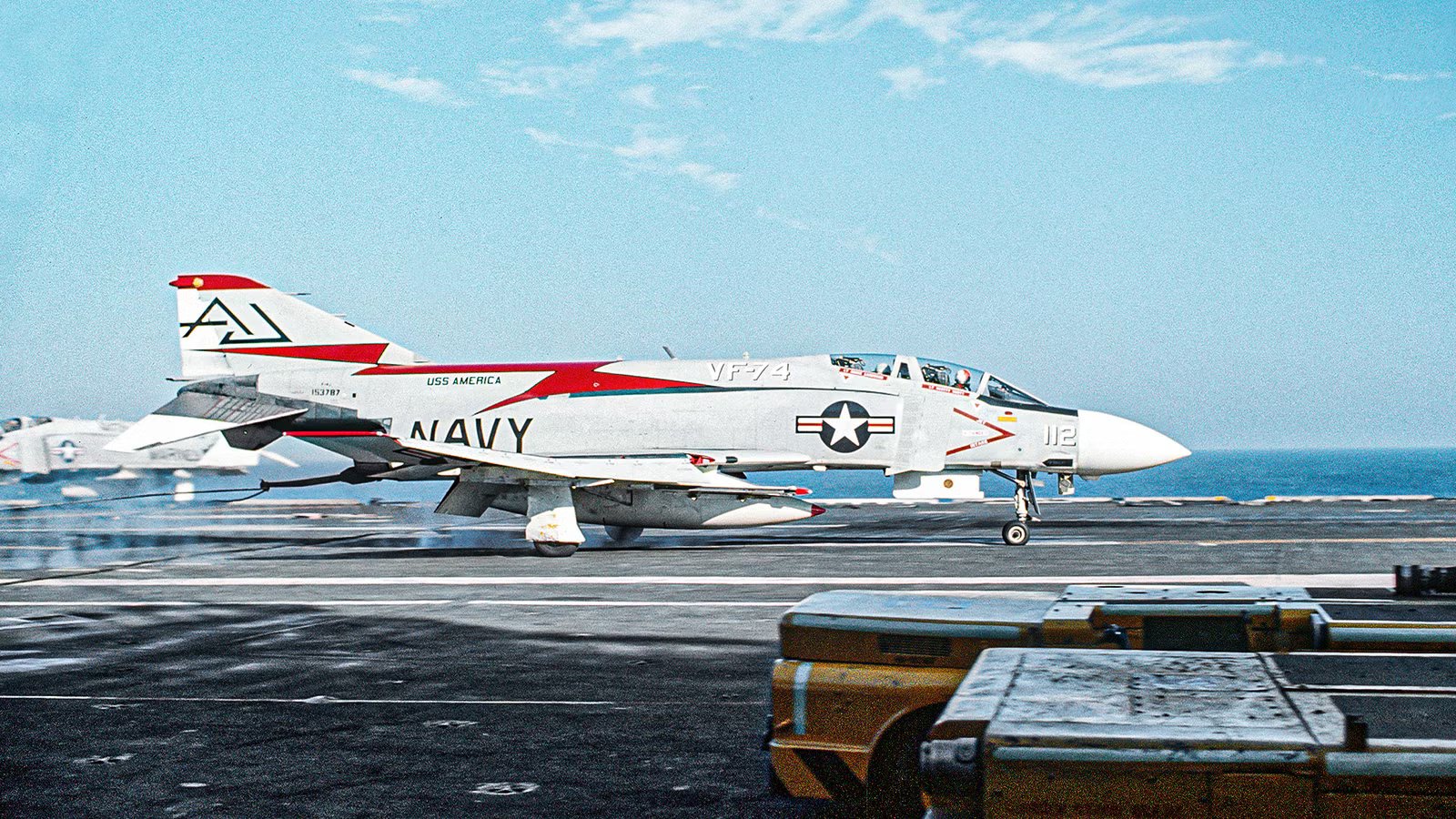
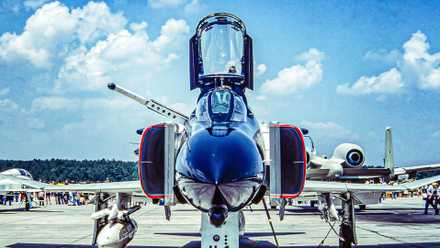
The McDonnell Douglas F-4 Phantom II has gone down in the history books as one of the most iconic fighter jets ever built. It began as a US Navy fleet defense Interceptor and evolved to become one of the most versatile and reliable airplanes in the US Air Force, as well as dozens of other US partner nations. The plane was so popular that McDonnell Douglas produced over 5,000 examples, with over half being solely delivered to the USAF.
Heralded as a ‘triumph of thrust over aerodynamics,’ the Phantom proved that sheer power was enough to make the plane one of the most successful platforms of its era. Not only could it fly faster than Mach 2 in an Interceptor configuration, but the plane was capable of hauling 16,000 pounds of ordnance on nine hard points. It greatly surpassed its contemporaries in the Century Series, like the F-100 Super Saber and F-104 Starfighter. The F-4 is still on par in some aspects with many modern jets like the F-16 Fighting Falcon, which succeeded it.
Ultimately, the versatility of the airframe is what made it so valuable, as it took on far more missions than its original aerial superiority role. It became an invaluable close air support workhorse as well as the pioneering platform of ‘Wild Weasel’ anti-air defense tactics in the age of missile warfare. Despite being a third-generation aircraft, it endured with the USAF until 1996 and continues to be upgraded and flown by operators around the world today, with Greece, Turkey, and Iran still maintaining active units in service.
The Universal Fighter: McNamara Forces The USAF’s Hand

The Phantom is an absolute truck, and while the high-performing, heavy-duty naval fighter was impressive, the USAF institution still resisted buying the jet at first. It took Defense Secretary Robert McNamara pressing the US Air Force into agreeing to a common platform in order to save funding before it finally happened, according to Joe Baugher. Furthermore, the Aviation Geek Club notes that it was first designated the F-110 Spectre, and when the Air Force’s F-4 deal took off, it proved to be one of the best investments the service ever made.
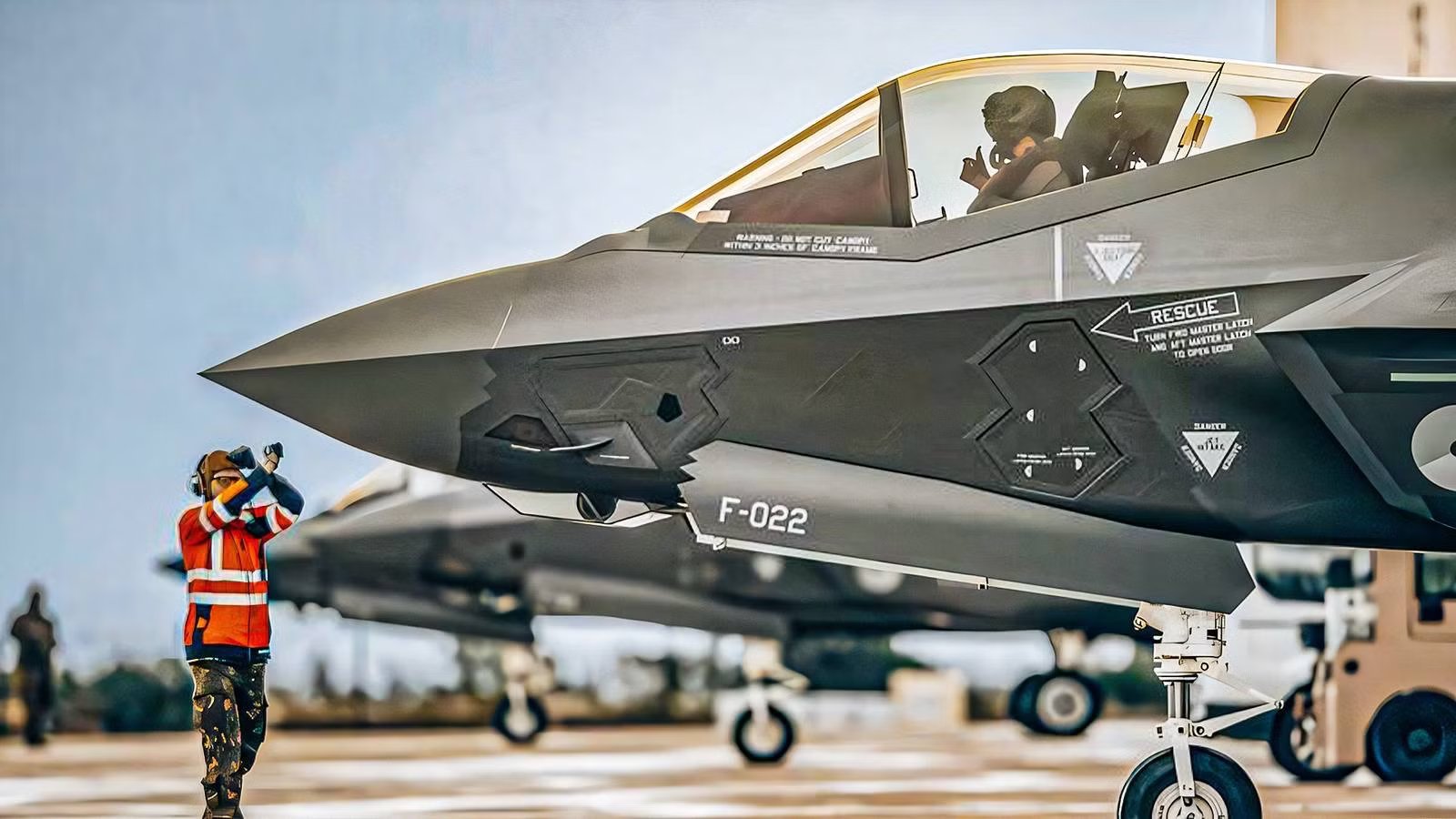
In fact, it remains uniquely successful in this area to this day, despite the newer Lockheed Martin F-35 Lightning II succeeding the Phantom as a universal platform. There are three very different variants in use, but the F-4 jets flown by the USN, USAF, and US Marines were virtually identical. Subsequently, the transition away from the F-4 was a gradual crawl because the aircraft was so over-engineered and highly adaptable.
In the skies over Vietnam, the Phantom couldn’t turn as tightly as the agile, lightweight Soviet-built MiG-17 or MiG-21. However, USAF pilots learned to fly ‘boom-and-zoom’ tactics. The F-4 effectively became a kind of force multiplier for the USAF; a single platform could execute the missions of three planes with a single purpose. And while turning fights were not its forte, it used its sheer muscle to dictate the terms of engagement, out-speeding threats to escape danger and out-bombing everything short of a heavy strategic bomber.
Instead of buying fragile, expensive new jets, many operators could simply gut the F-4’s obsolete electronics and install 4th-generation hardware. It carried up to 18,650 pounds of ordnance, more than the jets that replaced it in the USAF and USN. For countries needing a platform to deliver a massive volume of ground-attack weapons, the F-4 has remained superior to many newer aircraft, and a few still serve today.
More Is More: Full Throttle In The Phantom

The F-4 is still faster than many of the modern jets built to replace it. While the F-15 Eagle could beat it in a straight line, newer multirole workhorses like the F-16 and the Navy’s F/A-18 Hornet actually took a step backward in top speed. Where the F-4 lost to its successors was in aerodynamic design. The F-15 and F-16 utilized relaxed static stability and fly-by-wire computer systems, allowing them to pull 9G turns without shedding all their energy.
While newer, agile 4th-generation fighters like the F-15 and F-16 began entering service in the late 1970s, the Air Force flatly refused to retire the Phantom. The USAF prized the F-4’s ability to scramble from a runway, climb vertically at over 40,000 feet per minute, and intercept high-altitude threats before they could cross friendly lines. On a single sortie, a Phantom could carry four AIM-7 Sparrow radar-guided missiles, four AIM-9 Sidewinder infrared missiles, an external center-line fuel tank, and still have room for six 750-pound bombs.
The combination of performance and capacity meant a pilot could bomb a heavily defended bridge, turn around, and shoot down a MiG on the flight home. If an F-4 pilot in combat found themselves outmaneuvered or running low on fuel, they could simply straighten the nose, engage full afterburner, and leave enemy fighters in the dust. And that same high-flying power made it so valuable as a tree-top surfing Wild Weasel that hunted down enemy surface-to-air missiles. This F-4 was so effective in this role that it remained the go-to for it during the 1991 Gulf War.
Which Aircraft Does The Iran Air Force Fly?
The Iranian flying museum.
Multirole Pioneer: Flexing In The F-4

The very design features that made the F-4 a successful US Navy carrier-based fleet defender were also what made it an incredibly flexible fighter-bomber for the USAF. Long before the Boeing F-15E Strike Eagle was built, the USAF relied on the F-4 to fly deep behind enemy lines at night or in terrible weather to strike critical targets and provide crucial close air support for troops on the ground. The Phantom could blast through the thick, turbulent air at treetop level for ground-attack missions in a hostile environment that would cause lesser, more delicate air-superiority fighters to falter.
The Navy engineered the F-4 to survive the violent, bone-crushing impact of arrested landings on a pitching carrier deck, as well as the explosive stress of steam-catapult launches. The Navy had also insisted that the jet be capable of carrying a two-person crew to perform complex aerial interceptions with long-range missiles. When the Air Force inherited the design, they saw that this ruggedness allowed the plane to carry immense weight under high G-forces, and its backseat made it possible for the jet to perform its most valuable missions.
With an 18,650-pound payload capacity, an F-4 could carry more bomb tonnage than a four-engine Boeing B-17 Flying Fortress from WWII. The large nose array was originally meant to make it a ‘missileer,’ which later allowed it to be equipped with large ground-mapping radars and other equipment for a myriad of missions. The jet was equipped with terrain-following equipment as well as laser and electronic countermeasure systems that made it an evolving, sophisticated strike platform.

America’s 5 Fastest Fighter Jets Of All Time
A closer look at the nation’s speed kings.
Two To Tango: No Substitute For The Lead Sled

The two-seat F-4G Wild Weasel V variant stripped out the nose cannon to pack the airframe with complex radar-homing and warning systems, plus room for a Weapon Systems Officer in the back seat. The Phantom had the power to haul an arsenal of anti-radar AGM-88 HARM missiles plus extra aircrew to manage the complex systems and tasks required to home in on missile batteries and destroy them while blasting at Mach 2 on the deck directly at the threat vector. The mighty jet served in this role until as recently as Operation Desert Storm.
When it eventually succeeded, it took two entirely separate, cutting-edge aircraft platforms to completely replace what the Phantom had been doing on its own for over thirty years. Nicknamed ‘The Lead Sled’ for its power-over-agility design philosophy, the F-4’s roles were split up between light jets and uncompromising, Cold War super fighters. The F-16 and F-15 maximized niche roles once fulfilled by the Phantom but lacked the versatility of their predecessor.
How Many F‑4 Phantom IIs Were Built?
Tallying up the most prolific supersonic warbird ever made.
Heir To The Phantom’s Kingdom

The F-15 Eagle was developed with the mantra ‘not a pound for air-to-ground, as a pure air-superiority fighter, and featured a thrust-to-weight ratio greater than 1:1. That made the Eagle so powerful that it could accelerate while climbing vertically, a feat even the brutally fast F-4 could not achieve. Even to this day, the F-15 remains the fastest jet in the US inventory, although it came with a far higher price tag than the F-4, and modern F-15EX models cost even more than some next-gen stealth fighters.
Looking to the low end of the tactical spectrum, the F-16 Fighting Falcon far exceeded the aerial agility of the F-4, earning it the moniker ‘Viper.’ Its stunning turn rates and maneuverability were complemented by pilot-empowering features like one of the first fly-by-wire, side-stick controls ever installed in a plane. Although most F-16s are limited to a single seat, only a handful of two-seat versions exist; its bubble canopy eliminated virtually every blind spot that could allow a ‘bandit’ to sneak up on the Viper.
The F-16 has gradually evolved into a multirole plane, but thanks to its twin engines, the F-4 is still faster as well as a heavier hauler. Ironically, however, by modifying the air-superiority F-15 into a dual-crew ground-attacker, the Air Force effectively built a modern spiritual successor to the F-4 Phantom. Introduced in 1988, the F-15E reinforced that the fundamental design philosophy of the Phantom was correct all along.