dailynewsnblog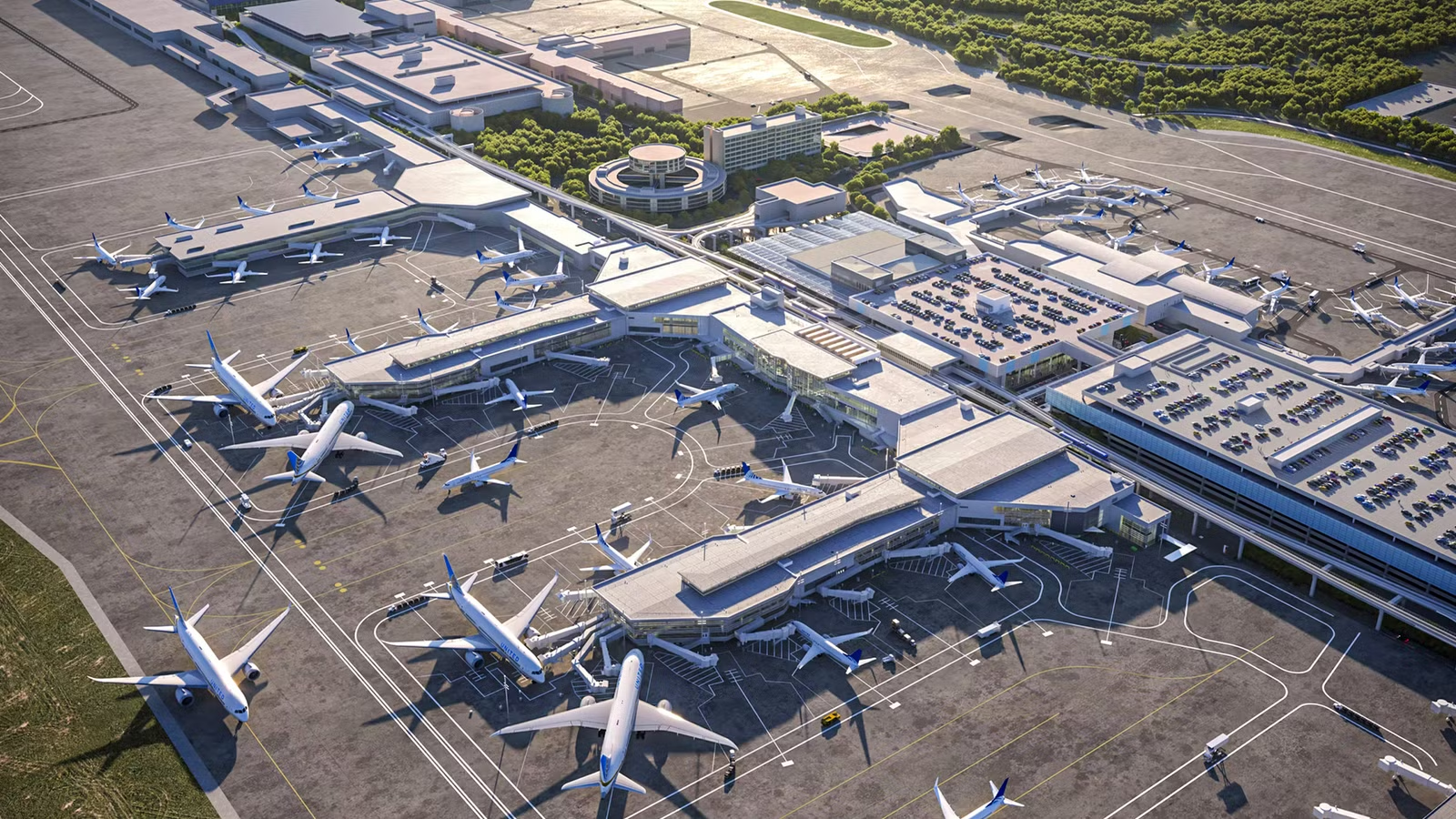
The United States is in the midst of a once-in-a-generation era of aviation mega projects. All across America, airports are undergoing massive overhauls and expansions to modernize as well as grow to meet the ever-increasing demand for air travel. The US network of civil airports is home to some of the oldest aerodromes in the world, as well as some of the busiest mega hubs in the global flying apparatus.
The buzz of attention brought to American Air Travel by the 2026 FIFA World Cup is highlighting many new developments that are just the tip of the iceberg. New York John F. Kennedy International Airport (JFK) specifically opened 14 widebody gates in Phase A of its $19 billion overhaul just for the World Cup.
 Los Angeles International Airport (LAX) on the West Coast started several enormous construction projects years ago, many of which are still ongoing, as LAX anticipates a massive influx for the 2028 Olympics. A new era of flying is taking shape from coast to coast, in the nation’s capital, and even in the Lone Star State.
Los Angeles World Airports

LAX is in the late stage of a $30 billion capital improvement program, as the City of Los Angeles will host the 2028 Summer Olympic Games. LAWA pushed up the schedule for a number of improvements in order to accommodate higher traffic for the FIFA World Cup this year as well. Many projects are still ongoing, but so far, the airport has constructed a new 6.3 million-square-foot consolidated rental car facility and a new police headquarters to streamline security operations.
LAX completely renovated the Tom Bradley International Terminal into a 15-gate, multi-level facility with a midfield satellite concourse. Delta Air Lines completed a multi-billion-dollar demolition and reconstruction project for Terminal 3 and the satellite, as well as a complete overhaul of Terminal 2 and the skyway connecting to TBIT. Meanwhile, United Airlines also completed major upgrades to Terminal 7 before the World Cup kicked off. A number of significant improvements have been completed to Terminal 5, and the Terminal 4 modernization program is also well underway.
The airport removed its famous illuminated entrance pylons along the streets that loop around the terminal area in order to make way for new bypass bridges. It is expected that they will be rebuilt later in a new format, but before that happens, the airport aims to complete an additional $1 billion worth of elevated roads and ramps that will stretch over 4 miles. The automated people mover, a new rail link from the airport to the city, is also well underway. The 2.2-mile sky link will be able to carry 30 million passengers a year to more convenient locations for rental car and ride-share pickups.
John F. Kennedy International Airport

The centerpiece of the modernization effort at JFK is the New Terminal One mega build. NTO is a $9.5 billion construction project that will combine the footprints of the pre-existing Terminals 1 and 2, as well as the previously demolished Terminal 3. The new terminal will have 23 gates, 22 of which will be made to accommodate widebody jetliners. When it is completed, NTO will span 2.6 million square feet and become the largest terminal at the airport.
One of the most significant engineering improvements to come with NTO will be the microgrid installed to provide sustainable power that can also serve as a backup energy supply. It will have 13,000 solar panels that generate 12 megawatts of electricity, with localized fuel cells as backup power to keep the terminal operational even during a complete blackout. It will have the largest airport microgrid in the country once operational.
The new Terminal 6 is a $4.2 billion project to construct a 1.2 million-square-foot building with 10 new gates, featuring nine that can accommodate widebody aircraft. The new boutique building will be an extension of JetBlue’s Terminal 5 and feature touchless passenger processing from curb to gate, significantly streamlining domestic-to-international connections. Facial recognition scanners will be installed, and at the post security area, there will be a bridge to connect T6 and T5 as a unified concourse area.
Pan Am’s Old HQ Is Now Miami’s New Luxury $1,295-Per-Use Private Terminal: Here’s What’s Inside
Groups of four can also book private spaces within the terminal.
Texas Goes Bigger Than Ever

The DFW Forward project at Dallas-Fort Worth Airport (DFW) is another Mega project with an estimated budget of around $12 billion. The program encompasses massive terminal area expansion, as the airport is completely rebuilding 83 gates across terminals A and C, as well as building an all-new 31-gate international facility at Terminal F. The enormous undertaking comes as DFW expects to accommodate over 100 million passengers per year going forward.
DFW set the World Cup as a deadline for the modernization of Terminal C, the International Parkway, and new rental car facilities. As the soccer fans depart, work will continue on Terminal F and additional construction on Terminal C. Meanwhile, Houston’s George Bush Intercontinental Airport (IAH) completed its $1.46 billion international terminal redevelopment program just in time to add a new D West pier and 17-lane security gate before the FIFA matches started.
Houston opened terminals B, D & E in 2024, including the new 160,000-square-foot D West Pier. The new area included widebody-capable gates as well as a decorative 380-foot-tall LED wall. IAH still has over $2.6 billion worth of transformative work to complete on Terminal B and retail expansions after the World Cup concludes. To complement America’s first and only five-star Skytrax Airport and support the expansion of Southwest Airlines operations, the airport is adding seven new gates to the West Concourse and completely redesigning the baggage handling system.
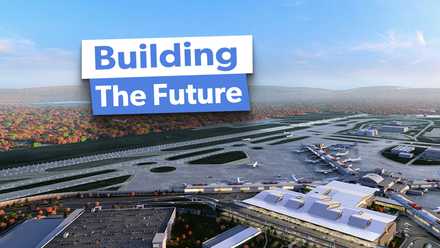
6 Airports Undergoing Major Improvement Projects
New multi-billion dollar terminals and other airport improvements are underway across the United States.
First Of The Century: Salt Lake City

The Salt Lake City Airport Redevelopment program is a $5.1 billion mega project that aims to create ‘the new SLC.’ Beyond being a major improvement for travelers to and from the southwestern United States, this project takes a historically significant place in US aviation as the first brand-new airline hub built in the 21st century. Instead of overhauling the existing terminal buildings, the Salt Lake City Department of Airports decided to demolish the 1960s-era layout and construct an all-new facility.
Catch what other flight trackers miss
Emergency squawks, holds, NOTAMs — live signals, no signup.
Open tracker
Catch what other flight trackers miss
Emergency squawks, holds, NOTAMs — live signals, no signup.
Open tracker
Spearheaded by HOK Architects, the new SLC will be a 4-million-square-foot high-efficiency dual-concourse hub. One of the main operational challenges the new airport aims to address is aircraft taxiing bottlenecks caused by the tightly spaced finger piers projecting from the legacy building. The new blueprint will have two large parallel concourses running east to west with enough room for narrowbody and widebody jets to taxi simultaneously in opposite directions.
As the incumbent, Delta Air Lines has secured a long-term contract extending its hub lease until at least 2044. Delta has historically held a 70% market share at SLC and plans to continue developing the airport into a kind of ‘Atlanta of the West.’ Among the many improvements coming with the project will be the complete phase-out of hardstand shuttle bus operations on the airfield, and every aircraft, including SkyWest regional jets flying Delta connection missions, will perform 100% jetway-only ops.
Another crucial element in the redevelopment strategy is the premiumization of the landside lounge spaces and amenities. The Concourse A Sky Club will span 28,000 ft and feature an outdoor sky deck with fire pits to complement the scenic mountain views. The Concourse B Sky Club will be indoors, but its offerings will be on par with those at other locations once completed, as it will house the largest lounge in the airline’s global network. All of these improvements aim to transform SLC into a domestic air travel epicenter as well as a trans-Pacific gateway for international travelers, and even accommodate direct flights to and from Europe or South America.
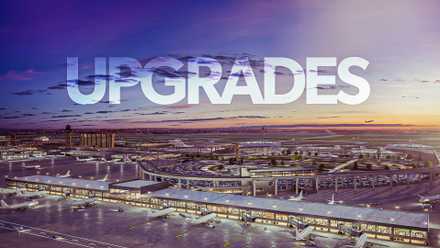
The Multibillion-Dollar Race To Upgrade America’s Busiest Airports
From New York-JFK to Dallas/Fort Worth, major aviation hubs are embarking on ambitious redevelopment programs.
A Fresh Start In Philly

Philadelphia International Airport (PHL) has completed 500 million in modernization projects, including 50 targeted infrastructure improvements specifically intended to serve as a welcome for the FIFA 2026 World Cup. Unlike other large improvement projects, the Philadelphia Department of Aviation focused on completing a long list of smaller improvements ahead of the larger $2 billion long-term capital development program, which will continue after the last match wraps up.
In anticipation of the overseas guests for the FIFA games, the Terminal A West International arrivals gateway was overhauled. The airport also installed dedicated in-terminal World Cup viewing lounges alongside local art displays to welcome guests to the Philly experience immediately after they disembark. Amenity improvements also included restroom renovations, device charging ports installed across terminal areas, as well as improved signage and landside transit access.
After all the football fans head home, PHL will continue its efforts to improve airport operations and enrich traveler experiences. The Terminal D & E baggage expansion is a 12,000 ft annex that will increase luggage and link capacity by 40%. Meanwhile, the taxiway’s reconstruction will greatly improve airfield operations for the airport’s primary parallel runways 9R and 27L. And there’s a long list of enhancements coming to other terminal areas, cargo facilities, and energy efficiency, as well as other eco-friendly improvements.