dailynewsnblog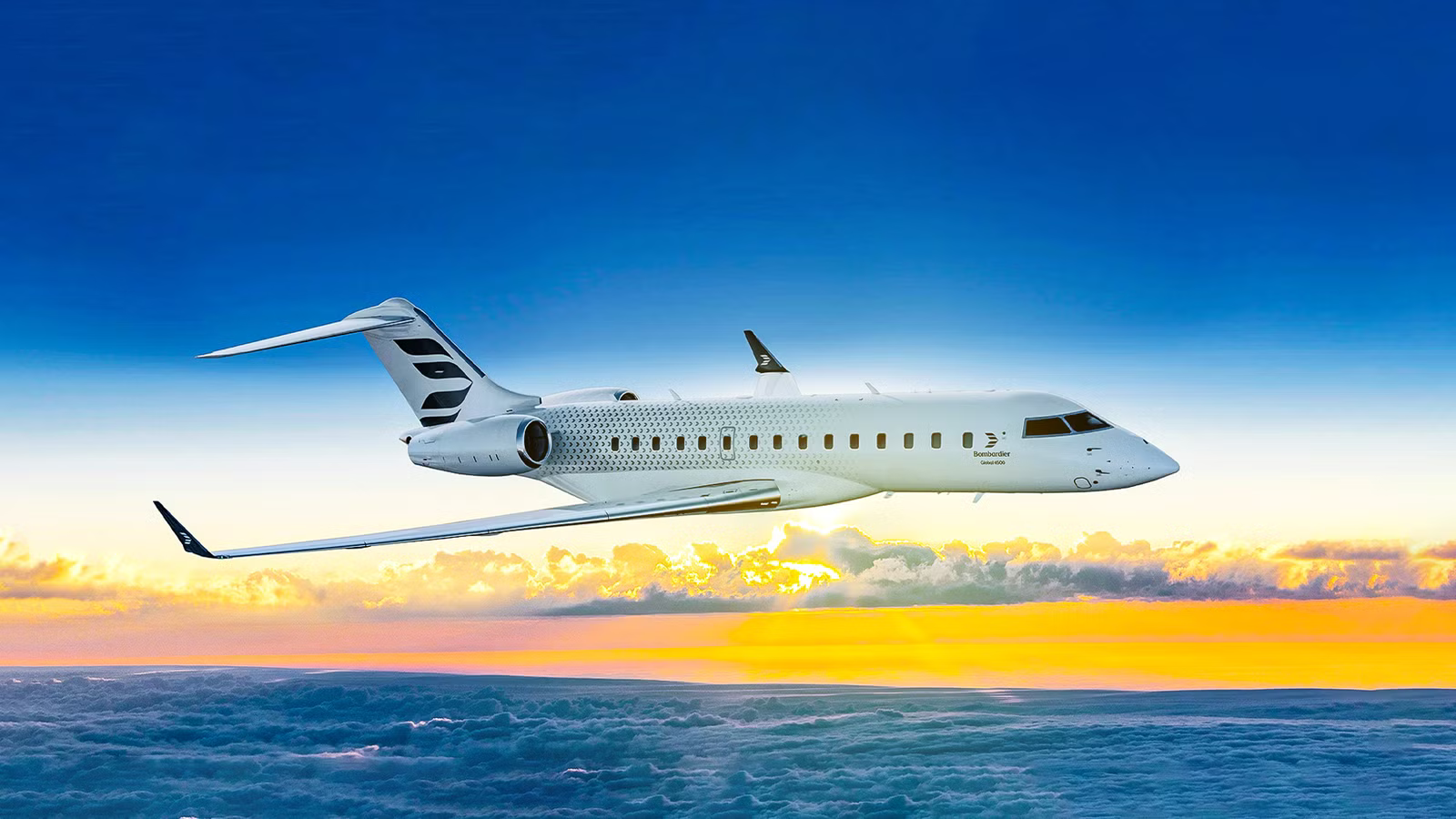
The Canadian Department of National Defense brokered a major joint-production deal in May between Bombardier and Sweden’s Saab to build the next generation of airborne early warning and control for the Royal Canadian Air Force. The GlobalEye will integrate Saab’s advanced radar and sensor suite with a domestically built Bombardier Global 6500 jet. The bizjet turned AEW&C platform combines Saab’s Erieye Extended Range radar with an advanced suite of sensors and a multi-domain command and control, or C2.
The selection of the Swedish system came despite intense pressure from Washington to buy the prohibitively more expensive Boeing E-7 Wedgetail, which even the US Air Force does not have enough budget for. Prime Minister Mark Carney has billed the decision as a systematic pivot from American defense contractors. Canada is leaning toward more domestic aerospace investment due to the strained relationship that the administration of Donald Trump has created.
The DND is now targeting a 70% domestic contract allocation within the next decade for its future procurement plan. The news follows in parallel with the ongoing debate over the nation’s pending Lockheed Martin F-35 Lightning II order, which has dragged on under review for over 18 months. The ultimate question is whether this is the first sign of protectionist tariff policies and the hostility of the current US presidency fracturing the world’s closest defense alliance deeper than ever thought possible.
Greater Sovereignty And Self-Sufficiency For RCAF

The decision to procure the GlobalEye and not the Wedgetail is part of the Carney Administration’s aims to more than double the proportion of military spending allocated to domestic defense contractors. That will raise it from the current value of roughly 30% of the total budget to 70% by 2035. This aggressive pivot explicitly targets the historical status quo due to the souring of recent diplomacy but also basic cost performance.
The underlying platform for the GlobalEye is the Bombardier Global 6500, which is assembled in Toronto and completed in Montreal. Under the preliminary framework signed with the Government of Canada, future aircraft will be built and ‘militarized’ domestically. Bombardier Defense is negotiating to lead the modification program with Saab’s guidance.
The GlobalEye relies on an ultra-efficient business jet airframe that offers drastically lower lifetime fuel and operational costs compared to a commercial airliner derivative. Meanwhile, the E-7 platform has suffered from notable cost overruns and delays, with unit prices climbing past $724 million before training and long-term sustainment are factored in. At $350 to $500 million per plane, choosing the more economical GlobalEye allows the RCAF to plan for a greater total of six aircraft.
The decision to choose the Saab GlobalEye directly parallels and foreshadows a potential shift to an F-35A Joint Strike Fighter and Saab JAS-39 Gripen E mixed fighter fleet. Just as the GlobalEye utilizes a Canadian-built Bombardier airframe to inject billions into domestic aerospace, a shift to the Gripen E would leverage Saab’s promise of a domestic Canadian assembly line.
Strategic Preparedness & Supply Chain Insulation Favors Saab

Strip away the diplomatic theater and the baseline price tags, and the Saab GlobalEye remains the most logistically sound, operationally superior aircraft for Canada’s Arctic mission. When evaluating what the RCAF actually needs to protect North American airspace, the decision boils down to three strategic realities: operating efficiency, airframe reliability, and supply chain security.
Canada’s vast geography requires the RCAF to rely on a decentralized network of small, austere airfields and remote Forward Operating Locations across the Arctic and rural provinces. Built on the Bombardier Global 6500, the GlobalEye is engineered with a high thrust-to-weight ratio and advanced wing aerodynamics. This allows it to take off and land on significantly shorter, less-prepared runways in extreme cold weather.
While the E-7 Wedgetail is a capable radar platform, its systemic supply chain risks and historical performance issues make it an unreliable choice for Canada. The E-7 relies on the heavily backlogged 737 commercial production line. Boeing’s defense division is deeply unstable, hemorrhaging billions of dollars in losses from fixed-price contracts and marred by systemic quality-control failures.
Australia’s pioneering of the E-7 Wedgetail was plagued by severe integration delays, software glitches, and cost overruns. The fleet was delivered years behind schedule and initially failed to meet full operational capability due to radar and data-link maturity issues. By choosing the GlobalEye, Canada gains a highly efficient, short-field-capable aircraft built on a domestic supply chain, entirely bypassing Boeing’s industrial bottlenecks.
What Canada Would Actually Build At Home

Opting for the GlobalEye proved that Canada values fleet size and persistence over a single, hyper-expensive US platform. The acquisition strategy also leverages Canada’s Industrial and Technological Benefits policy. It guarantees that at least one-third of GlobalEye production over the next 15 years, potentially including orders placed by foreign allies, will be Canadian-built.
However, Chief Executive Éric Martel is aggressively pursuing a larger share of the manufacturing workflow to capture more high-value aerospace engineering revenue. Bombardier has already entered advanced negotiations with Saab to localize assembly and has begun scouting domestic sites for a dedicated military modification facility.
Operating a domestic airframe allows the RCAF to manage its own spare parts, component overhauls, and long-term in-service support without relying on US defense firms. The project is also projected to support roughly 3,000 highly skilled jobs across Quebec and Ontario, reinforcing Canada’s sovereign capacity.
The same argument principles are driving the Carney administration to consider a joint production deal with Saab for Gripens and create a ‘high-low’ mix fighter fleet. Canada can use the same budget to field a larger, more sustainable fleet by absorbing lower-cost Gripen E’s for routine Arctic patrols, much like the US Air Force. There is speculation this could also result in a larger total force of over 100 jets with two or three dozen JSF alongside several dozen Gripens.
Industrial Protectionism And Strategic Realignment

Even as politics and economics steal many headlines, the primary objective for the RCAF and DND remains establishing a renewed AEW&C fleet with modern sensors, radar, and battle-management technology as the top priority. At the bottom line, Ottawa’s goals focus on long-term training frameworks and research and development investments. Not only do a domestic supplier and future export opportunities empower the Canadian defense industry, but the GlobalEye is the best jet for the mission.
The GlobalEye platform houses an Erieye ER S-band active electronically scanned array radar inside a 33-foot (10 meters) dorsal fairing. Utilizing gallium nitride transmit-receive modules, the sensor achieves a 350-nautical-mile (650 km) tracking range, delivering real-time air, sea, and land telemetry straight to commanders. Meanwhile, the Global 6500 airframe gives the mission endurance that is needed, with the reliability and efficiency to be ready 24/7.
The military-grade bizjet is powered by Rolls‑Royce Pearl engines that cut fuel use by 13% compared to legacy jets in its class and burn a fraction of what the 737-based Wedgetail consumes. This lets the Bombardier Global 6500 fly for 12 hours without refueling and cover 6,600 nautical miles (12,200 km).
The E‑7 Wedgetail stands out because it has a much more powerful radar array and C2 suite, along with other advanced intelligence, surveillance, and reconnaissance features. At the same time, GlobalEye allows the RCAF to operate free from restrictive US export controls and proprietary tech bottlenecks. Sovereignty concerns have reached a peak due to the transactional diplomacy wielded by Trump’s cabinet.
NORAD Integration And Technical Commonalities

GlobalEye’s long-term integration with North American Aerospace Defense Command networks remains unproven. However, more will be flying in Europe in the near future where they will be integrated into the joint forces of the North Atlantic Treaty Organization. Even though Canada’s fleet has not yet been delivered or flown in a North American airspace capacity, the Saab GlobalEye directly supports the modern, enduring mission of NORAD.
NORAD’s enduring mission is to defend the northern approaches to North America. Modern threats from adversaries like Russia and China have evolved from traditional bombers to stealth cruise missiles, hypersonic weapons, and drone swarms. GlobalEye’s Erieye Extended Range (ER) GaN radar specializes in tracking low-radar cross-section targets across vast distances.
Platform Specification | Saab GlobalEye (Global 6500) | E-7 Wedgetail (737-700) |
|---|---|---|
Primary Radar Sensor | Erieye ER Gallium Nitride AESA | Northrop Grumman MESA |
Detection Range | 350 nautical miles (650 km) | 250+ nautical miles (400+ km) |
Maximum Unrefueled Endurance | Over 12 Hours | 10+ Hours |
In-Flight Refueling Capability | None (Currently) | Rigid Boom Receptacle |
Radar Field of View | Lateral Sidelooking (Blind Spots) | Full 360-Degree Coverage |
While Washington insists that the E-7 represents the lowest-risk path for NORAD and the proposed “Golden Dome” missile defense architecture, the USAF has yet to buy it for itself. Meanwhile, many allied air forces have gravitated toward the Swedish design. As the top customer and domestic operator, Sweden already deploys its S 106 GlobalEye model to monitor Baltic airspace and defend NATO’s critical eastern flank.
While the platform is new to Canada, GlobalEye’s operational credibility is heavily backed by its adoption across Europe. In July 2026, NATO officially selected the Saab GlobalEye to entirely replace its aging multinational fleet of Boeing E-3 Sentry AWACS planes, securing up to 10 aircraft to be pooled among 11 allied nations. The French Air and Space Forces also plan to buy two, and the United Arab Emirates Air Force has operated a fleet of five GlobalEye jets for over six years.
Catch what other flight trackers miss
Emergency squawks, holds, NOTAMs — live signals, no signup.
Open tracker
Catch what other flight trackers miss
Emergency squawks, holds, NOTAMs — live signals, no signup.
Open tracker