dailynewsnblog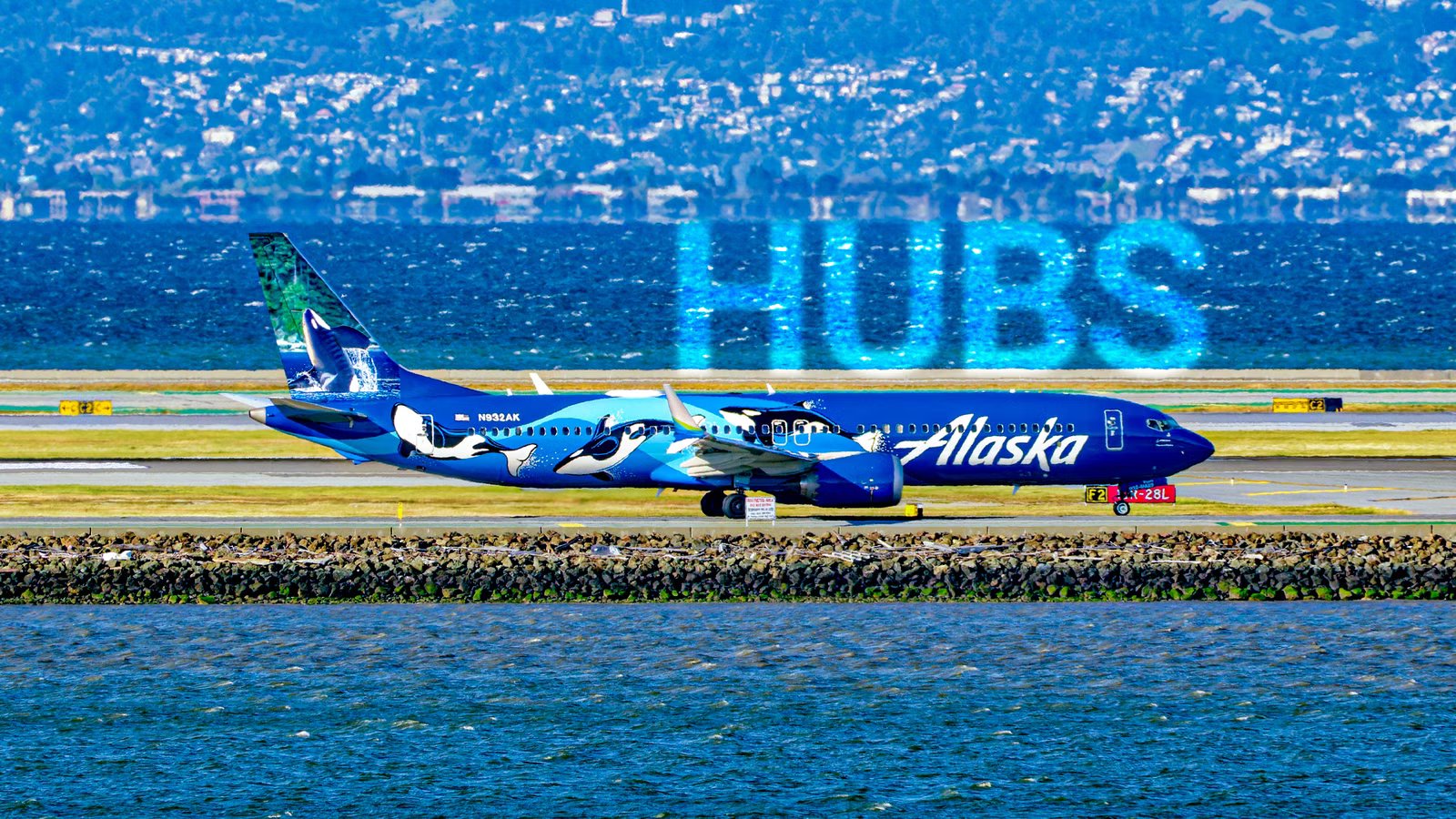
 Alaska Airlines‘ rapid growth at
  Seattle-Tacoma International Airport (SEA) has received considerable attention in recent months, particularly following the launch of the carrier’s first long-haul routes. According to the airline’s 2026 Investor Day fact sheet, Alaska Air Group is now the fifth-largest airline in the United States and the leading carrier across the West Coast and Hawaii.
However, Seattle is only part of the story. After acquiring Hawaiian Airlines and continuing to expand across the West Coast, Alaska operates six other hubs, each playing a different role in the wider network. From its new second global hub in Hawaii to steady growth across California and Alaska, the airline has without a doubt evolved beyond its traditional Seattle stronghold in recent years.
This Is Alaska’s New Second-Largest Hub

Following the acquisition of Hawaiian Airlines by the Alaska Air Group, Honolulu’s Daniel K. Inouye International Airport (HNL) is now the company’s second-largest hub after Seattle. Together, Alaska and Hawaiian held roughly a 47% market share between July 2025 and June 2026.
Under the Hawaiian brand, the group serves destinations including  Sydney Kingsford Smith Airport (SYD), Tokyo Haneda Airport (HND), and Kansai International Airport (KIX), alongside an extensive network linking Hawaii with the US mainland and neighboring islands. At its 2026 Investor Day, Alaska also described Honolulu as its second “global hub” and said the group is the “number one airline flying to, from and within the Hawaiian Islands.”
Part of Alaska’s Accelerate Program is continued investment in the Hawaiian brand and route network. Through Hawaiian’s Kahuʻewai Hawaii Investment Plan, the group plans to invest more than $600 million across the islands over five years, including airport renovations and upgraded Airbus A330 interiors. At HNL specifically, Hawaiian is also preparing to open a new nearly 13,000-square-foot premium lounge in early 2028, with space for around 200 guests.
How This Airport Quietly Became Alaska’s Third-Largest Hub

Before the acquisition of Hawaiian Airlines, Alaska’s hub at Portland International Airport (PDX) was the airline’s largest after SEA. In 2025, the carrier had more than 5.2 million one-way seats scheduled from PDX, where it has also remained the largest airline for more than two decades. As of writing, Alaska holds roughly a 50% market share in PDX.
Despite being overtaken by Honolulu within the Alaska Air Group network, Portland continues to grow. Alaska scheduled more than 130 daily departures from PDX during summer 2026, while this fall Alaska will offer 50% more seats in Portland than just two years earlier. The carrier has also continued adding new routes from Portland, reinforcing its role as one of Alaska’s most important West Coast hubs.
Alaska is also backing its Portland growth with significant infrastructure investment. In June 2026, the airline opened a new roughly 14,000-square-foot lounge at PDX with more than 230 seats and broke ground on a new maintenance hangar at the airport. The new facility will expand Alaska’s maintenance capacity in Portland and support the airline’s larger hub operation.
This State Is Home To Most Alaska Airlines Hubs

Following the acquisition of Virgin America in 2016, Alaska inherited Virgin’s hub presence at California’s busiest airports:  Los Angeles International Airport (LAX) and
  San Francisco International Airport (SFO). OAG data reveals Alaska had over three million one-way seats scheduled for LAX in 2025, and around 2.9 million from SFO.
This makes the two California airports the fifth- and sixth-largest hubs for the Seattle-based carrier by capacity. Between July 2025 and June 2026, Alaska held a 6.6% and 8.4% market share at these airports.
According to the airline itself, it is the largest carrier between LAX and Latin America. OAG data suggests routes between LAX and  Cancun (CUN), Los Cabos (SJD), Puerto Vallarta (PVR), in Mexico, and Liberia (LIR) in Costa Rica were among the carrier’s busiest international routes in 2025.
LAX And SFO Aren’t Alaska’s Largest California Hubs

In 2025,  San Diego International Airport (SAN) was Alaska’s largest California hub and fourth-largest overall, with almost 3.1 million scheduled one-way seats. The airline opened a cabin crew base at the US’ busiest single-runway airport back in 2013. Since June 2026, Alaska now also has pilots based at the airport.
The reason for Alaska basing pilots at SAN stems from the rapid growth of the airline in the Southern California city. According to Cirium Diio data, Alaska Airlines has 8.4 million round-trip seats for sale in 2026, up by a staggering 35% compared to the previous high a year earlier. Between July 2025 and June 2026, the carrier held a 21.4% market share at the airport, making it the second-largest operator at SAN.
 Southwest Airlines is currently the largest airline in SAN, with both airlines competing aggressively against each other, making San Diego one of the fastest-growing aviation markets in the world. Alaska currently offers over 50 nonstop destinations from San Diego and has served the city for over 40 years. In 2028, the airline will also open a brand-new 14,000-square-foot lounge at the airport.
According to Darren Scott, Managing Director of Network at Alaska Airlines:
“As San Diego’s airline, we’re proud to offer more nonstop destinations from San Diego than any other airline and to be the leading carrier serving Mexico from the market. Launching our 50th nonstop destination from San Diego as we celebrate 40 years of serving the region is a meaningful way to thank our guests for choosing Alaska and Hawaiian and trusting us to connect them to the places they want to go.”
Here’s How Relevant Alaska Actually Is For Alaska Airlines

While most of Alaska Airlines’ hubs and operations are no longer in Alaska, the carrier still maintains a dominant position in the state where its historic roots lie. Alaska remains the largest airline serving the state and operates a major hub at Ted Stevens Anchorage International Airport(ANC), connecting Anchorage both with communities across Alaska and destinations throughout the US.
As of writing, Alaska Airlines holds roughly a 70% market share at ANC. In 2025, the carrier’s route between ANC and SEA was the busiest across its domestic network, according to OAG data. Alaska has not forgotten its roots and continues to invest in its namesake state, including by introducing new routes.
In 2025, the carrier completed a major expansion of its Anchorage Lounge, adding 2,600 square feet and more than doubling seating capacity from 65 to 140 seats. The project forms part of Alaska’s wider Great Land Investment Plan, which includes $60 million in investments across the state over several years. In addition, Alaska residents also receive benefits through Club 49, a special program within Atmos rewards.
At the time of the lounge’s opening, VP of Guest Products and Experience, Todd Traynor-Corey, highlighted:
“The Anchorage Lounge is one of the busiest in our network, and we can’t wait to welcome back guests to this newly refreshed space as they travel through Anchorage. This remodel is part of our Great Land Investment Plan, which involves $60 million in projects throughout the state of Alaska over the next few years. Providing an elevated travel experience is just one way to show we care for our guests and thank them for their loyalty.”
Alaska Is Becoming A Different Airline

Alaska is increasingly showing how different the airline is becoming from the predominantly West Coast-focused carrier it was only a few years ago. Alaska Air Group launched its Alaska Accelerate strategy in 2024 to build a more global, premium, and diversified airline. At its 2026 Investor Day, the group said it had already captured roughly two-thirds of its targeted $1 billion in incremental profit, with the full target still expected by 2027.
The most visible part of that transformation is international growth. Alaska expects long-haul flying to increase from around 8% of group capacity today to approximately 15% by 2030, while Seattle is planned to grow to at least 15 intercontinental destinations. Honolulu, meanwhile, gives the group a second global hub and an established international network under the Hawaiian brand.
Rather than trying to build a network as large as  Delta Air Lines or United Airlines, Alaska increasingly appears focused on adding enough international reach to keep its existing West Coast customers within its own network and through
  oneworld partners for a much larger share of their travel.
Moreover, Accelerate also involves a significant push toward capturing premium demand, with Alaska aiming for premium cabins to generate around 40% of revenue by 2030. To achieve this, the airline is introducing its new Aurora and Leihōkū premium experiences, alongside the introduction of a true premium economy cabin and extensive renovations of its airport lounges.
The strategy ultimately goes considerably further than adding long-haul routes and better seats. Alaska wants revenue generated outside the main cabin to increase from 53% today to 60% over time, supported by premium products, Atmos Rewards, cargo, and international growth. Its fleet is also expected to expand from more than 400 aircraft today to around 550 by 2035, meaning significant growth still lies ahead.
Catch what other trackers miss
Emergency squawks, holds, NOTAMs — live signals, no signup.
Open tracker
Catch what other trackers miss
Emergency squawks, holds, NOTAMs — live signals, no signup.
Open tracker