dailynewsnblog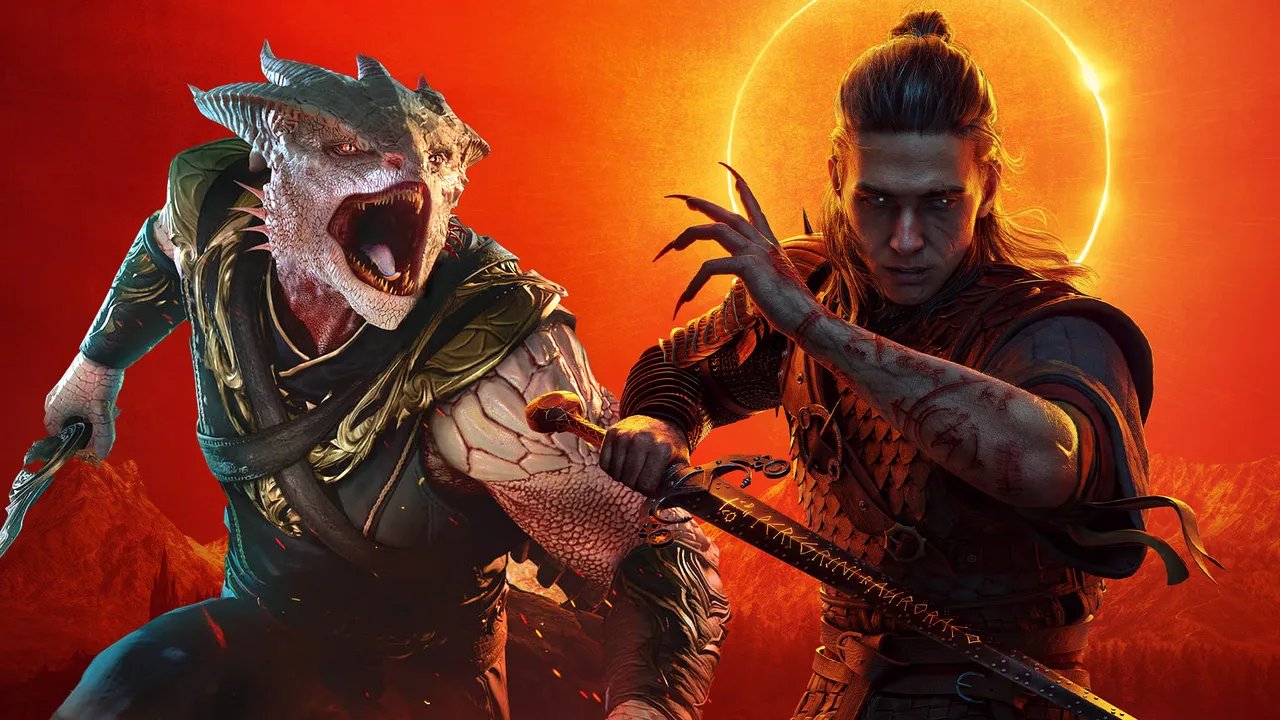
This is an IGN opinion piece from Matt Purslow, who loves RPGs both on the tabletop and in video game form. He appreciates any game that has an interesting take on the evil within, probably because his first ever RPG character was the son of the god of murder.
My sword slices through the final soldier. As his body hits the forest floor, my work here is done: I have saved two innocent men from being marched to the draining camps. Ambrus, the vampire that rules over this region of Vale Sangora, is rounding up civilians and bottling their blood to create a stockpile of sustenance. It’s my job to disrupt all that, and this latest round of vigilante slaughter is part of that task. These men will not be drained today.
Well, at least not by Ambrus’ troops.
You see, I’ve made the poor decision of conducting this mission at night. When the moon rises, I become a vampire myself, and while that grants me a suite of helpful abilities, such as being able to turn into a wolf and walk up walls, it also means I need to feast on blood. And, well, after all that slaughter, I’m pretty hungry.
As the two men thank me for my heroics, my regular dialogue choices are replaced with “Give in to the hunger”. I resist, choosing the only option that will push forward the conversation. One of the men promises to give me a suitable reward for saving his life. All my response options have been overridden by the hunger. I refuse to select one. The fangs come out anyway. So much for saving these men from being drained.
In The Blood of Dawnwalker, being a vampire truly is a curse. Protagonist Coen is sired in the story’s early hours, but it’s an imperfect transformation; during the day he remains a human, but at night the vampirism takes over. Regular health-restoring items like food and water become impossible to palette, and so only blood can repair his wounds. But the red stuff isn’t just a nice-to-have; it’s a necessity. An addiction. And so if you let Coen’s HP linger in the bottom section of his health bar, where it flashes like a warning beacon, you risk the hunger taking over. When you enter conversations, dialogue options are replaced by “Give in to the hunger”. Resist too long, and Coen will chow down on whoever is in front of him… regardless of how important they are to the plot. Yes, you can accidentally kill anyone and everyone, from random civilians to major quest-giving NPCs. Never before has it been so important to keep your belly full.
Coen is far from the only “monster” protagonist in RPGs. Obsidian Entertainment is fascinated by the idea, allowing you to murder most NPCs in its The Outer Worlds duology and Fallout: New Vegas, as well as building an entire campaign around the idea of evil in Tyranny. But Coen feels like an interesting reflection of the Dark Urge, Baldur’s Gate 3’s optional origin story that casts you as a depraved serial killer. As the Dark Urge, you’re given additional layers of choice that allow you to revel in your grisly nature – the most famous of which is probably being able to tear off the hand of wizard Gale when you first meet him, killing the potential companion before he can be recruited.
Like Baldur’s Gate 3’s most sinister origin, Coen quite literally has a dark urge that pushes him to do unspeakable things. But while these characters are reflections of each other, their symmetry is warped. Coen’s urge is systemic – there are conditions that, when met, will trigger his uncontrollable hunger, which can disrupt the decisions you’ve made. The Dark Urge, meanwhile, layers additional choices into Baldur’s Gate 3 that allow you to author your own story of a serial killer navigating the tentacled apocalypse. These two approaches to choice create two very different takes on a similar idea.
With the Dark Urge, it’s all about crafting your character’s journey. Throughout the course of the story, a Dark Urge player is presented with many, many additional dialogue options and scenarios that allow them to engage with more sinister ideas than those presented to the more “traditional” Baldur’s Gate player characters. During the first act, for instance, the Dark Urge is given the opportunity to mutilate animals, break the legs of a refugee, bite off a goblin’s toe, brutally murder a companion following a steamy nocturnal engagement, and butcher one of the game’s most beloved NPCs.
By presenting these as options, rather than uncontrollable desires, each becomes a story branch that you choose to enact, which in turn allows you to shape the Dark Urge’s personality. Perhaps your version of this character has a code, like the titular serial killer of the AMC show Dexter, and will only murder a particular kind of personality. Maybe they’re an animal lover and will refrain from plucking the wings off injured birds. And then there’s what’s widely considered the most satisfying manner in which to play the Dark Urge: the redemption arc, in which you wrestle with your inner darkness and try to become the hero that the Sword Coast needs.
To make that redemption arc feel authentic, there does need to be some systemic elements that ensure your urges are just beyond your control, and so there are a few moments where you must pass a skill check dice roll in order to suppress your murderous intent. But for the most part, the experience of the Dark Urge is about writing your own destiny – how will your choices define your murderer?
There is, of course, crossover between Baldur’s Gate 3’s Dark Urge and The Blood of Dawnwalker. As Coen, there are several opportunities to tread a purposefully grisly path, and your dialogue choices will dictate the kind of man he becomes. But as my accidental feast demonstrates, controlling Coen’s dark urge is more about mastering Dawnwalker’s systems. It’s vital to understand how his hunger works, as that understanding allows you to make informed gameplay decisions that can keep that hunger in check.
For instance, a reasonably early quest tasked me with breaking into a jail to rescue the local miller. After scoping out the small castle during the day, I gathered enough intelligence to understand that this prison break was best conducted at night, as there would be fewer guards. And so after dark I used my vampiric powers to teleport over the fence, pilfered the cell key, and freed my quarry. However, fewer guards doesn’t mean no guards at all, and so I was forced to spill some blood on my way out – Dawnwalker unfortunately doesn’t feature any genuine stealth systems, and so even the sneakiest plans typically require some direct confrontation.
The battle left my health bar in the flashing red, and so when it came to the quest’s final conversation with the prisoner before he was free to leave, my dialogue options began to shudder, replaced by that ominous “Give in to the hunger”. The sudden panic this induces is deeply effective – unlike the men I’d accidentally drained earlier, this prisoner was a more significant character in the story. I really didn’t want to eat him. Suddenly, I was re-thinking all my choices – why didn’t I drink a blood vial before talking with the prisoner? Was there a way out that didn’t involve combat? Why didn’t I do this quest in the day, when there’s no risk of hunger?
Luckily, fate was on my side this time – the prisoner thanked me and escaped without my fangs puncturing his neck. But it could have been a very different story. And that’s the beauty of Dawnwalker’s systemic approach to hunger. It’s not just a health replenishment system; it’s a very real curse that demands you properly consider the risks of working through the night. Of course, it’s not just as simple as opting to play solely during the day – the game’s most famous feature is the 30-day countdown until your family dies, and so this exerts pressure on you to use time wisely. Do you really want to avoid the night when so much could be achieved in those hours? After all, it’s the only time when you can use your powerful suite of vampiric abilities.
Your choice here isn’t just about mitigating a gameplay risk, though. It’s also about writing Coen’s story. If you try to avoid your curse – if you sleep during the night, or restrict yourself to nighttime quests that don’t involve NPCs you want to keep alive – you’re creating a particular version of Coen. Does he fear who he’s become? Does he hate himself? Or is he deeply caring of everyone, so much so he’ll risk running out of time to save his family to ensure the other residents of Vale Sangora are kept safe from his hunger? How you respond to this gameplay challenge helps define the story you extract from The Blood of Dawnwalker. It’s another fascinating layer to a game that’s already doing plenty with its time system and “narrative sandbox” to ensure everyone’s playthrough is unique.
Baldur’s Gate 3 and The Blood of Dawnwalker are, of course, very different RPGs with many distinct approaches to handling choice, consequence, and storytelling. The rich reactivity of Baldur’s Gate 3 is often the result of several libraries’ worth of authored narrative branches, allowing for as close an approximation of the tabletop Dungeons & Dragons experience as possible. Dawnwalker is also inspired by the freedom of tabletop RPGs, but its approach is somewhat more systemic in nature, allowing the gears of the game’s systems to dictate the story’s flow as much as pre-written choices. The end result is an experience that functions differently, but – at least in the case of its examination of the vampire curse and the burden it inflicts – easily evokes the same thrills as one of Baldur’s Gate 3’s best ideas.

Matt Purslow
Executive Editor of Features
Matt Purslow is IGN’s Executive Editor of Features.