dailynewsnblog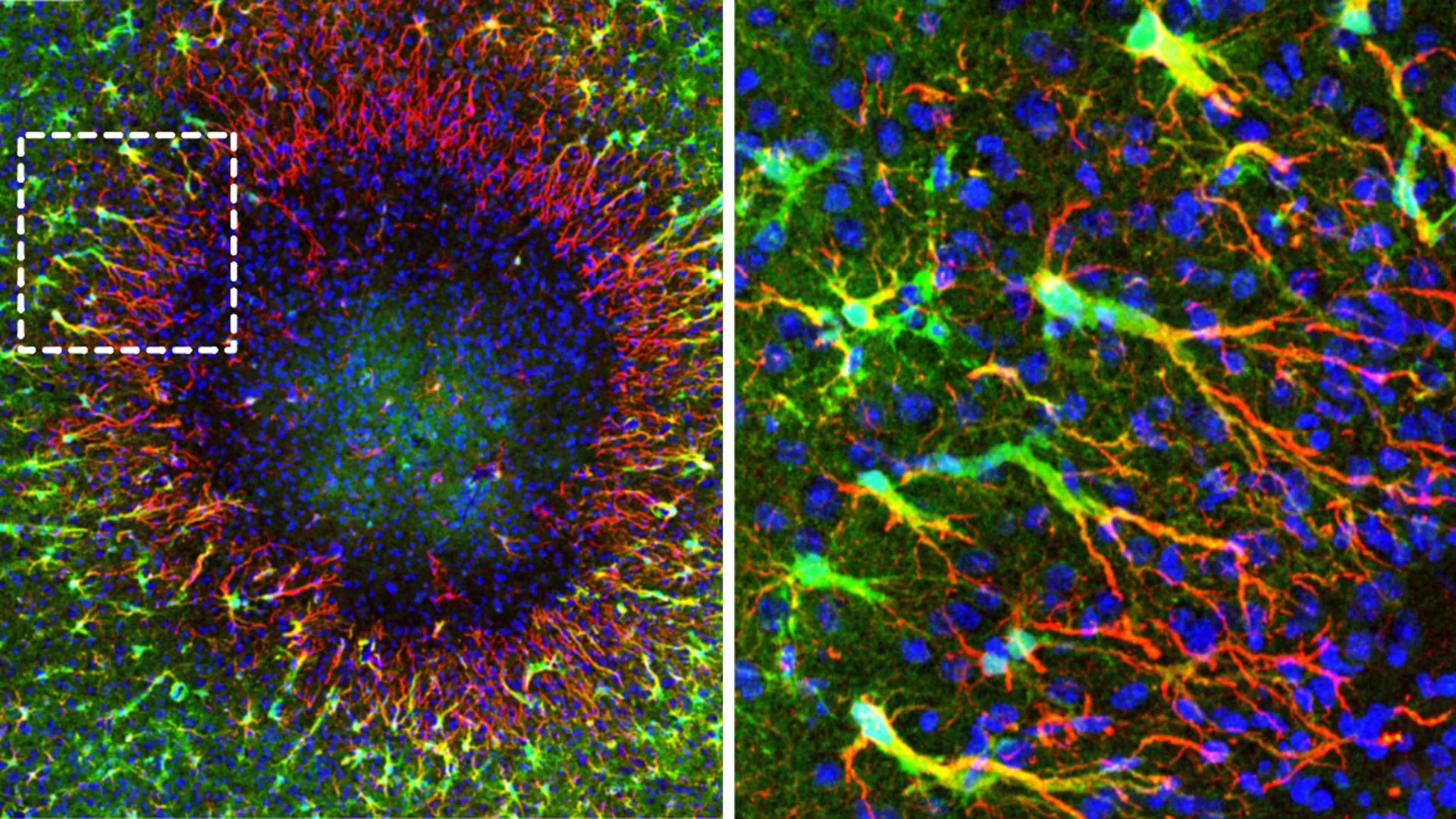
The adult brain may have a greater ability to repair itself after injury or certain autoimmune diseases than scientists previously believed. In experiments with mice, researchers at the University of Zurich found that specialized support cells can repopulate damaged parts of the brain in an unusual way. Rather than moving entire new cells into the affected area at first, they send newly formed cell nuclei there.
Glial cells play essential supporting and nourishing roles in the brain. One type, known as astrocytes because of their star-shaped appearance, is especially important for healthy neuron function. Astrocytes provide nerve cells with nutrients, help control blood flow, and support the overall health of brain tissue.
Scientists had long thought that once astrocytes were destroyed, the adult brain could not fully replace them. This loss can occur after brain injuries and in autoimmune diseases such as the rare neuromyelitis optica spectrum disorder, in which the body’s own antibodies attack and destroy astrocytes.
Specialized Astrocytes Rebuild Damaged Brain Tissue
A study led by co-lead authors Marina Herwerth and Matthias Wyss of the Institute of Pharmacology and Toxicology at the University of Zurich (UZH) challenges that long-standing view. The research team, headed by Bruno Weber, identified a specialized population of “regenerative” astrocytes in the brains of living mice.
These cells gather around the edges of damaged brain regions and help rebuild the lost astrocyte network. “The findings of our study reveal a previously unknown ability of the adult brain to repair itself. They point toward new ways of supporting recovery from ailments involving the loss of astrocytes,” Weber says.
New Cell Nuclei Travel Into Damaged Areas
To follow the repair process, the researchers used two-photon microscopy to observe the brains of living mice in real time for several weeks. They also tracked which genes became active in different regions of the brain. Together, these methods allowed the team to identify the astrocytes responsible for restoring injured tissue.
The regenerative cells do more than simply divide. They also carry out an unusual process in which newly created nuclei from daughter cells travel considerable distances through the astrocytes toward the damaged region. As Weber explains, “they send the newly formed nuclei of their daughter cells gliding across long distances to repopulate the damaged area of the brain and knit the astrocyte network back together.”
New Targets for Brain Regeneration
The finding that cell nuclei can move through the long extensions of adult astrocytes into injured tissue adds a new dimension to scientists’ understanding of how the brain organizes its own repair after certain types of damage.
If researchers eventually learn how to selectively activate these repair mechanisms, they may be able to promote more effective restoration of damaged brain tissue, rebuild astrocyte networks, and improve recovery from certain brain disorders.
The team also identified many genes and signaling pathways that become temporarily active while the repair process is underway. These biological signals may provide potential targets for future efforts to influence regeneration after disease or injury.
“We were able to identify numerous genes and signaling pathways that are temporarily activated during repair. They could serve as starting points in the future for influencing post-disease and -injury regeneration processes,” Weber stresses.