dailynewsnblog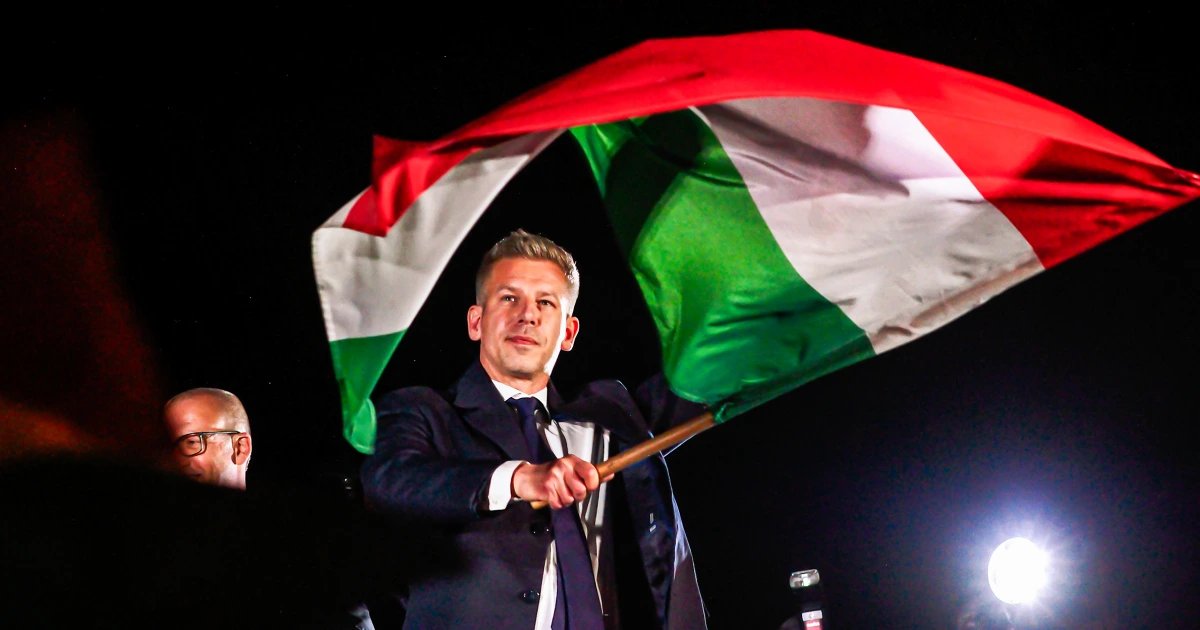
He’s ousted the man who ruled for 16 years. Now Hungary’s new prime minister faces a daunting task: taking on the authoritarian state built by Viktor Orbán.
Subscribe to read this story ad-free
Get unlimited access to ad-free articles and exclusive content.

No sooner had Peter Magyar finished posing with the country’s smiling president this week, he called the Orbán-aligned figurehead unworthy, unfit and demanded his resignation.
Magyar, 45, also posted a video of the meeting, in which he spotted Orbán himself on a nearby balcony. “Absolute cinema,” Magyar said, raising his hands to reflect the popular meme.
Next stop? A round of interviews on the country’s Orbán-mouthpiece state media in which he called them a “factory of lies” and said they would be suspended until their independence could be guaranteed.
These swift moves from Magyar reflect his promise to sweep away the corruption, cronyism and Kremlin allyship that European officials and watchdogs say plagued Orbán’s Hungary.

FORSUBSCRIBERS
Why Hungary’s election matters far beyond its borders
01:48
Whether he can do so is a crucial open question, not just for the country itself, but also for Europe and beyond. Though Magyar is no liberal, some are now looking to his victory as an example of how to defeat an entrenched far-right leader who has the support of an increasingly powerful global movement.
Unpicking the deep roots of the Orbánist state will not be simple. Magyar will be helped by last weekend’s landslide victory that gave him a supermajority, 137 of the National Assembly’s 199 seats.

That “will make it significantly easier,” said Stefania Kapronczay, one of Hungary’s top human rights experts during the Orbán years. “Not many people believed he could actually achieve that.”
Under Hungary’s Fundamental Law, changes to the constitution require two-thirds of lawmakers to vote for it; Magyar now has the same tools to unpick the state as Orbán used to construct it.
During five consecutive administrations, Orbán’s government changed the constitution and passed hundreds of laws to shape government in his “illiberal” image. He limited the independence of the judiciary and the media, and stuffed supposedly nonpolitical government positions with his allies.
One example highlighted by the European Commission was the appointment of a prosecutor general last June — for a nine-year term.
“The hierarchical structure” of the prosecutor’s office, together “with the lack of internal checks and balances” creates the risk that senior prosecutors could “influence the work of subordinate prosecutors, including in individual cases,” its report last year said.
While the E.U. condemned it, Orbánism was lauded by President Donald Trump and his MAGA movement, which openly praised the Hungarian leader as an example of what conservatives could achieve.

Vice President JD Vance jetted to Hungary in an eleventh-hour attempt to keep his poll-flagging ally in power. The trip even included a voice call from Trump himself, in which he called Orbán a “fantastic man.”
After Orbán was defeated, however, Trump sought to distance himself. He called Magyar a “good man” who is “going to do a good job.”
Some within the Orbánist state will welcome the new leader’s reforms.
For years, many Hungarian journalists have, privately at least, expressed exasperation with the state controls on their work.
With Orbán going, 90 of these journalists with the MTI state news agency broke cover Thursday and wrote a letter, seen by Reuters, demanding that their editorial independence be reinstated.
It’s not only in Magyar’s stated political interests to undo the regime, but it’s also in the interests of Hungary’s economy.
The E.U. has frozen around 17 billion euros (around $20 billion) of funding for Hungary because of concerns about democratic backsliding and the rule of law.
European President Ursula von der Leyen said Tuesday she had spoken with Magyar and said “swift work” needed to be done.
Their “immediate priorities,” she wrote on X, were to “restore the rule of law. Realign with our shared European values. And reform, to unlock the opportunities offered by European investments.”

On Friday, European officials were in Budapest discussing unlocking these funds, as well as a 90 billion euro loan to Ukraine that was recently blocked by Orbán, a close ally of Russian President Vladimir Putin.
However, there is another, perhaps even bigger, unknown looming over the nascent Magyar project: If he can dismantle Orbánism, what might he replace it with?
A former regime insider, Magyar has staked out conservative positions on immigration and social issues.
“The big question is what he does with this power,” said Kapronczay, former director of strategy at the Hungarian Civil Liberties Union.
She likens this moment to the 1990s, when Hungary emerged from communism and had the chance to flourish into a liberal democracy.
“That failed in the 1990s, but we have a real chance now,” she said.