dailynewsnblog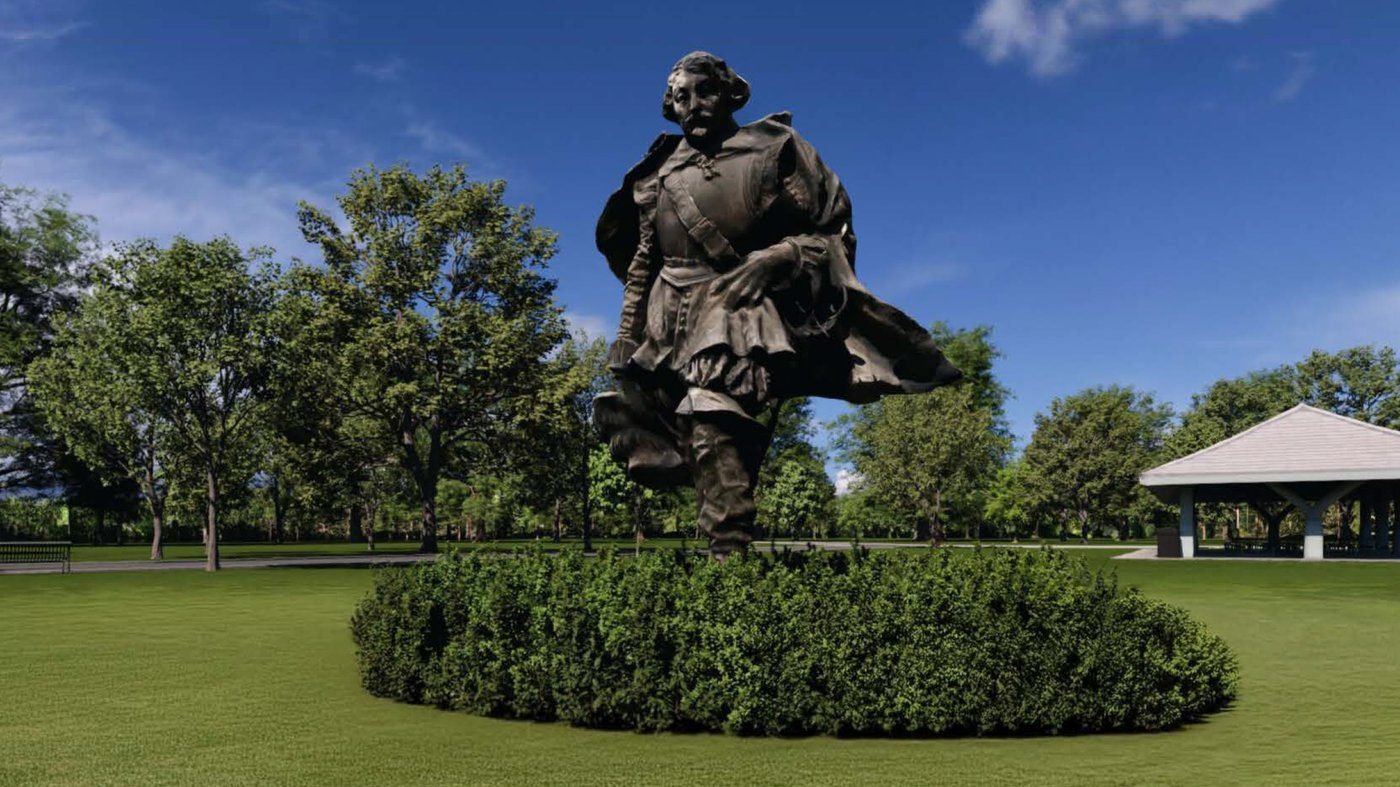
Some Quebec municipalities and organizations are offering to take a controversial statue of Samuel de Champlain from an Ontario city in Simcoe County.
The nearly four-metre-tall bronze monument of the 17th century explorer and founder of Quebec City was removed from a park in Orillia, Ont., and placed in storage in 2017 following debate over its colonial imagery.
Orillia Mayor Don McIsaac said a wave of offers poured in after the city recently raised the possibility of melting the statue down.
“They say it’s racist, it’s not our history, it is an insult to Indigenous peoples,” McIsaac said in an interview about the controversy over the statue.
“The plaque on the initial statue that was put up in 1925 said the statue celebrates the advent of white people into Ontario. Obviously … that is not OK in 2026.”
Champlain, known as “the father of New France,” is credited with helping establish French colonies in the St. Lawrence Valley.
The Champlain statue was part of a larger statuary in one of the Orillia’s most prominent public parks. The display, unveiled in 1925, featured Champlain on top of a stone slab. Indigenous people were shown at the feet of a Jesuit priest and a fur trader, who were below the French explorer.
The statue’s removal for repairs in 2017 sparked debate about its reinstallation.
A working group – including Parks Canada, the city, and representatives from the Chippewas of Rama First Nation and Huron-Wendat Nation – recommended in 2019 that only the Champlain statue be reinstated pending further consultations.
Earlier this year, the First Peoples Group – an Indigenous-led consultancy firm – proposed a reimagined display to highlight contributions from the Chippewas of Rama, Huron-Wendat, and Anishinaabeg with a new plaque.
However, in January the Chippewas of Rama First Nation recommended ending the project, stating that reopening the debate would amount to “de-reconciliation.” Two city council members later left the working group, citing concerns that the project didn’t reflect true reconciliation.
The statue briefly returned to its original location in March but was removed again in June and put back into storage. After the second removal, the city contemplated melting down the statue.
Now, McIsaac says he’s received more than a dozen expressions of interest, mostly from Quebec municipalities and Franco-Ontarian communities.
Caroline Dionne, a spokesperson for Champlain, Que., which is named after the Frenchman, said the city is renowned for its cultural heritage and wants to pay tribute to a prominent figure in its history.
“It would seem entirely logical to us that this work of art be displayed near the St. Lawrence River, in a location closely linked to his time in our region,” she said in an email.
Dionne specified that the municipality is only interested in the Champlain statue and not the full monument.
“In our view, this distinction is important, since the debates observed elsewhere concern the monument’s overall composition more than the historical figure of Samuel de Champlain himself,” she said.
Lévis, Que., is also among the municipalities hoping to give the statue a new home.
On June 24, McIsaac sent a document to Orillia city council detailing 13 expressions of interest or formal offers for the Champlain statue. He said he received about 30 inquiries in total but believes the statue should remain city property with a new plaque, as it was meant to “unite French and English Canada.” He added most residents want it restored.
In an email sent to McIsaac, Lévis Mayor Daniel Saindon promised to relocate the Champlain statue to one of the city’s “most prestigious parks,” while providing appropriate historical context to “preserve its significance while addressing the sensitivities that have emerged in recent years.”
But McIsaac said it’s unlikely the statue will leave the storage facility where it is currently held any time soon as council continues to debate its future.
This report by The Canadian Press was first published July 12, 2026.
Erika Morris, The Canadian Press