dailynewsnblog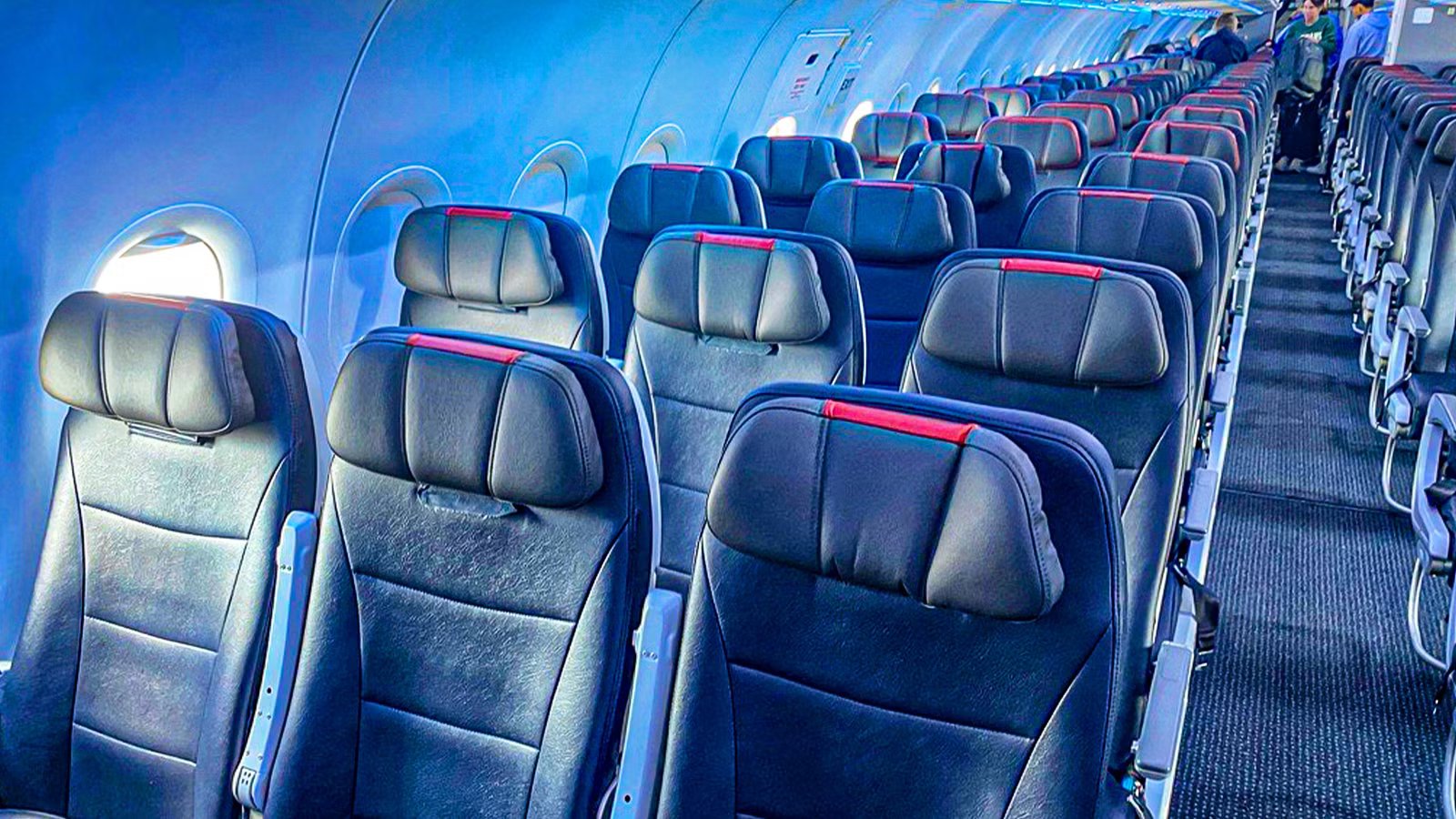
American Airlines’ Airbus A321neo has become one of the airline’s most important domestic aircraft, serving everything from short shuttle flights across the Northeast to longer transcontinental and high-demand leisure routes. On paper, its two-cabin layout appears straightforward, with domestic first class offering a more spacious seat and premium service, while Main Cabin Extra provides additional legroom for other passengers.
However, one detail has increasingly caught the attention of frequent flyers and aviation enthusiasts alike. The most surprising aspect of American Airlines’ A321neo first class is not the lack of seatback entertainment screens or the relatively basic recliner seat, but the fact that one specific Main Cabin Extra exit row actually offers considerably more legroom than first class itself, raising legitimate questions about which cabin provides the better overall value.
Domestic First Class Is Relatively Modest By Current Standards

 American Airlines equips its Airbus A321neo fleet with Collins MiQ recliner seats in domestic first class, rather than the more advanced products increasingly appearing across competing airlines. The seats measure approximately 20 to 21 inches (51 to 53 cm) wide and offer between 36.5 and 37 inches (92.71 and 94 cm) of pitch, together with roughly five inches of recline. While these figures remain perfectly acceptable for domestic flying, they no longer represent a significant advantage over the rest of the cabin, particularly as airlines continue improving their premium economy-style seating options.
The biggest criticism is not necessarily the seat itself but rather the overall package. Unlike  Delta Air Lines and
  United Airlines, which have invested heavily in modern domestic premium cabins on their latest Airbus A321neo aircraft, American Airlines continues to rely on a fairly traditional recliner without integrated seatback entertainment. Passengers instead access movies, television shows, and live programming through the airline’s bring-your-own-device streaming platform, requiring travelers to use their own phone, tablet, or laptop throughout the flight.
This creates an experience that feels functional rather than premium, especially when compared with competitors’ offering large high-definition displays, Bluetooth audio connectivity, multiple charging options, and significantly upgraded cabin interiors. Although American Airlines’ first class still includes complimentary meals on qualifying routes, alcoholic beverages, dedicated cabin service, and additional baggage allowances, the actual seat itself has become increasingly difficult to justify purely on comfort alone.
That is particularly noticeable because the difference in seat pitch between first class and Main Cabin Extra is surprisingly small, leaving the premium experience dependent largely on service rather than physical seating advantages.
Main Cabin Extra Narrows The Comfort Gap Considerably

Main Cabin Extra was originally introduced as a way for economy passengers to purchase additional comfort without upgrading to a premium cabin, but on the  oneworld carrier’s Airbus A321neos, it has evolved into something considerably more compelling. Standard Main Cabin Extra seats offer approximately 33 to 34 inches of pitch, meaning they sit only three to four inches behind first class in terms of available legroom.
That relatively small difference changes the economics of paying for an upgrade. Many passengers naturally assume first class provides dramatically more personal space than economy, yet on the Airbus A321neo the numbers suggest otherwise. Losing only a few inches of pitch while paying substantially less can make Main Cabin Extra an attractive compromise, particularly on flights lasting only one to three hours.
The additional benefits also strengthen its appeal, with Main Cabin Extra passengers receiving priority boarding, allowing earlier access to overhead bin space, along with complimentary alcoholic beverages throughout the flight. Combined with the extra legroom, those features create a product that begins to resemble a light version of domestic first class, especially for travelers who rarely check luggage or have airline status that already covers some premium benefits.
For many frequent flyers, the seat itself matters more than the service. Someone working on a laptop during a two-hour flight or simply looking for additional knee room may find that the relatively minor pitch difference between cabins hardly justifies paying significantly more for the forward cabin. When viewed purely through measurable seating dimensions, Main Cabin Extra closes much of the gap that traditionally separated economy from first class.
Exit Row 27 Completely Changes The Comparison

The conversation becomes even more interesting once passengers look beyond standard Main Cabin Extra seating. Exit row 27 on American Airlines’ Airbus A321neo offers somewhere between 43 and 45 inches of pitch, creating one of the most spacious seats available anywhere in the aircraft.
Those measurements exceed domestic first class by as much as eight inches of legroom, an unusual situation on any commercial aircraft. While first class passengers enjoy approximately 36.5 to 37 inches of pitch, travelers occupying this particular exit row gain substantially more space to stretch their legs despite remaining inside the economy cabin.
Naturally, there are trade-offs, and exit row seats usually have fixed armrests because tray tables and entertainment holders are stored inside them, potentially making the seat feel slightly narrower. Carry-on bags must also be placed in the overhead bins during takeoff and landing, and passengers must meet exit row eligibility requirements, including being physically capable of assisting during an emergency evacuation.
Even with those limitations, the sheer amount of available legroom dramatically changes the value proposition. For taller travelers, particularly those exceeding six feet in height, unrestricted leg space often contributes more to comfort than slightly wider armrests or modest recline. Since American Airlines’ domestic first class already uses fairly standard recliner seats rather than lie-flat products, the exit row effectively removes one of first class’ biggest traditional advantages.
That reality explains why experienced travelers often monitor seat maps carefully before booking, recognizing that one carefully selected Main Cabin Extra seat can outperform the premium cabin in the area that matters most to many passengers.
Upgrade Pricing Does Not Always Support Moving To First Class

American Airlines increasingly offers instant paid upgrades through its booking platform and mobile app, allowing travelers to move into first class after purchasing an economy ticket. These offers vary considerably depending on route, demand, and timing, but recent examples illustrate why many passengers hesitate before accepting them.
On shorter routes such as  Boston Logan International Airport (BOS) to New York John F. Kennedy International Airport (JFK), upgrade offers around $69 have become fairly common. Meanwhile, purchasing Main Cabin Extra seating on longer domestic routes such as
  Ronald Reagan Washington National Airport (DCA) to Las Vegas Harry Reid International Airport (LAS) can cost roughly $70 to $78 above standard economy fares.
Viewed in isolation, those prices may not seem unreasonable, but industry observers frequently reference a benchmark of approximately $50 per hour of flight time when evaluating whether domestic first class upgrades represent good value. Under that guideline, paying nearly $70 for a flight lasting barely an hour quickly becomes difficult to justify mathematically.
The calculation becomes even more challenging when Main Cabin Extra already delivers nearly equivalent legroom, complimentary alcoholic beverages, and priority boarding. If an exit row seat is available, passengers may actually enjoy considerably more space than those seated in first class while spending less overall.
There are certainly situations where upgrading remains worthwhile. Travelers checking multiple bags can benefit from first class baggage allowances, while passengers valuing dedicated cabin service, earlier meal selection, or simply a quieter environment may consider the premium worthwhile. Nevertheless, for passengers evaluating comfort strictly on a cost-per-inch basis, Main Cabin Extra frequently emerges as the stronger financial decision.
Catch what other flight trackers miss
Emergency squawks, holds, NOTAMs — live signals, no signup.
Open tracker
Catch what other flight trackers miss
Emergency squawks, holds, NOTAMs — live signals, no signup.
Open tracker
Competition From Delta Air Lines and United Airlines

Wikimedia Commons | Simple Flying
Part of the scrutiny facing American Airlines’ Airbus A321neo first class stems from comparisons with direct competitors rather than the product existing in isolation. Delta Air Lines and United Airlines have both introduced significantly upgraded domestic premium experiences aboard their newest Airbus A321neo aircraft, making American Airlines’ cabin appear increasingly dated.
Modern first class cabins on competing airlines feature large 4K seatback entertainment screens, Bluetooth headphone pairing, improved storage solutions, newer cabin finishes, multiple charging options, and generally more refined seating designs. Although the difference in seat pitch alone may not be dramatic, the cumulative effect creates a noticeably more premium experience from boarding until arrival.
American Airlines’ reliance on personal-device streaming instead of integrated entertainment particularly stands out. While many passengers already travel with tablets or smartphones, premium cabins traditionally emphasize convenience, and requiring travelers to use their own devices inevitably reduces that perception. The absence of built-in screens also becomes more noticeable during longer flights when passengers may prefer a larger display positioned at eye level rather than balancing a tablet throughout the journey.
Consequently, American Airlines increasingly depends on service quality rather than hardware to differentiate its premium cabin. Cabin crews frequently receive positive feedback, and many passengers remain loyal to the airline because of the route network, schedules, or AAdvantage status benefits. Even so, travelers comparing aircraft objectively can easily understand why some question paying a premium for a seat that no longer clearly outperforms an upgraded economy option.
The Choice Depends On Individual Priorities

Whether first class or Main Cabin Extra represents the better purchase on American Airlines’ Airbus A321neos ultimately depends less on the cabin label and more on what each traveler values most. Passengers primarily seeking personal space may find the answer surprisingly straightforward, especially if exit row 27 remains available during booking. With up to 45 inches of pitch, it objectively provides more legroom than any standard first class seat on the aircraft.
Passengers who rarely consume alcohol, travel with only carry-on luggage, and already possess elite status may discover that many traditional first class benefits hold relatively little additional value. Priority boarding may already be included, baggage fees may already be waived, and airport lounge access often depends on separate memberships rather than domestic first class tickets.
Conversely, travelers wanting dedicated service, complimentary meals where available, wider seats, additional shoulder room, and the quieter atmosphere of the forward cabin may still consider first class worthwhile, particularly on longer domestic flights. The wider seat remains an important differentiator, even if legroom alone no longer tells the whole story.
Ultimately, American Airlines has created an unusual situation where the cabin marketed as premium does not always offer the aircraft’s most spacious seating. For informed travelers willing to study the seat map before booking, selecting the right Main Cabin Extra seat can deliver a surprisingly comfortable journey while avoiding much of the premium price normally associated with sitting at the front of the aircraft.

![American Airlines Launches 10 Nonstop Routes From New York-JFK To Europe [List & Map]](https://dailynewsnblog.com/wp-content/uploads/2026/09/aa.png)