dailynewsnblog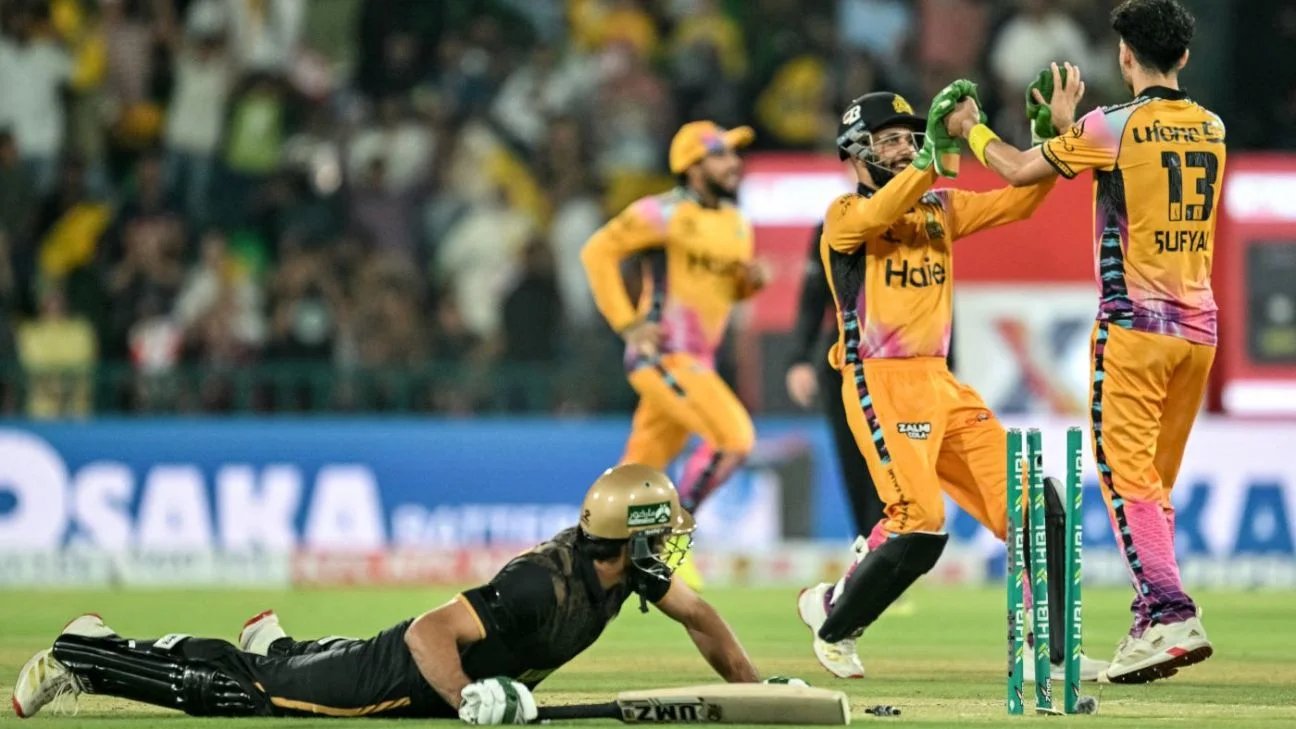
“We just didn’t give our bowlers enough runs to defend and full credit to Peshawar,” Gillespie said. “We threw everything at them, they stood up and got their team home, full credit to them. They were too good for us tonight.”
The game turned in a crucial phase of the contest that Kingsmen – since their turnaround midway through the tournament – have generally viewed as one of their strengths. Since their first win of the PSL, Kingsmen have scored 502 runs between the end of the Powerplay and the 14th over, more than any other side. However, after making a fast start in the Powerplay, Kingsmen suffered a dramatic – and partly self-inflicted – collapse. In the eight-over period that followed, they scored 39 runs and lost six wickets. In the seventh and eighth overs alone, they lost four wickets, including two run outs and a first-ball slog from Glenn Maxwell that looped up softly for mid-on.
“We had a decent Powerplay,” Gillespie said. “We started pretty well, and then just lost that little period where in a couple of overs, we lost four [wickets] for two [runs]. That just took the wind out of our sails, and it was hard to get back into the game after losing those wickets in quick succession. That was disappointing.”
That implosion resulted in Kingsmen being bowled out for 129, the lowest first-innings score in a PSL final. In desperate pursuit of quick wickets to pull one last rabbit out of the hat, their bowlers came flying out of the traps. Babar, the highest runscorer of the tournament, nicked off slashing nervously at a wide ball for a duck just two balls after Mohammad Haris had slogged one to Marnus Labuschagne at mid-off. By the fifth over, Hunain Shah and Akif Javed sunk Zalmi further as Kusal Mendis and Michael Bracewell were sent packing for single digits. It reduced Zalmi to 40 for 4, and Kingsmen sniffed a miracle once more.
“The conversations we had were pretty simple,” Gillespie said. “We knew we underachieved with the bat, but the big word we kept using was that we’ve got to believe. In this tournament, we’ve found ourselves in tricky situations and found ways out of it. We needed just one little twist and unfortunately that didn’t happen tonight. But the lads all went out there believing that if we could get a couple of wickets early, we’re a chance and we managed to do that.”
“Aaron Hardie and Samad were superb,” Gillespie said. “We knew we had to go back and bring our main bowlers back early because we just didn’t have enough runs on the board. So we had to take that gamble. Peshawar batters were equally up to the task so they just deserved to win that game.”
But Gillespie also looked back with satisfaction at a team that was something of a laughing stock during the first third of the tournament, one that felt hopelessly out of kilter with the demands of the league, or modern T20 cricket in general. They went from losing their first four to winning seven out of eight, defying the points table, net run rate, and an almost lost cause in the dying stages of the eliminator against Islamabad to scrap their way into the final, riding a narrative arc the Pakistan national team believes it has bottled up and patented.
“We knew we’d click at some point, but unfortunately the results didn’t go our way early in the tournament,” Gillespie said. “We were playing some good patches of cricket, but we weren’t putting complete games together. We’d either bowl quite well and bat poorly, or bat poorly and then not back that up in the field. We just weren’t playing complete games. We knew that if we stuck to our processes, we were training well, preparing well, and our strategies were all sound. Once we got a win, that started to build a bit of confidence around the group.
“We trusted the players to step up and do their job when it was required. We kept it as simple as that. We kept the vibe around the dressing room really positive. Our mantra was being calm, being clear and just execute our skills so we kept it as simple as that. I’m incredibly proud of the players and what they’ve achieved. We were written off very early in the piece and they stuck to the task and stuck to their work.”
Danyal Rasool is ESPNcricinfo’s Pakistan correspondent. @Danny61000