dailynewsnblog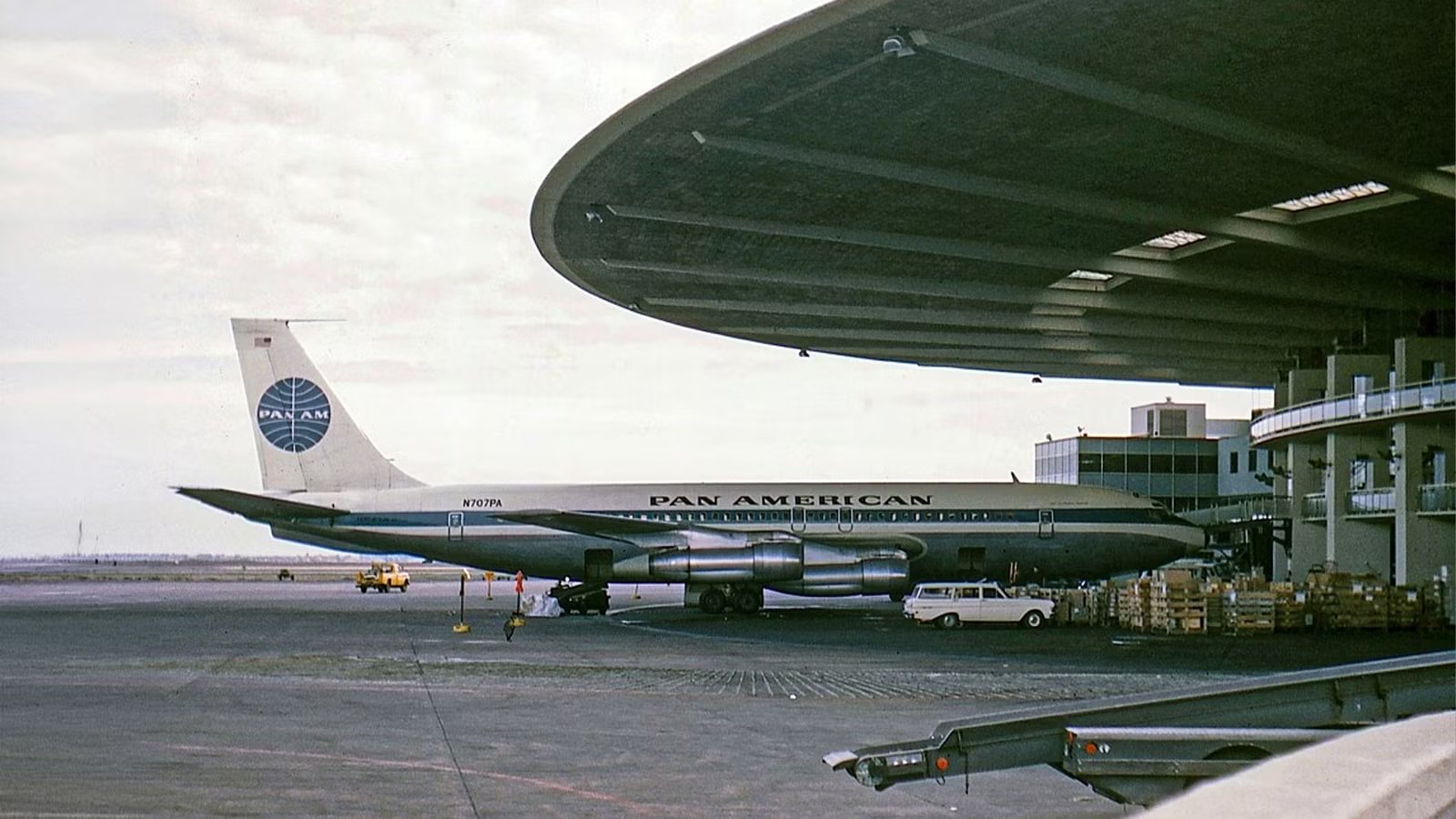
Hangar 17 At New York JFK Airport

Pan American World Airways had a significant operation at JFK Airport, which ran out of the iconic Worldport, later just known as Terminal Three. To support its operations, Pan Am also operated a large maintenance base, which included Hangar 17. Pan Am was liquidated in 1991, but the Worldport and Hangar 17 remained, with Tower Air later taking ownership of the building and using it as its headquarters. The iconic white and blue color scheme remained, but the hangar received new Tower Air logos.
In 2000, Tower Air also went bankrupt and ceased all operations, leaving Hangar 17 unoccupied once again. It sat abandoned for a brief amount of time, but in the wake of the September 11 attacks, Hangar 17 was used to store artifacts from the attacks. Roughly 2,500 relics in total have been placed in the hangar, ranging from mangled debris to damaged first responder vehicles, and it took slightly under 15 years for all artifacts to be cleared from the building.
Hangar 17 was subsequently closed, and it still sits with its Pan Am-designed paint scheme and Tower Air logos. Despite the building having no real purpose today, it has persisted even as other Pan Am relics have faded away. However, today, the Port Authority is embarking on the biggest refurbishment program of JFK Airport in decades, involving a new Terminal One and Terminal Six. Hangar 17 no longer serves any purpose, and it’s set to be demolished as the airport revises its facilities.
Improvement Projects At JFK Airport

Work is currently ongoing on a new building to replace JFK Terminal One. The first phase will open in June 2026, consisting of 14 gates located on the east side of the terminal, along with an arrivals and departures hall. The terminal will be completed in 2030, replacing the former Terminal One building, and it will consist of 23 gates, including 22 widebody-capable gates.
It will be the largest international terminal in the United States, occupying the space formerly used by Terminal One and the former Terminal Two, which was demolished in 2023. In addition to Terminal One, work is also ongoing on a new Terminal Six. It will be smaller in scale, primarily used to serve a limited number of international carriers as well as JetBlue, and it will be fully connected to Terminal Five, allowing for easy airside transfers.
|
JFK Terminal Six Airlines |
|||
|---|---|---|---|
|
Aer Lingus |
Avianca |
Frontier |
Lufthansa |
|
Air Canada (JFK route currently suspended) |
Brussels Airlines |
Icelandair |
Norse Atlantic Airways |
|
All Nippon Airways |
Cathay Pacific |
JetBlue |
SWISS |
|
Austrian Airlines |
Condor |
Kuwait Airways |
|
Terminal Six will also occupy the space formerly used by Terminal Seven, which is set to be demolished. In total, 15 airlines plan to use Terminal Six, and the building will also open to the public in 2026, with full completion set for 2028. There isn’t a specific building that will replace Hangar 17, as JFK is instead focusing on revising the layout of its maintenance and cargo facilities.
Hangar 17 has reached the end of its useful operational life, with the building just taking up valuable real estate. The airport is planning to demolish the building and similar aging hangars to replace them with larger buildings arranged more efficiently. This will better serve the needs of airlines today and will also improve airside access for vehicles.
Why American Airlines Removed Moving Walkways At New York-JFK After Its $125 Million Terminal Makeover
Why airports are increasingly transforming into malls.
The Pan Am Worldport (Terminal Three)

Opened in 1960, the Pan Am Terminal at JFK became famous for its size and distinctive flying saucer roof design. In 1971, the terminal was significantly expanded to accommodate the Boeing 747, becoming the world’s largest airport terminal and receiving the name ‘Worldport’. Pan Am would operate out of Worldport for decades until going out of business in 1991. Delta Air Lines acquired most of Pan Am’s European assets, including some aircraft and the carrier’s lease on the Worldport.
The building was subsequently named ‘Terminal Three’ and became Delta’s primary facility in JFK for transatlantic and Latin America flights, while it used Terminal Two for domestic flights. Ultimately, Terminal Three became antiquated and restrictive for Delta’s aspirations out of New York, and so the carrier decided to move out of the facility. In 2013, the Port Authority completed an expansion of Terminal Four, and Delta subsequently transferred its international operations out of Terminal Three.
On May 23, 2013, a Boeing 747-400 operating as Delta flight 268 to Tel Aviv performed the final departure out of Terminal Three, and with that, the Worldport was permanently closed. Some called for the building to be preserved as a historic building, but it was ultimately demolished to make way for additional parking spaces. The new Terminal One is being constructed over the space formerly occupied by the Worldport, which is somewhat fitting as it will be the airport’s largest international gateway.
Other Former Terminals At JFK Airport

Terminal Two was originally occupied by Northeast Airlines, Braniff International, and Northwest Orient. As it lacked a customs facility, it was only ever used for domestic flying, with Delta Air Lines relocating here following its merger with Northeast Airlines. Pan Am moved its domestic flights to Terminal Two in 1986, and the terminal was later exclusively used by Delta in later years.
The expansion of Terminal Four allowed Delta to consolidate most of its operations, with shuttle buses connecting Terminal Two and Four airside. In the 2020s, Terminal Two was closed, with Delta running all of its flights out of Terminal Four. The original Terminal One was originally used by Eastern Air Lines, and it remained the terminal’s primary tenant until Eastern liquidated in 1991.
It remained vacant until 1995, after which the building was demolished to make way for the current Terminal One. The International Arrivals Building was opened in 1957 and was replaced by Terminal Four in 2001. The original Terminal Six, also known as the Sundrome, was originally used by National Airlines and later used by TWA as an annex to the TWA Flight Center. In the 2000s, Terminal Six was used by JetBlue until it moved to Terminal Five.
|
Current And Future JFK Terminals |
Opening Date |
|---|---|
|
Terminal One |
1998 (2026 for the new Terminal One) |
|
Terminal Four |
2001 |
|
Terminal Five |
2008 |
|
Terminal Six (New) |
2026 |
|
Terminal Seven (Set to be demolished) |
1970 |
|
Terminal Eight |
2007 |
American Airlines has been based out of Terminal Eight ever since the building opened in 1960, with the building being replaced by the current Terminal Eight in 2007 and being demolished in 2008. Terminal Nine was originally home to Delta and United Airlines, with Delta swapping with Braniff in 1972 while United vacated the terminal in 1991 and moved to Terminal Seven.
Terminal Nine was used by American Airlines in its final years until the building was demolished in 2008. The Tower Air terminal, meanwhile, is separated from the rest of the terminals and has been vacant since the carrier’s collapse.
The Massive US Airport Expansions That Will Transform Air Travel
Several of the country’s largest airports are currently undergoing significant overhauls.
The Other Relic At New York JFK Airport

The TWA Flight Center first opened in 1962 and was used for decades by Trans World Airlines, its primary tenant. It was named as a New York City designated Landmark in 1994, but in the 1990s, the terminal was suffering from capacity issues due to its age and high passenger volumes. In 2001, however, TWA merged with  American Airlines, and the terminal become a vacant space, as it was deemed as unfit for modern airline operations.
Discussions began to center around repurposing the terminal as a hotel in 2011, with JetBlue and MCR Hotels being awarded the contract in 2015. The iconic headhouse became the lobby and main dining area, while two towers were added on both sides of the headhouse for guest rooms. The three buildings are connected by the TWA Flight Center’s original passageways, and the hotel includes amenities such as a rooftop infinity swimming pool as well as a bar located inside a preserved Lockheed L-1649 Starliner.
The TWA Hotel opened in 2019 to critical acclaim, and it’s the most accessible relic of JFK’s history. In addition to standard overnight stays, the TWA Hotel also permits day guests, who may stay for a maximum of 14 hours, while also allowing access to the hotel’s bars and swimming pool. While much of JFK Airport as a whole has been modernized, removing any evidence of past airline service, the TWA Hotel will remain as a nostalgic throwback to what some call the ‘Golden Age of flying’ for those who can afford it.