dailynewsnblog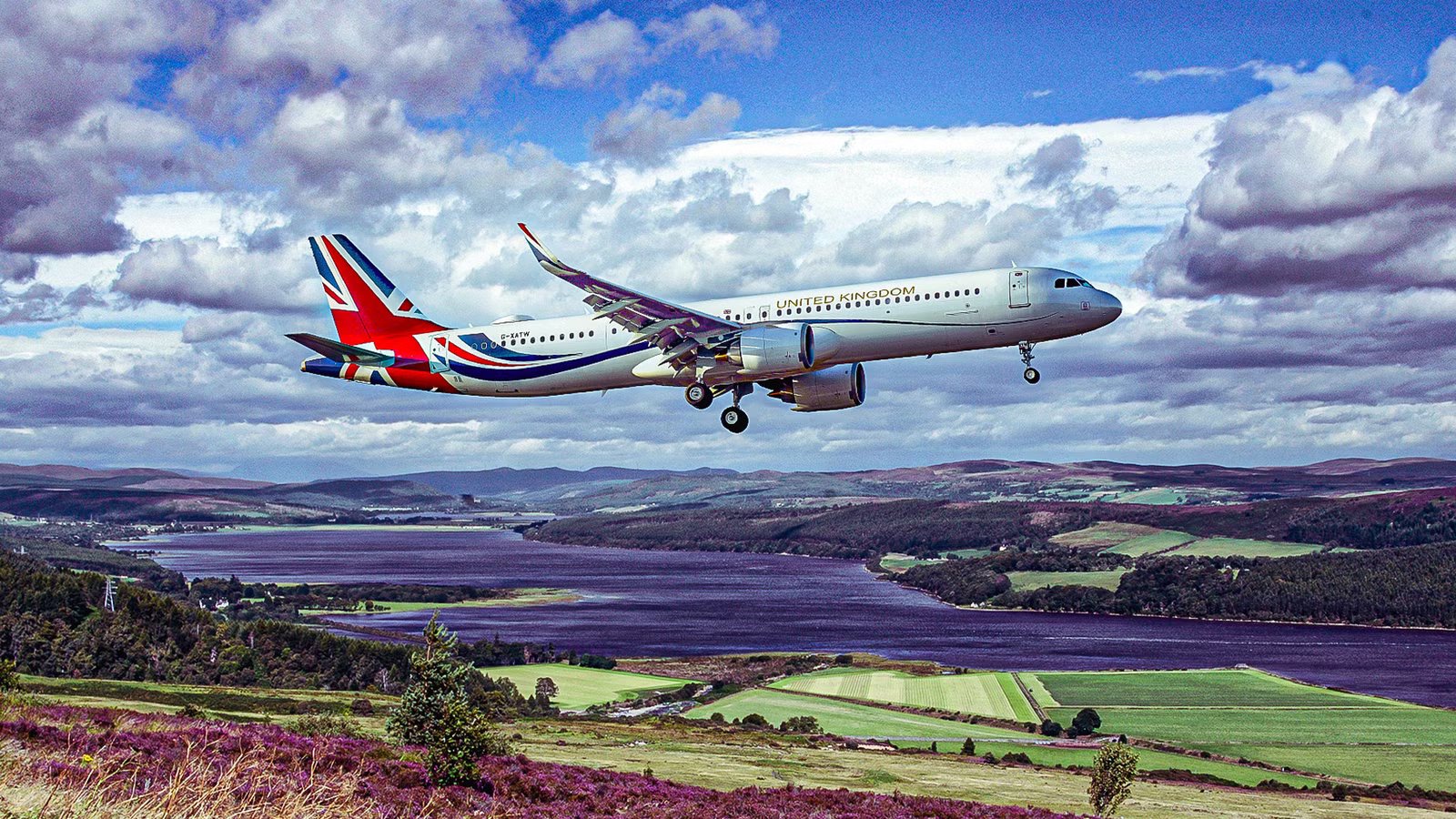
An aircraft carrying the head of state or whoever holds the real reins of power is very high profile. Various countries choose to fly different aircraft for a whole range of security, domestic signaling, and geopolitical reasons. In some countries, it is considered important for the national leader to lead by example and travel without fanfare, somewhat modestly demonstrating egalitarianism in society.
For other countries, it is important to fly a big, showy aircraft to help demonstrate the self-perceived importance of the country or person. A message the large VC-25A (known as Air Force Onewith the President onboard) sends is that the US is important, makes big airplanes, has military strength, and is always prepared. A message the Norwegian Prime Minister sends flying on a commercial flight is that public servants are there to do an honest job, and democratic egalitarianism and accountability are central to governance.
Countries That Make Aircraft

As a rule of thumb, countries that have an aviation industry will also have their leader fly in aircraft hailing from that nation. This ties into national pride and buying locally. Examples include the US President flying in a Boeing 747, the Russian President flying in an Ilyushin Il-96, and French/British/German/Spanish leaders typically traveling in Airbus aircraft. One limiting factor is that only Europe, the US, and the Soviet Union/Russia/Ukraine have produced widebody transport aircraft.
Consequently, Brazil and Canada use Airbus aircraft for their main long-haul VIP aircraft for leaders. That said, they also operate examples of their regional Embraer and Bombardier jets in their VIP fleets for shorter flights. Ukraine now mostly uses an Airbus A319 for transporting its President, but it retains a domestically produced Antonov An-148 aircraft for some missions.
Ukraine could theoretically use its massive Antonov An-124s, but they would likely be seen as ridiculously excessive, especially at a time when Ukraine needs external financing. The United States, Russia, and France are three very rare examples that can provide complete domestic fleets for the leader. For example, the French VIP fleet includes the large Airbus A330, the Falcon 7X/900 business jets, and the Super Puma helicopters.
Prestige In A ‘Big Important’ Airplane

It is important for some countries to fly big aircraft for the sake of image. The decisive reason why the  Boeing 747-8 has been chosen as the replacement for the aging Boeing 747-200-based VC-25As is that it was the only US-built jet with a large enough floor area to accommodate all the systems and personnel. Regardless, it also just looks big. Even if a Boeing 777X could serve the role (it can’t), it would be smaller than the Boeing 747s that China and some other countries use.
This also applies to China, which hasn’t yet developed its commercial airline industry to the point it can take over VIP roles. For now, the Chinese Chairman/General Secretary/President (Xi Jinping has all those titles) flies on a modified Boeing 747. While the Russian Il-96 is smaller, it’s the largest commercial passenger jet the USSR/Russia ever made.
|
Select top-line VIP transport aircraft |
Select countries |
|---|---|
|
Boeing 747 |
United States (extremely modified), China, Egypt |
|
Boeing 777 |
India, Japan |
|
Ilyushin Il-96 |
Russia |
|
Airbus A350 |
Germany |
|
Airbus A330 family |
United Kingdom, France, Canada, Brazil |
|
Airbus A319 |
Ukraine, Pakistan, Italy |
|
Boeing 737 |
Australia |
Other examples include Egypt, which recently took delivery of a modified Boeing 747-8, and the Iranian Shah before the 1979 Revolution, who purchased a Boeing 747 and had ordered a Concorde supersonic jet. Another important category is smaller, but wealthy states ruled by incredibly wealthy Kings/Emirs/Sultans/etc, who do not share the same social contract as the monarchies of Europe do.
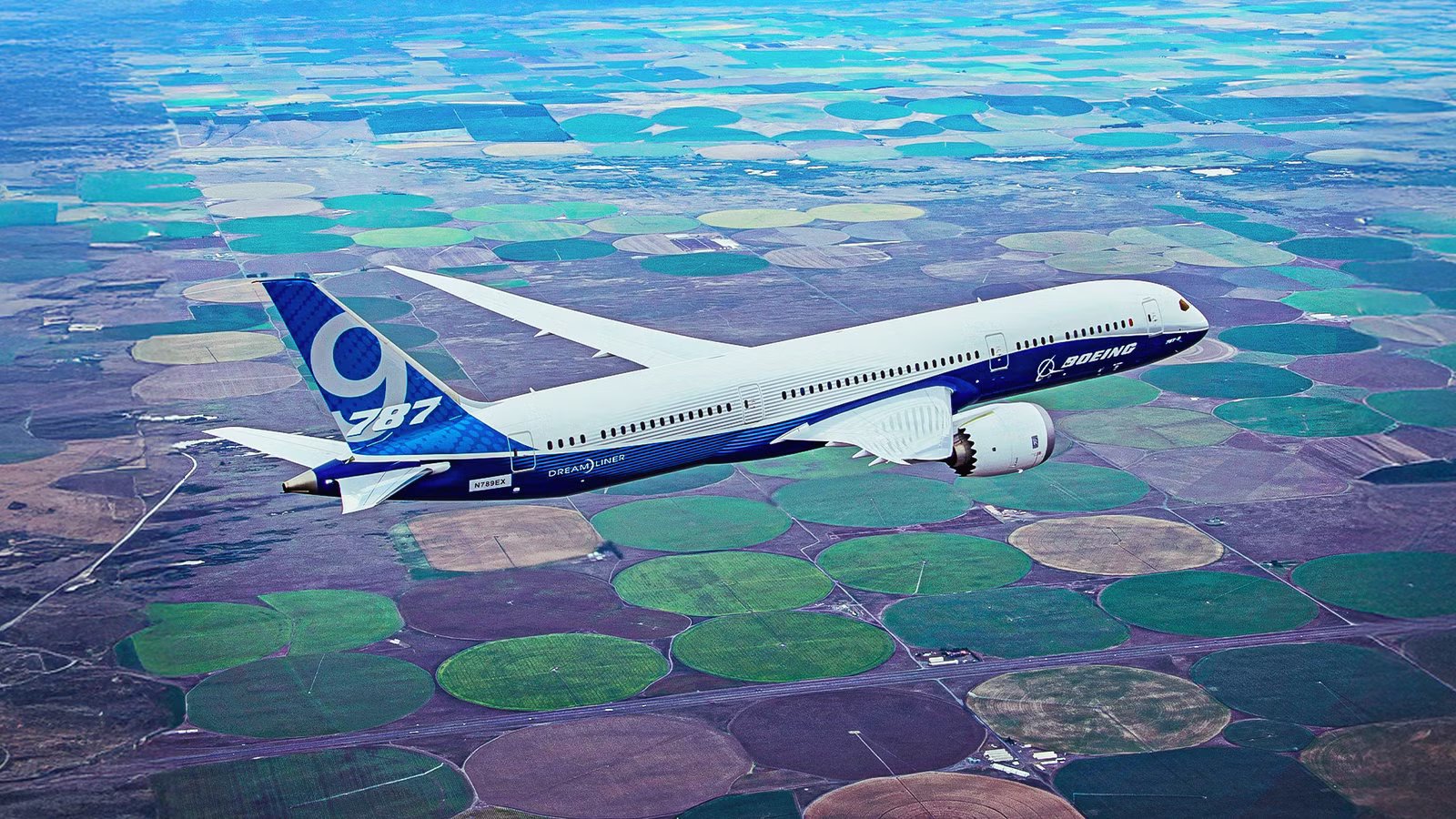
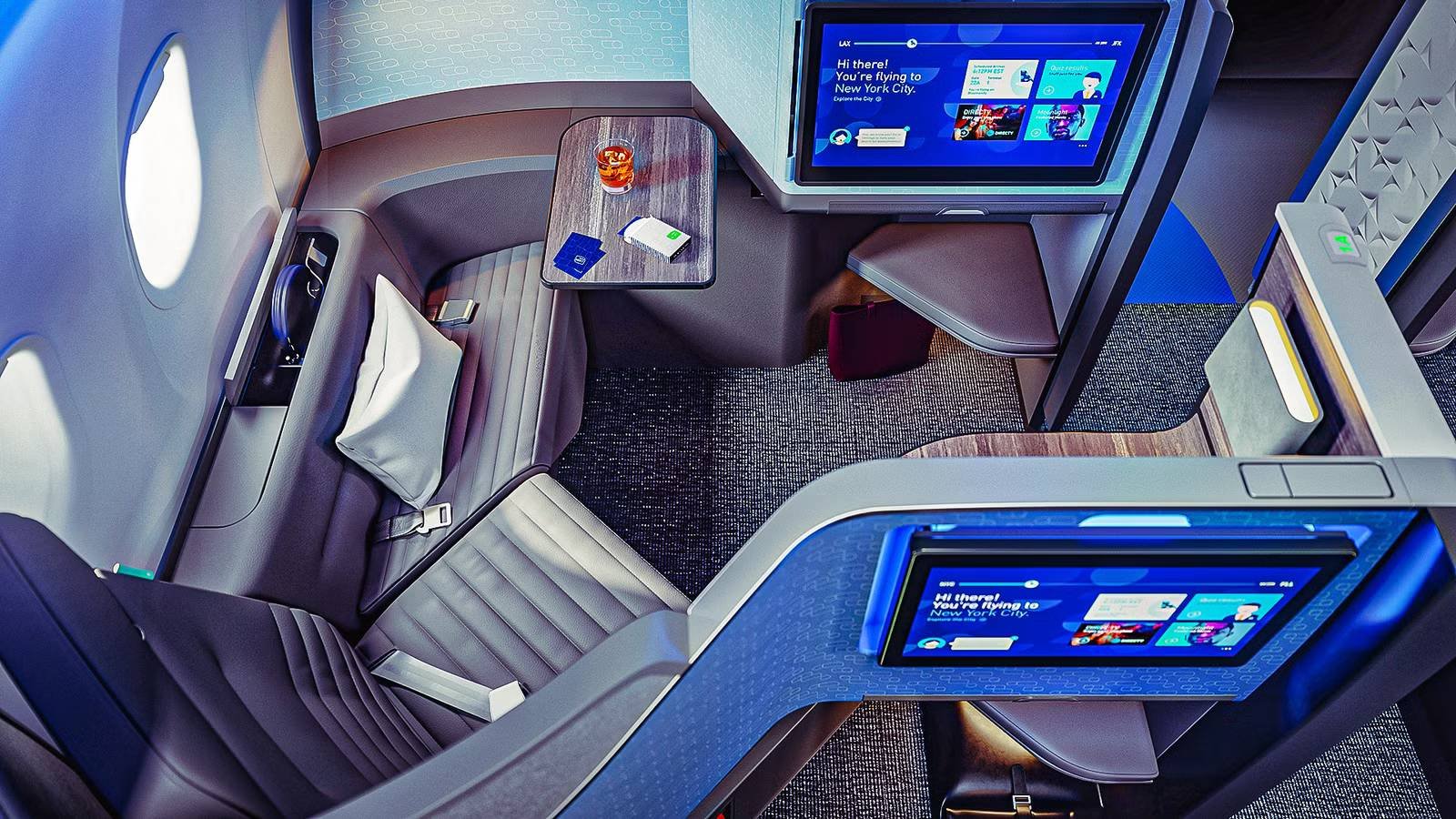
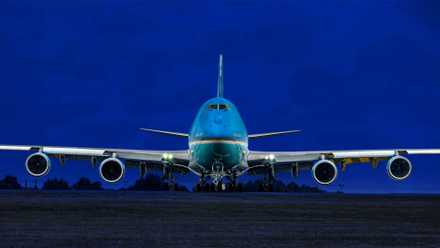
For example, the VIP aircraft for the Sultan of the tiny, but oil-rich state of Brunei flies in a luxurious Boeing 747, while the Emir of Qatar also flies in a flying Boeing 747-8 palace. An important difference between these jets and the USAF VC-25A is that the latter are military jets with command and control systems designed to be a flying Oval Office, while the former are closer to mobile palaces.
The G7 Nations’ Presidential Aircraft Ranked
Airbus is extremely prominent in this list.
Dual-Use Military Aircraft

While the leaders of countries like Qatar and Brunei choose to flaunt their wealth, the leaders of some other countries live in an environment where they are expected to restrain their expenses. Two examples are the United Kingdom and New Zealand. The United Kingdom could afford to have dedicated opulent aircraft for its Prime Minister and Royal Family. However, this could be seen as excessive and potentially a sign of corruption. It could even be delegitimizing the Royal Family within British society.
Catch what other flight trackers miss
Emergency squawks, holds, NOTAMs — live signals, no signup.
Open tracker
Catch what other flight trackers miss
Emergency squawks, holds, NOTAMs — live signals, no signup.
Open tracker
The solution is for the Royal Air Force to operate the dual-use Royal Air Force Voyager Vespina. The Vespina is a specially modified Airbus A330 MRTT aerial tanker (Voyager KC3) that is also able to transport cargo. The aircraft is owned by AirTanker Holdings and operates as both the VIP transport for the British Prime Minister as well as a military aircraft carrying out aerial refueling and other duties for the RAF when not required by the PM.
King Charles III recently visited Washington, and he flew on a Titan Airways Airbus A321neo (G-GBNI) operated for the UK government and nicknamed the ‘Baby Voyager,’ which is seen as more fuel-efficient and cheaper than Vespina. Meanwhile, New Zealand is replacing its two aging Boeing 757s with A321XLRs. These are also used for the needs of the NZ military and the transportation needs of the Prime Minister and other top government officials when required.
Using Commercial Airlines

Some countries take the ‘state must be fiscally responsible’ approach to another level by just not operating dedicated VIP fleets. Maybe the most classic example is Norway, where Norwegian ministers and MPs routinely fly commercial on the multinational SAS airline or with Norwegian. However, this is pragmatic: the Norwegian prime minister does take military aircraft when needed for security or other reasons. Despite being one of the world’s wealthiest countries, Norway lacks a large, prestigious VIP fleet.
This is also common with Sweden, Denmark, Finland, the Netherlands, New Zealand, Ireland, Iceland, Switzerland, and Luxembourg. Most of these countries do operate military aircraft capable of transporting top government officials (such as New Zealand with the 757s), but it is common for high-ranking ministers to fly commercial, depending on the context. Mexico publicly sold its luxury Boeing 787 to Tajikistan, with the Mexican President now commonly using commercial flights.
The Kiwi 757s have gotten old and started breaking down, including in 2024 in an incident that briefly left the Prime Minister, Christopher Luxon, stranded in Papua New Guinea before Air New Zealand came to the rescue. The then-defense minister said at the time that “at the moment, when we are in a cost-of-living crisis, [so] I think we need to hold fire until that June review.” For his part, Luxon has expressed a preference for flying on more reliable Air New Zealand commercial planes, but providing the PM a comfortable ride just hasn’t been a top Kiwi spending priority.
China: The One That Will Change

Looking forward, despite its decline, Russia is intent on seeing itself as a great power and wants to be seen as a great power. Consequently, it is likely to continue operating similar Russian-built VIP aircraft for the foreseeable future. France and the United States will also continue operating their national aircraft. China is currently the odd one out among the top powers. It is the aspiring new ‘superpower,’ and yet it continues to operate foreign-built VIP aircraft.
The Chinese VIP fleet is currently made up of modified 747-8, 747-400, 737NG, Airbus A319, Bombardier CRJ, and Eurocopter EC225 Super Puma helicopters. China is rapidly developing its domestic airline industry. Chinese aircraft now in service include the regional COMAC C909 (formerly the ARJ21) and the narrowbody C919 commercial aircraft, as well as military helicopters.
This suggests that China is now in a position to start ordering some of its lower-level VIP aircraft from its own industry. COMAC is also developing the C929 250-290-seat widebody aircraft and the C939 ultra-long-range 400-seat widebody aircraft. Additionally, COMAC is developing the C949 supersonic aircraft as a Chinese answer to the Boom Supersonic Overture. These will eventually give China more flexibility in ordering national VIP transports, although replacing the large high-end modified 747-8s may be challenging.
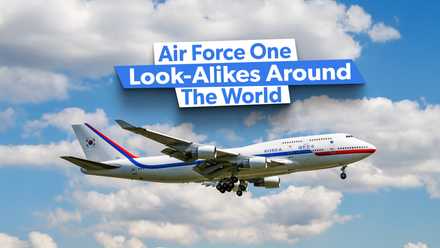
6 Air Force One Look-Alike Boeing 747s Serving As VIP Transport For Governments Around The World
Six unique Boeing 747 jets for VIP travel, carrying an image akin to Air Force One for the heads of state in other nations around the world.
VIP Aircraft Speak To The Country

To some degree, the VIP aircraft intended to carry the leader can be thought of in several categories. The US, China, Russia, the UK, France, and other countries operate modified military aircraft that can serve as flying offices and emergency military command centers. The US’s VC-25 jets are likely in a military-grade league of their own. Many countries operate what are essentially business jets for their top leaders that wouldn’t be too out of place in a corporate fleet, while some operate lavish flying palaces.
Others expect their Prime Ministers to join the proverbial queue at the boarding gate with other commercial passengers whenever feasible. In those cases, it is not uncommon for passengers to see the Prime Minister at the airport with one or two bodyguards and ask for a selfie. It is fair to say that much can be deduced from a country by the VIP aircraft (or lack thereof) that the country’s high-ranking ministers are expected to fly.
Additionally, it is worth pointing out that it isn’t feasible for the US President to fly commercial, even if he wanted to. The security realities are such that it doesn’t work, and ‘Air Force One’ is just one part of a whole fleet of aircraft that follow the President. In 1973, President Nixon became the only sitting president to fly commercial, but it was a publicity stunt as his jet still had to fly without him for his return trip, and an aircraft had to deliver his car.