dailynewsnblog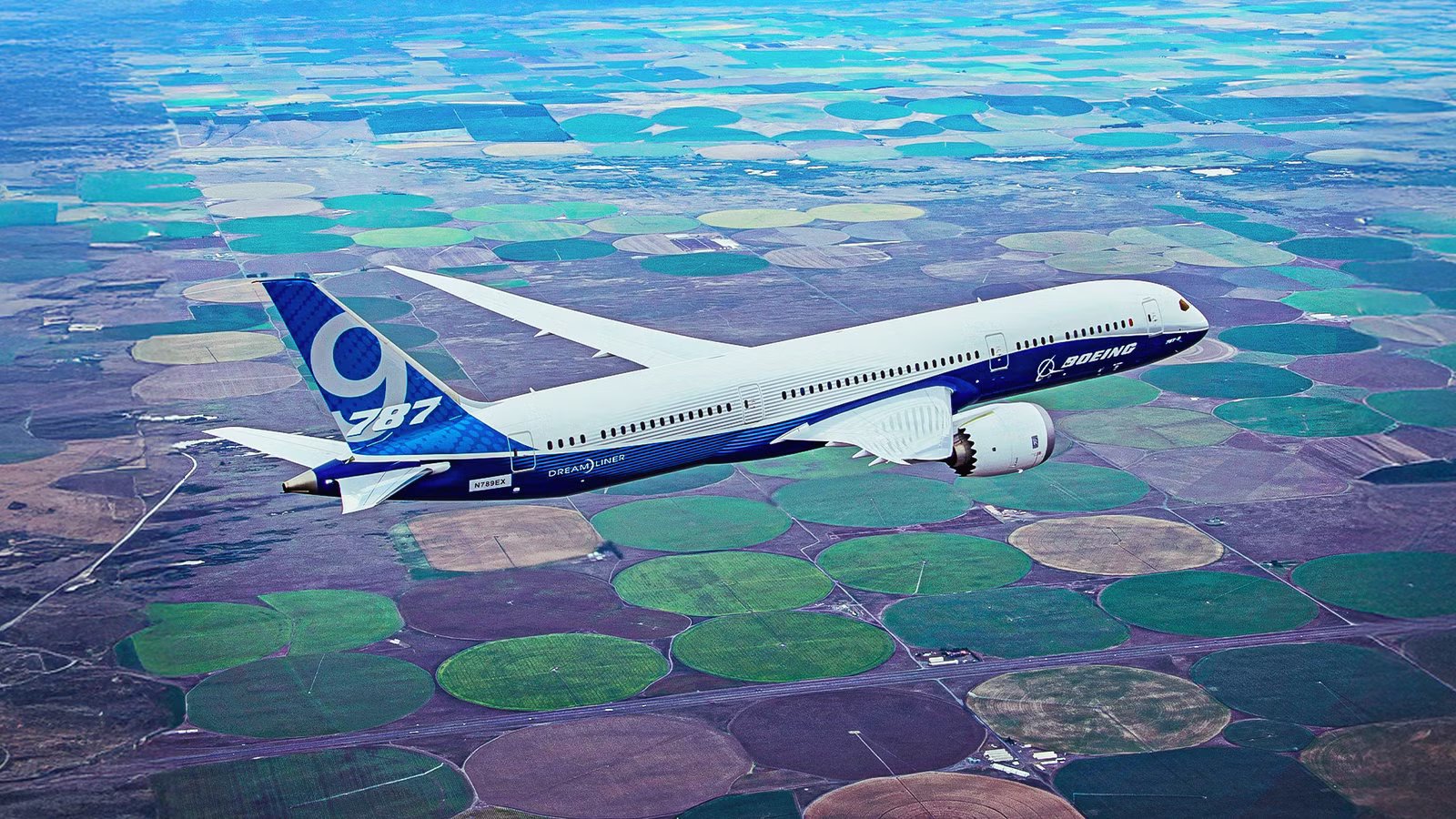
When the Boeing 787 Dreamliner entered service in 2011, long-haul aviation was dominated by giant hubs and increasingly large aircraft. Airlines relied heavily on airports such as Heathrow, Dubai, and Frankfurt because older widebodies were too expensive to operate efficiently on lower-demand routes. Instead of competing with the Airbus A380’s strategy, Boeing bet on a midsize long-range aircraft capable of flying up to 7,565 nautical miles (14,010 km) while using far less fuel than previous-generation jets.
Fifteen years later, that gamble reshaped global aviation. The 787 has accumulated over 2,300 orders and over 1,000 deliveries while helping airlines launch more than 370 new nonstop routes once considered commercially unrealistic. Its fuel efficiency, lower operating costs, and passenger-focused cabin design made direct long-haul flights between secondary cities viable, fundamentally changing the economics, comfort, and geography of modern air travel.
The Rise of Long, Thin Routes

Before the 787, airlines faced a difficult balancing act on long-haul routes. Large aircraft such as the Boeing 747 or Airbus A340 could travel intercontinental distances, but they required consistently high passenger demand to remain profitable. Many city pairs simply lacked enough travelers to justify operating large widebody jets every day. As a result, passengers flying between smaller international markets were often forced to connect through major hubs, even when demand for direct service clearly existed.
The Dreamliner transformed those calculations by combining long range with relatively moderate seating capacity. Depending on the variant and airline configuration, the aircraft typically carries between 240 and 330 passengers while maintaining a range of up to 7,565 nautical miles (14,010 km). At the same time, it reduced fuel consumption by approximately 20-25% compared with older twinjet aircraft such as the 767 and early A330 models. Those lower operating costs allowed airlines to serve routes previously considered financially unrealistic.
The results were dramatic. Since entering service, the 787 family has reportedly enabled more than 370 new point-to-point international routes and operated on over 2,000 unique city pairs worldwide. Flights such as Perth to London, Austin to Heathrow, and San Jose to Tokyo became practical because airlines no longer needed massive passenger volumes to sustain nonstop long-haul service. Airports that once played primarily regional roles suddenly gained direct intercontinental connections, while passengers benefited from shorter travel times and fewer exhausting layovers.
Boeing’s Gamble Against The A380 Era

During the early 2000s, Boeing and Airbus were effectively betting on two different futures for aviation. Airbus believed rising global demand and airport congestion would favor giant aircraft transporting huge numbers of passengers between massive international hubs. That strategy led to the creation of the Airbus A380, capable of carrying more than 500 passengers in typical airline configurations and over 800 in maximum-density layouts. Boeing disagreed with that vision and instead focused on flexibility, frequency, and direct long-haul connectivity.
Catch what other flight trackers miss
Emergency squawks, holds, NOTAMs — live signals, no signup.
Open tracker
Catch what other flight trackers miss
Emergency squawks, holds, NOTAMs — live signals, no signup.
Open tracker
At the time, Airbus appeared to hold the stronger position. The A380 generated enormous publicity and symbolized the glamour of modern aviation. Many analysts believed the future would revolve around mega-hubs linked by superjumbos carrying unprecedented passenger volumes. Yet the economics of operating extremely large aircraft quickly became challenging outside a relatively small number of routes. Airlines struggled to consistently fill hundreds of seats while maintaining profitability year-round, particularly during seasonal downturns or economic slowdowns.
The 787 validated Boeing’s alternative strategy. Airlines discovered they could make more money operating smaller, fuel-efficient aircraft on direct routes rather than depending entirely on giant hub-to-hub operations. Travelers also overwhelmingly preferred nonstop flights whenever possible, even if the aircraft itself was smaller. Over time, the industry shifted decisively toward efficient twin-engine widebodies, while production of the A380 ended after only 251 aircraft were built. In contrast, the Dreamliner family surpassed 2,300 orders and became one of the defining commercial aircraft programs of the 21st century.

787-8 Vs 787-9 Vs 787-10: How The Dreamliner Variants Differ
The three 787 variants are tailored to different market segments to fill niches and offer a placement for different previous-generation aircraft.
A Cabin Designed To Reduce Exhaustion

Long-haul flying has always placed considerable stress on passengers. Traditional widebody aircraft maintained cabin pressure equivalent to roughly 8,000 feet above sea level, exposing travelers to lower oxygen levels during flights lasting 10 to 16 hours or more. Combined with dry cabin air, constant engine noise, and artificial lighting, these conditions often caused dehydration, headaches, fatigue, and severe jet lag. For decades, airlines have treated these problems as unavoidable consequences of intercontinental travel.
The Dreamliner approached the problem differently by redesigning the cabin environment itself. Its composite fuselage allowed airlines to maintain significantly higher humidity levels without increasing corrosion risk, while cabin altitude was reduced to approximately 6,000 feet. Though the difference may sound modest, studies and passenger feedback consistently showed that travelers often arrived feeling less dehydrated and less fatigued than on older long-haul aircraft.
The aircraft also introduced several design features that became signatures of the Dreamliner experience. Its windows are roughly 30 percent larger than those on comparable aircraft, making cabins feel brighter and more spacious. Instead of traditional pull-down shades, passengers use electronically dimmable windows that can gradually darken while still preserving outside visibility. Advanced LED lighting systems simulate natural daylight cycles to help reduce circadian disruption during ultra-long-haul journeys. Combined with quieter engines and reduced cabin noise, the Dreamliner significantly altered passenger expectations of what long-haul flying could feel like.
The Technology That Made It Possible

Much of the Dreamliner’s revolutionary performance comes from its construction. Earlier commercial aircraft relied heavily on aluminum structures, which were durable but relatively heavy and vulnerable to corrosion over time. Boeing instead built the 787 using approximately 50 percent carbon-fiber-reinforced composite materials by weight, compared with roughly 12 percent on older aircraft such as the Boeing 767.
The lighter structure generated substantial operational benefits. Reduced weight improved fuel efficiency, while advanced aerodynamics and next-generation engines further lowered operating costs. Airlines operating the Dreamliner typically consume around one-fifth less fuel per seat compared with previous-generation aircraft on similar routes. For long-haul carriers, where fuel represents one of the largest expenses, those savings translate into billions of dollars over the life of the aircraft program.
Simple Flying Quiz
Easy (15s)Medium (10s)Hard (5s)
The Dreamliner also introduced major changes in aircraft systems architecture. Many traditional pneumatic systems, such as wing leading-edge anti-ice systems, were replaced by electrical systems, making the aircraft more energy-efficient and easier to maintain. Boeing additionally estimated maintenance costs could be reduced by roughly 30 percent compared with older widebody aircraft because composite materials are less susceptible to corrosion and fatigue cracking. Although the program experienced serious early difficulties, including battery fires that temporarily grounded the fleet in 2013, the aircraft’s technological approach ultimately influenced the entire aviation industry, including competitors such as the Airbus A350.

How Much Does A Boeing 787 Dreamliner Cost?
The aircraft is powered by General Electric GEnx or Rolls-Royce Trent 1000 high-bypass turbofan engines.
The Aircraft That Redefined Airline Strategy

Before the arrival of the Dreamliner, airlines often faced a difficult compromise between range and capacity. Smaller aircraft could not operate ultra long haul routes economically, while larger aircraft required passenger demand levels that many markets could not reliably sustain. This limited flexibility discouraged airlines from experimenting with new international destinations and forced many carriers into conservative network planning strategies.
The 787 filled that gap by offering intercontinental range in a midsize aircraft. Airlines could open routes with lower financial exposure while still maintaining the ability to fly nonstop across oceans and continents. This flexibility proved especially valuable for carriers in geographically isolated regions such as Australia and New Zealand, where long-haul efficiency became critical. Qantas, for example, used the 787-9 to launch nonstop Perth-to-London flights covering roughly 9,009 miles (14,498 km), one of the world’s longest scheduled passenger routes. At the time of writing, four of the world’s top ten longest flights are operated by the 787-9, and nine of the world’s top 25 longest flights use the aircraft.
The aircraft also became attractive to a remarkably wide variety of airlines. Full-service global carriers used it to expand international networks, smaller national airlines used it to compete on long-haul routes without purchasing larger aircraft, and low-cost airlines used its efficiency to experiment with long-distance budget travel. Its versatility explains why demand has remained exceptionally strong even more than a decade after launch, with airlines continuing to place large orders well into the 2020s.
The Numbers Behind The Dreamliner Revolution

The Dreamliner’s influence becomes even clearer when examining its commercial performance and operational scale. Since entering service in 2011, the aircraft family has accumulated over 2,300 orders, making it one of the fastest-selling widebody programs in aviation history. More than 1,000 Dreamliners are currently flying worldwide, and the fleet collectively carries millions of passengers every month across thousands of daily flights. Over the past several years, the 787 consistently outsold competing long-haul aircraft families, including the Airbus A330neo.
Its operational reach is equally remarkable. Depending on the variant, the aircraft can travel between approximately 6,330 and 7,565 nautical miles, enabling airlines to operate some of the world’s longest nonstop commercial flights. Four of the ten longest flights on Earth are currently operated by the 787-9, while multiple Dreamliner routes regularly exceed 15 or even 16 hours in duration. The aircraft’s ability to combine ultra-long range with moderate capacity gave airlines unprecedented flexibility in route planning and network expansion.
The Dreamliner also delivered major environmental and operational advantages. Its engines, supplied by either General Electric or Rolls-Royce, produce substantially lower noise footprints than previous-generation widebodies, helping airports reduce noise exposure around urban areas. The aircraft also offers significant cargo capacity alongside passenger capacity, allowing airlines to improve route profitability through freight revenue. Combined with its fuel efficiency, reduced maintenance requirements, and operational versatility, these strengths transformed the 787 from a risky engineering gamble into one of the most influential and commercially successful aircraft programs of the modern era.