dailynewsnblog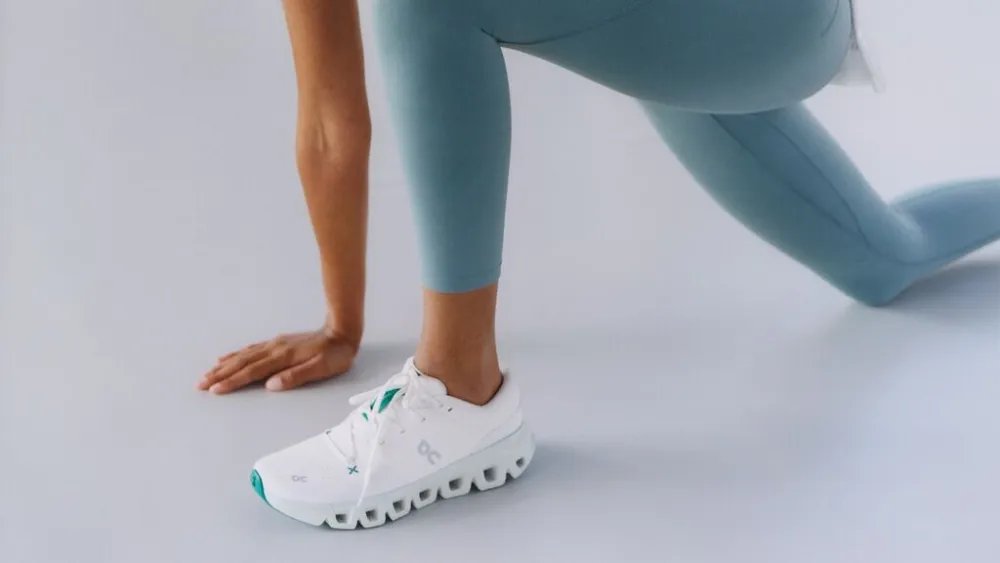
Material World is a weekly roundup of innovations and ideas that are reshaping the materials sector. It covers the latest developments in how fashion is designed, engineered, and scaled—from emerging biomaterials and next-generation leathers to engineered fibers and sustainable alternatives.
On
On Holding AG is introducing a midsole made of captured carbon emissions. The brand’s CleanCloud midsole swaps the typical fossil fuel inputs for ethylene made from captured carbon.
Infinium’s eNaphtha is made from captured carbon dioxide and hydrogen, creating a renewable alternative to the crude oil-based petroleum naptha. The eNaptha is then used by Borouge International as an input to create the pellets for the ethylene-vinyl acetate (EVA) midsole. On noted that the midsole is identical in performance to a conventional EVA foam, with the same molecular weight, polymer chain length and melting point between the two.
“Infinium was founded on the belief that carbon isn’t simply a waste product—it’s a valuable feedstock,” said Robert Schuetzle, CEO of Infinium. “Seeing captured carbon transformed into a product worn by people around the world demonstrates what’s possible when sustainable chemistry scales through existing industrial infrastructure.”
A life cycle assessment on the foam conducted by CarbonMinds and evaluated by TÜV indicates an 80 percent carbon emissions savings compared to conventional manufacturing.
The CleanCloud technology is rolling out in On’s Cloud X 5 sneaker, which debuted July 16. On initially planned to scale the midsole production to a commercial level by 2030, but it is currently ramping up to 1 million pairs. The brand attributes the ability to scale quickly to its direct relationships with the chemical companies, which created a drop-in solution that worked in existing reactors.

On’s Cloud X 5 sneaker
Courtesy of On
“By rethinking how a supply chain can collaborate, we scaled to over a million pairs today,” said Jean-Philippe Romain, director of polymer science and engineering at On. “The speed at which we went from a single wild prototype to commercial-scale production is incredibly fast for the chemical and footwear industries.”
The brand plans to replace more of its EVA midsoles with greener options in the future.
Covation Biomaterials
Covation Biomaterials has launched Sorona elasterell-p fiber, a stretch fiber made using its Sorona polymer. This is the company’s first bicomponent stretch fiber that is being manufactured in the U.S.
Sorona is made from 37 percent bio-based plant material, reducing the environmental impact of the material compared to fully fossil fuel-based fibers. Sorona elasterell-p fiber offers spandex-free stretch, helping garments like activewear allow for movement while also retaining their shape. CovationBio says the fiber is a fit for applications that need durable stretch and recovery, like athleisure and uniforms.

Courtesy of
“As a partially bio-based polymer, Sorona has been an ingredient in innovative textile solutions used by leading apparel brands worldwide,” said Steven Ackerman, CEO of CovationBio. “With the introduction of Sorona elasterell-p fiber, we’re pairing our reputation for trusted performance and sustainability benefits with a new stretch solution built for what brands need next.”
Louis Vuitton
Louis Vuitton is introducing a new material in a range of menswear items. Silk Tech is a twill weave textile made from a blend of silk and reclaimed nylon, resulting in a lightweight fabric that resists water, fraying and creasing. The material mix creates a twill that resembles the look of leather, with a sheen and silky hand feel. Silk Tech is also strong; a City Bag made from the textile is capable of holding 50 kilograms, or around 110 pounds.
Louis Vuitton is using Silk Tech in ready-to-wear apparel, handbags, luggage, footwear and accessories. Among the pieces made in the textile are a water-repellant windbreaker, puffer jacket, running shorts and Speedy bags. For the initial designs, which debuted on the runway in January at the Fall/Winter 2026 menswear show and launched at retail in July, Silk Tech is made in the house’s signature brown-and-gold monogram pattern.

Silk Tech backstage at Louis Vuitton’s Fall/Winter 2026 menswear runway show
Courtesy of Louis Vuitton
As the brand explains, this use of silk for its performance properties hearkens back to its heritage in travel. “Reinterpreting the resilience-to-weight ratio and incredible strength of early 20th century silk parachutes and hot air balloons, it combines mechanical feat with textural appeal,” Louis Vuitton wrote in a release.
Recover
Recycled cotton fiber producer Recover is partnering with Turkey-based vertical textile manufacturer Ünteks Group to create fabrics and garments using circular knitting.
Ünteks Group’s operations span knitting, dyeing, printing and cut-and-sew manufacturing, with a monthly capacity to produce up to 1.5 thousand tons of fabric and 1 million garments. Using Recover’s circular cotton, Ünteks Group has created single jersey, fleece, interlock, terry, 2×1 rib and pique fabrics, and it plans to introduce more constructions in the future. All of the textiles have at minimum 20 percent Recover cotton.

“In circular knits, small variations can impact how a fabric behaves in production,” said Hakan Kılıç, CEO of Ünteks Group. “A big part of our work with Recover has been adjusting and refining each step so the material runs consistently, from knitting through to the finished garment.”
eVent Fabrics
Chinese outdoor brand Pelliot has adopted eVent Fabrics’ waterproof and windproof membranes. Pelliot—which specializes in gear for activities like hiking, skiing and mountaineering, will be using eVent’s AlpineST laminate that is waterproof and windproof, as well as its windproof WindstormST laminate.
Both laminates are breathable and PFAS free, with a C0 durable water repellant (DWR) finish. Increasingly, regulation is restricting the use of PFAS—aka per- and polyfluoroalkyl substances—which do not biodegrade. PFAS have been linked to negative health effects and are possibly carcinogenic.
“At Pelliot, we are not only committed to crafting top-tier, versatile professional outdoor apparel for enthusiasts worldwide, but also to advancing material innovation and responsible product development,” said Zhao Le, vice president of Pelliot. “The environmental hazards associated with traditional chemical materials, such as PFAS, have become a pressing concern for the entire outdoor industry. Driving the transition toward PFAS-free and low-carbon textiles is not only an inevitable industry trend but also a fundamental responsibility and mission for leading brands.”

In the Fall/Winter 2026 collection, Pelliot has created the WindstormST Soft Shell Jacket, and the Spring/Summer 2027 collection will see the introduction of the AlpineST Hard Shell Jacket.
“This partnership with Pelliot represents a big step forward in the global reduction of PFAS in consumer apparel,” said Chad Kelly, vice president of eVent Fabrics. “As one of the fastest growing outdoor apparel brands in China, Pelliot is a volume leader, which means this partnership could have a real effect on attitudes towards PFAS in China’s explosive, multi-billion-dollar outdoor sports market.”
AMSilk
Biotech company AMSilk is ramping up to large-scale production of its silk proteins through its ongoing partnership with Ajinomoto Foods Europe (AFE). In a new phase of the collaboration that began in 2023, the two companies are entering into a long-term supply and manufacturing agreement that will see AFE set up a dedicated production line for AMSilk’s silk proteins at its manufacturing facility in Nesle, France. The parties jointly made a multi-million investment in outfitting the plant with equipment and upgrades needed for AMSilk’s production process.
AFE has experience in large-scale fermentation and biomanufacturing, and once the line reaches peak performance, it will be able to generate commercial volumes of the silk protein. AMSilk’s materials have use cases in textiles as well as automotive and personal care.
The plant’s location offers a few key benefits, including proximity to customers and nearby availability of raw materials. Producing in France is also expected to provide an added cachet for potential customers.
“As we move into the next phase of growth, scaling our production capabilities is a key priority,” said Christian Wichert, CEO of AMSilk. “With its strong manufacturing expertise and strategic location in the heart of Europe, AFE is an ideal partner to support this growth. The addition of dedicated manufacturing capacity is an important step in translating our technology into sustainable commercial growth.”
Harvard University
Researchers at Harvard University’s John A. Paulson School of Engineering and Applied Sciences have developed programmable knit textiles, allowing fabric to be used for purposes like switches.
The team warp knit highly elastic yarns and leveraged plating—a technique that keeps one yarn to the front side of the fabric and another to the back side. The resulting fabrics are thick and naturally curl, allowing them to be positioned or snapped into multiple states.
With the addition of conductive materials to the knits, the researchers turned the materials into switches. For instance, fabric placed on an elbow or knee recorded when its shape changed due to natural bending while walking, creating a step counter. In another application, a lamp was programmed so that different shapes controlled the light. Other potential use cases for this include textiles that provide physical feedback or shape shifting textiles.

Researchers created a lampshade that acts as a switch using knit material.
Courtesy of Harvard University
Niber
As demand for alternatives to PFAS materials grows, PFAS-free electrospun nanofiber membrane Niber is building up its ingredient branding in partnership with Braind.
Based in Southeast Asia, Niber Technologies uses electrospinning to create fibers that are 0.45 micrometers, or 0.00045 millimeters, wide. The lightweight, breathable fibers can be used for applications like performance and outdoor apparel, lifestyle fashion, workwear and personal protective equipment.

As part of this partnership and strategy, Tomas Vucurevic, managing director of Braind, has been named chief brand advisor to Niber Technologies.
“Graduating from a membrane-only business to a fully structured ingredient brand is the natural evolution of what we are building at Niber,” said Richard Beck, president of Niber Technologies. “Partnering with Braind gives us the strategic architecture to ensure that Niber becomes the name that brands specify, retailers trust, and consumers recognize.”
Apparel Alliance
Acting together as the apparel alliance, Apparel Impact Institute, Cascale, Textile Exchange and ZDHC Foundation have introduced the second version of their Supply Chain Taxonomy for the textile industry. Originally launched in late 2024, the taxonomy aims to standardize terms used in the industry—such as definitions of supply chain tiers—so that communication and reporting are clearer. Additionally, having set classifications is expected to support better collaboration, stronger risk management and more accurate benchmarking that helps to drive progress.
“When facilities, products and processes are classified consistently, the whole industry benefits, from more reliable data and clearer reporting to stronger collaboration on the work that matters most,” said Joël Mertens, director of environmental impact methodologies at Cascale. “The updated Supply Chain Taxonomy is foundational infrastructure for a more aligned and effective sustainability ecosystem. It reflects what’s possible when organizations commit to alignment, and we’re confident it will support more effective progress across the value chain.”