dailynewsnblog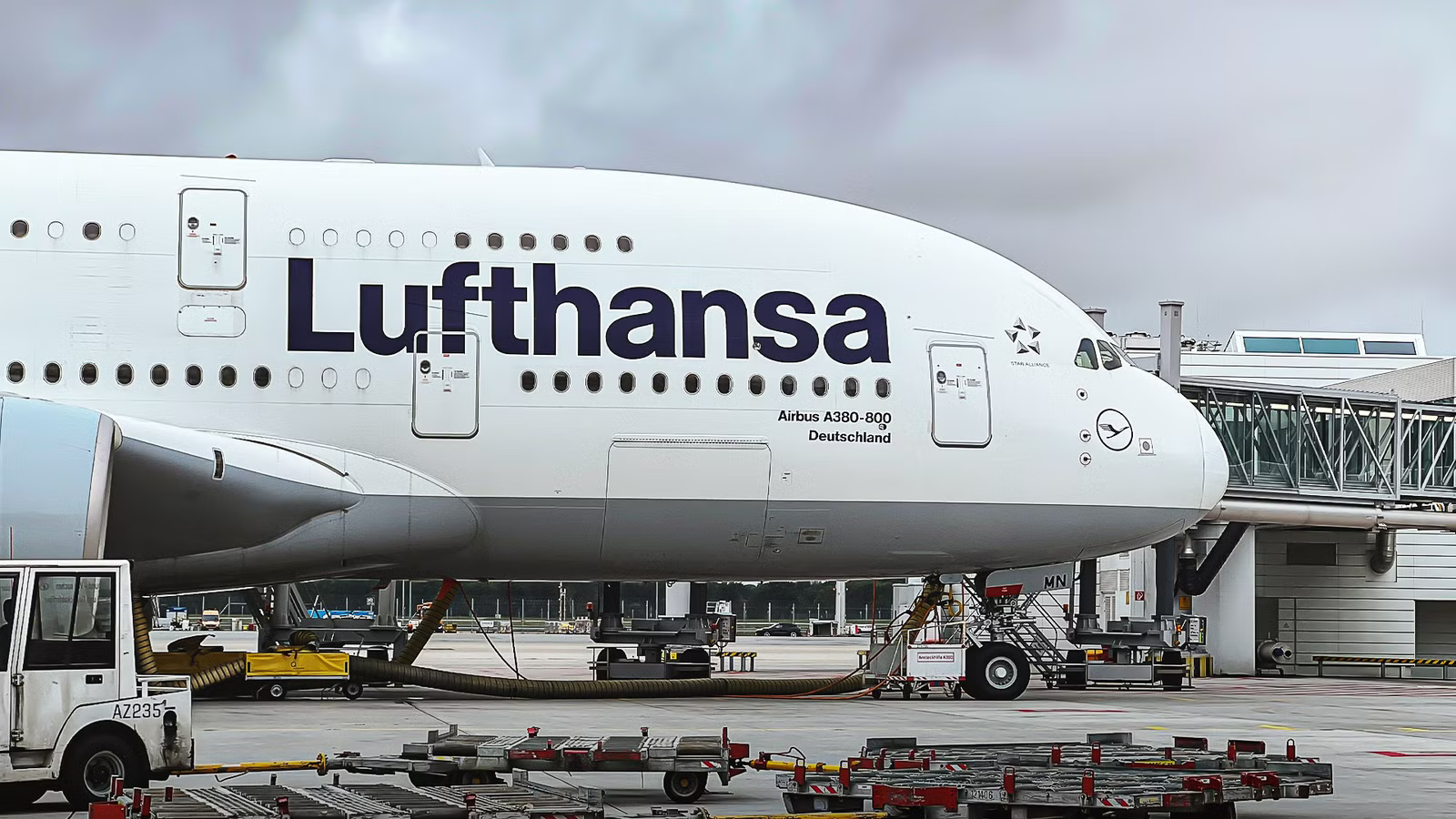
Seat 70D does not exist on a QantasAirbus A380. Look at the seat map, and the row is there; the window and middle seats are there, but the aisle seat is simply missing, replaced by a section of floor that looks identical to the carpet around it. It is not a manufacturing quirk, and it is not lost inventory. The floor beneath that missing seat conceals an escape hatch, and it exists because European regulators required it before Airbus was allowed to certify the aircraft’s crew rest module.
The story behind that gap involves the unusual location of the aircraft’s crew rest compartment, the evacuation requirements imposed by European regulators, and a certification debate over how crew could escape if the normal access route became unusable. That chain of decisions explains why Qantas ended up sacrificing a revenue-generating seat, why the same issue doesn’t look identical on every A380, and how a requirement buried in a certification document became something passengers can spot on a seat map.
Why The A380 Needed A Rule Like This At All

The A380’s most common crew rest configuration is a 12-berth module installed underneath the main deck, in space that would otherwise be cargo-hold volume, as detailed by Simple Flying’s look inside the aircraft’s crew rest areas. Built into the lower fuselage, the module effectively creates a third level on an aircraft passengers already experience as a double-decker, sandwiched between the economy cabin floor and the cargo containers below.
That placement solves a real problem. Twelve bunks below the floor keep off-duty crew away from cabin noise and free up premium space on the passenger decks that airlines would rather sell. But it also creates a problem regulators had never fully addressed before the A380: a sleeping compartment that sits in the same structural space as the cargo hold, reachable only by a single staircase, on an aircraft expected to carry hundreds of passengers on flights of 14 hours or more.
A single staircase is an evacuation bottleneck waiting to happen. If it is blocked by fire, smoke, or structural damage, everyone in that module has no way out at all, which is precisely the scenario European regulators refused to certify without a fix.
The Regulation Behind The Hatch

The fix is written into EASA Special Condition D-04, the certification document governing crew rest compartments on the A380. As first reported through the regulator’s own published text, the special condition requires at least two emergency evacuation routes that let every occupant of the crew rest compartment rapidly evacuate to the passenger decks, with the routes positioned far enough apart that a single event cannot disable both at once. Crucially, the special condition itself, according to EASA’s published D-04 document, states that using the emergency evacuation route must not require occupants of the compartment to enter the cargo compartment to return to the passenger cabin.
That single clause is the reason the hatch exists at all. A staircase down into a module built inside a cargo-hold volume is fine for routine access. But if that staircase is the only way out, the evacuating crew would have no choice but to pass through, or immediately alongside, cargo compartment space to reach safety, which is exactly what the special condition forbids.
Requirement in EASA Special Condition D-04 | What it covers |
At least two emergency evacuation routes | Every occupant of the crew rest compartment must be able to reach the passenger decks by more than one route. |
Route separation | The two routes must be positioned apart so a single fire, smoke, or structural event cannot block both. |
No routing through cargo | Evacuation must not require occupants to enter the cargo compartment to reach the cabin. |
Smoke and fire detection | The compartment must have its own detection system, plus emergency illumination. |
Exit signage | Required in each divided section of the compartment, not just at the main door. |
Two-way voice communication | Occupants must be able to communicate with the rest of the aircraft. |
Door operation under crowding | Doors and hatches must open even when people are pressed against them. |
Such specific rules rarely arrive without a fight over how to implement them, and the record of that fight is public.
What Airbus Pushed Back On, And What EASA Held Firm On

EASA’s comment-response document for D-04 shows exactly which objections Airbus raised during certification and how the authority ruled on them. On fire detection, Airbus argued that a rule written for cargo-compartment smoke detection systems should not apply directly to a crew rest compartment, since the module is not, by definition, a cargo compartment, as outlined in the CRD-CRI-D-04 record. EASA accepted that point and removed the direct JAR 25.858 reference, while retaining a separate requirement for the crew-rest compartment to provide a visual fire indication to the flight crew within one minute.
On door operation, the record shows EASA accepting Airbus’s clarification rather than rejecting it. The final wording still requires a hatch or door to be shown as capable of opening when people are crowded against it, regardless of which side of the door the crowding occurs on. EASA clarified, however, that this means crowding on either side individually, not people pressing against both sides simultaneously.
That back-and-forth between manufacturer and regulator is normally invisible to passengers. What is visible, if you know how to look for it, is the seat that disappeared to make room for the result.
How Qantas Turned The Rule Into A Missing Seat

On Qantas A380s, the primary access to the lower-deck rest module is a narrow, steep staircase behind a discreet door roughly halfway along the economy cabin, next to the crew seats between rows 65 and 66, as first reported by Executive Traveller. Crew uses that staircase whenever they go on or off shift. If it were blocked, however, the normal access route would no longer be available.
The second route is a hatch beneath seat 70D, which is removed from the seat map to provide an alternative evacuation route. If the main staircase cannot be used, off-duty crew can use the hatch to reach the economy cabin directly rather than passing through the cargo hold, per Executive Traveller’s original reporting on the missing seat. Passengers booked into row 70 rarely learn why one aisle seat is absent from an otherwise full configuration. The gap is the physical proof that Special Condition D-04 was satisfied.
The staircase is the route crew normally use; the hatch is the alternative route required for certification. Neither is optional, and Qantas is not the only A380 operator that had to meet the same requirement, although other airlines did not necessarily solve it the same way.
Not Every A380 Hides It The Same Way

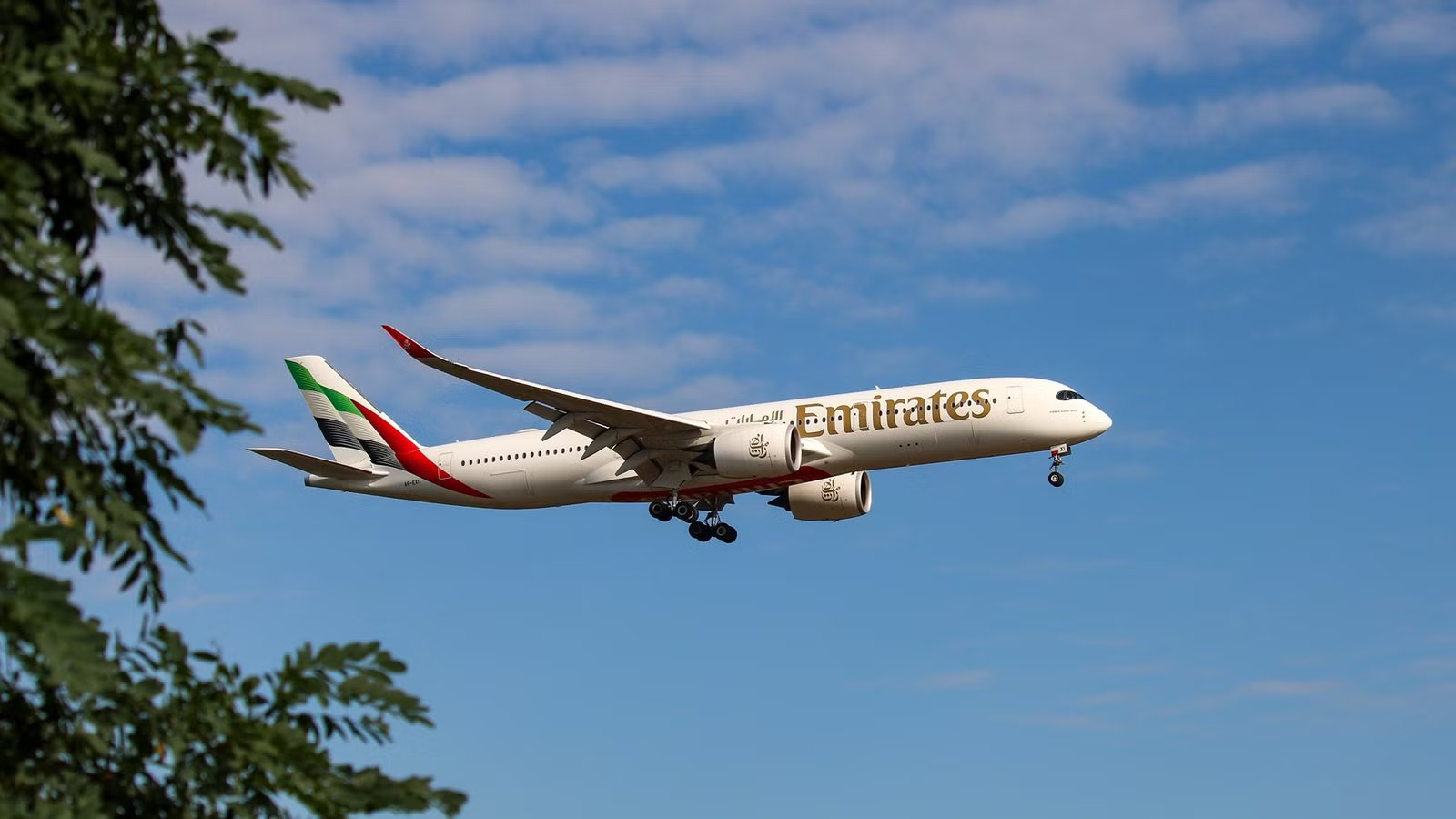
 Emirates takes a different approach to where its lower-deck crew rest sits. On Emirates A380s, the crew rest area is positioned on the same deck as the economy cabin, rather than in the subfloor module Qantas uses, according to Simple Flying’s comparison of widebody crew rest layouts. That placement changes the evacuation geometry entirely, since a compartment built at deck level does not carry the same structural relationship to the cargo hold that a true subfloor module does.
What does not change between operators is the broader rule governing when any of these compartments can even be occupied. Crew rest areas across widebody types, the A380 included, are locked and cannot be used during taxi, takeoff, and landing, regardless of which deck they sit on or how the airline chose to configure the evacuation routes.
The redundancy Special Condition D-04 demands is specifically an in-flight safeguard, built for the hours when crew is actually asleep below a cabin full of passengers who have no idea a hidden staircase, or a hidden hatch, is a few feet beneath their seatback screen.
The Hatch Nobody Notices, But Everyone Is Protected By

Seat 70D is a tiny detail on an aircraft with roughly half a million individual parts, but its absence says more about aircraft certification than the seat itself ever could. A passenger sees an odd gap in a row; the crew sees one part of a carefully engineered escape system, and regulators see the result of a requirement that had to be satisfied before the space below the cabin could be used for sleeping crew. That is what makes the missing seat more interesting than a hidden feature.
The A380’s sheer scale gave Airbus and its airline customers room to hide all sorts of functions behind ordinary-looking surfaces, from sealed-off crew workspaces to a small compartment tucked under the forward staircase on some Emirates aircraft that crew reportedly call the “Harry Potter cupboard,” which doubles as a purser’s office, as Simple Flying’s own catalog of the jet’s hidden cabin features documents. Most of those spaces exist for convenience or workflow.
The trade-off is easy to miss because the system is deliberately designed to disappear from the passenger experience. The crew still needs access to the rest area, while the aircraft also needs a certified route between that concealed space and the cabin in an emergency. On an aircraft as densely engineered as the A380, even a single missing seat can therefore mark the point where those two requirements meet.